


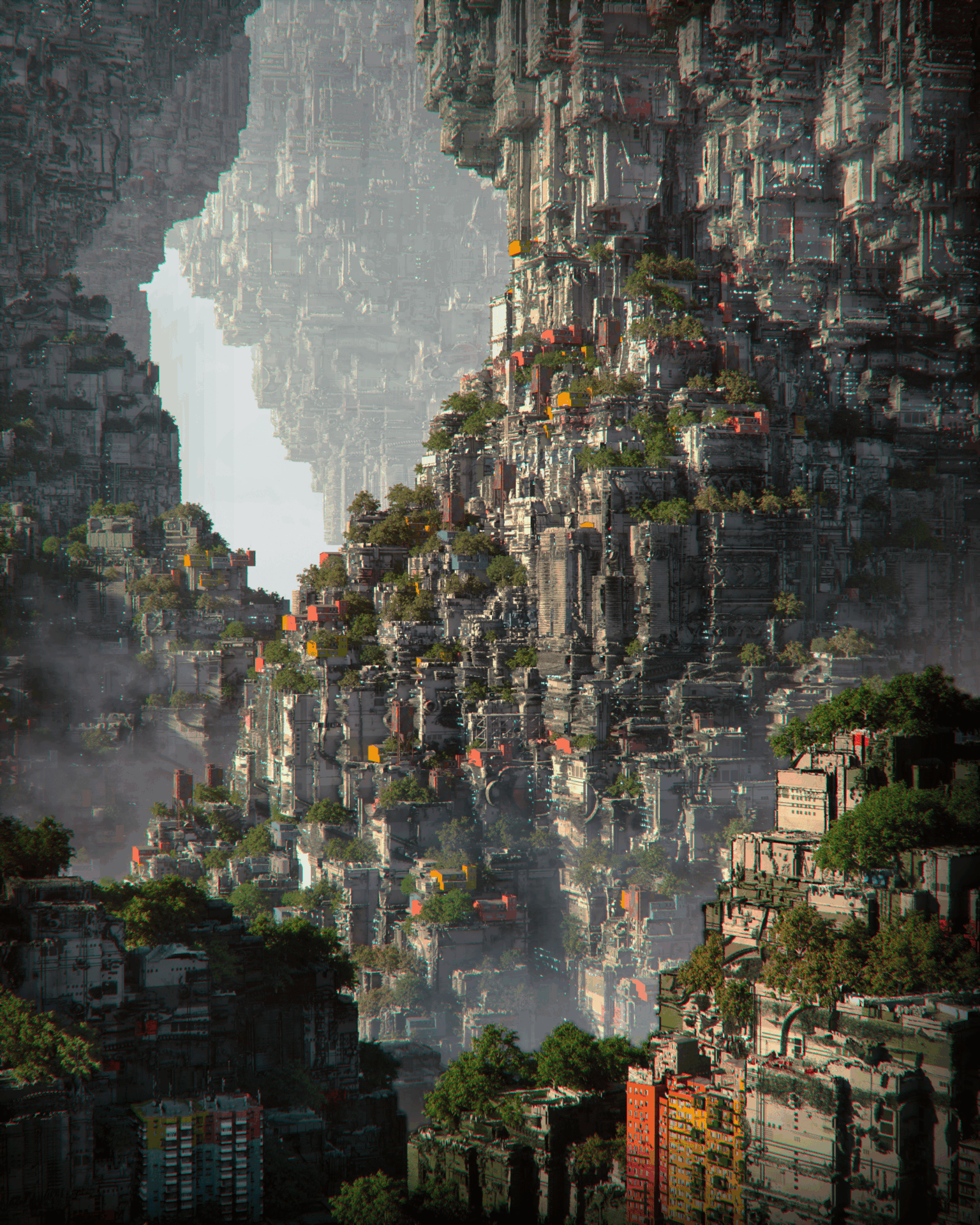
Annibale Siconolfi, also known as Inward, is an Italian artist, architect and sound designer based in Irpinia who has constantly experimented with different disciplines, from art to sound, from architecture to 3D techniques. These aspects found their synergy in the creative vision of vast urban landscapes that explore the tensions between a technologically advanced future and a return to nature.
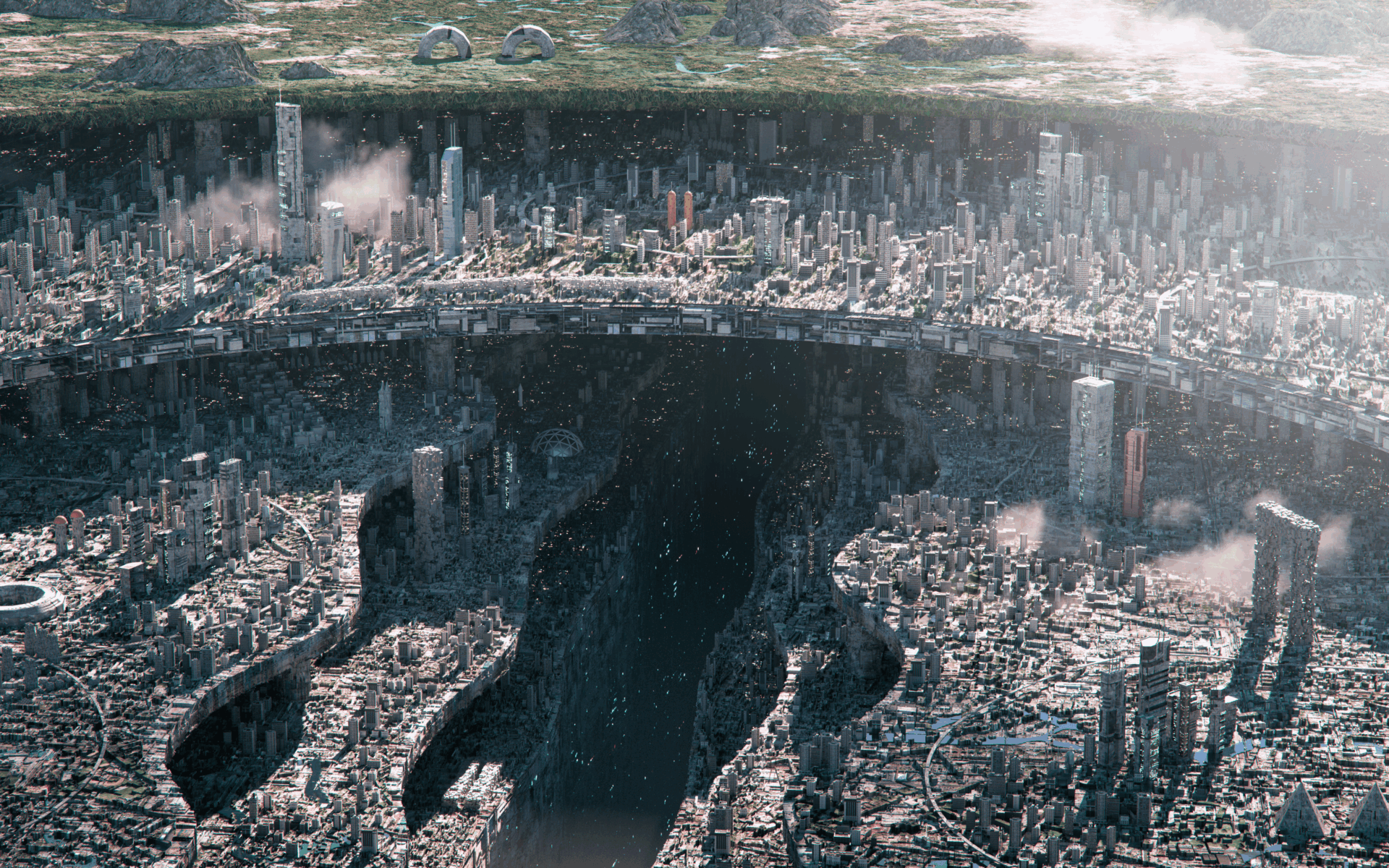
My visions come from a series of reflections and an attraction for subjects that involve constructive saturation, overpopulation, exponential technological evolution, and the relationship between man and nature. I have always been attracted to the digital world since I was an adolescent, especially in artistic experimentation with software in both sound and visual contexts. Studying architecture at the Universit – degli studi di Roma 3 was fundamental for my artistic career. This experience gave me the technical instruments to create my visions of futuristic urban landscapes. I create these settings using 3D rendering and modelling software.
The main tools I use to create my work are Maxon Cinema 4D for modelling, Otoy Octane for rendering, MOI3D for hard surface modelling, which I then import into C4D and Adobe Photoshop to correct and refine the colours. For animation editing and post-production, I use Adobe Premiere and After Effects. The formats change according to the complexity of the 3D models. I tend to do my rendering in 4K and when that isn’t possible, I render in a lower resolution, then increase it during post-production using specific software.
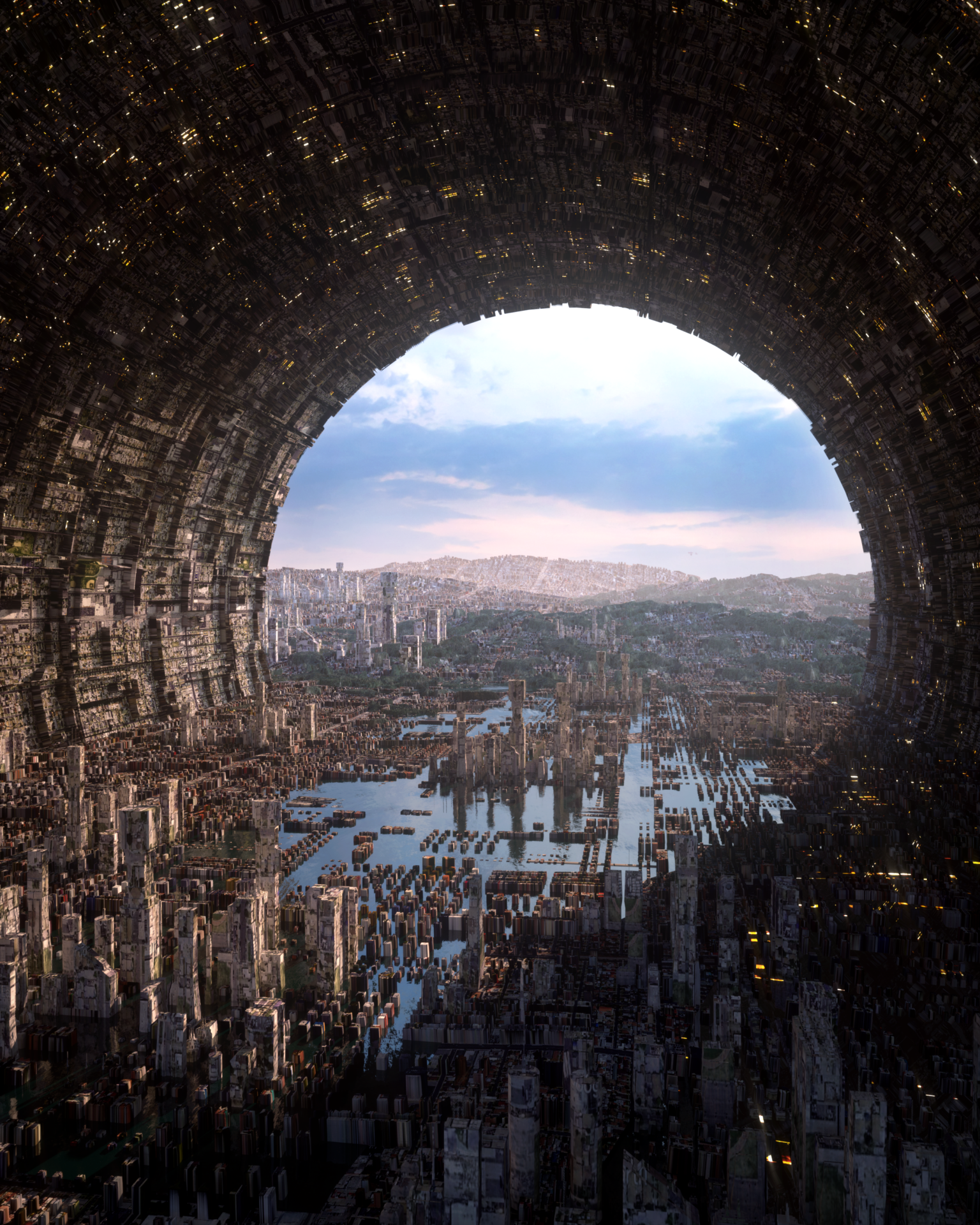
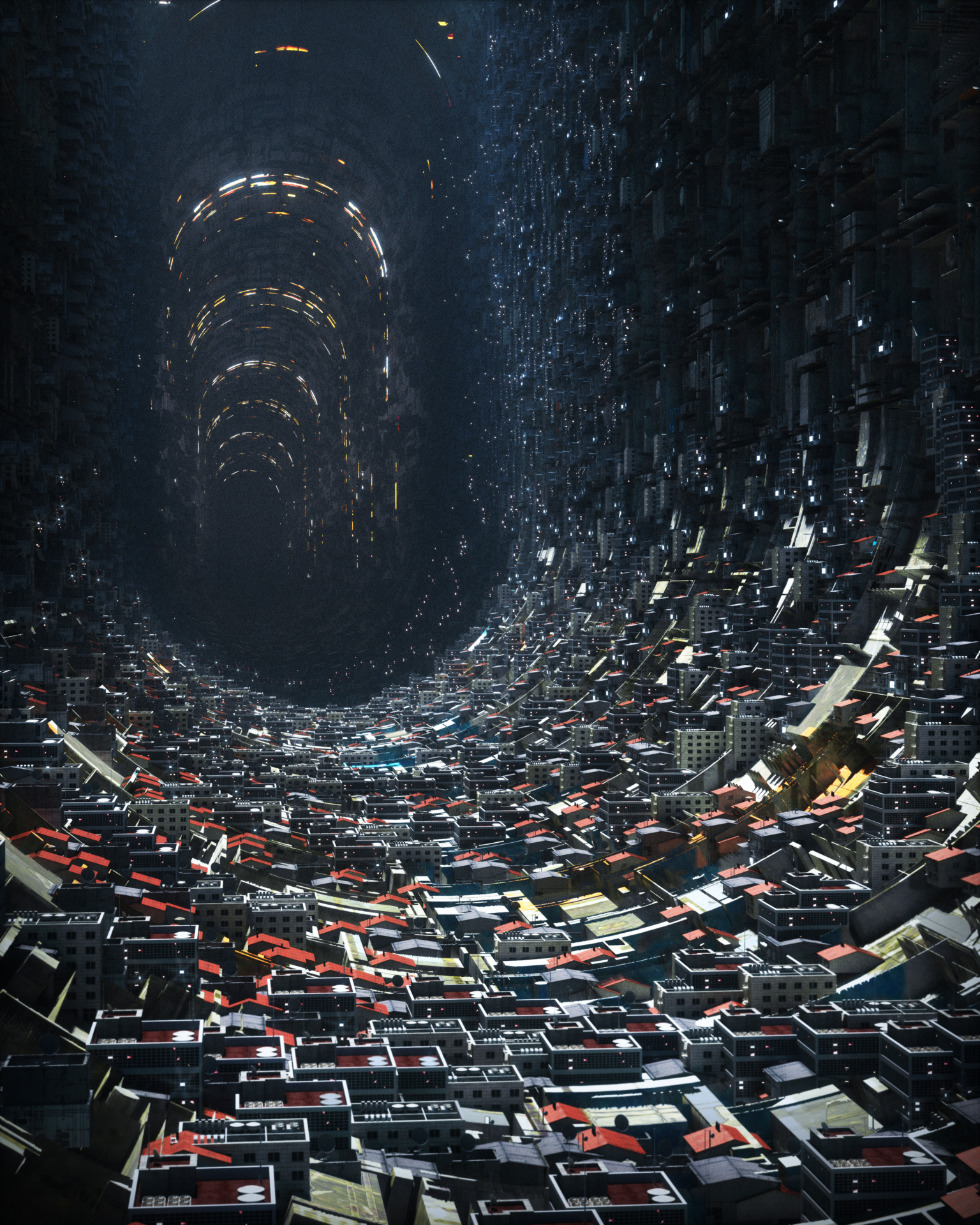
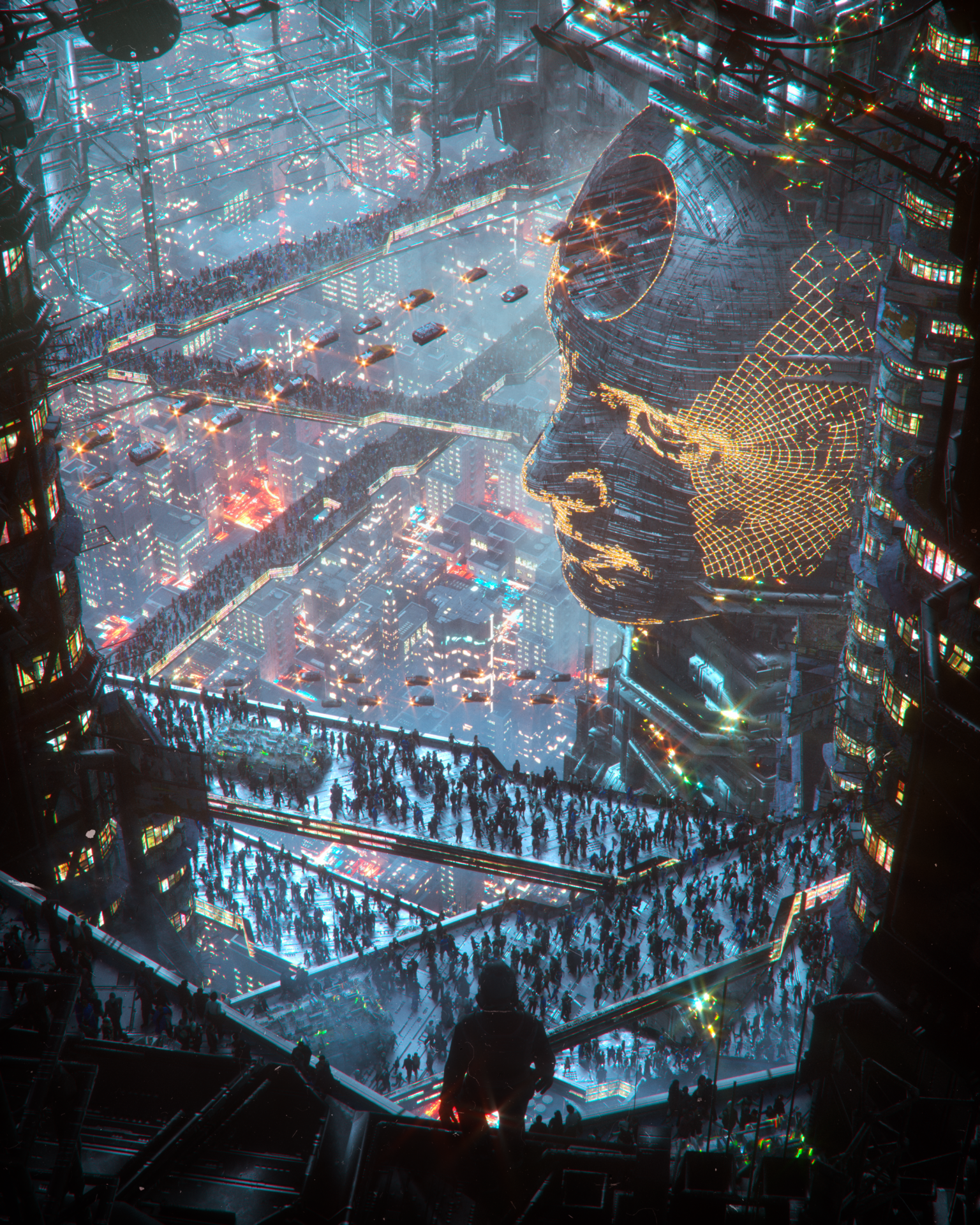
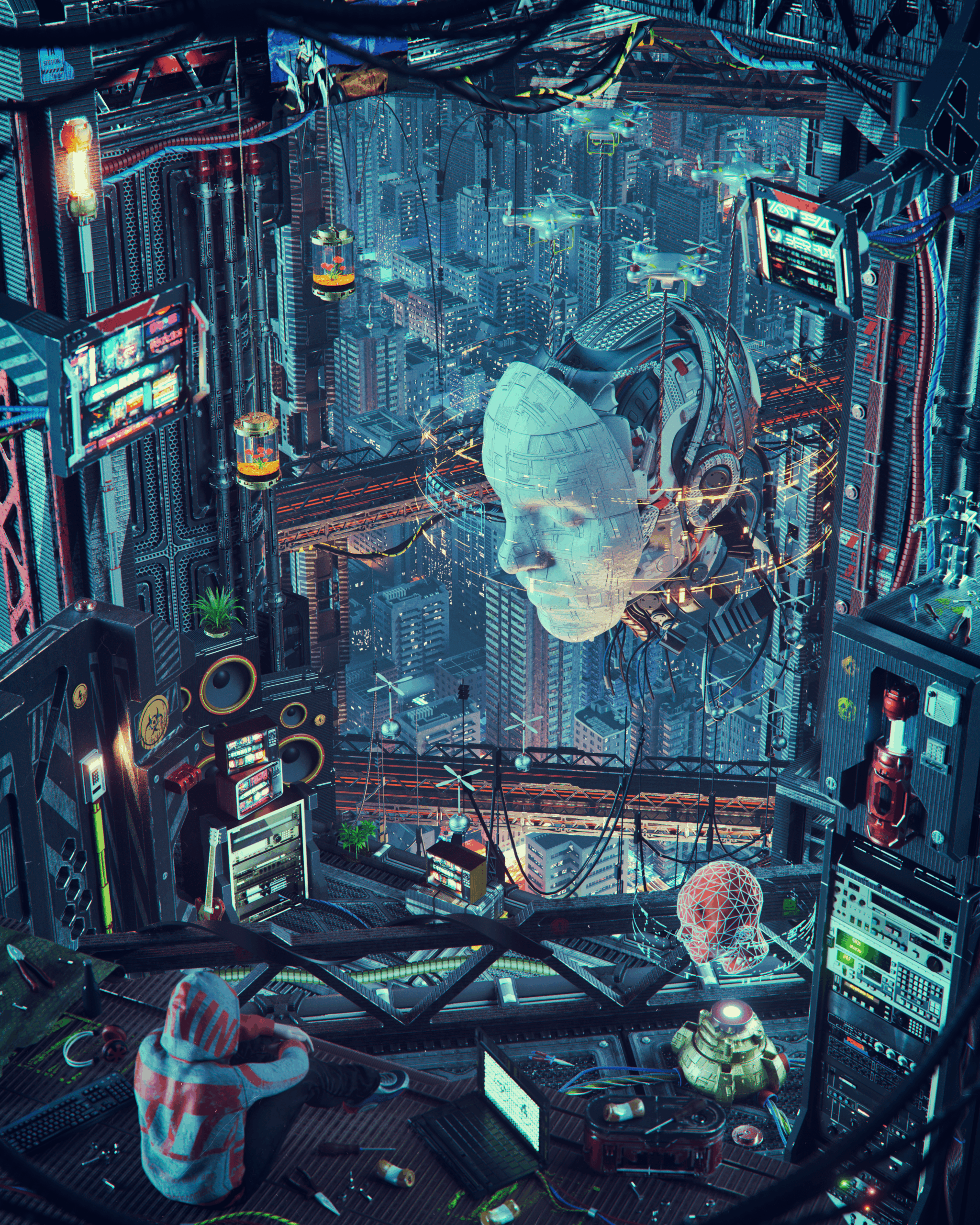
In many of my works we can see anthropomorphic forms, which in certain cases, have an actual structural function in the urban landscape. The use of these elements allow us to perceive the human aspect in a context that is apparently dominated by automated technology. Aesthetically, they strongly recall android imagery and, in some ways, could be interpreted as digital divinities. With the increasing phenomenon of digitization at the moment, I imagined future communities worshipping technology, dedicating cathedrals, public squares, and statues in its honour. My hope for the future is a pacific integration between technology and nature. Mankind must deal with the instruments that could potentially become very dangerous from many points of view. We must know how to control and use them in an ethical and responsible way.
Experimenting and production with sound is an important part of my artistic career. I have always been fascinated by the concept of sound, and the stimulation and perceptions that sound generates in the listener. As well, I was able to investigate the analogies that exist between visual art and sound design. There are common elements in both these environments: for example in the concept of saturation, and naturally, that of noise, that allowed me to experiment different subjects with a certain level of understanding. I produced ‘drum n’bass’ tracks for several years, published by international labels, also collaborating with other producers and performing in different European clubs. This category has always fascinated me because of its sound complexity. I can still remember the first time I heard the Dutch trio, Noisia; I was literally blown away by so much attention to detail in an electronic musical composition; it was a sound projected into the future: powerful, dystopian. So I decided to travel along that route and dedicate a large part of my time searching for a complex detailed sound.
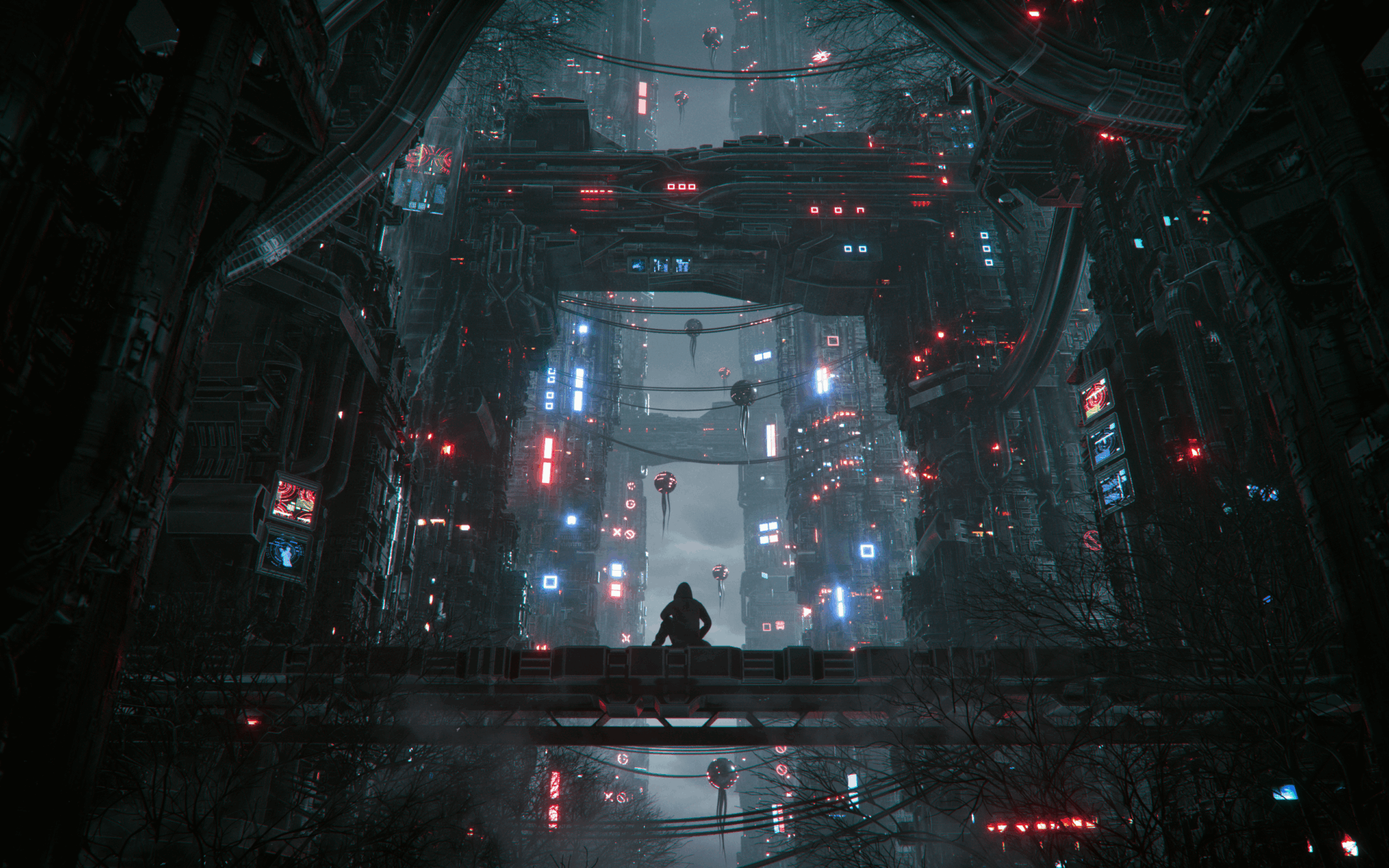
Irpinia, the place where I live and work, has certainly influenced my artistic vision. Living in close contact with nature, in a place that has undergone strong depopulation in recent years, in favour of a transfer to large urban centres, helped me reflect and become far more aware of some of the subjects I like to create. However, I feel the opposite as far as Naples is concerned. It is a city where I have spent a lot of time for years and it fascinates me for its urban complexity and chaos. It is stimulating to observe the contrast between the – emptiness – of the sea and the urban area saturated with buildings. Antiquity and modernity coexist in a setting that can sometimes seem surreal. There is no doubt this fusion has provided feedback for some of my works.
The crux of my creative process is based on the need to capture visions of a future where technological and human coexistence is taken to the extreme. The rapidity with which the technological world is evolving is exponential. Already back in the early 20th century, the Futurists portrayed this concept, when cities began to change as a result of industrialisation. During that period, the architect, Sant’Elia, created his famous – Power Station – series, a work that still influences the aesthetics of cyberpunk and sci-fi architecture today.
At that time, just as Sant’Elia was influenced by the technological context, and was able to hypothesise on visions of the future of urban areas, today we theorise on the same subjects, but in a far more complex and frenetic environment. Personally I do not spend much time wondering about developing certain topics; for me it is simply a process that comes naturally using the instruments and ideas that we artists have available today.
There is no doubt that crypto art made a big difference to my career and that of many other artists. Until quite recently, digital art was not considered on the same level as traditional art. Thanks to this phenomenon, digital works have started to assume greater value, and not only in monetary terms. The crypto art movement has focussed attention on many talented artists that were often ignored simply because they used digital instruments to create their work. Digital art tokenization has contributed towards accepting the computer as an instrument of artistic expression.