


The official White House social media account – now almost indistinguishable from any profile run by trolls and shitposters – decided to celebrate the first six months of the Trump administration in its own way: by publishing a tacky AI-generated illustration showing the 47th president surrounded by flying dollar bills, eagles, and fireworks.
The accompanying text reads: “We’re moving forward. Full throttle. The victories will continue. The expulsions will continue. The memes will continue.” Then comes the final promise, in all caps: “THE GOLDEN AGE WILL CONTINUE.”
In another post, the most important measures and executive orders issued so far are listed. Beyond their quality, the sheer quantity is impressive; and that’s probably why the past six months have felt like six years.
Trump’s return has pushed to the extreme the concept of “flooding the zone with shit,” devised by Steve Bannon, former chief strategist during the first term and one of the main ideologues of the MAGA base, named after Trump’s slogan “Make America Great Again.”
In essence, as Bannon explained in an interview a few years ago, the media and the opposition must be “short-circuited” by bombarding them with fake news, half-truths, provocations, slogans, and conspiracy theories. The speed at which this is done is crucial: one must always go full throttle, never letting opponents catch their breath.
For some, however, Trump still isn’t doing enough. He started off well, sure, but now he’s slowing down – and slowing down too much. To start running again, there’s only one solution: a good old-fashioned coup d’ – tat to put an end to the “failed democratic experiment of the last two centuries.”
This was seriously proposed in his newsletter by 52-year-old Curtis Yarvin, one of the leading theorists of the neoreactionary current of the American right and of the so-called “dark enlightenment,” a libertarian and anti-democratic philosophical movement described by journalist Jessica Klein as “an alt-right that has read Nietzsche and H.P. Lovecraft.”
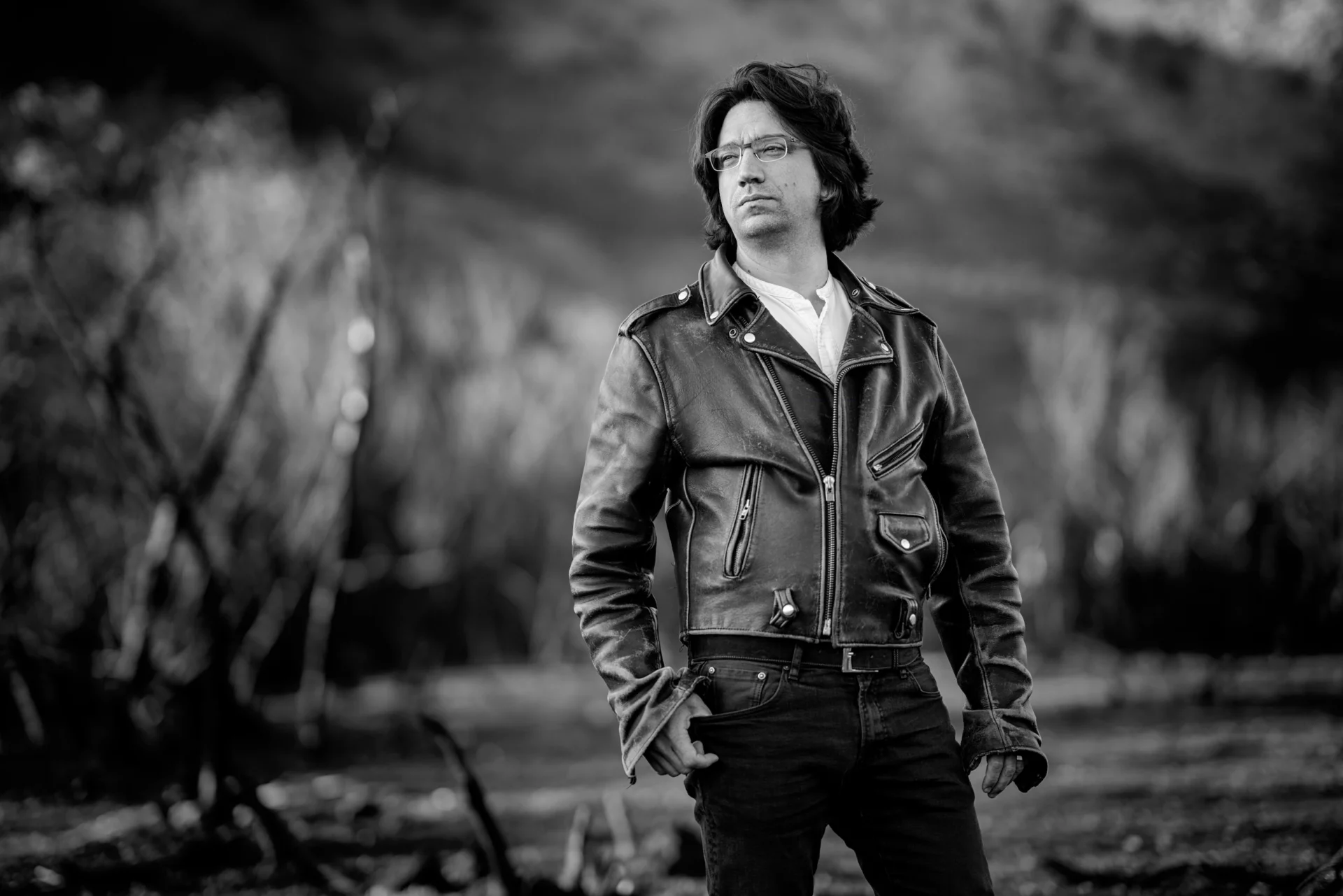
Yarvin, who long wrote under the pseudonym Mencius Moldbug, does not envision an old-school dictatorship: no colonels with dark glasses, nor caudillos in flashy uniforms or tracksuits. His authoritarian model, as historian Joshua Tait highlighted in the essay Key Thinkers of the Radical Right, is the corporation.
The state, in his view, should be completely “privatized” to maximize the profits of “shareholders” – magnates and techno-oligarchs – who would choose their “CEO-monarch.”
One of the key steps to achieving this sort of “corporate monarchy” is dismantling the federal bureaucratic apparatus. In a 2012 post, Yarvin coined the acronym RAGE, Retire All Government Employees, which literally means “fire all government employees” and replace them with people loyal to the “delegated monarch.”
Far from being confined to his blog, the RAGE proposal was cited in 2021 by then-Senate candidate JD Vance and was partially implemented by Elon Musk with his Department of Government Efficiency (DOGE).
In short, Yarvin exerts a certain intellectual influence on Trumpian circles and – above all – on the reactionary current of Silicon Valley.
Having also been a software developer, the blogger speaks the same language as the tech bros and peppers his writings with computer metaphors and programming references: democracy, as he wrote in a 2022 post, is an “obsolete operating system” that must be “rebooted” and “recoded.”
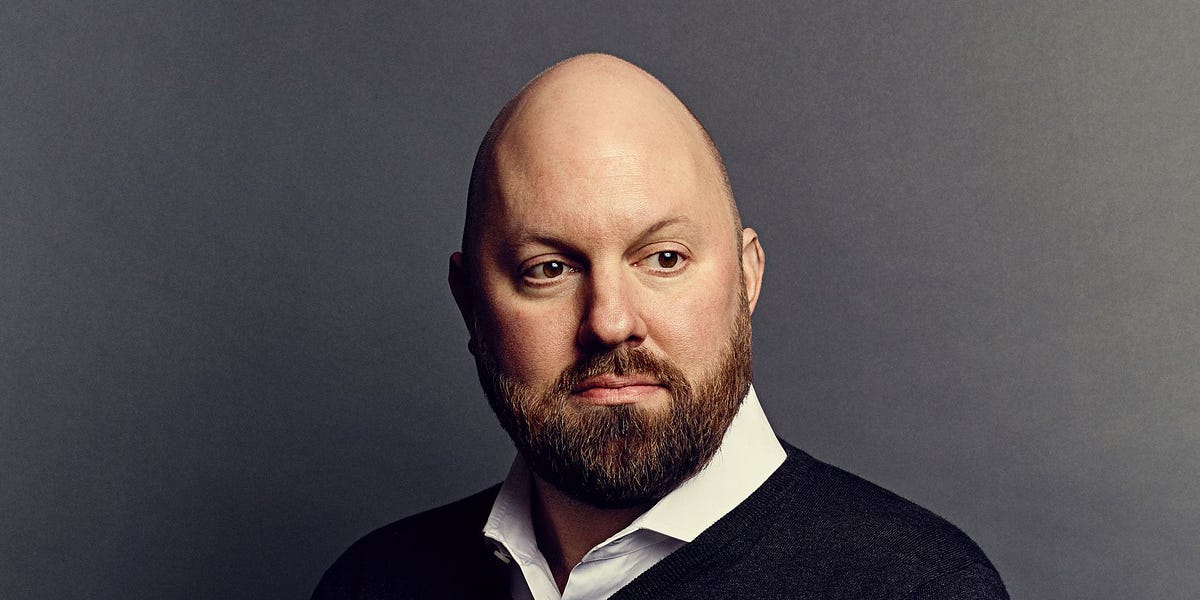
His startup, named Tlon in honor of a short story by Argentine writer Jorge Luis Borges, has also received hefty funding from venture capitalist Marc Andreessen – the Netscape co-founder best known for his egg-shaped head that makes him eerily resemble Sonic’s villain – and from South African magnate Peter Thiel.
The latter is the co-founder of PayPal (alongside Musk) and founder of the data analytics firm Palantir, as well as the gray eminence of the so-called tech-right. His worldview is very similar to Yarvin’s, with whom he maintains close ties: Thiel, too, is anti – political correctness, anti-state, and anti-democracy.
In 1995 he published, along with David Sacks (also South African and a member of the infamous PayPal Mafia), the book The Diversity Myth, which railed against inclusion programs and decolonial studies that – in his view – were a Trojan horse for bringing communist ideas into university campuses and Silicon Valley.
Several passages in the text are fiercely anti-feminist and misogynistic; at one point, it even minimizes rape. A sexual assault allegation, they write, “may mean nothing more than late regret, because a woman might – realize’ she was – raped’ the day after or even many days after [the encounter].”
Thiel is also obsessed with the apocalypse, namely the decline of the West, and believes he is the only one capable of stopping the Antichrist – who, in his eyes, takes the form of Greta Thunberg (he has said this more than once, and not metaphorically).
This perception of omnipotence mainly stems from reading a 1997 book titled The Sovereign Individual by James Dale Davidson and William Rees-Mogg. Among other things, the essay compares billionaires to “the gods of Greek mythology” and urges them to use their immense resources to “redesign governments” and “reconfigure economies.”
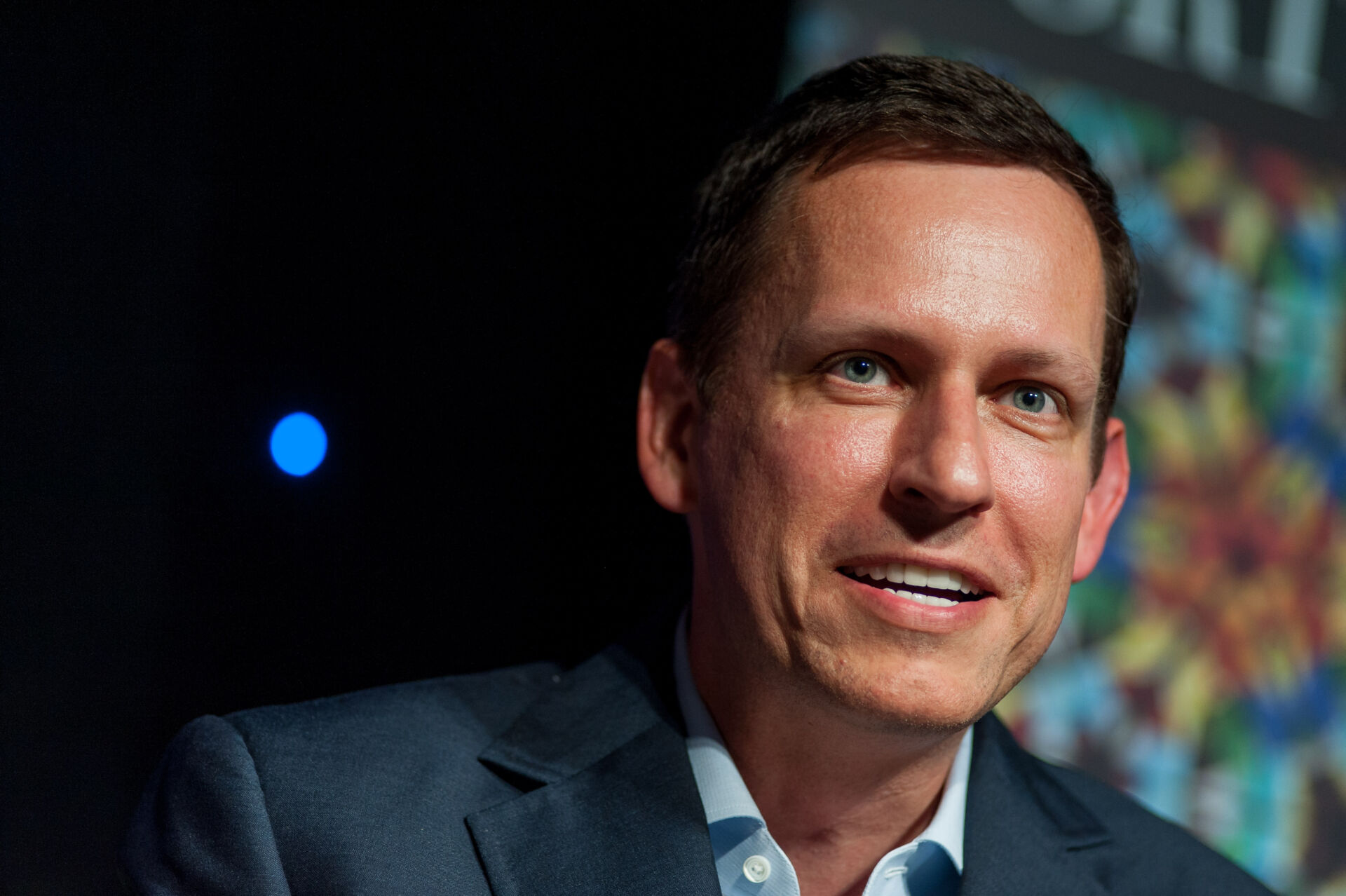
Drawing inspiration from Davidson and Rees-Mogg’s ideas, Thiel later came to reject entirely what he calls “electoral politics.” In a 2009 manifesto, he reiterated that the ultra-rich must “escape the state” – and taxes – by any means possible: through the internet, cryptocurrencies, colonizing other planets, fortified bunkers in New Zealand, or floating city-states (so-called seasteading). In the most significant passage of that text, Thiel declared his belief that “democracy and freedom are not necessarily compatible.”
Given this ideological path, it’s not surprising that in 2016 he was the first Silicon Valley magnate to support Donald Trump’s candidacy. At the time, his choice was criticized by his peers, but Thiel – who would later be disappointed by Trump’s first term and finance the political career of vice president JD Vance – had merely anticipated the times.
Indeed, in July 2024, David Sacks urged entrepreneurs to join Trump’s campaign with this exhortation on X: “Come on in, the water’s warm.” Many answered the call – including those who had previously supported Democrats, like Marc Andreessen, or those who had rarely gotten involved in politics, like Elon Musk.
As is well known, the world’s richest man fully put his X platform at Trump’s disposal and literally bought himself a place in the administration with hundreds of millions of dollars.
In the early months of the second term, amid Nazi salutes and branded chainsaws, it seemed Musk could wield as much – if not more – influence than Trump himself. He was the final boss of the broligarchs, the crown jewel of the tech-right, reactionary acceleration made flesh. And DOGE truly seemed like the embodiment of Yarvin’s ideas – the final blow to the federal machine that would lead to the longed-for reboot of the system.
But his involvement did not bear the expected fruits. On the contrary: federal agencies (at least for now) have resisted the siege of the ultrabillionaire and his team of young red-pilled software engineers; relations with members of the administration have increasingly soured, leading to physical shoving matches in White House hallways; and in the end, Musk left DOGE and began furiously quarreling with Trump.
The first round came in June: the Tesla owner had criticized Trump’s “Big, Beautiful Bill” (the budget law definitively approved by the House on July 3), calling it “madness” that would cause a recession.
During a meeting in the Oval Office, Trump snapped back, saying he would win the election even without Musk’s money. Musk immediately countered on X: “Without me Trump would have lost. Such ingratitude.”
Trump, in turn, replied on Truth Social, writing that Musk had “lost his mind” because the law cuts subsidies for electric cars, then threatened to rescind government contracts with the South African magnate’s companies. Privately, he allegedly called him “a junkie” for his high and habitual drug use, revealed by a New York Times article uncannily similar to the opening of Hunter S. Thompson’s Fear and Loathing in Las Vegas.
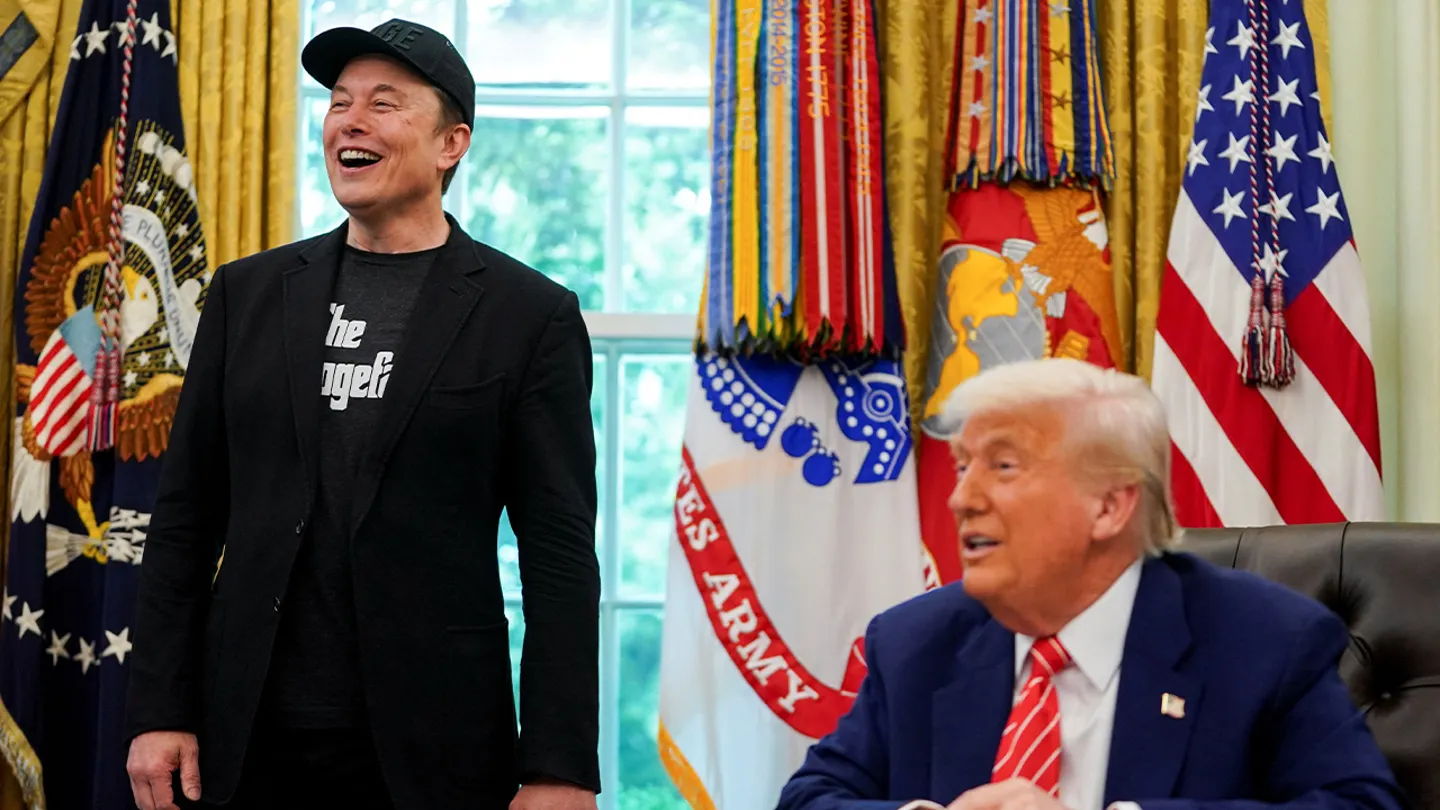
Musk responded by dropping a “big bomb”: revealing (in advance) that Trump’s name appears multiple times in the “Epstein files” – the court documents from the case of pedophile billionaire Jeffrey Epstein, who died by suicide in prison in 2019 and has since been at the center of numerous conspiracy theories fueled by Trump himself.
The feud seemed to die down after a few days, but it reignited at the beginning of July. Musk once again criticized the budget law and announced the creation – no one knows how serious or provocative – of a new political party, the America Party.
Trump hit back hard. In quick succession, he threatened to use DOGE against Musk, expel him from the United States, and strip him of subsidies and tax breaks. Without state aid, he wrote on Truth Social, “Elon would have to shut up shop and go back home to South Africa. No more rocket launches, satellites, or electric cars, and our Country would save a FORTUNE.”
Which is objectively true; and this is certainly not just about Musk. Despite the tech-right’s dream of liberation from the state, the techno-oligarchs are entirely dependent on the state and thus on political power.
This is precisely the fault line where the fiercest internal clash in the Trumpian coalition is playing out.
On one side are the MAGA populists – la Steve Bannon, who distrust the oligarchs and believe technological power must be completely subordinated to political authority, which draws its legitimacy from popular consent. On the other side are the Yarvins and Thiels, who would like to get rid of democracy and have no interest in gaining consent.
For them, it is not important that the king be Trump – he won’t last forever, unlike the Silicon Valley entrepreneurs who are trying to reverse the aging process. Rather, it is important to establish a form of hyper-modern monarchy that serves their interests.
But Yarvin and the tech-right’s desires are extremely risky, especially for themselves. After all, an autocrat – or a king – doesn’t spare anyone: least of all allies who don’t bow deeply enough.
In some ways, the current U.S. situation resembles the early phase of Vladimir Putin’s regime consolidation, who, after all, is one of Trump’s models.
The rise of the Russian president was actively supported by the new oligarchs who had become wealthy by stripping Soviet state-owned companies. What they believed to be their political creature – and therefore controllable at will – turned against them mercilessly.
Journalist Greg Rosalsky recalled that in the early 2000s, Putin had offered a very clear deal: if you bow to my authority, you can keep your villas, your private jets, and your multibillion-dollar companies. If you don’t, expect Siberian prisons, exile, suspicious illnesses, and strange falls from windows – which indeed happened in various cases.
Now: it’s unlikely that Elon Musk or Mark Zuckerberg will meet the same fate as a Mikhail Khodorkovsky, say, or suddenly fall from a skyscraper. At the same time, it’s no longer so unlikely that they will be taken out of the picture if they cross certain red lines.
If that happens, we’ll know which faction is winning.
LEONARDO BIANCHI
Leonardo Bianchi is a journalist and writer. He mainly collaborates with Internazionale, Valigia Blu, and il Manifesto. He is the author of the newsletter Complotti!, which focuses on conspiracy theories and disinformation. His latest book is The First Drops of the Storm: Myths, Weapons, and Terror of the Global Far Right.