



Representation no longer exists; theres only action.
Gilles Deleuze, from Intellectuals and Power,
a conversation between Michel Foucault and Gilles Deleuze
There is a language that isnt taught, corrected, orleast of allasks for our permission. A language that flows elsewhere, parallel yet not peripheral, generated in the streams of chats, voice notes, Discord servers, livestreams, reels, shaping an entire syntax. Its a language that boots up; its verbs are not names of things in the world but direct gestures, operational segments, shortcuts. This isnt slang, a generational dialect, or a code for insidersits something else entirely: a mutable source code, a kind of linguistic interface that continuously recompiles itself. We are not facing a derivative tongue but a new form of language itself: functional, rhizomatic, performative, born of use. In this landscape, grammar is no longer a normative structure but a dynamic topology. The lexicon is a repertoire on high alert, ready to evolve. Meaning is elastic, slippery, generative. With every new context, a verb can shift shape and function.
Droppare (from the English to dropto let fall, to drip) has no fixed meaning: it can mean to publish, to share, to release a file, to bail on an event, to let go of something, someone, some content, or a responsibility. Its true meaning does not exist in the abstract but only in action, in the exact moment it is spoken or typed. In this sense, digital language is neither impoverished nor chaotic. It is precise in its environment, calibrated for speed, visibility, and propagation. It is a language made to circulate, not to stand still.

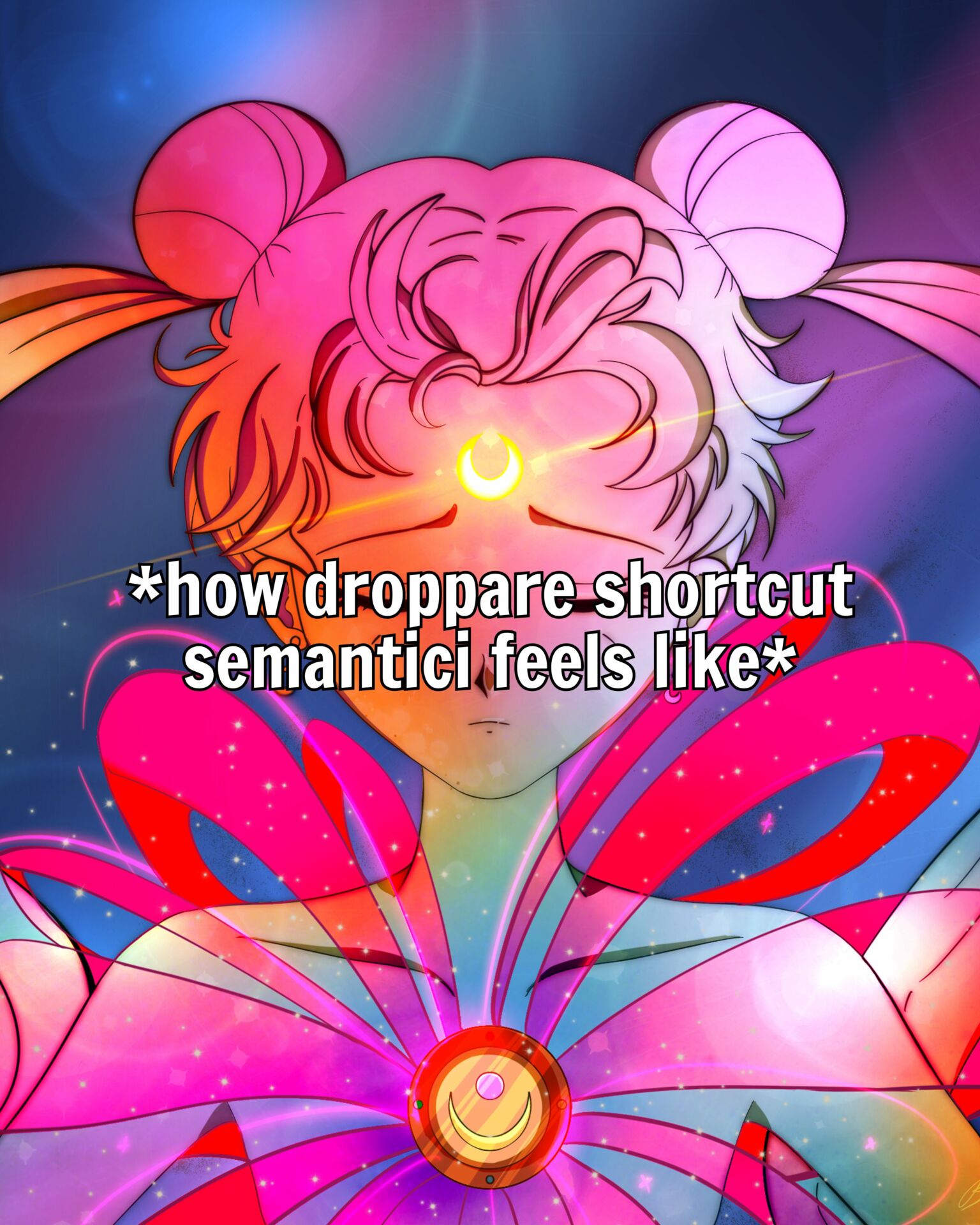
In the 1980s, Vilém Flusser reflected on cultural transformation, observing how civilisation was shifting from one rooted in alphabetic, linear, and logical-grammatical language to a new dimension dominated by codesmore interactive, symbolic, and syncretic. In this context, language loses its purely descriptive role and becomes an operational tool; words become levers of action, commands, semantic shortcutscodes capable of generating immediate responses within complex communication systems.
Every new verb is a fragment of codenot in a narrow computational sense, but in the deeper sense of a language that executes effects in the world. Pushare (from to push) is not simply to push in the classical sense; its to move something forwardin a game, a relationship, a group dynamic. Skillare (from skill) is not to be skilled but to demonstrate efficacy in a precise, experiential context. Blastare (from to blast) is not just to ridicule in a moral sense but to perform a public act of symbolic dominance. These verbs work; they actand thats why they persist. In this scenario, speaking is no longer an expressive act but a strategic move, a way of navigating a collective surface.
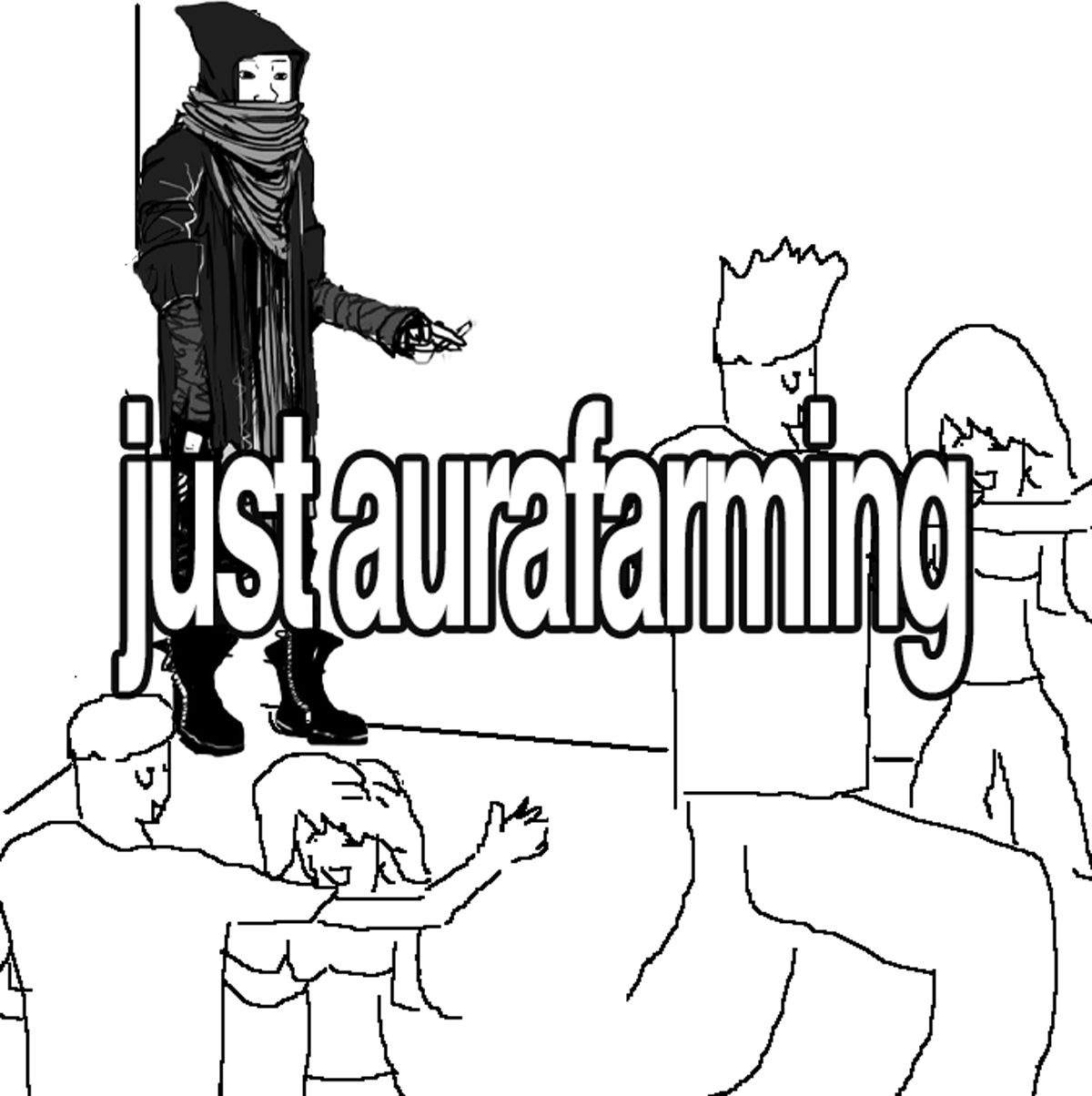
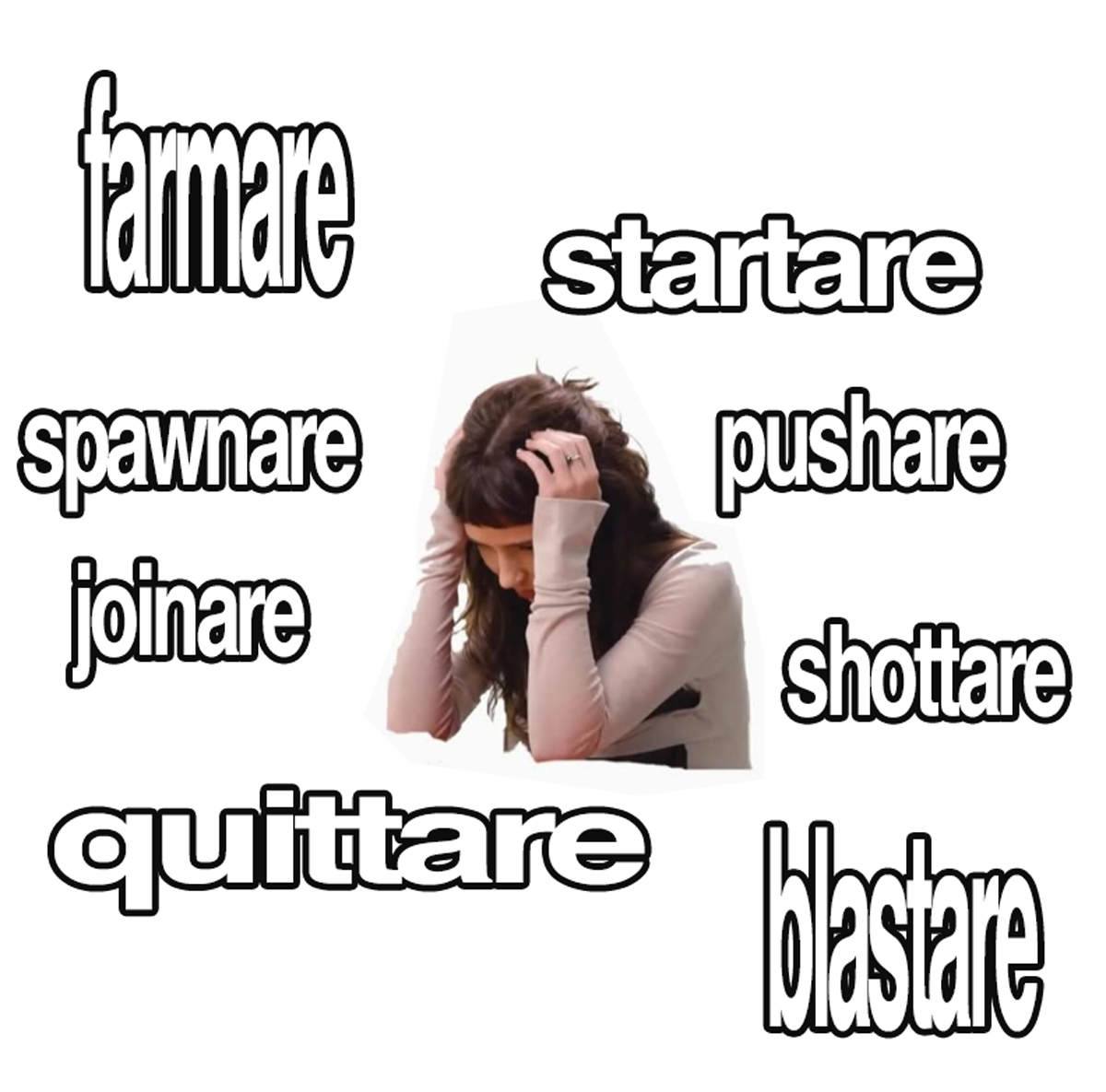
It is in the interactive space of online gaming that many of these words are coined and tested. Farmare, clutchare, pushare, grindare, buildare are verbs born in environments where language is immediate, adaptive, situated. In multiplayer games, words arent meant to narrate or describe but to do. Vocabulary becomes tactical, performative, stripped to essentials, constantly updated based on experience and effectiveness. It is a language for human interfaces that must act in syncnot an expressive code, but an operational one. Alexander Galloway, in Gaming: Essays on Algorithmic Culture, describes videogames precisely as action, not representation. Playing is executing commands, interacting with a system that responds in real time. In this context, language reconfigures itself: it becomes an extension of gameplay. Words are not signs to interpret but events to trigger. Each term is an input; every sentence, a strategy. From here emerges the idea of language as a modular tool, a system of semantic shortcuts designed to modify the game stateand, by extension, shared reality.
[
] where sentences branch and scatter, or collide and coexist, and letters, typography itself begins to dance as the crusade rages on. Here are models of nomadic and rhizomatic writing; writing marries a war machine and lines of flight, abandoning strata, segmentarity, sedentariness, and the apparatus of the State.
A Thousand Plateaus: Capitalism and Schizophrenia, Gilles Deleuze and Félix Guattari
In his fluid, anti-hierarchical thought, Gilles Deleuze saw language as a field of forces, not a system of signs. In A Thousand Plateaus, he spoke not of a fixed structure but of a rhizome: a decentralised, non-hierarchical network where every element can connect to every other. Speaking, then, is not the articulation of pre-existing meanings but the opening of paths, the generation of shifts and deviations. Each word can deterritorialiselose its anchoring and assume new functions.
Young people who today shottano, cringiano, flexano arent merely mangling something; they are doing what Deleuze called tracing lines of flight, linguistic movements that liberate meaning from rigidity, reinventing it through the fluid, situated, instantaneous connections of the present. Error, in fact, is an integral part of the process. Initially, every new word is a glitch that doesnt work by the rules, that sounds wrongbut its precisely this deviation that creates space for meaning.
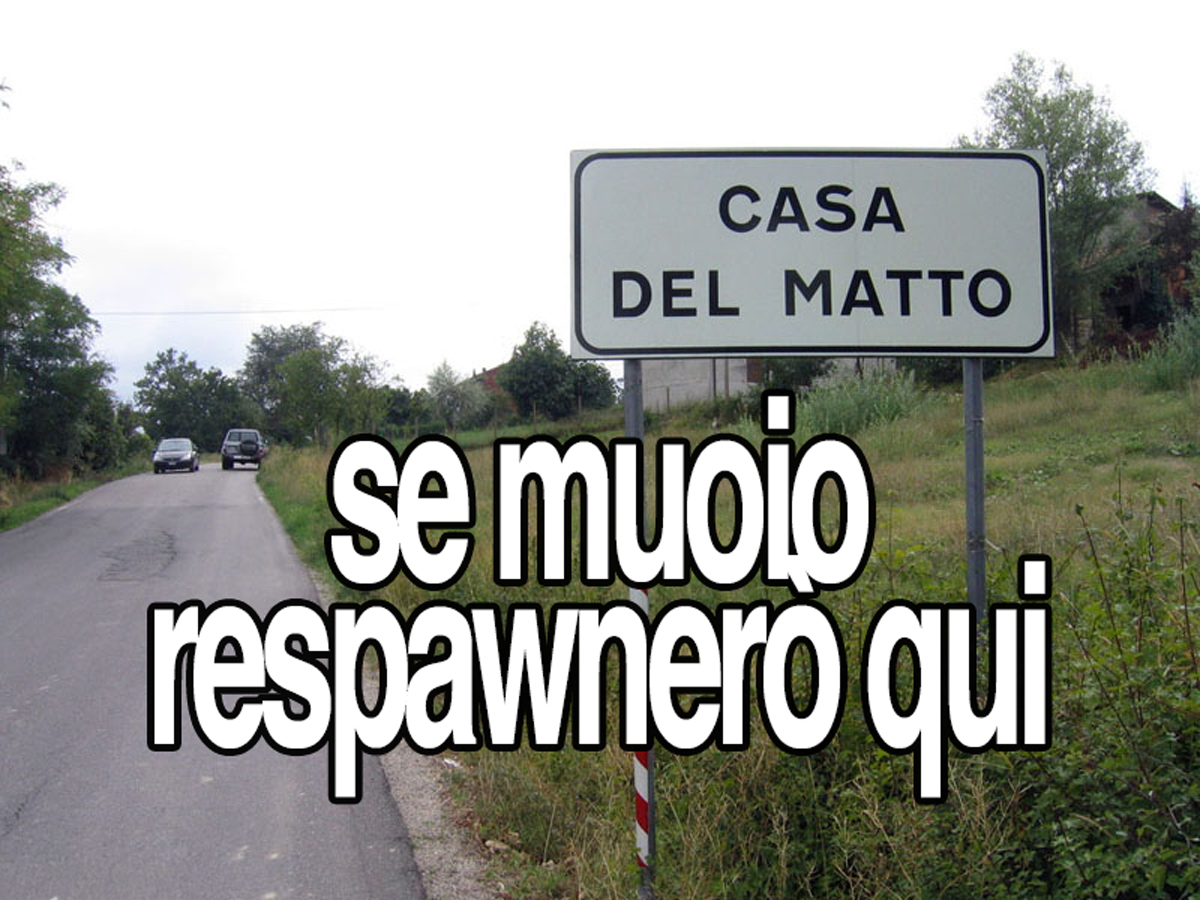
In this new rhizomatic grammar, meaning is no longer a property of the word but an effect of the network. Every term means in relation to others, in relation to context, platform, reference culture. This entails a radical transformation in how we conceive language. A verb is no longer a form to conjugate but a function to activate. Every new word is tested, modified, reinserted into the circuit. There is no longer a correct usage in the normative sense, only a series of locally effective ones. Effectiveness replaces grammar. Impact replaces coherence. Intuition replaces definition.
Yet this is not chaos. There is a fluid, emergent orderlike that of flocks, swarms, clouds. A situated, collective semantics. No longer a language to be preserved but one in constant emergence, living in feeds, servers, captions, calls, emotes. A language to be caught on the fly, mimicked, reinterpreted, farmed. A language that doesnt accumulate to know more, but to do better, faster, more effectively. In this landscape, the origin of a word matters less than what it doesand whether it works. Genealogy yields to performativity, as language becomes a field of operative possibilities, a form of social software, a strategy.
Will many of these words disappear? Of coursesome are already obsolete the moment theyre printed here, right now. But permanence isnt the point. The point is that contemporary language behaves like an ecosystem in perpetual beta. It self-updates, corrects itself mid-run, reinvents itself daily. There is no definitive version. There is only the current one: unstable, rhizomatic, alive.
Speaking today is like navigating a liquid language, constantly reassembled. There are no reliable maps, only provisional routes. And perhaps it is here that a new kind of authenticity liesnot in following rules, but in the ability to invent them in real time. To drop language, then, is a symbolic act: to let go of a certain closed, linear, transparent idea of language, and embrace anotherhybrid, dynamic, nasty, and powerfully unstable.
We say rawdoggare and youre like, what the fuck are they saying?…
Bruv, this is too much
Yeah, but whos the cop of too much?
from an episode of Epico! Podcast, live-streamed on Twitch from Dario Moccias channel
Born in 1992, Martina Maccianti writes to decipher the present and the future. Between language, desire and utopias, he explores new visions of the world, seeking alternative and possible spaces of existence. In 2022, he founded a project of thought and dissemination called Fucina.


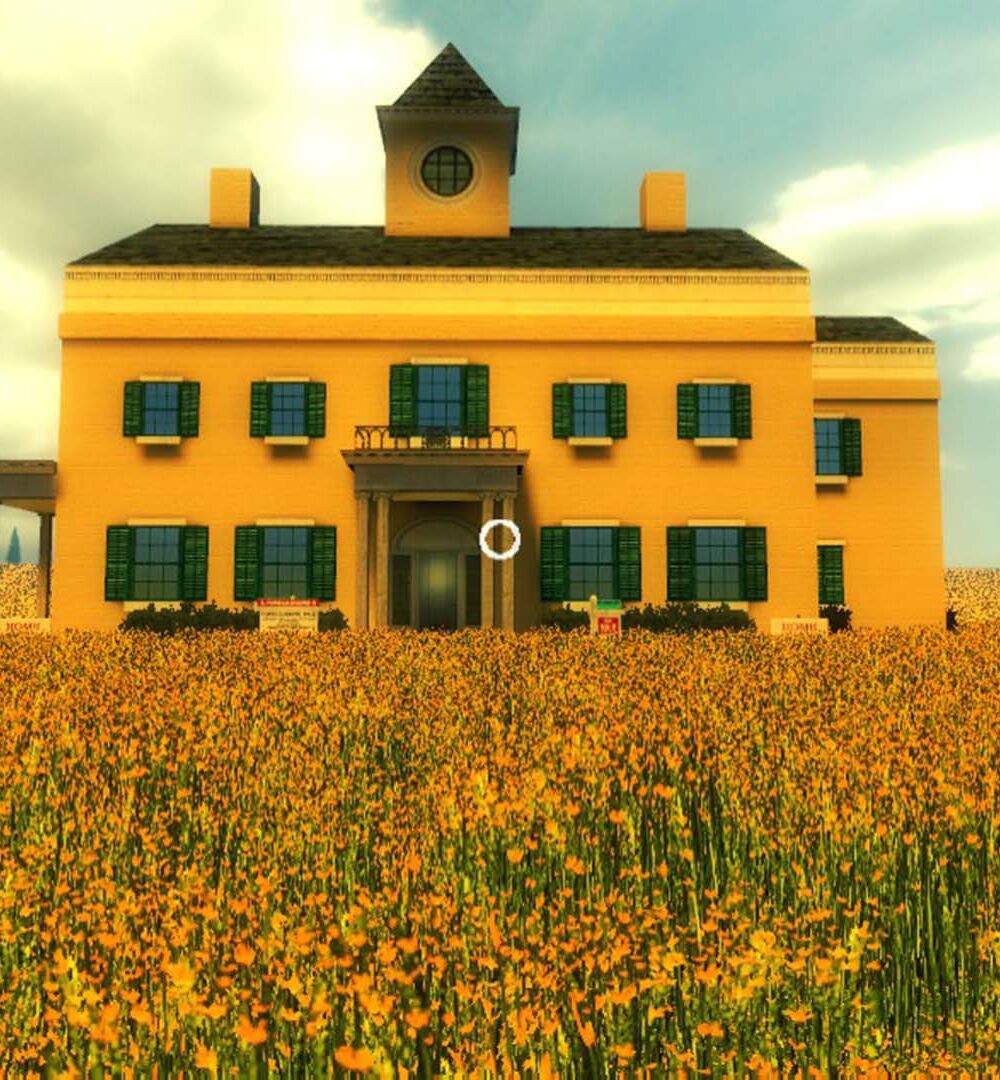
![The Topologies of Zelda Triforce (Patrick LeMieux, Stephanie Boluk, 2018) [image from itchio]](https://www.the-bunker.it/wp-content/uploads/2025/11/The-Topologies-of-Zelda-Triforce-Patrick-LeMieux-Stephanie-Boluk-2018-image-from-itchio-thegem-product-justified-square-double-page-l.jpg)





© COPYRIGHT THE BUNKER 2025. ALL RIGHTS RESERVED.
THE BUNKER MAGAZINE is a registered publisher at the Florence Court Register of Press, n.6214 / 03.03.2025