


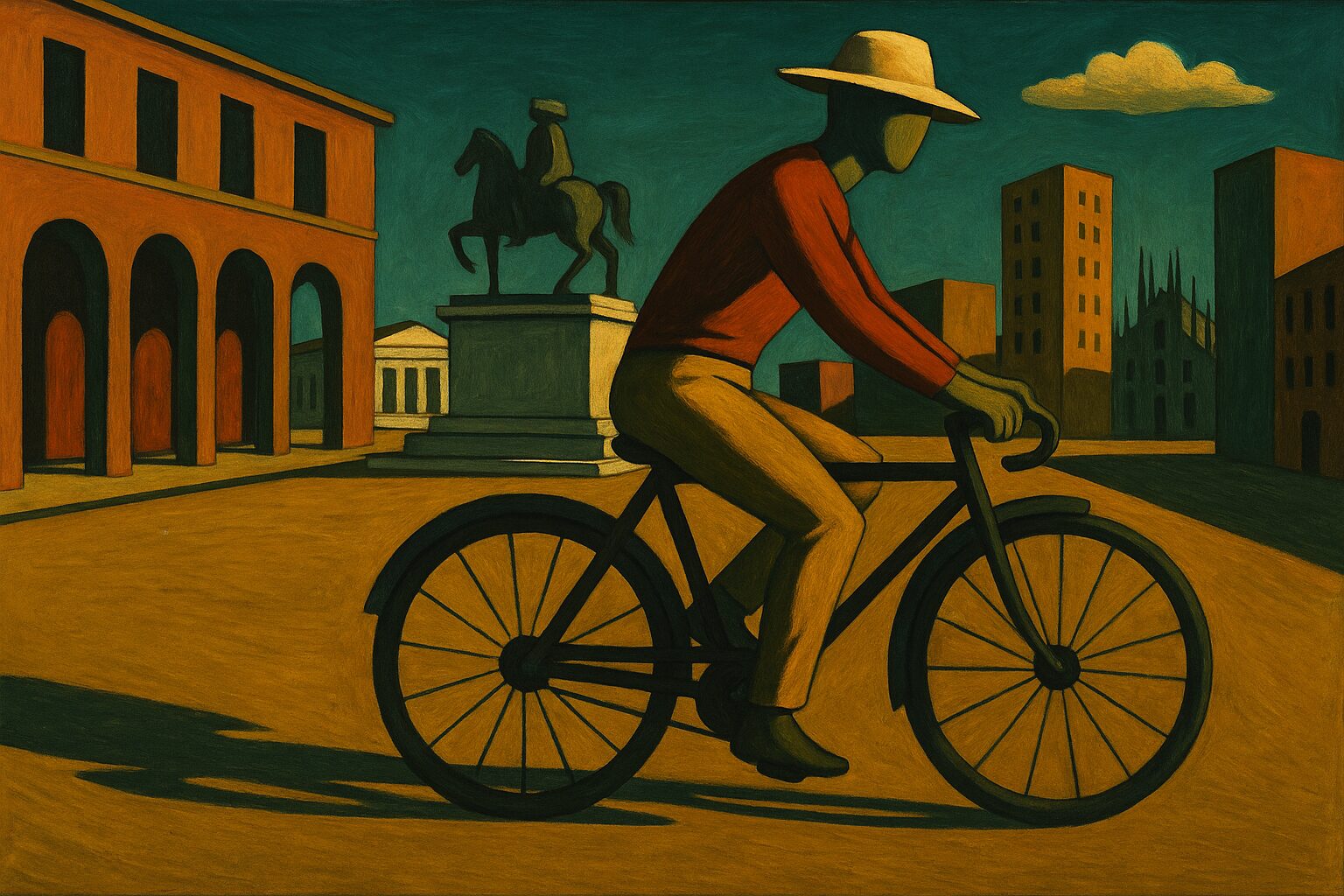
That branch of Lake Como, if followed in a straight line southwards with a deviation of twenty-nine degrees west from the north-south axis, leads to a large and populous city, all canals and palazzi, set right in the heart of that great toxic waste dump we call the Po Valley. Its Latin name already says it all: Mediolanum, formed from the words medio and (p)lanum, meaning in the middle of the plain. And in fact, as one would reasonably expect from a city on a plain, it is flat.
In the popular imagination, Milan has always been a grey city. Grey with smog, asphalt, and rain. But to tell the truth, it doesnt actually rain that much. The average is 86 days a yearalmost half of Amsterdams 185 days, a city no one would hesitate to call rainy. Readers intolerant of bad weather may therefore feel reassured: the unflattering label of grey city has more to do with smog than rain.
It is not unusual, in fact, for Milanese people opening the iPhone weather app to see their city glow in exuberant shades of violet. Expand the map, and the entire Po Valley sparkles like an amethyst lake set in a digital camo pattern of burgundy and red blotches. These are the colors the app assigns to the highest levels of air pollution, a graphic representation of what the European Environment Agency certifies in its annual reports (latest update 2023): the Po Valley is the most polluted area in Western Europe.
The reasons for this record are no mystery: massive industrialization, intensive agriculture, high population density, and poor ventilation due to the Alpine arc enclosing the basin. In Milan, however, pollution mainly comes from urban traffic, largely private. According to ARPA Lombardia, cars and motorcycles make up the bulk of vehicles in circulation, and although freight and passenger transport vehicles have a higher impact per unit, it is the sheer number of private cars that makes the difference.
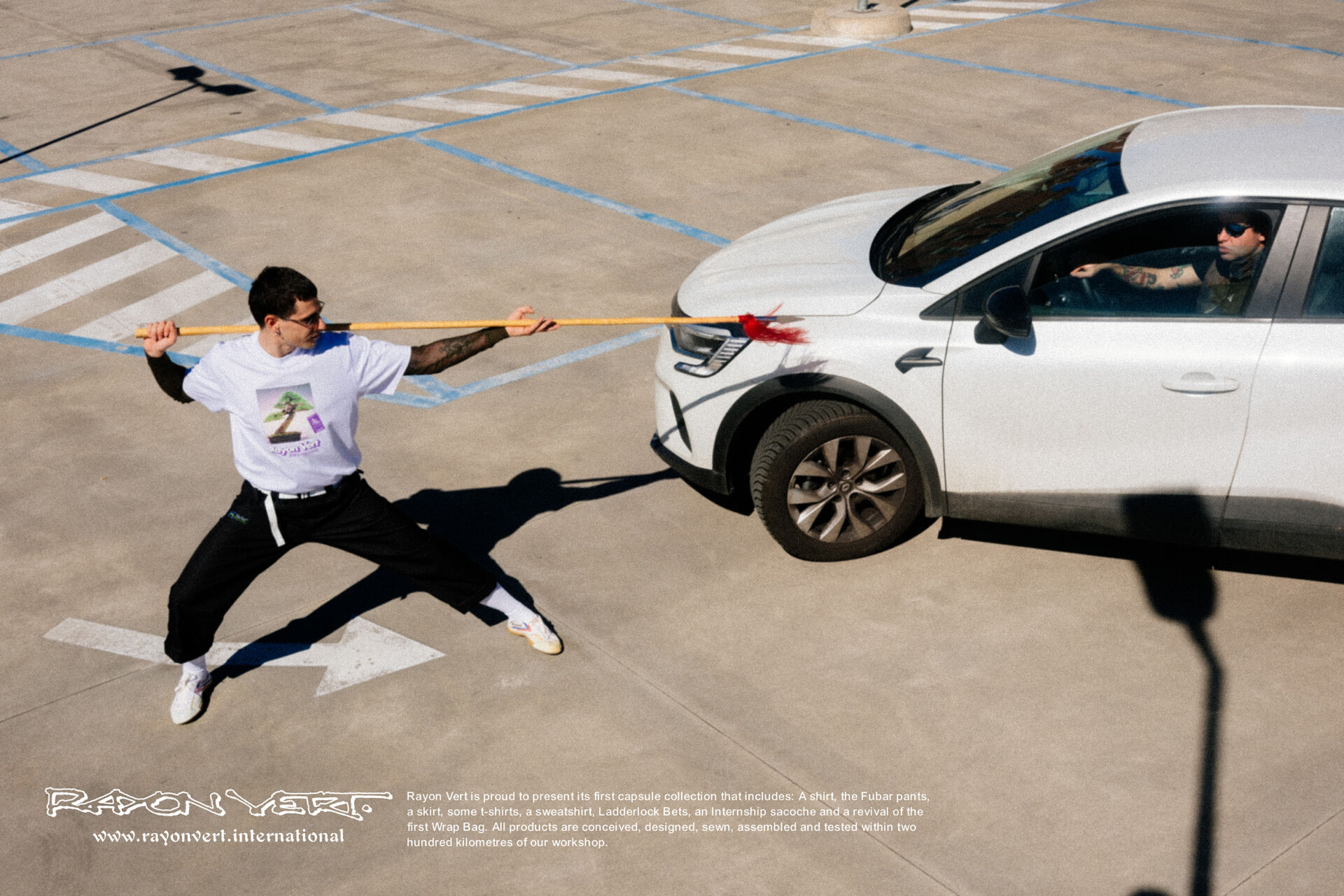
Its true that Milan doesnt have Amsterdams endless cold, rainy daysbut then again, it doesnt have Amsterdams northern-European-style welfare system investing in public transport either. Even so, one must acknowledge that Amsterdam has elevated the saying Theres no such thing as bad weather, only bad clothing into an ideological cornerstone for its inhabitants.
If the Dutch capital sends daily battalions of office workers stoically pedaling under the rain, Milancombining a generally mild climate with a keen sensitivity to the cut of clothingseems to reject the very idea of functional attire as something vaguely offensive. Suffice it to say that no guest has ever been seen dismounting from a bike in front of a venue during the notoriously unforgiving (and not only meteorologically) February fashion week. Arrivals are more likely to materialize from chauffeured sedans, passengers stepping out with a calculated stride and sunglasses worn in defiant indifference to the leaden skies that (yes, at that time of year) hang over the city.
If both the great deployment of chauffeur fleets and the out-of-context use of sunglasses can be explainedat least during fashion weekunder the broad conceptual umbrella of having more charisma and symptomatic mystery (quote), what no longer convinces is the stubborn preference for cars in daily commuting.
The problem of car dependency extends well beyond social events. Driving even in central areas has become an entrenched habit, not just out of laziness but because the citys urban planning was designed for engines: the right to occupy the road has historically been reserved for combustion vehicles, and the new traffic code (end of 2024) certainly hasnt helped. On the contrary, it has made coexistence with cyclists and pedestrians more difficult, leading even to grotesque episodessuch as when certain Forza Italia politicians took to hammering at the freshly laid curb of the new bike lane on Viale Monza.
These dynamics are nothing new. As far back as 1973, Ivan Illich in his essay Energie et équité (translated into Italian as Elogio della bicicletta) denounced the excessive use of energy in transport. His thesis was simple: any vehicle exceeding 25 km/h produces social inequality and destructive environmental effects. The private car is the perfect example: it forces each person to travel in isolation, monopolizes urban space for parking, and demands enormous public investments in roads and control infrastructures. The result? A city dominated by technocracy and an energy-guzzling system disguised as progress.
In this context, the bicycle remains the only truly efficient, economical, and anarchic means of transport, still relatively immune to new regulations. Yet in Milan, a flat and compact city, its use is hampered by the scarcity of safe lanes. Since 2021, Cambioan ambitious inter-municipal cycling plan financed by the PNRRhas been underway, promising 750 km of new routes by 2035. Whether they will be painted lanes or protected paths remains unclear, but even the first attempts have already drawn the wrath of Lega and Fratelli dItalia, eager to defend the sanctity of parking lots with sit-ins and hammers.
The debate is tedious but open: who in Milan really drives to go shopping? Viale Monza, with its predominance of clothing stores, is a low-cost offshoot of Corso Buenos Aires, the true shopping street dotted with fast-fashion chain outlets. These are the kinds of shops more attractive to tourists than residents, and one might add that multinational clothing giants with annual revenues exceeding 30 billion hardly count among the small local merchants deserving ardent Po Valley protection.
Meanwhile, Mayor Beppe Sala has set himself a clear goal: reduce the number of cars per inhabitant from 49 to 40 per hundred by 2033, bringing Milan closer to the European average (3638). An encouraging sign, one could say, as was also the 2020 resolution excluding automotive brands not aligned with environmental sustainability policies from public sponsorships. So, no more car ads posted around the city? Not quite! The vague wording was deliberately designed to allow illustrious exceptions for worthy brandssee, for instance, the monumental Audi billboard that still looms over the façade of the Pirellino.
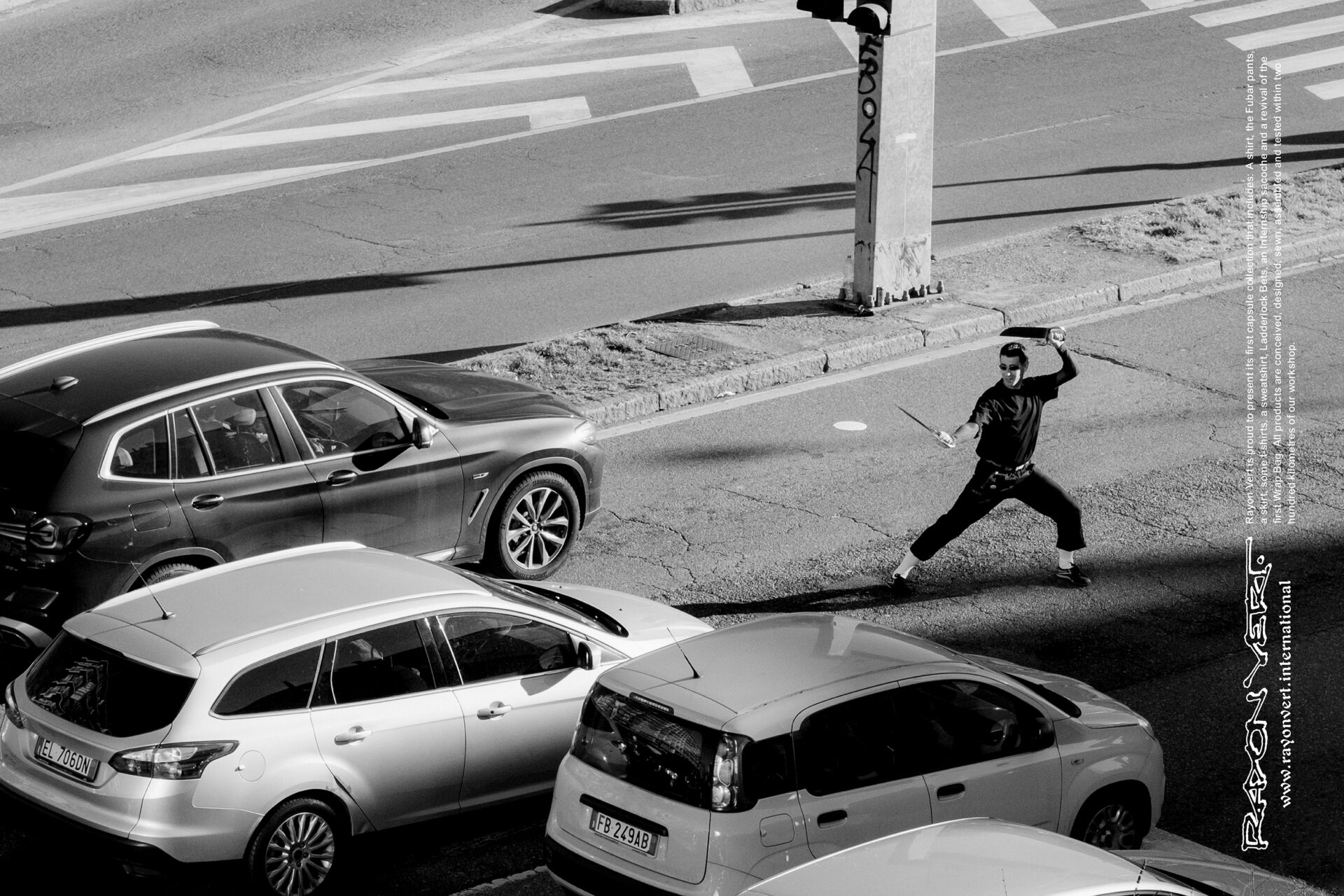
As Franco La Cecla notes in the afterword to Elogio della bicicletta, cars should have a warning label like unhealthy foods. Indeed, while advertising keeps selling us SUVs as status symbols, the reality is far less sexy: commercials filmed on deserted Alpine roads glistening with rain clash with the truth of eight oclock in the morning on Via Padova, where the same vehicle looks as clumsy and out of place as a watermelon at Christmas.
Alternatively, Milan could look to those who already use the bicycle as a work tool. Bike messengers, active since 2008, have proven that faster deliveries, zero emissions, and less traffic are no utopia. In many European cities, cargo bikes are now an integral part of urban logistics: no time wasted looking for parking, fewer fines, greater agility in pedestrian areas. Andnot an irrelevant detailan image of efficiency that also carries beauty, with those toned, elongated muscles flexing beneath tight clothing. Proof that in some cases the marriage of performance and appearance is not only possible but works surprisingly well.
Bike couriers could offer more than charm: they have a valuable set of insights to share with urban planners and architects about reorganizing city space around human movement. In a hypothetical dialogue with the community, they could provide both flow data and evidence of the bicycles versatility. Its important to remember that bikes can carry medium-sized loads even without cargo attachments. Meaning that if one still wanted to go and line the pockets of a few brand managers with a shopping spree on Corso Buenos Aires, with minimal gear one could easily haul a couple of bags of new clothes or that discounted home pizza oven from Kasanova.
If even a fraction of Milans car owners switched to bicycles, the city would gain millions of square meters of space freed from parking. And it wouldnt be just about mobility: people would also escape their passive role as consumers in the industrial transport cycle. If individualsso used to slipping into the role of passengerlooked past the smoke-and-mirrors game the consumer industry plays, they would rediscover not only their own rhythm but also their right to resist a dependency sold as freedom.
Of course, not everything depends on individual choices. The climate crisis requires structural policies: good intentions alone are not enough, bold decisions from institutions are needed. Because Milan does not need more green cars. It needs streets returned to the peoplelivable spaces that satisfy both utility and pleasure, where moving around means not just getting from A to B, but living urban space.
As Lucia Tozzi writes in Linvenzione di Milano (Cronopio, 2023): The Thatcherite There Is No Alternative applies also to the streets, with the surrender of citizens spaces to the superpower of motor vehicles, fattened by funds promoting them as symbols of freedom and safety. Faced with this asymmetry of power, it is not enough to adopt a defensive strategy that merely denounces what doesnt work without the courage to demand the minimum: the right to live in a city equally livable for all.
Walking and cycling are ways of decolonizing the mind and breaking free from the mechanized, classist anthropocentrism that divides people between those who can afford the luxury of a personal car and those who cannot, as well as between those who can afford the luxury of not needing one because they live in central areas and those whodue to classcannot. By walking and cycling, one can meet friends and acquaintances along the way and allow time for an unexpected exchange.
Deciding not to use the car in the city is equivalent to making political and cultural statements that reject the logic of purely instrumental movement. It means reclaiming time, space, relationships. Taking back control of ones body, space, and time, in an exercise of awareness and political action. The street, quite literally, is right there. All it takes is the decision to reclaim it.
ELENA BERTACCHINI
Millennial generation, Emilian origins. Ten years ago, she moved to Milan, drawn like a moth to the glittering lights of capitalism’s favourite daughter: fashion. Like a moth, she soon burned her metaphorical wings symbolising her provincial and trusting idea of the fashion biz. Today, she clears her conscience by alternating her petty styling work with writing controversial articles and spending Sundays wearing out her knees on long bike rides for self-purification.