


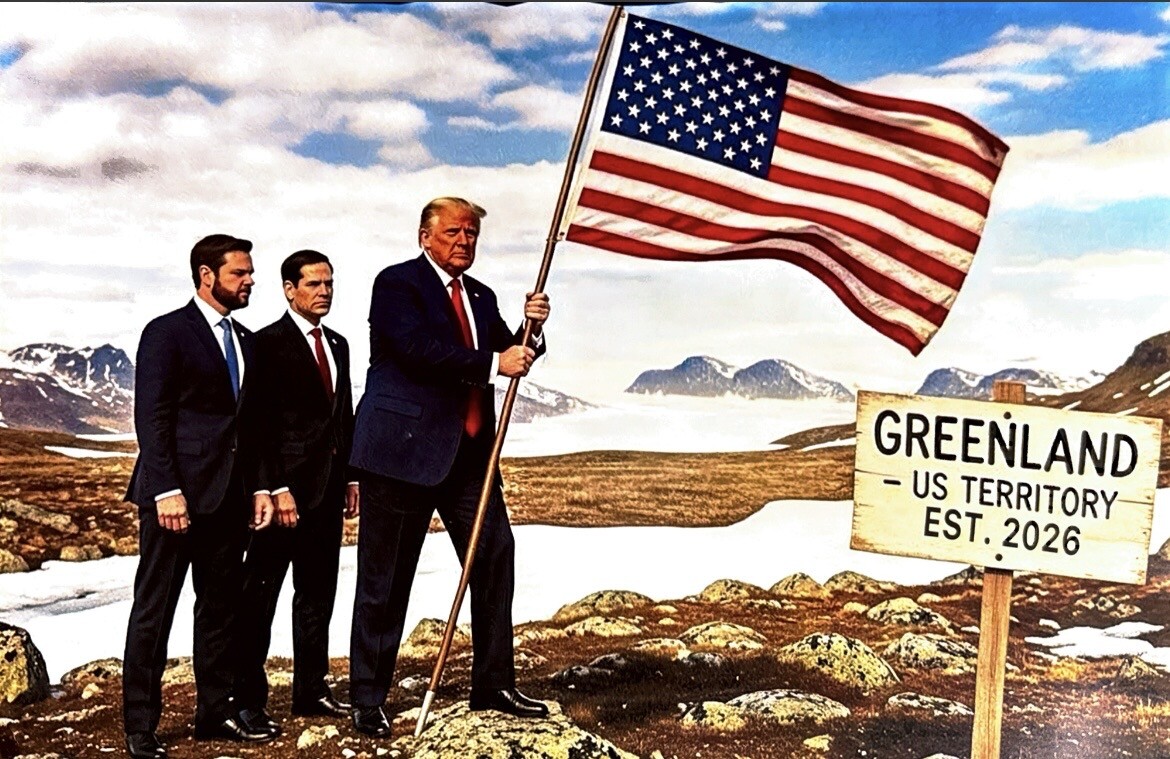
When Donald Trump posts a low-quality AI-generated image or video to social media, it means he’s not kidding.
On the evening of January 19, the president shared an image on Truth Social showing himself planting the Stars and Stripes in Greenland, flanked by Vice President JD Vance and Secretary of State Marco Rubio.
This is the portrait of a now all-consuming obsession: the annexation of a semi-autonomous territory that is under the kingdom of Denmark, itself a NATO ally.
Since Trump’s return to the White House, barely a day has passed without Greenland being mentioned. In recent weeks – especially following the U.S. military offensive in Venezuela, which has evidently emboldened the American president (and anonymous bettors on Polymarket) – the escalation has been impressive.
Among many things, Trump has openly declared that he will take control of the island “one way or another”. He has not explicitly ruled out a military occupation, and he has threatened tariffs on European countries that oppose his plan of conquest.
Deputy chief of staff Stephen Miller was even more explicit during an interview on Fox News, stating that Denmark does not have the military capacity to defend Greenland and therefore can have no claim. “No one is going to fight the United States over Greenland’s future,” he added, smugly.
Of course, American interest in Greenland is not new. Since at least the early nineteenth century, proposals of various kinds to acquire the island have been made, and promptly rejected.
Near the end of his first term, Trump himself had floated the idea of buying the island and tasked his entourage with studying its feasibility. When the news leaked to the Wall Street Journal, Denmark responded with indignation. The president tried to pour water on the fire with a sarcastic tweet, promising that he’d never build a golden Trump Tower on the island.
Now, however, the tone is radically different, with an unprecedented aggressiveness.
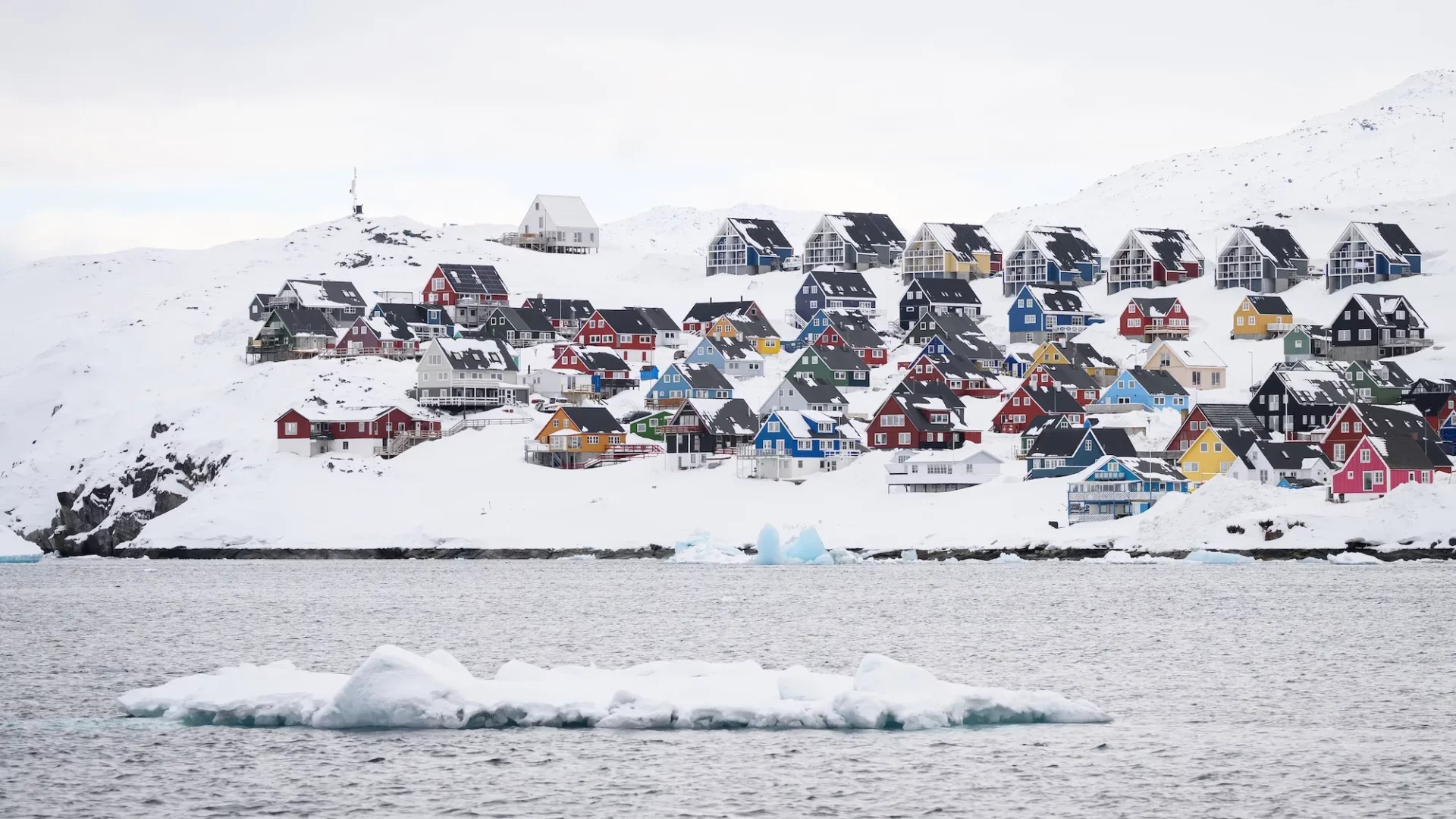
As Trump often repeats, the United States “needs” Greenland for “national and international security”, arguing the island is surrounded by Russian and Chinese warships. In his opinion, if the U.S. will not take control of it, Moscow and Beijing will, with severe consequences for global stability and economy.
Actually, by virtue of a 1951 agreement, the United States already has the right to build military bases and send troops and equipment to Greenland, with the consent of both local and Danish governments. Therefore, in theory, the U.S. military can already defend the island against geopolitical rivals.
But for Trump, apparently, these treaties are meaningless. “You protect property, not rentals,” he declared to the BBC, “and we need to own it [the island].”
Trump here speaks more like a real estate boss and less like a head of state. And it’s no coincidence. According to former national security adviser John Bolton (who later became one of Trump’s fiercest opponents), the real reason for the president’s obsession is to be found in his ego. Political scientist Ian Bremmer agrees: “He saw how big the island looks on the map, especially thanks to the Mercator projection, and decided he had to have it.” Trump reportedly wants to go down in history as the president who resumed America’s territorial expansion after decades.
The ego-gratification thesis is further reinforced by the bizarre letter Trump sent to Norwegian Prime Minister Jonas Gahr Støre, complaining bout not having won the Nobel Peace Prize. “Given that your country decided not to award me the Nobel Peace Prize for stopping eight wars AND MORE,” the U.S. president wrote, “I no longer feel compelled to think only about peace.”
Yet, It would be extremely simplistic to attribute colonialism to the will of a single person. The U.S. business class and the Silicon Valley broligarchs have also an obsession with Greenland, especially with its immense (and largely unused) natural resources.
The island is potentially an Eldorado for the extraction of rare metals and critical minerals for both the oil industry and the technology sector. And indeed, as journalist Casey Michel notes in The New Republic, the annexation of Greenland would usher in “the golden age of the American oligarchy, one free of oversight and democratic checks.”
Hovering over the island, in fact, are wealthy investors, billionaires, members of the Trump administration in open conflict of interest, and Trump himself – all ready to carve up Greenland and strip it to the bone.
According to Peter Baker and Susan Glasser, authors of The Divider, the first person to plant the seed in Trump’s mind was Robert Lauder, the 81-year-old cosmetics magnate who has poured millions of dollars into financing all of Trump’s election campaigns.
Already in his first term, Lauder (who has known Trump since the 1960s) insisted that the U.S. must acquire Greenland. In a February 2025 New York Post article, the billionaire reiterated the urgency: “Beneath the ice and rocks,” he pointed out, “lies a treasure of rare earth elements, essential for AI, weaponry, and modern technologies.” With the arctic ice melting, new maritime routes are also emerging, and they will reshape the balance of global trade and security.”
But as Danish newspaper Politiken revealed, Lauder’s motivations aren’t purely geopolitical: he has several business interests in Greenland. Recently, he has invested in at least two Greenlandic spring-water bottling companies, with the aim of selling “luxury water” on the U.S. and global markets. Needless to say, a possible annexation would be a godsend for him.
And Lauder is far from being alone: he’s not the only billionaire to benefit from the increasingly brazen overlap between the interests of the Trump administration and U.S. foreign policy.
Financial services firm Cantor Fitzgerald, long led by current Commerce Secretary Howard Lutnick and now controlled by his children, has a significant stake in Critical Metals Corp, a U.S. mining company already operating in Greenland that plans to begin rare earth extraction this year.
Among the investors in Critical Metals are also Vanguard, BlackRock, Geode Capital, and State Street, which shortly before the presidential elections invested over 300 million dollars in Trump Media, the family holding company behind Truth Social.
Another mining company interested in Greenland is KoBold Metals, exploring the island’s west coast in search of materials essential to the tech industry. For this very reason, the California startup founded in 2018 has received substantial funding from Silicon Valley. As The Guardian’s Tom Perkins reports, investors in KoBold Metals include Meta’s Mark Zuckerberg, Amazon’s Jeff Bezos, OpenAI’s Sam Altman, and Andreessen Horowitz’s Marc Andreessen of the fund, all of whom also financed Trump’s latest election campaign and presidential transition.
According to Robert Weissman, co-president of the NGO Public Citizen, Greenland is becoming a monument to modern-day conflicts of interest. “All you have to do is pour money into the Trump family,” he told The Guardian, “and it comes back to you as government policy.”
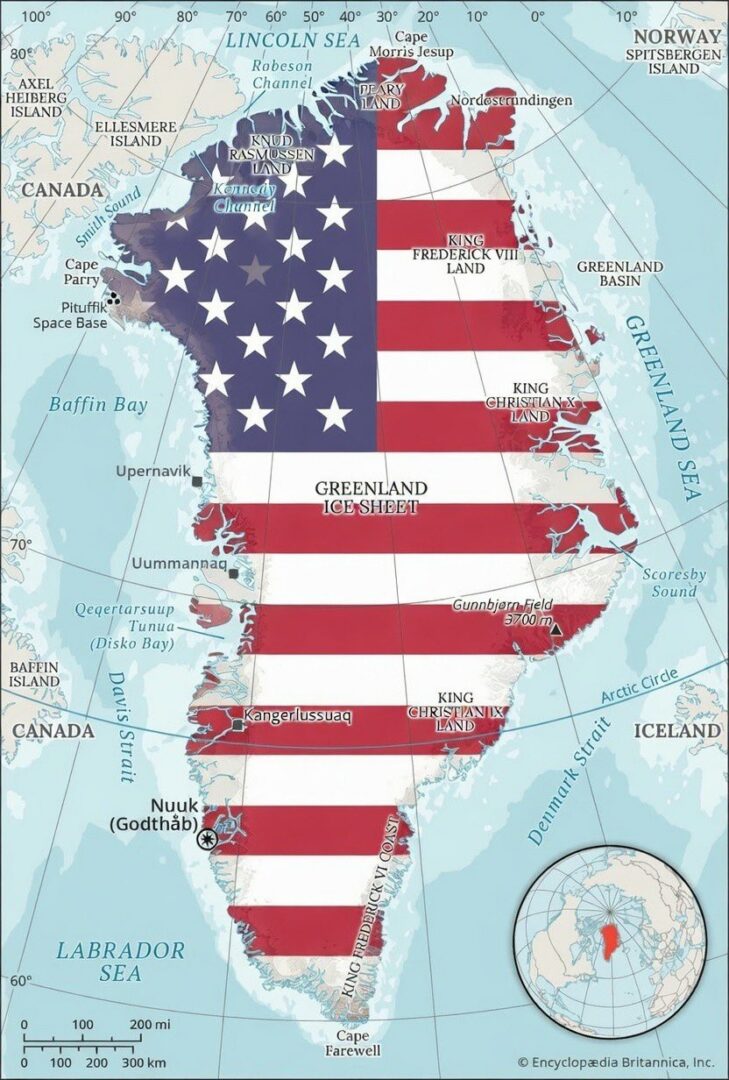
Finally, there is one last group operating behind the scenes on the annexation of Greenland: the crypto bros who dream of turning the island into the prototype of an independent, hyper-technological city-state.
One of the most vocal supporters of Trump’s expansionist project is the 29-year-old Dryden Brown, founder of the startup Praxis and a devotee of the so-called Network State movement. Coined by entrepreneur Balaji Srinivasan in his 2022 book, the concept envisions “startup nations” entirely governed by private multinational corporations.
The idea is not new: it blends the ultraliberal utopia of writer Ayn Rand with the anti-statist fervor of The Sovereign Individual, a 1997 manifesto – and one of Peter Thiel’s favorites – predicting the collapse of the nation-state and the rise of billionaire-run micro-nations.
Journalist Gil Duran,author of the newsletter The Nerd Reich, defined the Network State “ libertarian dystopia”, a model for techno-authoritarian tax havens.
This is exactly what Brown is aiming for: the creation of “a tax-exempt enclave, governed by free-market principles, led by a CEO-monarch and populated by shareholders-citizens.”
It is a project that evidently fascinates an important segment of Silicon Valley, given that Praxis has received funding from Peter Thiel, Marc Andreessen, Sam Altman, and the Winklevoss twins. And it is an idea that also intrigues Ken Howery, a member of the “PayPal mafia” who worked closely with Peter Thiel and whom Trump appointed U.S. ambassador to Denmark.
According to a Reuters article, his appointment was intended precisely to speed up the process of acquiring Greenland. Significantly, as soon as Howery’s name was floated, Praxis’s account on X published this comment: “everything is going according to plan.”
To Brown, Greenland is “a very interesting place” because it is “one of the last frontiers left to explore on Earth.” Because of its extreme climatic conditions, he said in a long thread on X in November 2024, the island would be the ideal place to test terraforming techniques in view of the colonization of Mars promised by Elon Musk.All of this, it must be said, is unfolding in open violation of international law and at the expense of Greenland’s people. The vast majority of locals want nothing to do with the United States or Silicon Valley’s city-state fantasies. And yet, some of the world’s richest and most powerful men are working to turn the island into a dystopian experiment that seems to have come straight out of the darkest novel by Philip K. Dick.
Leonardo Bianchi