



The transition from one year to the next is perhaps the most revealing moment to examine our relationship with social media. In the final days of December, the holidays come and go, gift shopping reaches its peak, and there’s a rush to wrap up work before the break, when emails often go unanswered. It’s a stressful time that carries the weight of the preceding months; counterintuitive if we consider that in nature winter is a season of rest.
During these days, a quick scroll through Instagram reveals a flood of year-end recap posts: photo carousels summing up what people have done, what we’ve learned from the past months, showcasing a selection of one’s professional and personal achievements. It almost seems as if, for many, the year can’t truly end without that post; as if putting it online gives it meaning.
January, instead, is the month of detox. Just like those who embrace Dry January or start new diets, many choose to “detox” from social media. According to a study by NordVPN, January is by far the most popular time to disconnect. In the United States alone, searches for how to delete Facebook increased by 67.6% in January 2025. In the same period, searches for how to delete WhatsApp, Instagram, and Snapchat rose by 56.6%, 42.6%, and 19.6%, respectively.
The curious part is that those choosing to detox are often the same people who post recaps at the end of year. Not necessarily the ones who spend too much time online, but rather those who conduct a sort of second life on social media, one that requires almost as much energy as certain aspects of their offline life.
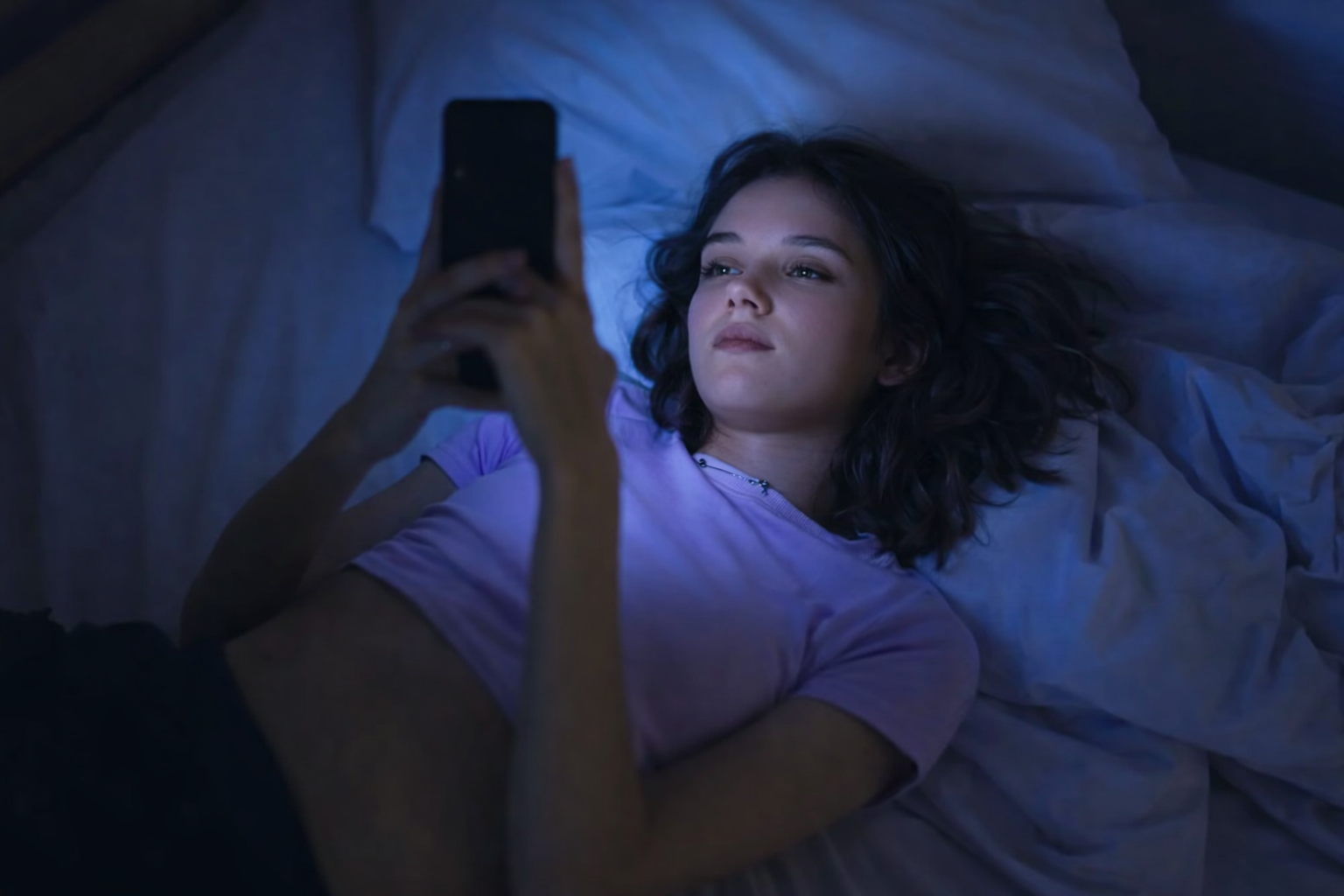
For years, we have tried to understand our relationship with social media by counting minutes, notifications, and screen hours. We’ve made it a matter of quantity: how long we spend online, how many times we unlock our phones. The implicit idea was that if there was a problem, it would be visible through measurable excess.
The most widely used tests to identify social media addiction, like the Internet Addiction Test (IAT) and the Bergen Social Media Addiction Scale (BSMAS), focus heavily on quantity and compulsiveness.
In recent years, however, a growing body of psychological research has begun to question this approach. Time certainly matters, but it only explains part of the phenomenon. Increasingly, studies suggest that the central issue lies not in how much we use social media, but in what role we allow it to play in our lives, and the emotional, psychological, and symbolic value we attach to these platforms.
This shift in perspective is where the Plan-net 25 comes into play, a psychological scale developed in 2025 by a group of researchers in Spain and published in BMC Psychology. Tested on a sample of 2,477 adolescents aged between 12 and 20, its goal isn’t to measure classic dependency or quantify excessive use: it seeks to analyze the overvaluation of social media.
Plan-net 25 builds on broader research into behavioral and substance addictions, where the core issue isn’t how frequently a behaviour occurs, but the frequency with which it is repeated. Studies on drugs and gambling show that people with addictions tend to overestimate the expected benefit of an action, the effect of a substance, or the potential winnings, compared to healthier alternatives, even when the actual experience turns out to be less gratifying than anticipated. This imbalance produces a decision-making bias: the overestimated behavior is chosen more frequenly, until it occupies a disproportionate place in daily life.
According to the authors of the study, a similar mechanism can also be observed in problematic social media use, which can become the object of the same cognitive distortion: the belief that they offer a more immediate and effective form of gratification compared to other options. In this sense, the problem is not the intentional use of social media, but the fact that, in our decision-making process, their value is systematically overestimated compared to alternatives such as face-to-face interaction, rest, physical activity, or unmediated time. Put simply: if I often prefer an evening scrolling through TikTok over spending time with friends, something is wrong.
To make these distortions visible (similar in structure to those found in other addictions, but translated into everyday digital life) the researchers used a culturally familiar metaphor: the seven deadly sins. This framework helped them outline the main “utility domains” where social media tends to be overvalued.
Pride manifests when self-esteem and self-worth hinge on online validation: when the number of likes, comments, or followers become a personal value metric.
Envy emerges through persistent social comparisons, fueled by curated content that distorts the perception of what is normal and amplifies feelings of inadequacy.
Greed is seen in the accumulation of attention and visibility (again likes, followers, engagement) treated as capital to be guarded and grown.
Gluttony refers to emotional and informational overconsumption, a continuous ingestion of content that saturates rather than nourishes us.
Lust is seen as the compulsive pursuit of immediate stimulation and sensory gratification, encouraged by a social media structure that rewards novelty and intensity, progressively reducing tolerance for boredom.
Sloth indicates cognitive passivity, an automatic, disengaged use of social media as a form of psychological avoidance.
Wrath reflects the emotional reactivity and polarization, encouraged by algorithmic dynamics that reward outrage and conflict.
The study’s results confirmed the centrality of overvaluation: researchers found out that individuals who showed high levels of social media overestimation (particularly in domains corresponding to the seven deadly sins) also showed a stronger association with anxiety, depression, loneliness, and overall dissatisfaction, along with lower self-esteem. The domains most strongly linked to negative effects were pride, envy, and gluttony, while others like sloth, were connected to passive and automatic use, still associated with increased dissatisfaction.
Of course, the outcome is not uniform: some adolescents overvalued only certain domains, while others show a more generalized overvaluation. This suggests that intervention strategies, such as digital detoxes or campaigns promoting mindful use, should focus not only on time spent online, but also the psychological needs that social media attempts to fulfill. The researchers hope the scale will be adapted and tested on adults, translated into other languages, and tested across different cultural contexts.
But where does this overvaluation come from? The study identifies emotional vulnerabilities, it doesn’t tell us about the societal context in which these dynamics unfold. We now live in a society where social media has overtaken traditional media as the primary source of information, even in countries like Italy. A society where politicians announce wars with a post on X.
It’s plausible that, in many cases, overvaluing social media is a response to an ecosystem that pushes us in that direction. In the job market, for example, a strong online presence is increasingly seen as an added value. This happens especially in sectors such as communication, creativity, media, or fashion, but it is also expanding into other fields. It’s not unusual for Instagram or LinkedIn profiles to be implicitly evaluated during job interviews. For many, these platforms have become a second CV, hence the recap posts of one’s professional successes, often made more out of necessity than pleasure.
Even the use of social media as a remedy for loneliness has real foundations. Platforms offer the possibility of contact and micro-interactions that can make a difference with little effort, especially in bigger cities, where it’s hard to find a community.
The December recap and the January detox paradox reflects an ambivalent relationship: social media is both the space where we seek meaning and the one from which we feel the need to escape when it becomes too overwhelming.
Beyond society, we must not forget to observe the architecture of these platforms, designed down to the smallest detail to amplify the very effects described by the seven deadly sins. Those who design social networks have no reason to make them less addictive, so unfortunately the burden falls on us.
Real detox won’t come from disappearing for a few weeks. It will come from questioning the value we assign to these platforms, asking ourselves what we’re looking for there that we might be missing here.
Viola Giacalone