


The Milan-Cortina 2026 Winter Olympics have just begun, but we can already say that they could be remembered as one of the editions in which the media relationship of the public with sport has changed.
From Rome 1960, the first globally televised Olympics, passing through Barcelona 1992 with satellite broadcasting and modern directing, up to Beijing 2008, which consolidated the use of streaming and social media, the Olympic Games have always marked the eras in which technology has changed the way we watch sport. Milan-Cortina is the first edition in which we can almost “experience them”.
Artificial intelligence, immersive drones and cloud production are shaping the way this winter edition is seen and experienced, with the declared goal of making the public part of the experience, even at a distance.
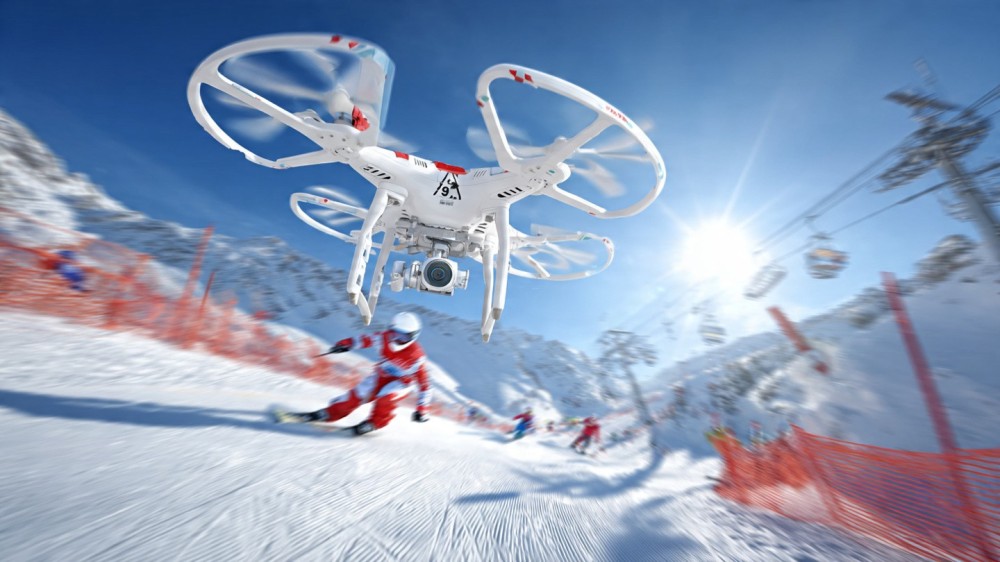
Among the most spectacular innovations are FPV (first-person view) drones, capable of following athletes along tracks and descents offering dynamic and close images. The idea is to let spectators perceive speed and trajectories as if they were competing, a perspective never before tested on a large scale.
Alongside aerial filming comes a new generation of replays based on artificial intelligence: multi-camera systems and automated analysis allow almost instantaneous 360° replays, with technical data — jump height, speed or trajectories — superimposed on the images. Sports performances become not only gesture, but information.

AI will also enter the editorial storytelling. A digital assistant dedicated to the Games will provide real time results, personalized answers and automatic summaries of Olympic news, while video analysis systems will help editorial teams quickly identify the most significant moments to share.
Behind the scenes, television production is moving more and more to the cloud: virtualized infrastructures allow remote directing, fewer equipment movements and reduced energy consumption, with significant savings in terms of space and electricity. A paradigm shift that also aims at sustainability, an increasingly central theme in major sporting events.
There is no shortage of symbolic signs of this transition. The “Essential” Olympic torch, for example, is designed with recycled materials and powered by biofuels derived from waste, while a transparent window shows its internal functioning: an iconic object that also becomes technological and environmental storytelling.
However an open question remains: how much does technology enrich sport and how much does it risk transforming it into a hyper-mediated spectacle? Milan-Cortina 2026 could mark a new balance, in which data, immersive images and artificial intelligence do not replace sporting emotion, but amplify it.
Editorial Staff