


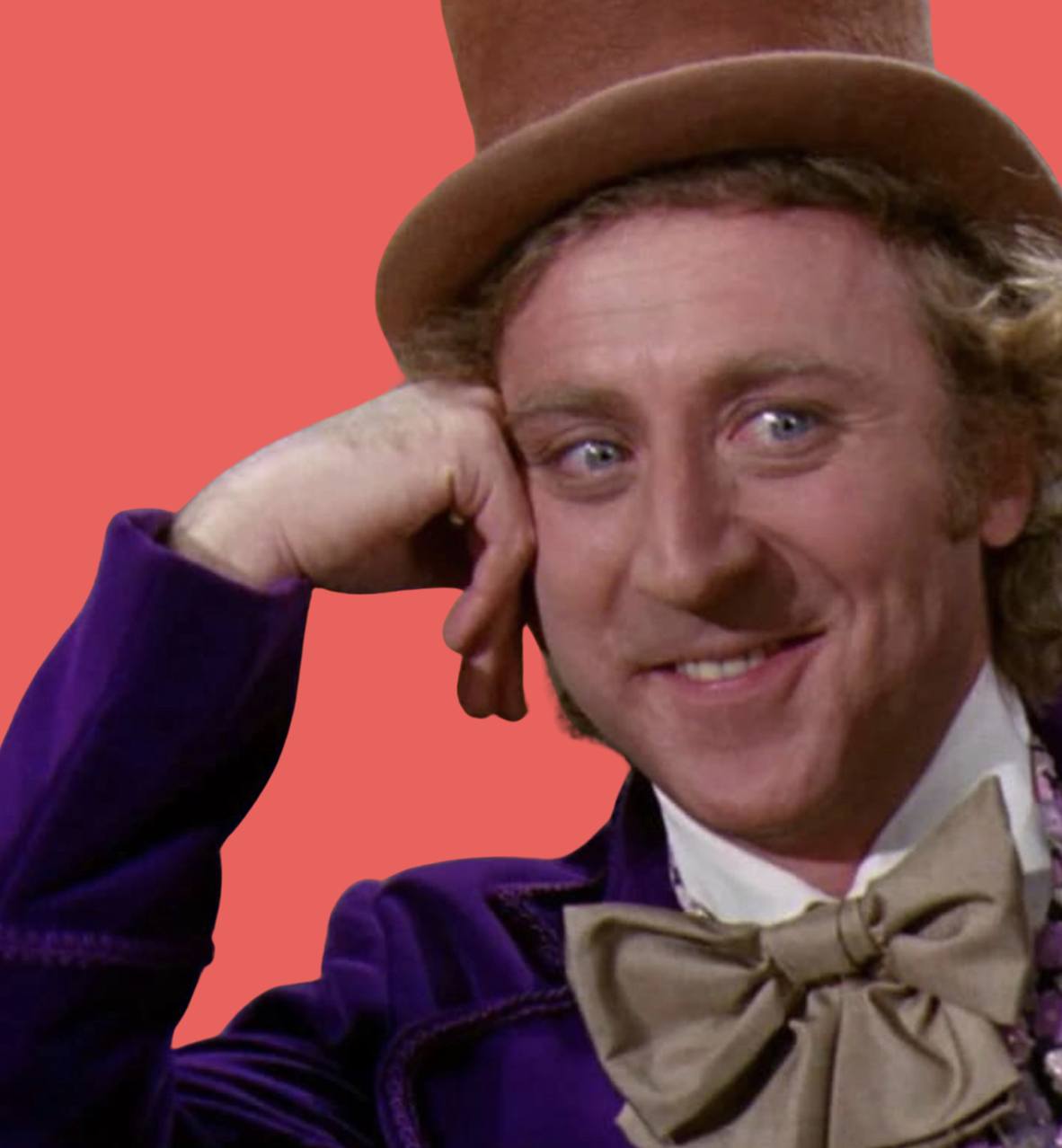
Reproducible, two-dimensional, often emerging from right-wing online spaces and carrying a distinctly ironic tone, memes populate our digital communities with characters we have learned to recognize by their codified appearance. While Chad and Virgin remain largely confined to the interstitial corners of platforms and are still unknown to many, Normies have entered the everyday language of most Millennials, and not only of those who, in the early 2000s, used Captain Obvious to label needlessly self-evident statements in Facebook comments or MSN chats.
Memes arise from a process that gives anthropomorphic form to linguistic figures, sets them in relation to one another through comparison between characters, and has immersed them in a climate of perpetual, self-referential irony. This process of subjectivization, by ensuring that what is commented on is no longer what is being said but who is saying it, produces deep semantic and social effects because it shifts the focus of discourse. The move from content to people, even when filtered through successive layers of irony, raises the symbolic stakes of the message and makes it possible to convey increasingly radical positions.
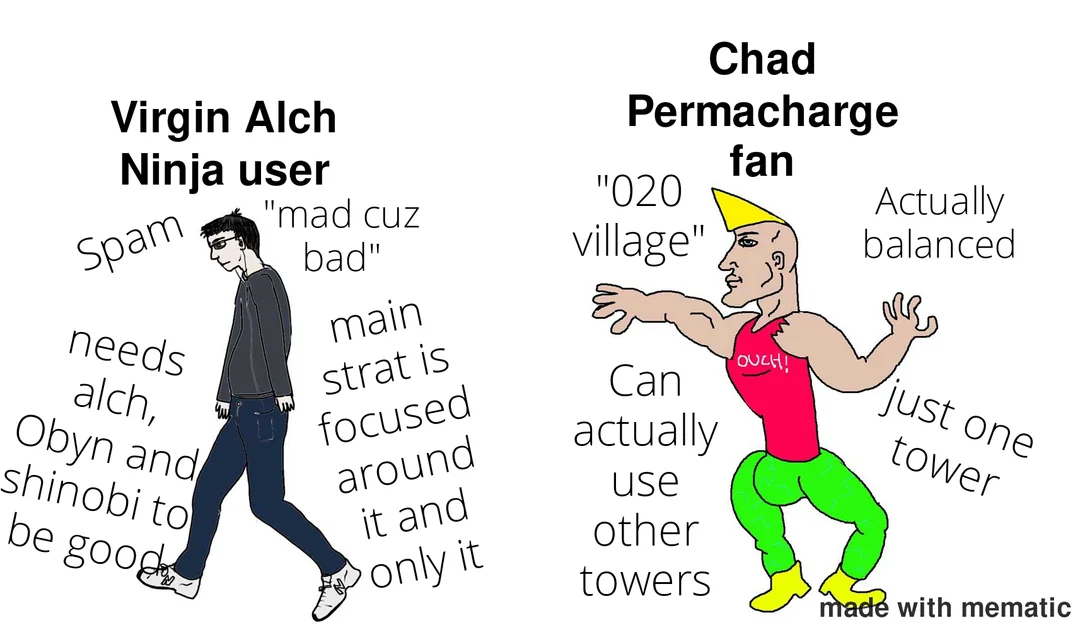
Captain Obvious can be considered a rhetorical ancestor of this dynamic: with his clenched fist and fluttering cape, he gave a face to the lapalissade, that is, a statement so obvious as to become ridiculous. His task was to strike the author of a naïve remark, just as today the epithet Karen can be applied to any woman to brand her as generically irritating, even though the term originally emerged to describe a specific classist and racist attitude. The personification of linguistic tools functions as a condenser of meanings which, as it spreads to an ever wider audience, facilitates their transformation into polarizing and divisive figures.
This happens because labels, by replacing articulated responses, flatten the target of criticism and turn disagreement into profiling. In social media dialogue, people attribute meme-like features to themselves and to others, which are no coincidence rough drawings made with a few pen strokes in Paint. Their deliberately crude aesthetic is functional to embody reduced, stereotyped, and caricatural characteristics, and their lack of detail serves as a template for each new application.
Wojak, for example, is the reaction image par excellence: the sketch of a bald man, with a bare face and a deliberately ambiguous expression, created to suggest a spectrum of emotions ranging from melancholy to regret or isolation. It only takes modifying a few traits to make him slide into other archetypes: with a cigarette in his mouth, a black beanie and hoodie, he becomes the Doomer, a depressed young man who embodies an existential posture of permanent disillusionment; with his mouth wide open and an euphoric gaze, he instead turns into Soyjak, which is more or less the meme equivalent of a performative male, with the added aggravation of being ugly and pathetic.
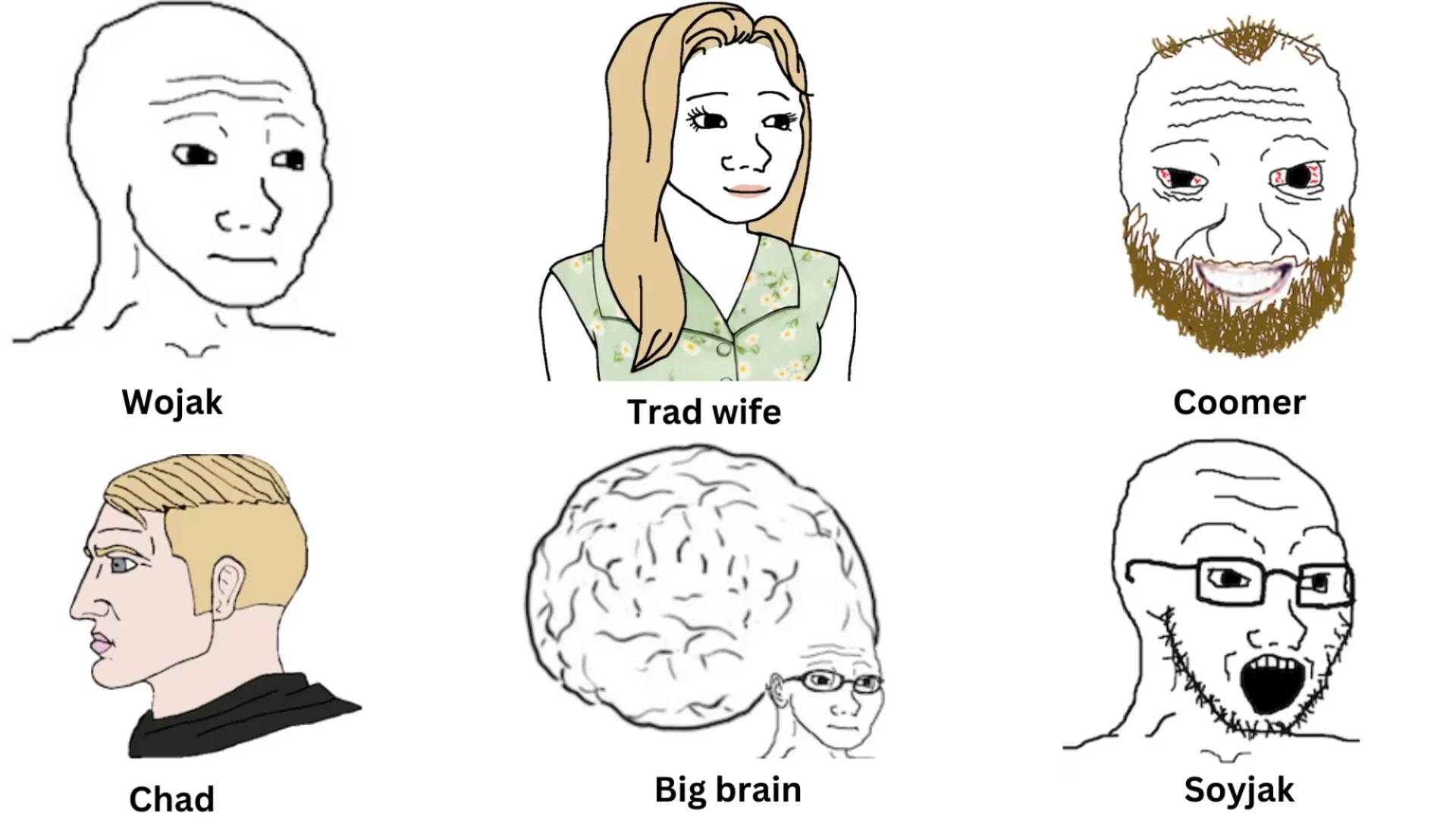
Wojak, for example, is the reaction image par excellence: the sketch of a bald man, with a bare face and a deliberately ambiguous expression, created to suggest a spectrum of emotions ranging from melancholy to regret or isolation. It only takes modifying a few traits to make him slide into other archetypes: with a cigarette in his mouth, a black beanie and hoodie, he becomes the Doomer, a depressed young man who embodies an existential posture of permanent disillusionment; with his mouth wide open and an euphoric gaze, he instead turns into Soyjak, which is more or less the meme equivalent of a performative male, with the added aggravation of being ugly and pathetic.
The list of Wojak variants is extremely long and tangled in all the possible interactions this meme can have with other digital characters, and indeed the very sacred text of online phenomena, Know Your Meme, states that “any attempt to describe or classify a complex cultural phenomenon like Wojak will inevitably be imperfect and incomplete.” A single glance at its immensity is nonetheless enough to suggest that contemporary memetic culture is in excellent health, but it is by now evident that this abundance is less an indicator of limitless creativity than a sign that a part of contemporary culture now uses the grammar of memes as its primary device of self-representation.
In his 1993 essay E Unibus Pluram (A supposedly fun thing I’ll never do again, Little, Brown & Company), David Foster Wallace described a phase in which American literature no longer merely cited or parodied pop culture, but fully absorbed its language and logics, writing as if media images had become reality itself. Similarly, in contemporary digital culture memes have moved beyond the function of commentary and no longer sit “above” the world, but shape it by providing the characters, categories, and symbolic shortcuts through which we interpret it.“How annoying are phrases like ‘This sky looks painted’,” Fabri Fibra sang almost 10 years ago in Stavo pensando a te almost ten years ago. Why did that phrase bother him? We can put forward a few hypotheses: the first is that (a) it is a saccharine expression, repeated by at least four centuries of naturalist painting and worn out by more than a hundred years of rhetorical use; or that (b) Fibra is actually a great lover of sunsets and cannot stand hearing the work of the greatest artist of all time (aka Mother Nature) being diminished; or again that (c), in that line, he is staging a subtler critique of the symbolic inversion whereby the primary reference is no longer the world itself, but its visual archive.
Now, I don’t know what Fibra’s stance on memes and sunsets is, but if he wanted to make a track with me, I would suggest these bars:
“Chad is beautiful like the sea at sunset,
Any p***y gives him a discount,
He provokes the betas and sets off the meltdown,
How banal you are, asking me what I really mean.”
Elena Bertacchini