


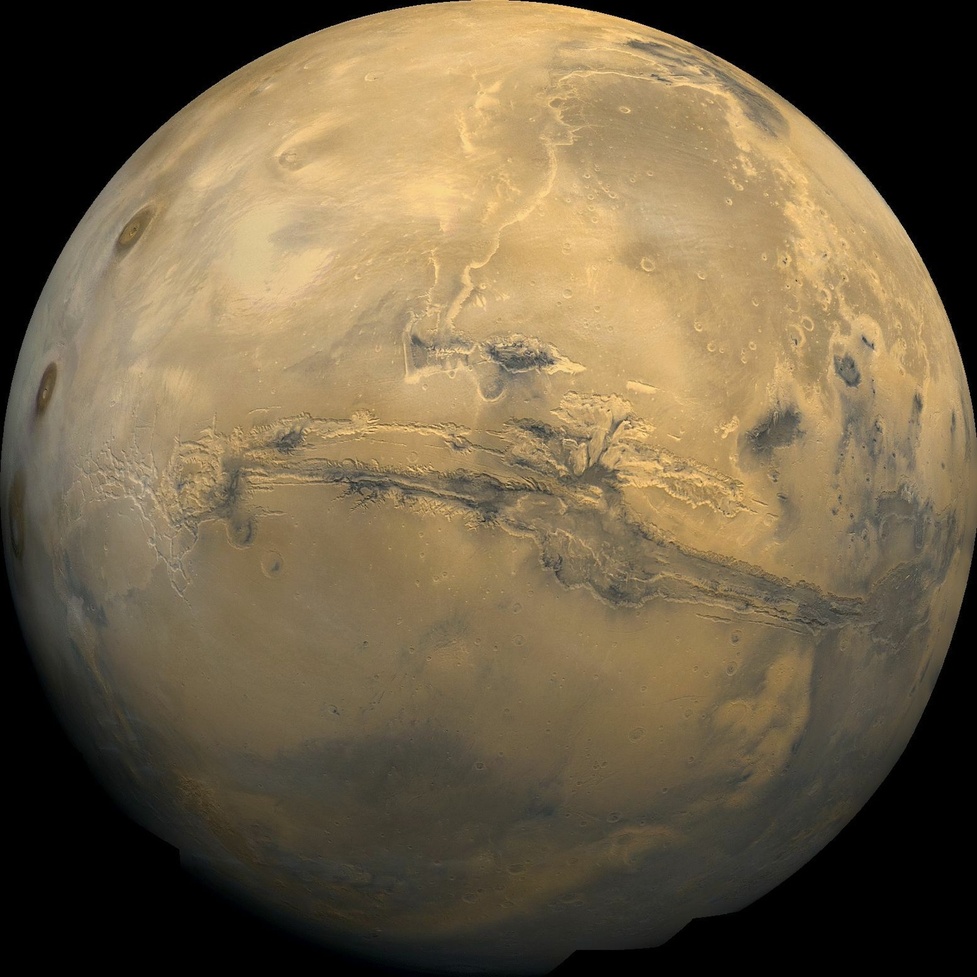
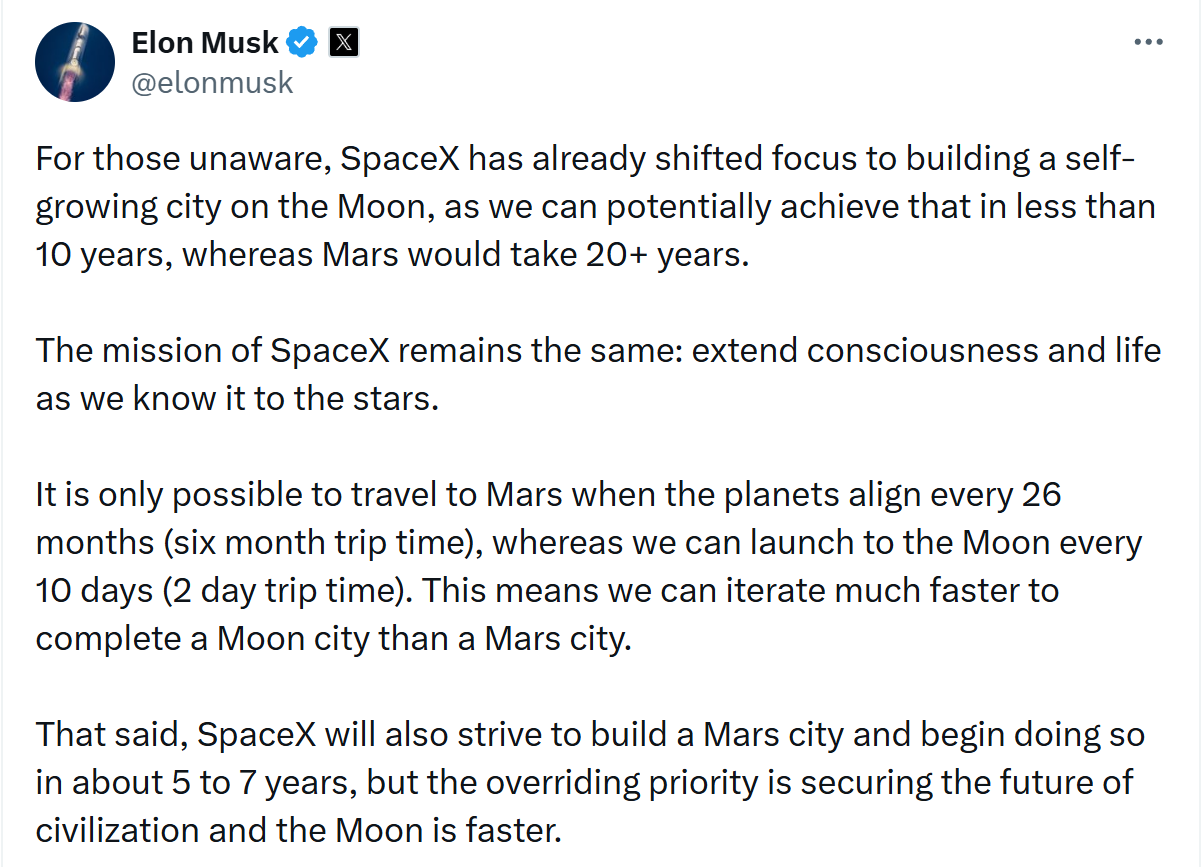
SpaceX still intends to build a city on Mars, starting in 5 to 7 years, but priority is being given to the Moon, where it could complete a self-sufficient city within 10 years. Mars, by contrast, will require at least 20. This is the sense of a post published on his social platform by Elon Musk, CEO of the private company SpaceX, on February 9, 2026.
It hasn’t been many years since SpaceX’s goal was to have a Martian city built by 2024. Musk and his companies produce space launch vehicles, electric cars, neurotechnology chips, artificial intelligences, and much more — but their main product has always been one thing: the future. It must always be a near future; otherwise it would not be a good product. That’s why declared goals are set unrealistically close: in five years no city construction will begin on Mars, and within ten years on the Moon we may at best start seeing the first scientific outposts of the Artemis missions.
The truth is that the dream of Mars may never have felt as distant as it does today, when all attention is focused on the Moon.
That fiery ruby in the sky has drawn humanity for millennia, ever since ancient observers associated it with warlike deities, such as Nirgal for the Babylonians and Ares for the Greeks. But it was with the telescope that, from a wandering star, it became an entire world — a stage on which to imagine a possible utopian (or dystopian, depending on the era) future for humanity. It is no surprise that when we began launching objects into space, Mars was among the first targets.
In 1965 NASA’s Mariner 4 probe reached Mars for the first time, flying past it and taking the first historic images of its surface. Grainy black-and-white pictures that already showed a desert world, far more than previously thought. Until 1972 there was an initial wave of Martian interest that concluded with the Mariner 9 mission, the first to enter orbit around the planet, capturing valleys, plains, and volcanoes in real maps.
Then came the Viking missions in 1975, which for the first time touched the surface of the red planet. The Viking landers searched for traces of life and, despite long debates on the matter, found none. However, we learned that Mars must once have hosted liquid water: an ocean around the north pole, lakes in craters, and rivers carving the surface almost 4 billion years ago — roughly the same period when life arose on Earth.
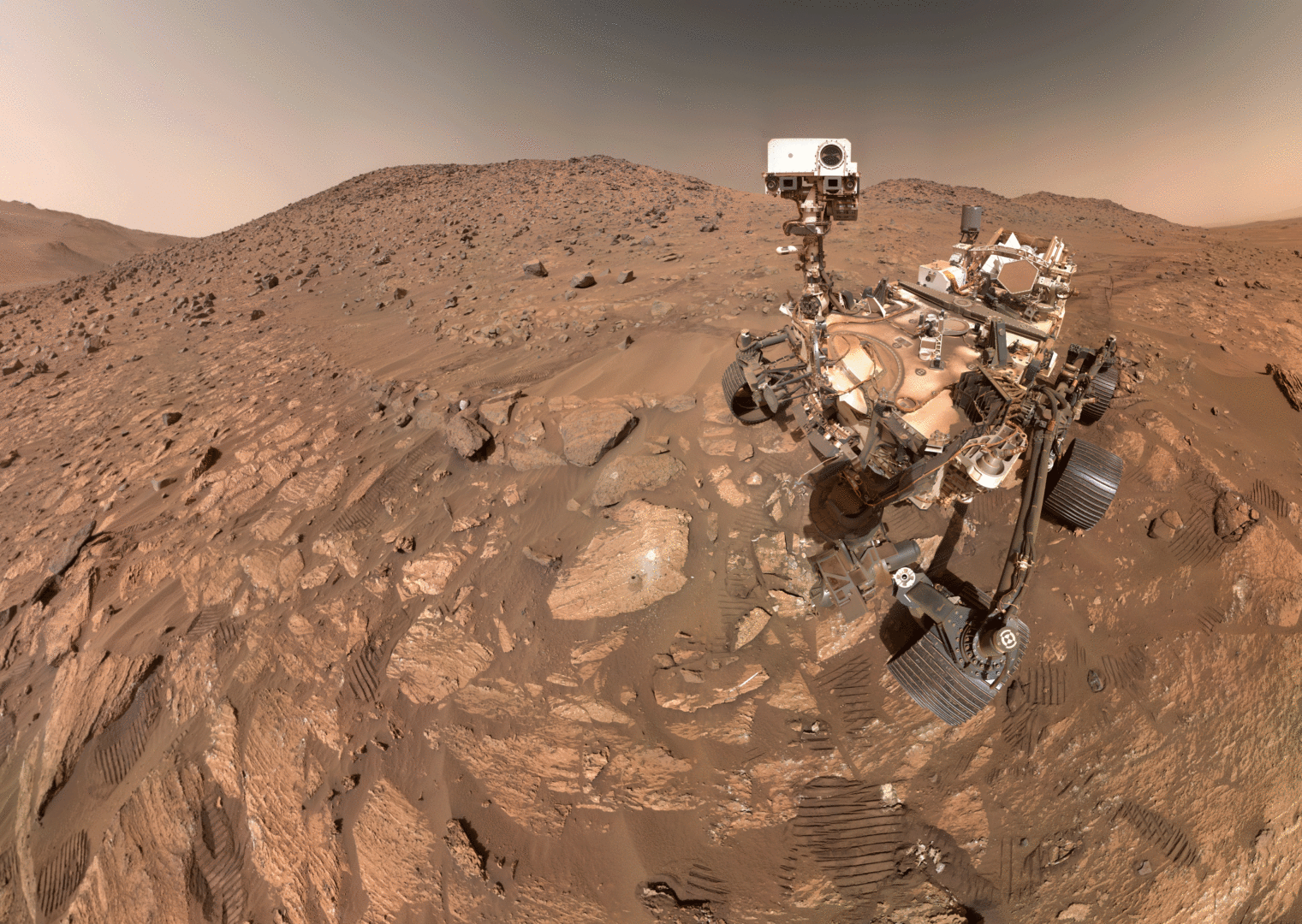
Despite this discovery, interest in Mars waned, only to revive in the early 2000s. The rovers arrived — first Spirit and Opportunity, then Curiosity, and finally Perseverance and Zhurong around 2020. In addition, a fleet of probes has continued remote observation, such as the UAE’s Mars Hope and Europe’s Trace Gas Orbiter.
Throughout all these periods, behind these extraordinary space missions, there has always been the dream of actually living there one day — on Mars.
And today? What has become of that dream? One after another, Martian probes are ending their missions — the latest being NASA’s MAVEN spacecraft, with which contact was lost in January 2026. Aside from a few sporadic cases (such as NASA’s EscaPADE and Japan’s MMX), no true generational replacement is planned.
The problem for Mars is that political attention worldwide is now focused on the Moon. NASA’s Artemis missions, together with European, Canadian, and Japanese partners, concentrate much of the current economic, political, and media attention in space exploration. Artemis 2 is close to launch and will, for the first time, return astronauts to lunar orbit (something that hasn’t happened since Apollo 17 ended in 1972); Artemis 3 will lead to a new Moon landing; later missions aim to build a lunar base. The Moon is a nearer, more attainable goal — ultimately a more marketable future for companies and politics alike, much as Mars once was for SpaceX.
Mars remains, but in the background. The Artemis program is based on the Moon-to-Mars philosophy, which sees the Moon as a general testing ground to acquire the know-how and technologies necessary for Martian exploration. Yet once again, Mars is a distant objective, plausibly something we will seriously consider only in a few decades.
After all, it could hardly be otherwise. On Mars, the atmosphere is only a few thousandths of Earth’s and is composed almost entirely of carbon dioxide. Water is scarce and frozen, and the planet is as arid as one can imagine. There is no magnetic field to shield the surface from cosmic rays, which in excessive doses are lethal to living cells.
All these challenges also exist on the Moon, which is why ten years will not be enough to achieve a self-sufficient city — perhaps not even a century will. However, the Moon can be reached in a journey of just a few days, whereas Mars requires several months. Musk is not wrong when he says SpaceX is aiming at the Moon because it is far more accessible in the short term.
The Moon-to-Mars philosophy makes perfect sense, but once again Mars remains a dream for the future. The difference is that this time the dream is back in the drawer, perceived as so distant that it may not even be a good product anymore — not even for the tech bros.
Luca Nardi