


In recent decades, the theme of materials has taken on a central position within the debate on contemporary design. The question concerns a broader transformation in the relationship between design, technology and the environment. Laboratory-grown biomaterials, responsive surfaces, robotic fabrication systems and programmable materials have suggested a progressive shift in design towards processes in which matter incorporates information, behaviour and adaptive capacities. Material is becoming a technological and cultural tool. The assessment of its properties no longer falls solely within chemical composition or mechanical performance, but is instead moving towards a broader network of data, biological processes, computational simulations and environmental cycles. Design is increasingly focused on the conditions that make the emergence of form possible: growth, transformation, reaction to stimuli, degradation, and the capacity for adaptation.
A significant part of this research develops around biomaterials, in parallel with the bio- trajectory that all aspects of everyday human life have now undertaken. Laboratories and companies have already experimented with materials derived from mycelium, algae, bacteria and organic cellulose, with applications spanning packaging, interior design, fashion and architecture. The interest of these experiments concerns both the final material and the production model they introduce. Growth replaces part of traditional extractive and industrial processes; biological time enters design; the organic behaviour of matter becomes an operational variable to be taken into account not only in design timelines, but even in the embryonic phase of the idea. Temperature, humidity, ventilation and nutrients assume the same importance that, in the past, belonged to moulding techniques or mechanical processing.
This logic appears clearly in the Hy-Fi project, created by The Living studio for MoMA PS1 in 2014. The pavilion, composed of thousands of 100% biodegradable organic bricks, obtained through mycelium and agricultural waste (produced by Ecovative Design), and reflective and recyclable bricks that served as cultivation trays (produced by the company 3M), introduced an idea of temporary architecture based on metabolic processes without moving away from the objective of refined, decorated design that could be reconciled with the needs of climatic adaptation. For the first time, the building is conceived as a reversible element within a continuous material cycle, destined for decomposition and subsequent environmental reintegration.
In parallel with biomaterials, contemporary research into responsive environments and intelligent materials introduces a second line of transformation. Sensors, microelectronics, actuators and embedded systems make it possible to integrate reactive and adaptive behaviours into matter, through surfaces and environments that modify their state in relation to human presence, climatic changes or environmental data.
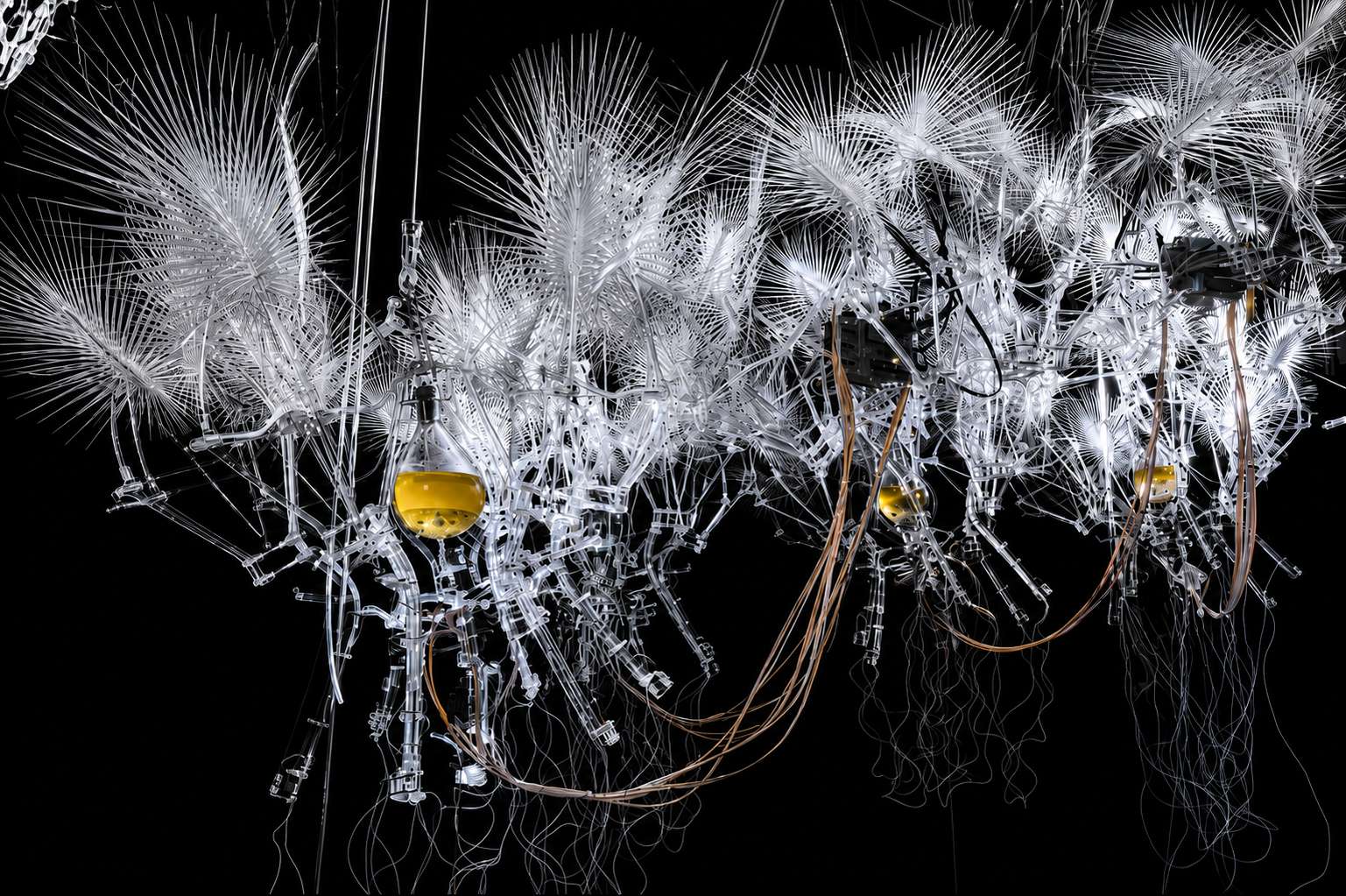
One example of application is Philip Beesley’s installation Hylozoic Ground, created for the Canada Pavilion at the 2010 Venice Biennale, which constituted an immersive environment, a sort of diorama, a digital forest made of lightweight elements, kinetic components and distributed microprocessors capable of reacting to movements, vibrations and variations in light.
A similar transformation runs through computational fabrication and robotic fabrication. In architecture and advanced design, generative algorithms, structural simulations and automated systems are redefining the relationship between form, construction and material behaviour. The DFAB House project of 2019, developed by ETH Zurich, was created through a combination of parametric design, robotics and additive manufacturing. The final configuration derives from the continuous interaction between digital simulation, structural limits and automated construction procedures.
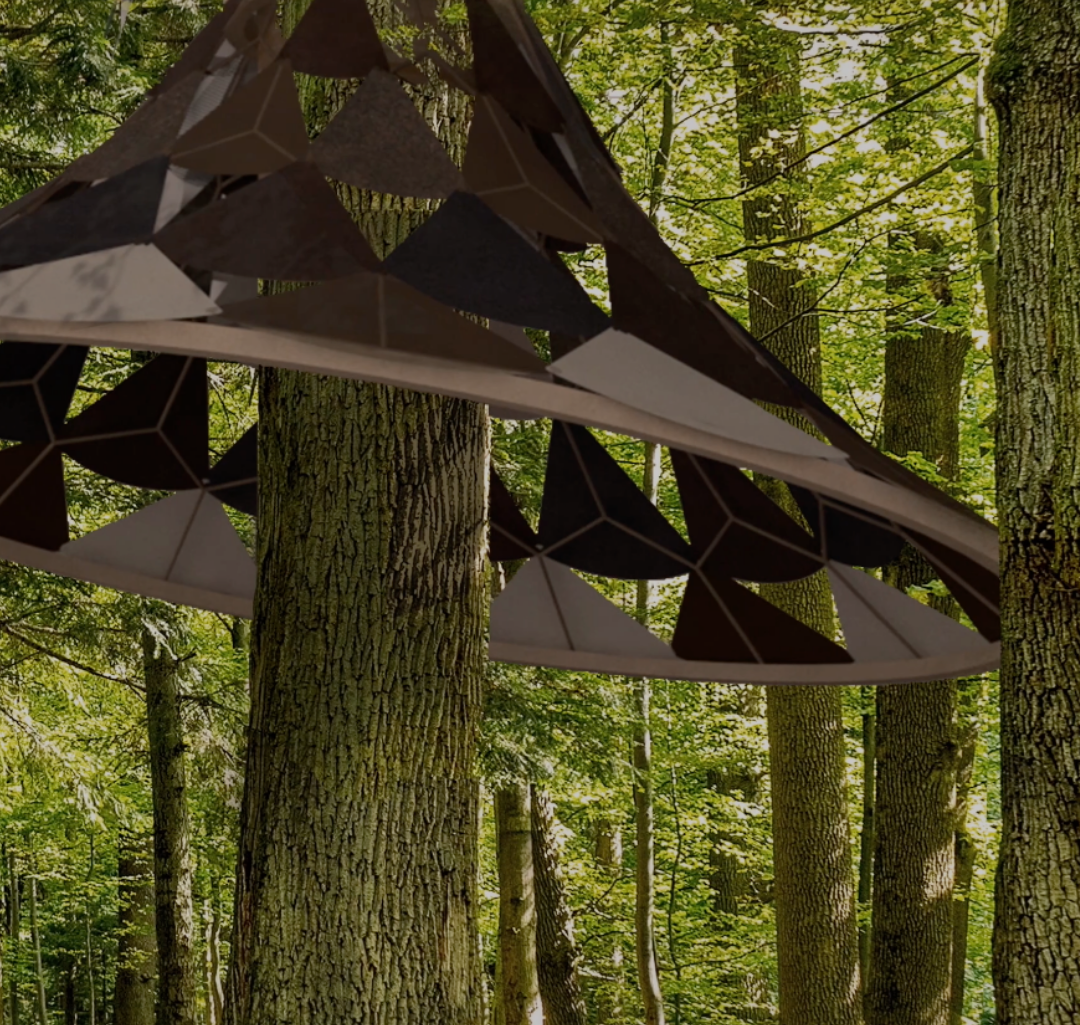
Recently, the debate has shifted to the 2025 Architecture Biennale, Intelligens. Natural. Artificial. Collective., curated by Carlo Ratti, which brought out the relationship between materials, digitalisation and adaptive systems through projects that treat matter as an infrastructure that is simultaneously computational and biological, devoting particular attention to the environmental implications of material waste and therefore underlining the relevance of recycling and reuse. Among the most significant cases presented, Maria Kuptsova’s ARBOR.PILAE uses intelligent-machine algorithms to read the structural properties of different wood species and transfer them into synthetic systems robotically printed with wood-based fibre-reinforced polymers. The project therefore combines biological data, computational simulation and 3D printing to construct a “cyborganic timber architecture”, that is, a structure that incorporates biological behaviour and digital modelling within the same material system. VAMO (Vegetal, Animal, Mineral, Other), developed by ETH Zurich and MIT, also works on the transformation of material into reconfigurable infrastructure. The structure uses bio-based components and materials derived from plant, animal and mineral waste, designed through computational simulation to be assembled, disassembled and reused: the building is conceived as a reversible and adaptable system. Another research project to take into account, which brings together biological, technological and digital matter, is Terraforms. The Shapes of Natural Intelligence, which develops clay mixtures designed through mathematical models derived from natural patterns. The project uses computational topologies to generate structures capable of distributing stress, absorbing humidity and reacting to environmental conditions, transforming traditionally inert materials into responsive surfaces. Not least, the Bio-Lattice project by DARLAB at London South Bank University integrates robotic fabrication, computational design and 3D printing with recycled polymers to produce lightweight structures with high material efficiency. The geometry of the structure is algorithmically optimised, reducing waste and the quantity of material used during fabrication.
In recent months, one of the most advanced theoretical lines of research has been consolidating within MIT, where the theme of materials is progressively being absorbed into a paradigm of computational construction and programmable material systems. At the Center for Bits and Atoms, this transition is formalised through the concept of digital materials, that is, discrete materials composed of standardised modular units that can be assembled, disassembled and reconfigured through robotic systems, 3D printing and AI. The underlying hypothesis is that matter can behave like physical information: each structural element becomes, at the same time, a mechanical component and an informational unit, readable and manipulable by automatic systems.
Within the same trajectory lies an experiment — developed in continuity with MIT’s lines of research and with contributions from EPFL — on discrete robotic construction documented in Automation in Construction (Q1) (Volume 187, 2026), in which grid structures composed of modular elements, called voxels, are assembled directly on site by mobile robots. These systems operate along the growing structure by attaching the modules through self-aligning snap-fit connections, reducing the need for permanent joints or manual assembly processes. Construction no longer follows a predefined linear sequence, but an adaptive process in which geometry, stability and assembly logic are updated in real time on the basis of data collected during execution. The main result concerns above all the transformation of the construction site into a distributed computational environment. Material is treated as a network of operational and informational units that can be read and reconfigured during construction itself, to the point that the boundary between design, fabrication and structural control progressively dissolves.
In parallel, a second line of research developed within MIT concerns adaptive automation and reconfigurable robotic systems. In these studies, which integrate BIM, algorithmic planning and distributed sensors, systems do not execute rigid instructions but modify their configuration in relation to the task and environmental conditions. Construction thus becomes a continuous iterative process, in which simulation and physical reality correct each other in real time.
Meanwhile, in 2020 in Italy, WASP (World’s Advanced Saving Project) developed TECLA — created together with Mario Cucinella Architects: a dwelling that combines robotised 3D-printing processes and biodegradable materials available directly in the local area, such as raw earth. In February 2026, the ITACA project, also in Emilia-Romagna, explored self-sufficient construction models through low-energy-impact digital fabrication technologies using the Crane WASP system: four robotic arms work together and simultaneously print the walls, in concrete and sustainable materials, making it possible to complete the structural shell of a house in just a couple of days.
Many of the most advanced research projects developed in recent years, from Neri Oxman’s projects to extract melanin and incorporate it into 3D prints to the recent experiments with 4D materials and active textiles through liquid printing at the Self-Assembly Lab, show how design is progressively taking on a post-industrial dimension in which biology, engineering and fabrication converge within the same design process.
In these processes, design assumes a systemic nature. Many contemporary experiments are born within interdisciplinary laboratories that bring together architects, biologists, materials engineers, programmers and researchers. The project instead coordinates flows of data, fabrication protocols, environmental models and processes of material transformation. The distinction between ideation and production progressively loses its rigidity, while design and technical research begin to overlap, also modifying the professional figure of the designer: the activity thus shifts towards practices of applied research, prototyping and continuous experimentation. A substantial part of the work concerns performance analysis, the simulation of behaviours and the management of complex systems.
This transformation inevitably also involves the theme of sustainability. Biomaterials and adaptive production processes are often presented as alternatives to high-energy-intensity industrial models. However, the value of these materials does not lie solely in replacing polluting ones with biodegradable versions: what is at stake is a broader revision of contemporary production logics. Critical questions emerge concerning the technological infrastructures required to develop this new materiality. Advanced laboratories, robotic machines, biotechnologies and computational systems require major investments in economic terms and highly specialised expertise. The production of contemporary materials therefore tends to concentrate within large research centres, universities and technology companies.
If matter incorporates data, adaptive capacities and biological processes, the project no longer intervenes only on isolated objects, but progressively begins to operate on living, automated and interconnected systems. And as the saying goes, the blanket is too short. This transformation opens onto a political contradiction: the production of materials defined as sustainable increasingly depends on technological, energy-intensive and economically demanding infrastructures, controlled by large companies, research centres and industrial platforms. Therefore, the question concerns not only which materials we will use in the future, but who will control the technologies necessary to produce them and which new forms of industrial dependency, resource extraction and concentration of power these systems have already begun to build.
Federica Sanna