



Artificial intelligence is often perceived as something immaterial: chatbots, algorithms, generated images, and data that seem to exist in an abstract and invisible dimension. In reality, behind every digital interaction lies an extremely concrete network of infrastructure made up of servers, cooling systems, enormous energy consumption, and millions of liters of water used every day. And it is precisely this physical dimension of artificial intelligence that is beginning to raise increasingly urgent environmental questions.
In the United States, the issue came to the forefront after the case of Morgan County, Georgia, where a large Meta data center was accused of altering local water resources. During a public hearing, Representative Alexandria Ocasio-Cortez displayed a jar containing cloudy water from the taps of some local homes, denouncing the possible effects of the data center’s activities on the area’s aquifers.
In Morgan County, in fact, there are private and community wells fed by aquifers, on which many families depend. It appears that after work began on the computing center, the water started changing color, becoming cloudy, muddy, and unusable. However, although to date there is no concrete evidence linking the deterioration in water quality to the data center, the connection between the two events seems more than plausible, given that the affected area is considered central to programs aimed at recharging underground water reserves.
In any case, the episode has become symbolic in the context of a much broader issue: the hidden environmental impact of the global race toward artificial intelligence. To power increasingly advanced models and high-performance computing systems, enormous facilities are needed, operating twenty-four hours a day, consuming vast amounts of electricity and water.
Data centers are facilities that house thousands of computer servers. These systems process and store data continuously, while generating huge amounts of heat. To prevent equipment from overheating, sophisticated cooling systems must be used, often based precisely on the extensive use of water.
The problem is not only that this water mainly comes from the same sources that supply our homes, industries, and agriculture, but also the ecological consequences associated with this demand. Water demand, in fact, risks threatening global water security, especially in areas already affected by scarcity, with resulting repercussions for local biodiversity and the needs of the population. Nearly 68% of data centers are located near protected areas or key biodiversity areas, which rely on clean water resources to maintain the health of ecosystems and of the communities that depend on them. Without these resources, such areas face greater risks of habitat loss, species decline, and reduced capacity to sustain both nature and people.
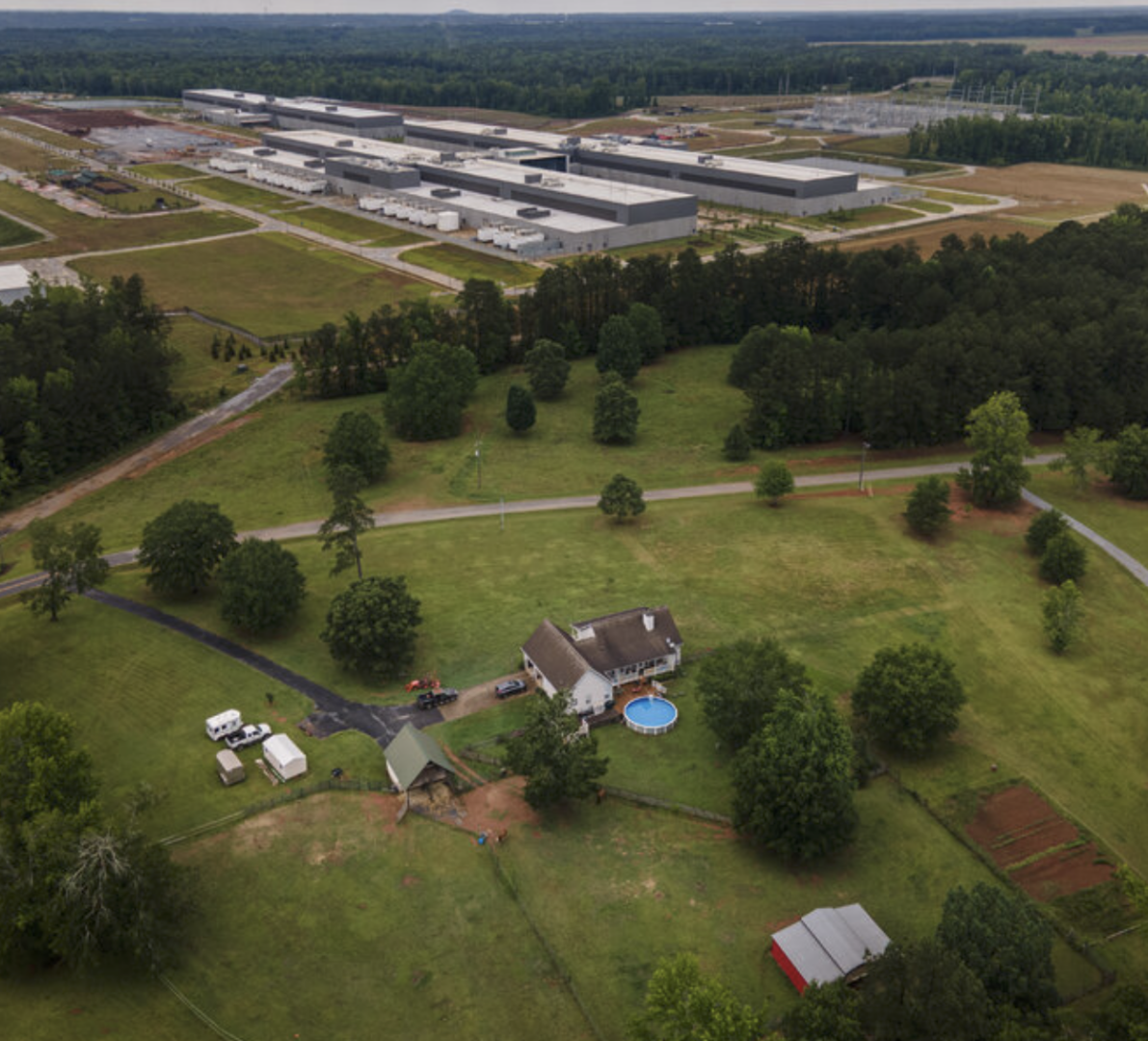
From a biological and environmental perspective, these alterations can have much deeper effects than they may initially appear to have. Aquifers are not simply water reserves for human use, but systems connected to surface ecosystems, waterways, wetlands, and vegetation. Excessive pressure on underground resources can alter the functioning of entire habitats, affecting water availability, biodiversity, and ecological cycles.
Furthermore, the direct climate impact of these facilities must also be taken into account, as they constantly dissipate energy in the form of heat, contributing to rising air temperatures, especially in surrounding areas. It appears, in fact, that the heat produced by a single data center can exceed that emitted by as many as 40 homes. When this phenomenon is combined with the traditional urban heat islands already produced by asphalt, concrete, and traffic, it immediately becomes clear that the overall picture is far from reassuring.
All of this leads not only to a decline in thermal comfort for local populations, but also to a further increase in the energy consumption needed to cool buildings and homes.
The energy issue is, in fact, another of the most critical aspects. Artificial intelligence systems require enormous computing power and, consequently, a growing amount of electricity. It is enough to consider that, according to the latest reports from the International Energy Agency (IEA), the electricity demand of data centers focused solely on AI has increased by 50% in just one year, and the sector’s overall consumption is expected to double by 2030.
The risk is that the growth of these infrastructures will end up slowing progress toward international climate goals, especially if the energy used continues to come largely from fossil fuels.
For all these reasons, calls are growing for greater transparency regarding the actual consumption of data centers and their environmental consequences. Several experts are calling for more rigorous ecological assessments, limits on the use of water resources, and mandatory investments in more efficient and sustainable cooling systems.
The issue does not concern Meta alone, nor individual projects in the United States. The global competition over artificial intelligence is accelerating the construction of new facilities everywhere, often without adequate public debate on the associated ecological costs. AI is presented as a symbol of the future, but it risks having a very concrete environmental impact, deeply rooted in the present.
The challenge, therefore, is not to stop technological innovation, but to prevent the digital transition from creating new forms of pressure on ecosystems precisely while the planet is facing climate crises, water scarcity, and biodiversity loss. Because behind every answer generated by an algorithm there is a physical infrastructure that consumes energy, water, and land. And the more demand for artificial intelligence grows, the more necessary it becomes to question the real price we are willing to pay.
Alessia Mircoli