


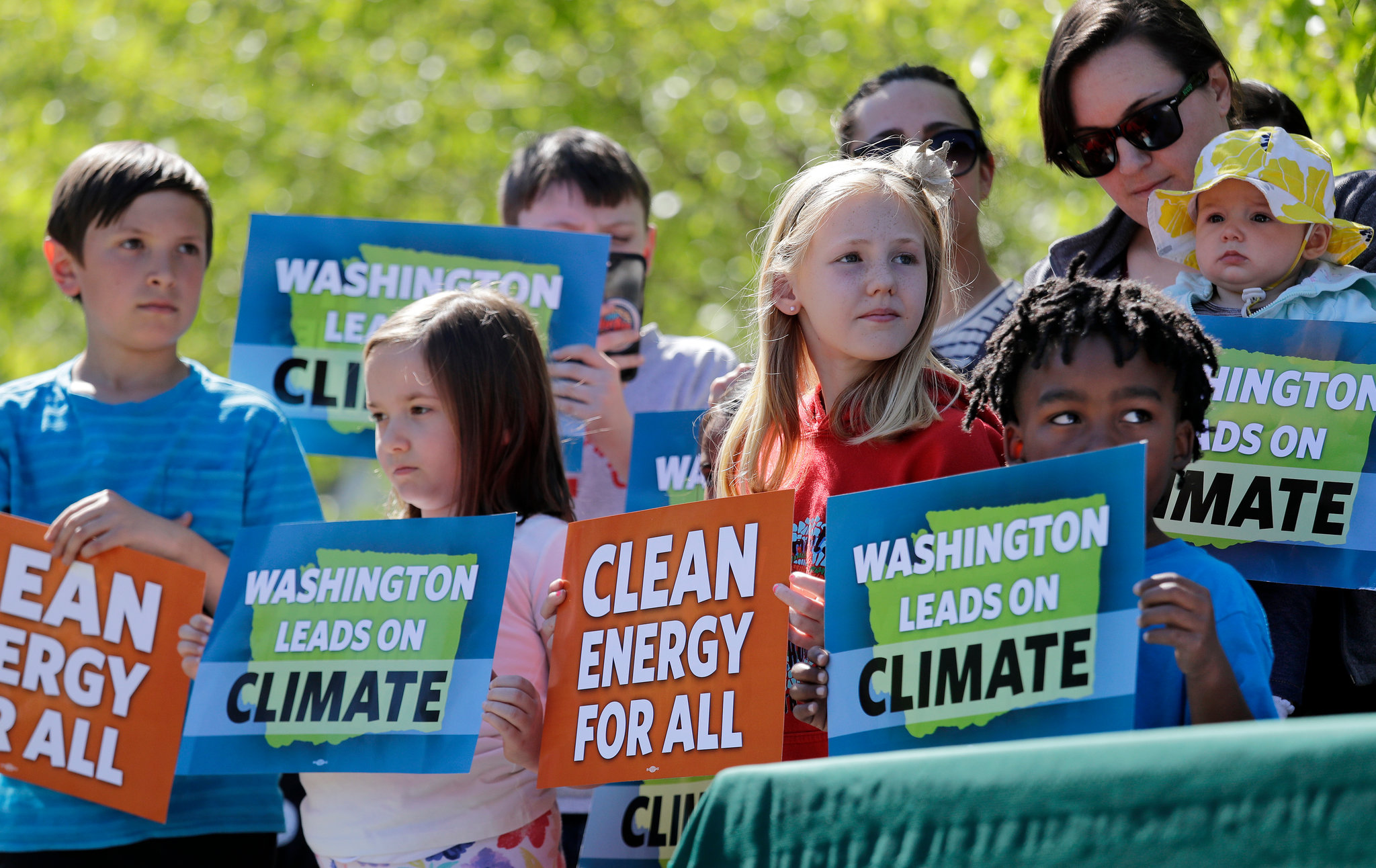
The climate crisis ceased long ago to be a purely environmental or economic issue. It has become a full-scale crisis of human rights and children’s rights. The latest scientific evidence and global statistical data presented in UNICEF’s 2026 Climate Risk Report for Children outline a scenario with no historical precedent: today, nearly all children worldwide are exposed to multiple risks linked to ecosystem collapse and global warming. We are no longer dealing with isolated extreme weather events, but with a complex and dangerous cascade of overlapping threats that is progressively weakening the resilience of families, communities and healthcare institutions.
The scientific and epidemiological data leave no room for optimistic interpretations: nearly all of the world’s children are currently exposed to at least one acute climate or environmental risk. The most alarming figure, however, and the one that redefines the urgency of international political action, concerns what is known as “overlapping exposure.” An estimated 1.1 billion children worldwide, approximately half of the global child population, live in geographical areas simultaneously exposed to at least three climate or environmental risks, with devastating consequences for health, education and survival.
This immense share of the world’s children must contend with at least three climate and environmental threats occurring in the same place and at the same time. This is therefore not a matter of responding to a single extreme weather event, such as an isolated heatwave or a temporary water shortage, but of surviving within a system in which multiple environmental shocks act together, amplify one another and systematically erase children’s capacity to protect themselves and recover.
The complex geographical mapping produced by UNICEF experts also highlights a profound and unjust inequality in the global distribution of risk, drawing a clear distinction between what is defined as absolute exposure and relative exposure.
Countries with large and densely concentrated child populations, including India, Nigeria, Pakistan and Bangladesh, consistently rank among those with the highest levels of absolute vulnerability. In these contexts, even when the percentage or relative share of children exposed to multiple threats within a given geographical area may appear numerically moderate, the total number of affected children is enormous and demands monumental humanitarian efforts.
A diametrically opposite yet equally tragic situation can be found in Small Island Developing States and landlocked developing countries. Although their populations are comparatively small in absolute terms, these territories have the highest rates of relative exposure. In these fragile island or isolated nations, the entire territory is vulnerable at the same time. When a severe tropical storm or cyclone strikes an island, its impact is not limited to one area but becomes systemic, simultaneously destroying or paralysing the entire network of essential social services and critical infrastructure.
A deeper scientific analysis of the intensity of these phenomena reveals that the most severe and frequent multi-hazard exposures are concentrated to an alarming degree in the Sahel, particularly in countries affected by complex crises such as Burkina Faso, Mali, South Sudan, Sudan and the Central African Republic.
In this part of the world, more than four million children face a relentless and potentially lethal combination of heatwaves, extreme temperatures and intense sand or dust storms every day, all compounded by chronic political instability and a lack of public investment.
The report strongly emphasises that children are not a homogeneous social group and that the crisis affects them in profoundly asymmetrical and disproportionate ways. From a biological perspective, children suffer the consequences of environmental disasters far more severely than adults because their bodies, organs and immune systems are still developing. This makes it physically and psychologically more difficult for them to withstand the stress caused by dehydration, heatstroke, malnutrition or the trauma of forced displacement.
This physical vulnerability is compounded by deep social inequalities related to age, gender, disability and membership of marginalised ethnic minorities or Indigenous communities. These groups often depend directly on local natural resources and are systematically excluded from access to basic services.
To assess children’s actual capacity to survive these climate threats, UNICEF has identified six key areas and essential social pillars. Their partial or total disruption due to climate change can transform a weather-related hazard into a large-scale humanitarian disaster.
The first pillar is healthcare. International data show that approximately 20 million children lack access to essential vaccinations, partly because environmental disasters destroy local medical facilities and disrupt the cold chains required to preserve vaccines.
The second pillar is nutrition. Global trends are deteriorating rapidly as droughts and floods devastate agricultural harvests. Estimates for the coming decades predict that climate change could result in an additional 28 million children suffering from wasting and 40 million experiencing stunted growth by 2050.
The third pillar concerns water, sanitation and hygiene. More than 600 million children lack access to safe drinking water, one billion are without adequate sanitation services and 489 million lack basic hygiene services. This situation is exacerbated by floods that contaminate groundwater and droughts that deplete it.
Education represents the fourth vulnerable pillar. A total of 243 million students have already experienced disruptions to their schooling because storms have destroyed educational facilities or heatwaves have made classrooms completely unusable, undermining learning outcomes.
The final two pillars concern child protection, threatened by more than 60 million cases of internal displacement that increase rates of child labour and early marriage, and social protection. The widespread lack of flexible safety nets could push an additional 130 million people into extreme poverty over the coming years.
This detailed and rigorous analysis of vulnerability factors definitively dismantles the illusion that industrialised, wealthy or advanced countries are somehow protected or immune from the devastating effects of global warming. The report’s specific focus on Italy offers clear evidence of this.
In Italy, the data reveal that 92.89% of children are exposed to at least one environmental hazard in their local area, 68.32% are vulnerable to at least two risk factors and 9.86% face simultaneous exposure to three or more overlapping threats.
Looking more closely at the individual pollutants and physical threats present in Italy, air pollution from fine particulate matter, or PM2.5, is confirmed as the most widespread and dangerous risk factor. It affects 91.98% of children and adolescents under the age of 18, with the risk level classified as high.
Heatwaves are the second most significant threat, affecting 82.99% of Italy’s child population. A substantial 66.78% experience unusually prolonged and frequent temperature peaks during the summer season.
Drought also represents a critical national emergency, affecting 73.24% of children across the country. This corresponds to more than six million children and adolescents whose access to secure water resources is under threat.
Although Italy’s well-established public healthcare network and structured education system partly mitigate children’s overall vulnerability compared with low-income countries, current climate trends require infrastructure to be upgraded extremely rapidly in order to prevent the collapse of social services.
To support governments and policymakers in planning targeted and effective interventions, the report introduces a multidimensional analytical model based on three different levels of assessment:
Hazard-specific risk analysis: useful for implementing early-warning systems and developing targeted infrastructure.
Sectoral risk analysis: enables individual ministries to determine how environmental threats affect the services under their responsibility.
Multidimensional risk analysis: provides policymakers with a comprehensive overview of systemic risks, supporting the development of National Adaptation Plans, or NAPs, capable of protecting the most marginalised communities without fragmenting interventions.
The ultimate objective of the study is to issue a global and non-negotiable call to action to guarantee every child’s right to grow up in a clean, healthy and sustainable environment.
UNICEF urges governments and the private sector to collaborate immediately on three fundamental priorities: a drastic and immediate reduction in global emissions through the gradual elimination of fossil fuels, in order to limit warming to 1.5°C; the adoption of structural adaptation measures centred entirely on children’s needs within national plans; and the active involvement and leadership of younger generations in climate-related decision-making processes.
Investing in the resilience of basic services while placing children at the centre of climate policy is the only way to protect them from today’s climate threats and guarantee them a dignified future.
Alessia Mircoli