


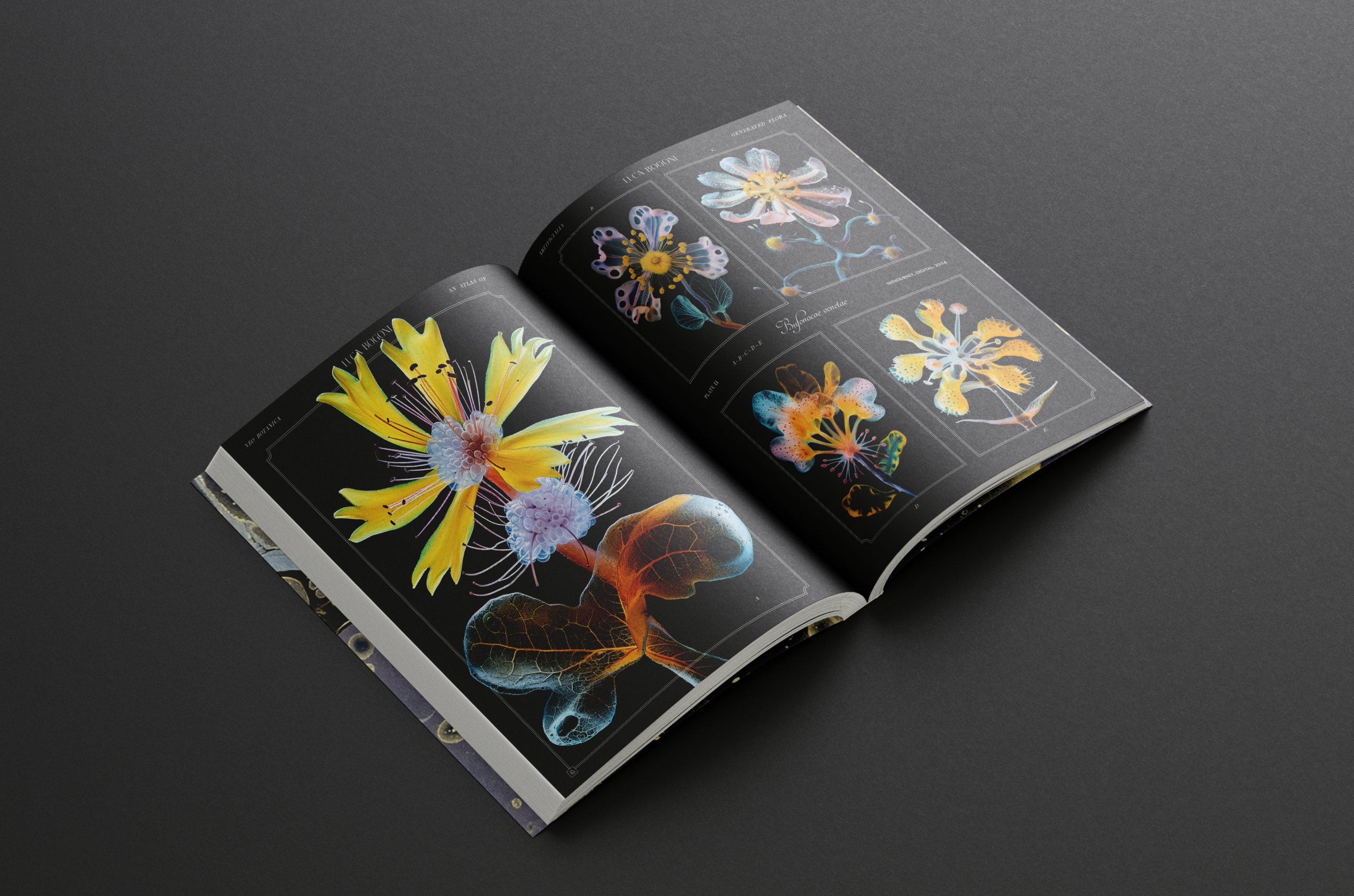
A botanical atlas begins with a gesture that is both humble and immense: observing what grows, giving it a name, rescuing it for a moment from the confusion of living things. The plant described on the page continues to live elsewhere, but the book offers us the reasonable illusion that we have understood it. Neo Botanica: An Atlas of Artificially Generated Flora, edited by Luca Bendandi and Freya Marshall and published by Vetro Editions, begins with the same intellectual structure and turns it inside out. Here, the atlas does not record an existing world: it produces one. Its species emerge from AI, CGI, 3D modelling and computer code. They are flowers lost to extinction, hybrids that have never appeared, plant structures belonging not to natural history but to the more ambiguous realm of the possible.
The book’s first achievement lies in its decision to use an ancient form to contain images created with recent technologies. The herbarium and the florilegium belong to a tradition founded on the idea that the world can be observed, classified and preserved. Neo Botanica adopts that tradition at a time when preservation has become problematic and classification is no longer enough, because even as we catalogue nature, we are witnessing its decline. Artificial flora does not replace the real thing. It functions as a counter-archive: it preserves what has never existed and makes the fragility of what does exist more visible.
The works of the thirty-two artists brought together in the project construct gardens that share no common ground other than the digital. Some plants generate potentially endless tendrils; some flowers, animated through augmented-reality content, evolve, adapt and eventually merge into new species. Variety is the very substance of the book, because plant life is treated not as a decorative repertoire but as a system capable of mutation. These bioforms, familiar enough to be recognised and strange enough to repel us, seem to obey laws we do not understand. The reader is confronted with something that resembles a flower, the simulation of a flower and the hypothesis of a future species all at once.
It is within this oscillation that Neo Botanica finds its most compelling tone. The book does not ask us to choose between wonder and alarm, between utopia and dystopia. It allows these possibilities to remain superimposed, as they do when we encounter technologies that genuinely affect our imagination. On one side lies generative euphoria: code produces forms that natural selection has lacked the time, necessity or whim to attempt. On the other lies a less comforting question: why invent a new nature precisely while the existing one is losing biodiversity and being transformed by global heating and environmental degradation? The book does not resolve the paradox with a ready-made moral. It gives the paradox a visible form.
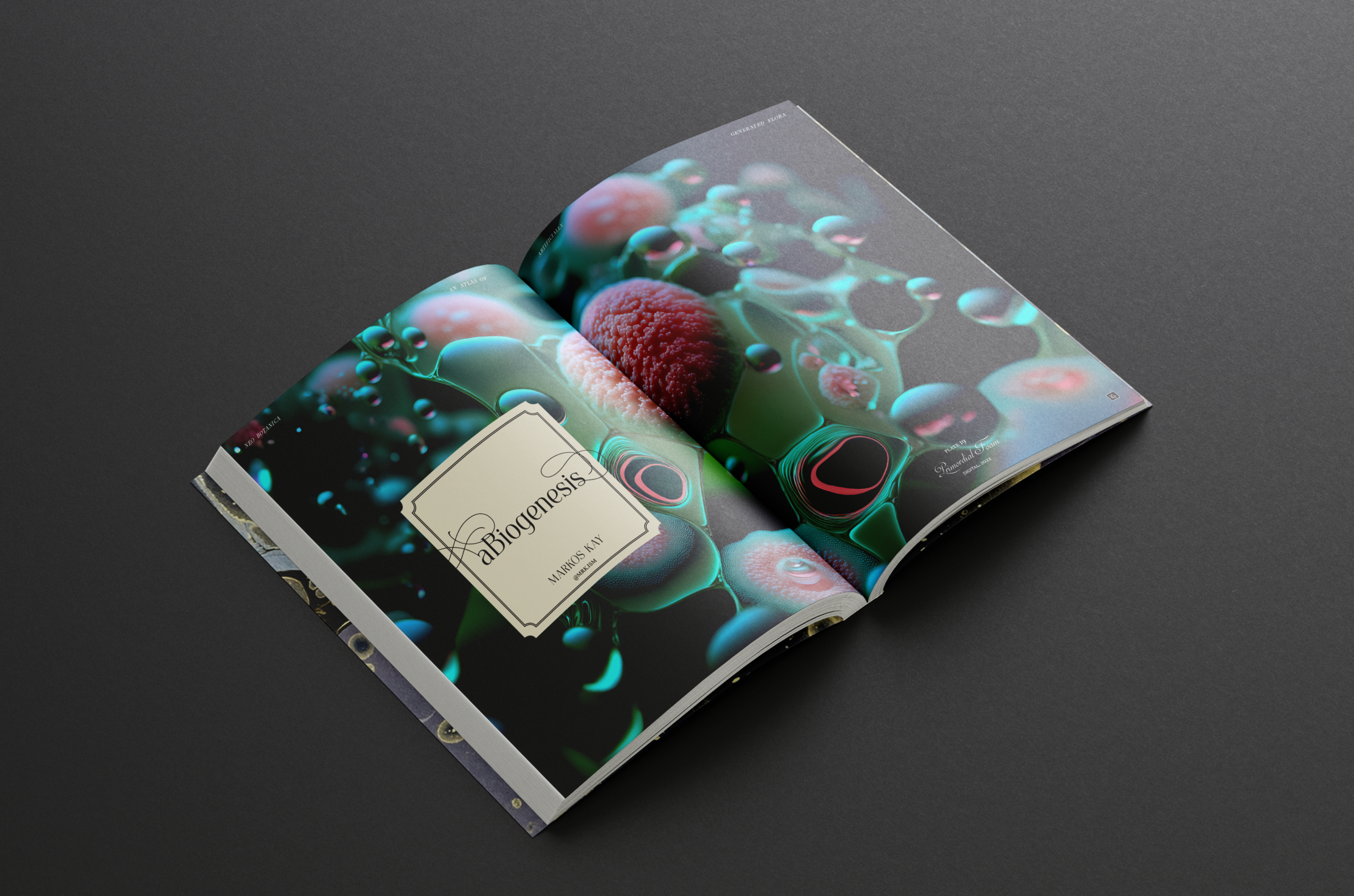
The point is not to establish whether an artificial plant is “real”. The question is less intelligent than it appears, because it confuses material existence with the effectiveness of the imagination. The plants in Neo Botanica do not photosynthesise, provide nourishment or stabilise ecosystems. Yet they intervene in the way we look at plants that do all these things. Their artificiality turns them into optical instruments. They reveal how thoroughly our relationship with nature is already mediated by images, devices, archives and models, and how inadequate the opposition between the natural and the technological has become. Machines do not inhabit some separate elsewhere: they alter what we are able to see and even what we are capable of mourning.
Augmented reality is therefore not a promotional addition, although publishing marketing tends to treat every digital extension as if it were the discovery of fire. Here, it makes the boundary of the book mobile. The page preserves the image; the device sets it in motion; the reader passes from contemplating a botanical plate to experiencing a form that changes. The result is a portable exhibition, but more importantly, a book that turns its own material limitations into a poetic principle. A traditional atlas immobilises living things in order to study them. Neo Botanica gives its non-existent species a sense of time. That which does not live is represented as though it could evolve.
This decision prevents the project from becoming merely a gallery of spectacular images, a very real risk for any publication devoted to generative art. The artists involved, from Refik Anadol to Anna Ridler, from Ryoichi Kurokawa to Andrés Reisinger, form a heterogeneous international panorama. Yet the book does not merely ask us to admire their technical skill. It asks us to notice that every technology contains a particular idea of nature. An algorithm can treat nature as a dataset, a repertoire of forms, an organism to be imitated or a memory to be reconstructed. The works do not offer a single answer, preventing the book from becoming the illustrated catalogue of a thesis decided in advance.
The ecological question is addressed without turning every image into an educational poster. Neo Botanica is rooted in the awareness that plants are living archives of the past and indicators of the future. Biodiversity loss gives these imaginary species a significance that extends beyond formal invention. They may appear as substitutes, ghosts or rehearsals; they may recall extinct flowers or anticipate organisms that no real environment will ever accommodate. In either case, they force us to think of nature not as the stable backdrop of human life, but as something that can disappear or survive only in the form of an image.
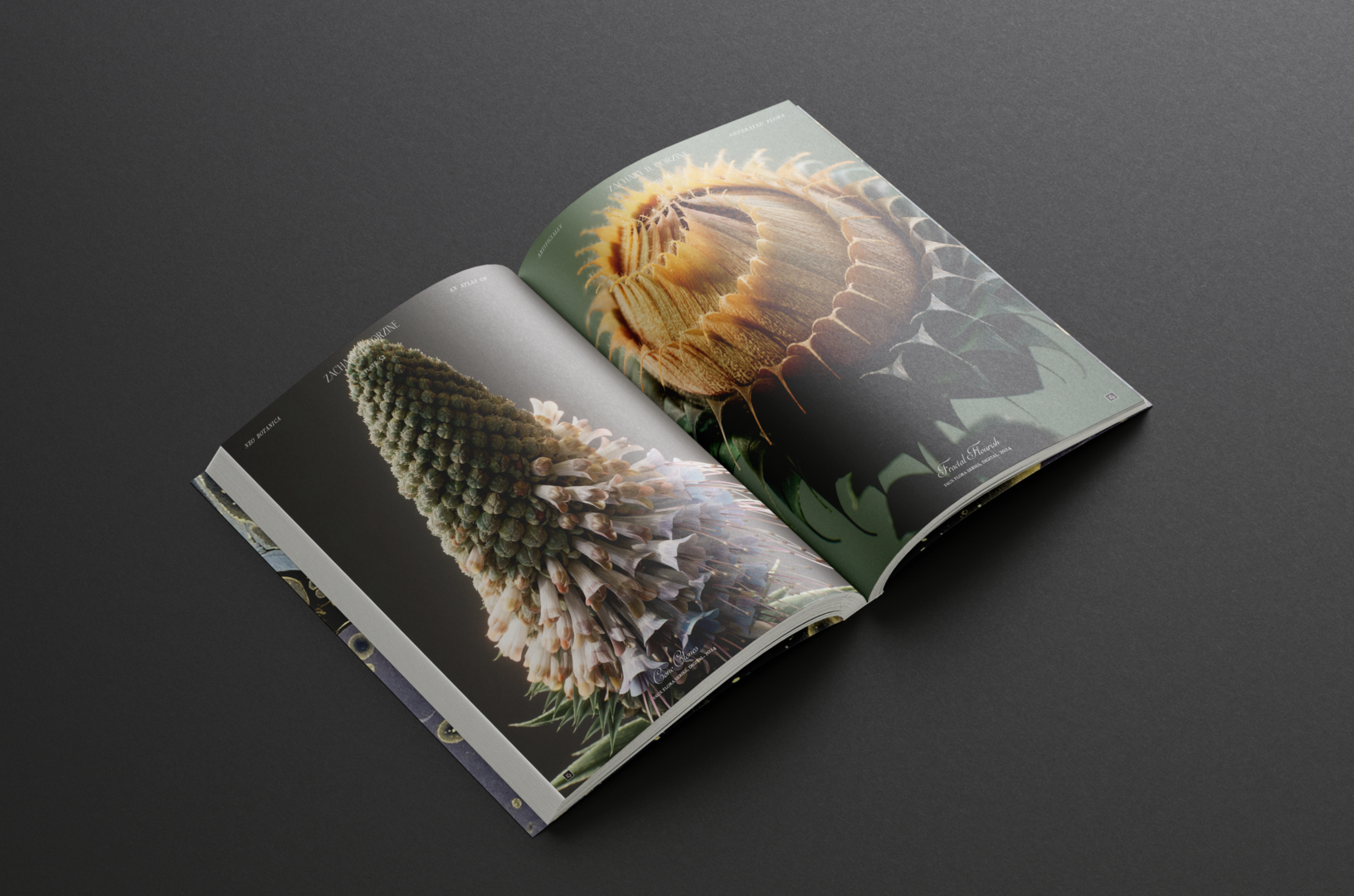
Behind the book lies an explicit confidence in the possibility that technology might help rebuild a connection with the natural world. This is perhaps the project’s most vulnerable point, because the idea of technology as an instrument of healing risks becoming a reassuring formula. No generated image, however magnetic, can repair an ecosystem by itself. But Neo Botanica avoids the worst kind of naivety: it does not present the digital as a separate and immaculate realm. It places it inside the contradiction. The same techniques that seem to distance us from the direct experience of nature are used to compel us to look at it again, through the detour of something that is not nature.
For this reason, the book works above all as an exercise in attention. Its impossible plants do not tell us what the future of flora will be. They remind us that this future has become thinkable as a problem rather than as a guaranteed continuity. Algorithmic imagination matters not because it can create the unprecedented, but because it makes the familiar unsettling. After passing through these coded gardens, a real flower can once again appear as what it has always been, and what habit prevents us from seeing: an improbable, complex and temporary form.
Neo Botanica thus achieves something rare for a book built around new technologies: it does not become obsolete the moment it names them. AI, CGI and augmented reality are tools within the project, not its ultimate subject. Its subject is our need to invent images of nature while we risk losing nature’s presence. The book offers no solution, thankfully. It offers an atlas of uncertainty, a rootless herbarium that uses the future to restore weight to the present. Its species do not exist. The problem they make visible, however, exists all too clearly.
Redazione