


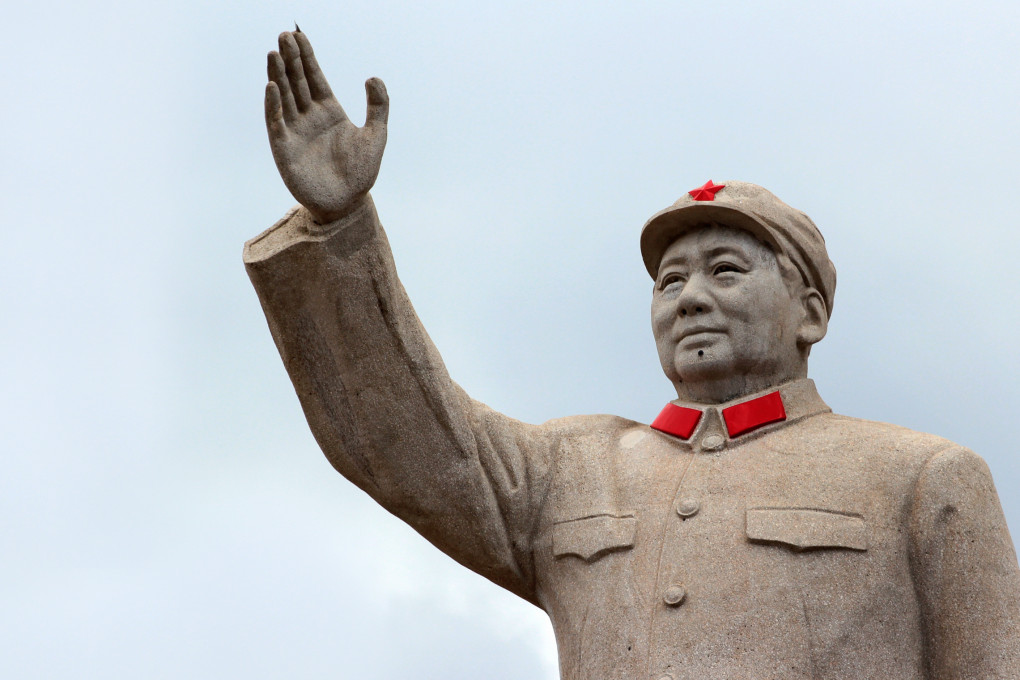
The inscrutable eyes of Mao Zedong still roam China. If Andy Warhol’s pop art immortalized them in 1972, the portrait of the Great Helmsman has never stopped watching over Tiananmen Square and lives on in billions of Chinese wallets, printed on every renminbi banknote, the “people’s currency.” Fifty years after his death, however, Mao’s face circulates more widely in cyberspace than in the physical world. On social media platforms such as Weibo, Zhihu, and Bilibili, growing numbers of young Chinese users are bringing him back into their digital communities through memes and coded language, calling him “Instructor” (jiàoyuán) and reviving Maoist aesthetics as a weapon against capitalism or the regime itself. They belong to the Net Left, a loose constellation of online activists and students who, caught somewhere between neo-Maoism and biting irony, reveal the disillusionment of a significant segment of Generation Z.
To understand Mao’s renewed popularity among digital natives, we need to look beyond the postcard-perfect image of China filtered through the lens of Chinamaxxing. The driving force lies primarily in the contradictions of Chinese state capitalism and the frustration they have generated among young people: cutthroat competition, 72-hour workweeks, and limited social mobility, with the rich getting richer and the poor getting poorer. In March, Li Shi, an economist and dean of the Institute for Common Prosperity and Development at Zhejiang University, revealed that the wealth Gini coefficient had risen from 0.45 in 1995 to 0.7 in 2023. Meanwhile, in June 2023, unemployment among Chinese people aged 16 to 24 reached 21.3 percent, the highest level ever recorded. Against this backdrop, Mao Zedong’s Selected Works, now flying off the shelves of Beijing’s university libraries, have become, first and foremost, a survival guide. In some cases, they have also become a vehicle for dissent, tolerated by Xi Jinping’s regime but censored whenever necessary.
The origins of the Net Left can be traced back to 2019 and were intertwined from the outset with the inequities of the private tech sector. The widespread 996 work culture, declared illegal by China’s Supreme Court two years later but never eradicated, forced young graduates to work from nine in the morning until nine at night, six days a week. In short, 72 hours of work and 96 hours left for everything else, sleep included. Jack Ma, the founder of Chinese tech giant Alibaba, proudly defended the system, going so far as to describe overwork as “a blessing.” Exhausted by these punishing schedules, tech workers in Beijing and Hangzhou launched the “996.ICU” movement, whose three letters stand for Intensive Care Unit: the inevitable destination of anyone who accepts such working conditions. The protest went viral and, as Jamestown Foundation analyst Shijie Wang explains in the ChinaTalk newsletter, “the language of nostalgia for the Cultural Revolution reemerged in China’s digital sphere.” Hatred of capital was directed at its most prominent representatives, starting with Jack Ma, who, according to the more militant users, deserved to “be hanged from lampposts”, echoing the rhetoric once directed at aristocrats during the French Revolution.
The resurgence of anti-capitalist sentiment among younger generations is, above all, the product of expectations that were never fulfilled. China’s economic boom in the 1990s, with its pursuit of material prosperity, offered a way to distance the country from Mao and the wounds of the Cultural Revolution, as Flora Sapio, professor of Chinese History at the University of Naples “L’Orientale,” explains to Bunker Magazine. But the labor market has changed, and many young people now find themselves living with chronic economic insecurity, crushed by social pressure. Some respond with outright refusal, like the followers of tangping, literally “lying flat”: a form of voluntary disengagement that went viral online and was promptly censored by the regime. Others interpret Mao’s writings as a manual for psychological resistance. Still others retreat into a cult of the defeated on social media, embracing Maoist aesthetics and the apparent purity of its values to expose the hypocrisies of Xi Jinping’s regime. All without ever venturing beyond the digital bubble.
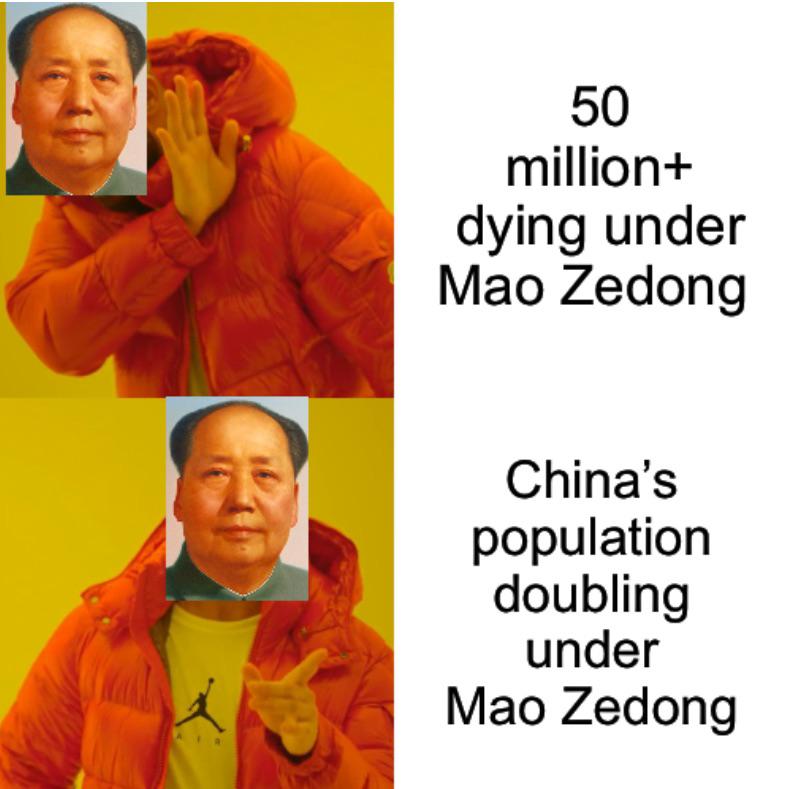
One of the most revealing examples occurred in November 2025 on Bilibili, China’s best-known video-sharing platform, often compared to YouTube. A content creator named Liáohuì diànyǐng ba (Let’s Talk Movies) uploaded three videos in succession analyzing Fanghua (Youth), the 2017 film directed by Feng Xiaogang. Grossing $235 million worldwide, the film opens against the backdrop of the Cultural Revolution (1966–1976) and follows the lives of several young idealists belonging to a military performing arts troupe of the People’s Liberation Army, as they navigate a series of turbulent historical upheavals. The creator’s videos advance an increasingly radical political interpretation of the film, dwelling on its symbolic subtext and ultimately arguing that Fanghua is actually the story of a betrayed revolution, now concealed by the official history written by the ruling elites. One of its protagonists, according to this reading, is none other than Wang Hongwen, vice chairman of the Communist Party during the final three years of Mao’s rule, who was later sentenced to life imprisonment for his involvement in the Gang of Four. His image as a heroic proletarian is contrasted with the corrupt faction of Deng Xiaoping, which supposedly dragged the country toward capitalism through China’s economic reforms following Mao’s death.
The trilogy amassed 37 million views and was flooded with danmu (“bullet comments”), Bilibili’s real-time messages, praising Maoism and revolution. Five days later, the platform removed the videos without any official explanation. The creator’s account was deleted. Yet traces of the episode remained, along with its aesthetic vocabulary. According to analyst Shijie Wang, the virality of nostalgic memes superimposing the film’s protagonist onto Wang Hongwen is revealing: by identifying with those defeated by the Revolution, young members of the Net Left “recast their stagnant lives as a narrative of tragic resistance. Trapped in precarious work, this imagery becomes a political sanctuary that lends dignity to their everyday struggles.”
The rise of the Net Left has not gone unnoticed by the Chinese Communist Party. Any deviation from the one-way street of official history is labeled historical nihilism, a concept that, since Xi Jinping assumed the presidency in 2013, has become the ultimate instrument for suppressing dissenting voices. In the confidential directive known as Document No. 9, historical nihilism is described as “a fundamental threat.” Since then, as University of Zurich professor Jean Christopher Mittelstaedt explains, it has become a veritable “political technology” in Xi’s hands. Relaunched in 2021 to mark the Communist Party’s centenary, the war on historical nihilism has tightened nationalist control over the teaching of history in schools, increased the penalties for dissenting opinions and, in the case of the Net Left, extended into cyberspace.
It is no coincidence that dissent has migrated online, into fragmented communities such as the Net Left, often ironically referred to as “keyboard political circles.” Following the effective co-option of the intellectual New Left, which, according to political scientists such as Letian Lei, had very little that was genuinely left-wing about it, the 2018 Jasic Technology affair had brought students and workers together. But repression crushed this unprecedented alliance before it could take root. That spring, in Shenzhen, workers at the machinery manufacturer mobilized to establish an independent trade union, protesting against meager wages and management abuses. Police responded with a wave of arrests, but the news persuaded dozens of students from university Marxist groups to support their cause in person. As Human Rights Watch reported, police raids in the following months led to the arrest of around a hundred activists, amid enforced disappearances and raids on their apartments. Marxist organizations were dissolved, while those arrested were charged or convicted in judicial proceedings whose outcomes, in many cases, remain unknown to this day.
In the digital sphere, the regime allows greater latitude, although large-scale censorship operations are hardly uncommon. In 2021 alone, ahead of the Party’s anniversary, the Cyberspace Administration of China (CAC) announced that it had removed more than two million posts deemed guilty of “historical nihilism.” The direction is clear, finding expression each year in the “Qinglang” campaigns. The latest, launched on September 22, 2025, was a two-month campaign titled “Combating the Deliberate Incitement of Negative Emotions.” Yet some room for tolerance remains. After all, how could the Chinese Communist Party ban every reference to Maoism, from which it derives a central part of its own legitimacy? The official position on the Cultural Revolution is enshrined in the 1981 resolution adopted under Deng Xiaoping: Mao’s decisions were 70 percent correct and 30 percent wrong. Then, in 2013, Xi Jinping attempted to circumvent the impasse with a new formula: the post-reform era (after 1978) cannot negate the preceding period, and vice versa.
At a time of precarious employment and economic inequality, this contradiction risks resurfacing, through an inversion of an old Maoist formula: “waving the red flag to oppose the red flag.” In other words, challenging the regime from the left by using its own founding language. The regime’s threshold for tolerance remains uncertain: the removal of the Fanghua videos from Bilibili confirms as much. And so the Net Left has shifted its survival strategy into the shadows of the much-feared historical revisionism: multilayered interpretations of a single film frame, memes loaded with historical allusions, dog whistles disguised as innocuous messages, and other linguistic devices designed to smuggle more or less politicized ideas past the censors. Content that, in turn, conceals something else: the profound unease of a generation with no certainties.
Simone Bianchetta