


My mother turned eighty-two a few days ago, and she does not vote for Italy’s Democratic Party. Neither do I, for that matter. Yet it was she who forwarded me, a few days ago, the newsletter announcing a conference organized by the party at its headquarters in Rome, including the full text of a speech by Giorgio Parisi on artificial intelligence.
On these subjects, I must admit she is far more alert and open-minded than many people my age who work with AI professionally. What pleased me most, however, was recognizing in the Nobel laureate’s remarks ideas that I—and many others—have been advocating for years.
Until recently, people like us were often dismissed as “tech enthusiasts,” a label carrying the not-so-subtle implication that we were useful idiots for the major digital platforms. That was because we refused to deny the increasingly astonishing capabilities of these systems, as was fashionable until last year (a position that is becoming harder to sustain), or because we considered the taboo surrounding creative uses of AI—from research to art—to be pointless, as is the tendency to blame users themselves. We also believe that capitalist remedies such as copyright are of little use. I do not know whether the times are changing or whether we were always less isolated than it seemed, but it is comforting to discover that this is the case.
Enough of the personal digression. Let us turn to the proposal itself.
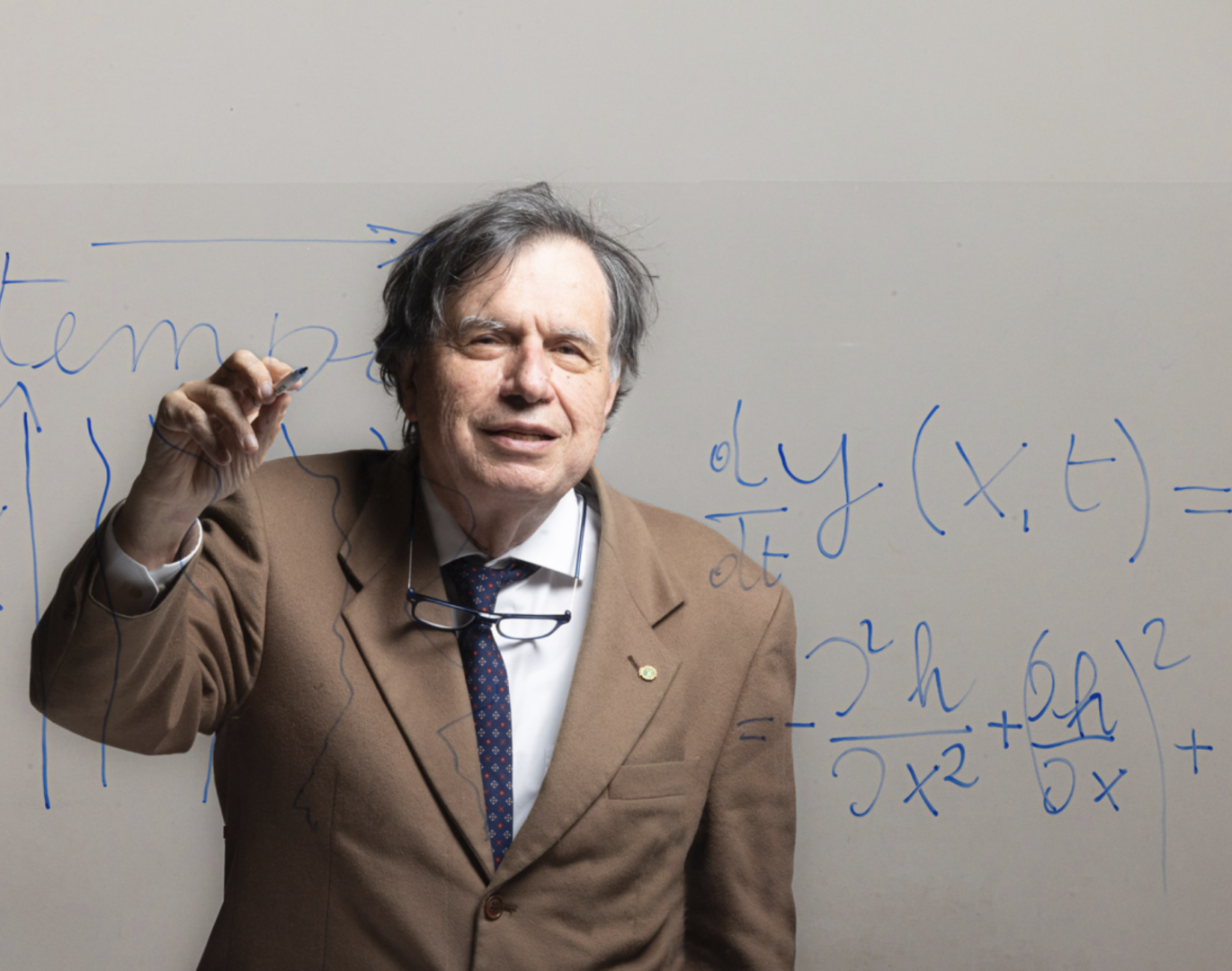
Parisi and a number of other researchers advocate the creation of a public European center for AI research—a kind of CERN for artificial intelligence: an open, transparent infrastructure funded by multiple states and capable of supporting a level of research that no single country could achieve alone.
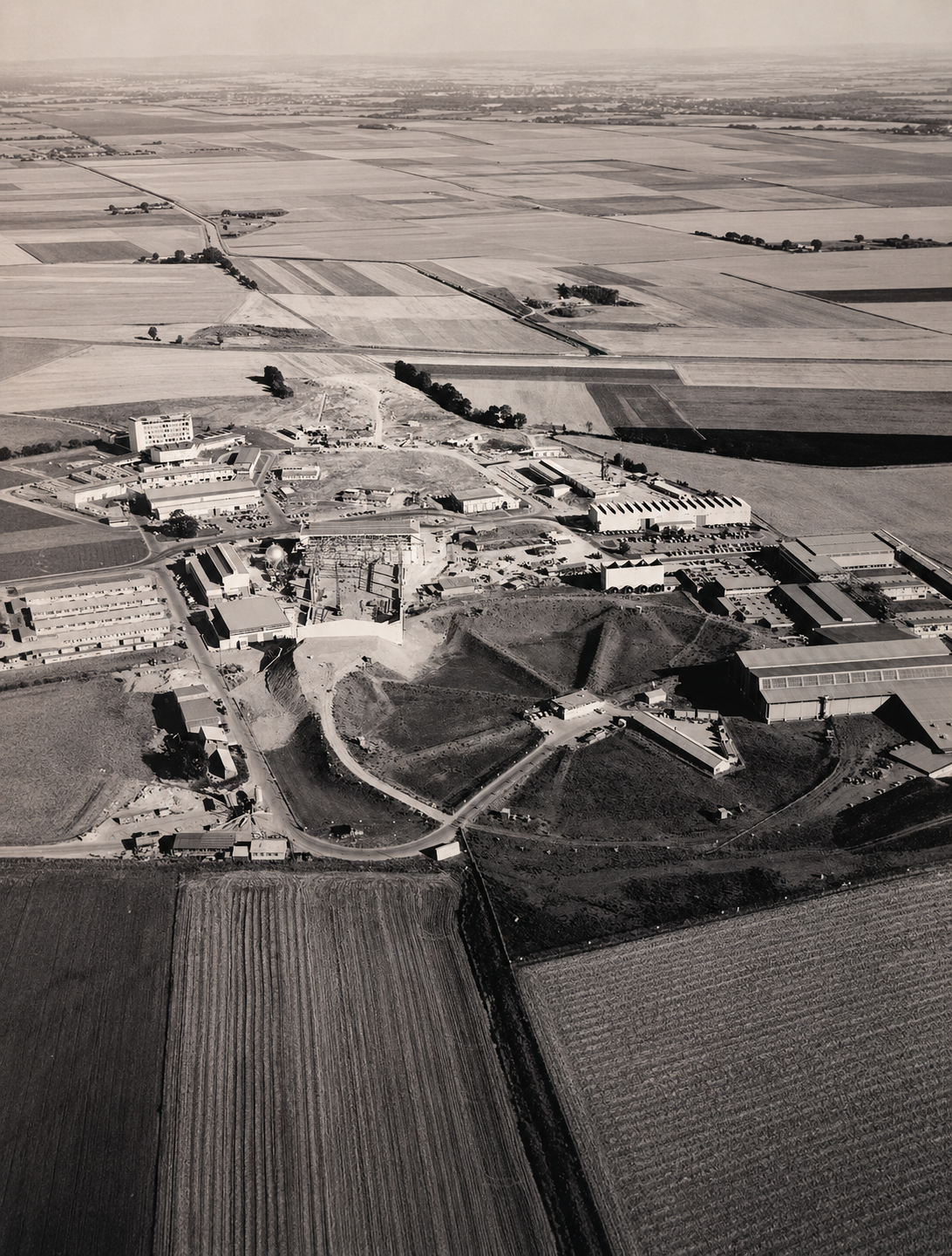
The comparison with CERN is rooted in history. After the Second World War, European nations pooled their resources to build physics laboratories that individual countries could not afford on their own. Industrial secrecy was set aside, results remained public, and cooperation flourished among nations that had only recently been at war with one another.
The idea itself is not new. For the past seven years it has been promoted by Giuseppe Attardi, former professor of Computer Science at the University of Pisa, through the network that was known in 2018 as CLAIRE and is now called CAIRNE. Parisi has long supported it as well. In fact, it was Parisi who gave the proposal continental visibility through an appeal published in Nature in October 2024. At that stage the metaphor was not CERN but rather an international “telescope” capable of observing and counterbalancing the power of large corporations. The comparison with the Geneva laboratory emerged later in interviews as a more immediately recognizable image.
Attardi repeatedly makes what seems to me a decisive point: Europe did not fail to produce language models comparable to those developed in the United States or China because of any technical inferiority. The problem was simply funding. He also argues that such a center would not merely generate yet another AI model; it would explore directions that private companies often neglect because they are too risky or insufficiently profitable.
In recent months the proposal has ceased to be merely a petition circulating among scientists and has begun to carry political weight. A manifesto presented in Bologna last autumn has been signed by figures including Yann LeCun, Geoffrey Hinton, Cédric Villani, and Bernhard Schölkopf. In February, Italy’s Minister for Universities and Research, Anna Maria Bernini, publicly endorsed it at the Accademia dei Lincei. Distinguished signatures are encouraging, but as we all know, translating ideas into reality involves budgets, legislation, projects, and a great deal of bureaucracy.
Parisi’s analysis suggests that today’s general-purpose AI models are controlled by a very small number of private companies, which collectively possess the computational power, the data, and the models themselves. Only a few years ago such concentration would have seemed implausible. It reinforces itself because the larger and more efficient a system becomes, the more users and investment it attracts, allowing it to grow even further.
When we query one of these systems, we rarely know where its answers come from. Those who choose the sources, determine what counts as reliable information, and shape the model’s behavior wield enormous yet largely invisible influence over its outputs.
More fundamentally, we still do not fully understand how these systems work. We build them and operate them successfully, yet we lack a comprehensive theory explaining why performance improves as layers and parameters increase. Research is not only about making things function; it is also about understanding them. To do that, we need public institutions willing to ask questions that matter less to those whose primary goal is selling products.
Drawing on a report by Bernie Sanders, Parisi reminds us that AI’s power rests upon a collective inheritance: decades of publicly funded research and the vast body of data generated by humanity over centuries. It is not ethically acceptable for all the wealth distilled into these models to remain entirely private.
The most instinctive response is to invoke copyright. If AI models feed on our work, then perhaps we should expand intellectual property rights, charge tolls, and erect gates around every text and image. By now, however, we can say quite plainly that this approach does not work.
Individual data points have little value in a context that requires billions of pieces of information, while large-scale datasets—massive collections of images, articles, and other materials—are controlled by major publishing conglomerates. Copyright revenues therefore accrue to only a handful of actors, who unsurprisingly strike deals with the technology giants. If knowledge is a common good, it should be treated as such: returned to society in the form of public infrastructure, shorter working hours, and collective economic dividends.
When a collective resource has been appropriated, the appropriate response is to socialize the benefits. Building yet another enclosure only helps those who already possess large territories and are best equipped to defend them—usually for economic reasons.
Parisi himself does not dwell on copyright issues (that particular obsession is mine). Instead, his speech shifts the central question. Rather than asking where artificial intelligence is headed, he asks who is holding the steering wheel, under what rules, and for whose benefit.
From that question emerge three intertwined themes: power, labor, and knowledge.
The first is the concentration of computational resources, data, and models in a handful of private hands, with the consequence that those who control these assets may ultimately shape narratives and meanings as well.
On labor, Parisi adopts a cautious position. He cites Geoffrey Hinton, who predicts both rising unemployment and rising profits, attributing the problem more to capitalism than to technology itself. He also recalls a striking statistic: since 1973, productivity and profits in the United States have increased dramatically, while median real wages have stagnated or even declined. The pie has grown larger, but most of the additional slices have gone to a very small number of people.
His conclusion is straightforward. If the gains generated by AI rest upon knowledge accumulated collectively, then part of those gains should be returned to everyone through shorter working hours, better public services, and what he calls a “technological dividend”—a concept echoed in the Democratic Party’s own policy document.
He cites the example of Italy’s national social security agency, INPS, which automated the processing of millions of communications and freed up tens of millions of working hours. Those hours can either become profits for a few or time and services for many.
This brings us to the proposal itself.

Parisi envisions an institution that is open, transparent, non-profit, and explicitly removed from military objectives. He estimates an initial budget of roughly one billion euros per year for three years, noting that France and Germany have already expressed interest
The details, he acknowledges, remain to be worked out. Rather than a single headquarters, the initiative could take the form of multiple sites distributed across different countries.
The Bologna manifesto describes a lean institution built around human capital and interdisciplinary collaboration, with open models and open-source development as founding principles to ensure that AI tools remain accessible to everyone. Alongside fundamental research and ethical reflection, the manifesto explicitly identifies environmental and energy sustainability as a core pillar—an aspect worth remembering.
Its envisioned fields of application range from multilingual language technologies and robotics to healthcare, climate modeling, and data security. It also proposes a framework for cooperation with industry, while insisting that such collaborations remain subordinate to the public interest. The document explicitly refers to “shared intellectual property models” and to protecting startups from premature acquisition.
Parisi also cites an encyclical by Pope Leo XIV, signed on the 135th anniversary of Rerum Novarum. From it he draws the idea that technology is never neutral and embraces a word he considers especially important: “disarm.” In this context, disarming AI means placing it back in the service of the common good.
He then addresses autonomous weapons directly—systems capable of selecting and attacking targets without a human hand on the trigger. Pending an outright ban, he argues that legal and moral responsibility must always remain with identifiable human beings.
Parisi also mentions legislation proposed by Bernie Sanders and Alexandria Ocasio-Cortez calling for a moratorium on the construction of new data centers until laws protecting workers, the environment, and civil rights are in place. He does so not because he endorses it, but because he sees it as a measure of the distrust toward AI that Silicon Valley prefers to ignore.
Personally, I find a moratorium too rigid and politically unrealistic. I would rather see strict, enforceable environmental standards governing the energy and water consumed by these facilities, the origins of those resources, and their local sustainability, coupled with mandatory public disclosure of actual consumption figures.
This would not be alien to the project itself, since environmental and energy sustainability already stand among the manifesto’s core principles.
As I mentioned earlier, the Bologna manifesto is accompanied by a petition that has already gathered more than three thousand signatures. I signed it as well.
A single signature carries little weight on its own. Yet signatures matter because they signal to governments that the demand comes from thousands of people, far beyond the university classrooms where the proposal first emerged. They demonstrate that the ambition to remove artificial intelligence from the exclusive domain of the market is not merely the eccentric wish of a small minority.
If you are inclined to sign petitions, this is one I feel comfortable recommending.rning and delegation. Save yourself effort where it is worth doing so, but do not spare yourself the effort necessary to learn.
Francesco D’Isa