


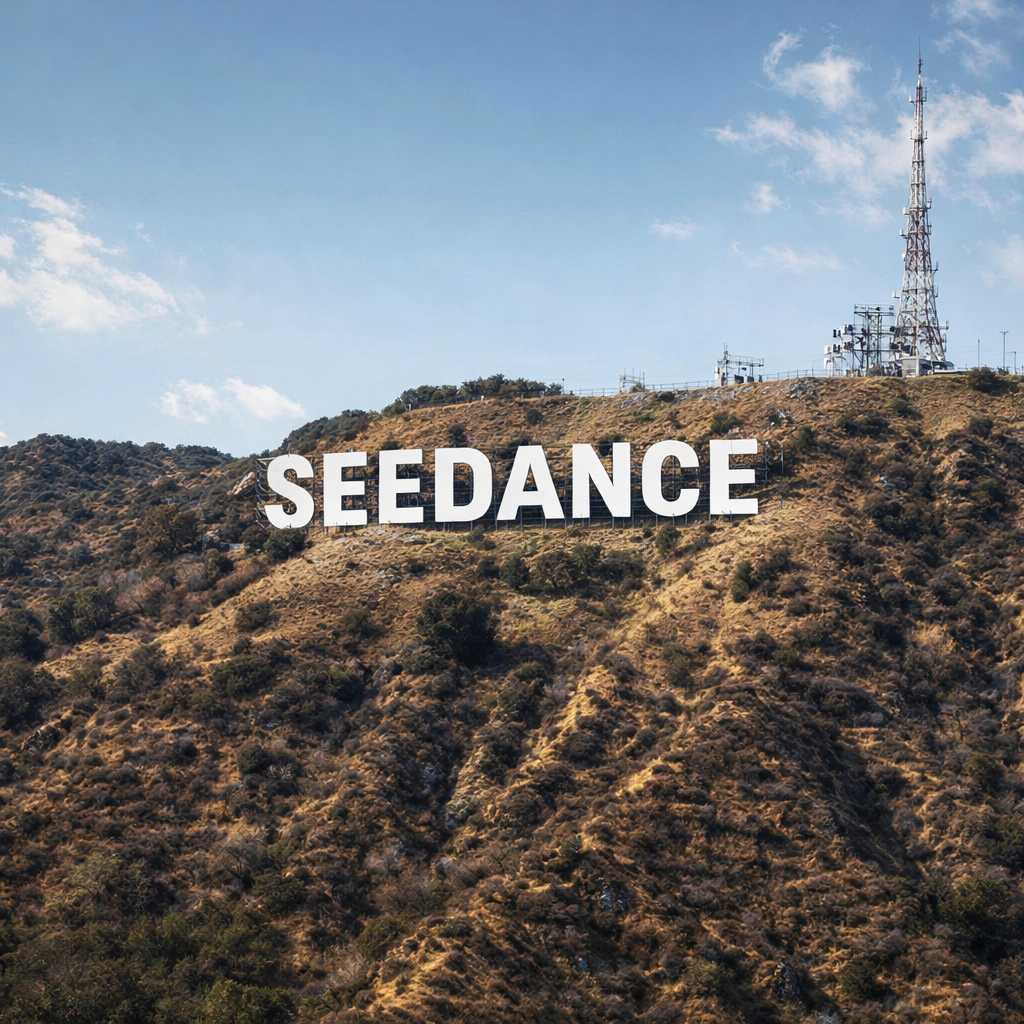
On February 12, ByteDance released Seedance 2.0 in China, its new video generation model. Within a few hours, the internet was flooded with clips that looked like the fever dreams of a Hollywood post-production studio: Frodo at a “cash for gold” shop pawning the ring, the characters from Friends reimagined as otters, Will Smith dealing with a spaghetti monster, Kanye West dancing in a Chinese imperial palace while singing in Mandarin—but above all, countless—let me say, beautiful—Chinese films reinterpreted by kittens. Samurai, soap operas, thrillers, kung fu, all with cats. The videos were so realistic that previous versions already looked like relics from another geological era—a fate that will soon befall these as well.
On March 25, OpenAI shuts down its video project Sora, deciding to invest elsewhere.
China overtakes and America weeps: the day after the launch of Seedance 2, Disney sent a cease-and-desist letter to ByteDance, accusing the company of training the model on copyrighted works. Paramount called it a blatant violation of intellectual property, and the Motion Picture Association argued that copyright infringement was a structural feature of Seedance. The actors’ union SAG-AFTRA condemned the unauthorized use of its members’ voices and likenesses. ByteDance responded with two boilerplate sentences about respecting intellectual property and a promise to strengthen filters, then suspended the international release of the model. As of mid-March 2026, Seedance 2.0 remains accessible only to users of Chinese domestic apps.
Meanwhile, the agreement between Disney and OpenAI obviously falls through, and the company has stated it will still pursue AI projects that “respect intellectual property.”
OpenAI abandons Sora, but does so to invest elsewhere: coding, robotics, LLMs… the first company in the world to popularize a large language model is no longer at the top of the rankings for system power, with Claude and Gemini surpassing it in some respects but not others. They cannot afford to lose this race, and concentrating resources (and money) elsewhere is understandable, especially since the gap with video competitors had become noticeable: videos generated with Sora were not only increasingly less successful than those made with Kling or Seedance 2, but also more expensive.
What the Seedance and Sora case reveals, however, if viewed with a bit of perspective, is an ongoing shift in the center of gravity of global cultural production, made possible in part by a regulatory asymmetry that the West itself helped create.
One should not think of China as a Wild West of artificial intelligence, without rules or limits—quite the opposite. At the beginning of February, shortly before the launch of Seedance, the Cyberspace Administration of China announced the removal of over 540,000 AI-generated contents deemed illegal from Douyin, WeChat, and Weibo, along with disciplinary actions against more than 13,000 accounts. China has one of the most articulated regulatory frameworks in the world for governing AI-generated content: it has imposed labeling requirements, filtering mechanisms, and mandatory registries for generative model providers. Censorship is pervasive and often unpredictable.
And yet, the type of content being censored is different. The Chinese system is built to protect political stability and the image of the Party: it suppresses political satire, dissent, pornography, and historical narratives that do not align with the official line. But it is much more permissive when it comes to foreign copyrighted content. The protection of American intellectual property is not a priority of the Chinese system.
The West, symmetrically, has the opposite problem. Filters focus less on politics (with important exceptions) and more on intellectual property. Disney, Netflix, Paramount, Warner Bros. wield enormous legal blocking power and use it effectively. Hollywood protects its characters, but in doing so prevents Western creators from accessing the most advanced tools for video generation, ceding ground to those who do not face such constraints.
Those who produce culture need tools and the freedom to experiment. At this moment, the Chinese ecosystem offers both, at least for everything that does not touch the political sphere. The Western ecosystem offers more political freedom (though increasingly less guaranteed), but increasingly constrains creative experimentation with generative models.
Those like me who work daily with video generation models know that Chinese supremacy in this field is tangible. Seedance 2.0 and Kling 3.0 produce results that Western models do not reach, in terms of motion coherence, character consistency, and cinematic control of the scene. These are tools that allow one to think in directorial terms: you describe a scene as a meticulous director would, and the model handles framing, lighting, acting, sound. Sora 2, Veo 3.1, Runway Gen-4.5 are excellent models, each with their own strengths, but anyone who uses them all knows that the qualitative leap now tends toward the Chinese side.
The numbers confirm this impression. Six of the eleven best video generation models in the world are developed by Chinese companies—ByteDance, Kuaishou, MiniMax, Alibaba, among others. Chinese open-source models have gone from almost zero usage in mid-2024 to about a third of total AI usage by the end of 2025, according to OpenRouter data. Their tools cost less, are integrated into platforms with hundreds of millions of users (Douyin, CapCut, Doubao), and are accessible with fewer restrictions in Global South markets, where American platforms often block access based on IP address.
To understand where Chinese soft power in generative AI is heading, one must look at the much-feared “slop,” which I admit to frequenting and loving without shame. As I mentioned, in recent weeks social media across half the world has been filled with AI-generated micro-dramas in which cats and dogs perform soap operas, complete with emotional music, plot twists, and dramatic zooms on furry snouts. These videos come from China, are in Chinese (often with subtitles), and reach millions of views even in countries where no one speaks the language, from Pakistan to Latin America.
It is easy to dismiss all this as trash—and indeed much of this production is of low value. But not all of it: as with memes, the phenomenon has the structure of a collective creative game, a form of widespread experimentation from which genuinely inventive ideas, moments of humor, and small narrative gems emerge. YouTube channels dedicated to this type of content gather billions of views and generate revenues in the millions of dollars annually.
The path from meme to cultural product is shorter than one might think, and sometimes the two coincide. The AI short film Huo Qubing, a historical drama generated with Chinese tools, reached hundreds of millions of views in just a few days. The first AI film to go global could come from China.
Jia Zhangke, an award-winning director at Cannes and Venice, recently produced a short film entirely with Seedance 2.0, titled Jia Zhangke’s Dance.
The short deserves to be described, because it embodies an attitude toward artificial intelligence that is almost unthinkable in the West for an author of his stature. Jia Zhangke’s Dance features two versions of the director, both generated by AI: one with an overtly artificial appearance and the other almost indistinguishable from the original. Jia produced, wrote, and supervised it, but the two bodies on screen are synthetic. His AI version tells him it has removed his wrinkles and made him lose weight; he protests that he wants the kilos back, because otherwise he looks awkward. The two argue, tease each other, and visit together the scenes from the films that made Jia one of the most important contemporary filmmakers.
The revealing moment comes when the AI inserts an optimistic line about “looking toward a new era.” Jia rejects it: his characters have never spoken like that. It is a gesture of dialogical authorial resistance, far removed from the panic that pervades Western reactions to the same tool. On Weibo, accompanying the short, the director wrote that from black and white to color, from silent to sound, from film to digital, cinema has always coexisted with technological novelty, and that what matters is how people use technology, not the technology itself. He concluded with a sentence that a Western author would struggle even to formulate: “I am like AI, I am still learning.”
The contrast with reactions on the other side of the Pacific is instructive. In the same weeks Jia was experimenting with Seedance, SAG-AFTRA condemned its use, Disney initiated legal action, and Western platforms filled with invective against anyone who touched the tool. On Letterboxd, under the page for Jia’s short, a user wrote that anyone who uses AI for their work should be considered a former filmmaker. The prevailing attitude in the Western cultural world oscillates between ideological rejection and corporate defense; Jia’s is more pragmatic and, in its own way, more philosophically honest. He does not sacralize the figure of the author to the point of making dialogue with a machine unthinkable, nor does he succumb to uncritical enthusiasm. He plays with the ambivalence, stages it without resolving it, and asserts his authorship not against the tool but through the ability to use it with intention.
American cultural colonialism of the twentieth century worked through grand narratives: Hollywood films, pop music, television series built a shared imaginary that carried with it values, lifestyles, and desires. It was a top-down soft power, operating through expensive and technically sophisticated cultural products.
The emerging Chinese model is different. China is building the infrastructure through which the entire world will produce its visual content—and consequently is the first to use it. Precedents already exist: TikTok has redefined the global audiovisual language, imposing formats and aesthetics that are now standard even on competing platforms. The transition from technological curiosity to cultural hegemony can occur without anyone noticing, simply because the most convenient and powerful tool is also the one that shapes the creative habits of a generation.
The West finds itself in the position of someone defending a fortress while the ground around it crumbles. Disney and the MPA’s lawsuits against ByteDance are understandable from the perspective of asset protection, but the effect is to slow Western creators’ access to the most advanced tools, while Chinese creators continue to use them unhindered. Every month of delay in the international release of Seedance 2.0 is a month in which the Chinese creative ecosystem accumulates experience and produces content that—albeit still subtly—defines new aesthetic conventions.
Even the claim of a clear distinction between Chinese censorship and Western freedom is becoming increasingly untenable. American models apply increasingly restrictive filters on the generation of real faces, on the representation of violence, on even remotely controversial content. The safety filters of Western models, designed for partly legitimate reasons, have the side effect of making tools less flexible, powerful, and interesting for those who want to experiment. Chinese models, conversely, have very strict political filters but are more permissive elsewhere. The result is that for an independent creator who wants to produce an AI video that does not concern Chinese politics, the Eastern ecosystem is already the most effective choice.
No one can predict with certainty how this dynamic will evolve. It is possible that the American industry will find a compromise, that Chinese platforms will accept restrictions to enter Western markets, that Google’s models or others will close the technical gap. But the direction is clear: China is working on AI production with an intensity and coherence that the West cannot match, divided as it is between corporate interests, legal concerns, and ethical debates.
A century ago, American cinema conquered the world. Hollywood films carried with them values, narratives, and aesthetics that became universal; today, Chinese video generation tools could reverse that flow. While Hollywood sues ByteDance to protect Spider-Man, Chinese kittens are conquering us one meme at a time.
Francesco D’Isa