


June 14, 2024, Borgo Egnazia, Puglia. In a fortified resort, Pope Francis enters in a wheelchair before the G7 leaders to deliver the first papal address ever given at a summit of the worlds great powers. The focus of his appeal is neither peace in the Middle East nor the debt of poor countries, but artificial intelligence. We need a global algor-ethics, he warns, because only human beings can give meaning to data. The successor of Peter, custodian of a tradition that identifies the Word with salvation, asks faceless and unsacramental algorithms not to cross the threshold separating nous from computation.
It is a historic moment, but not an unprecedented one. In 1546, when the printing press began to disseminate Bibles in the vernacular, the Council of Trent responded with the Index and later the imprimatur. In 1931, Pius XI founded Vatican Radio to stake a claim on the airwaves; in 1963, the Second Vatican Council issued Inter Mirifica to form television; in 2002, John Paul II called the Internet a forum for spreading the Gospel. Every medium that amplifies the word pushes the Church to reassert its prerogative: to safeguard the Logos.
Generative AI, however, raises the stakes. It is not a press replicating texts nor an antenna rebroadcasting radio waves; it is a system capable of producing language dialogically, mimicking intentionality. If a machine can engage in conversation (and even write homilies), what space remains for the theology of the incarnate Word?
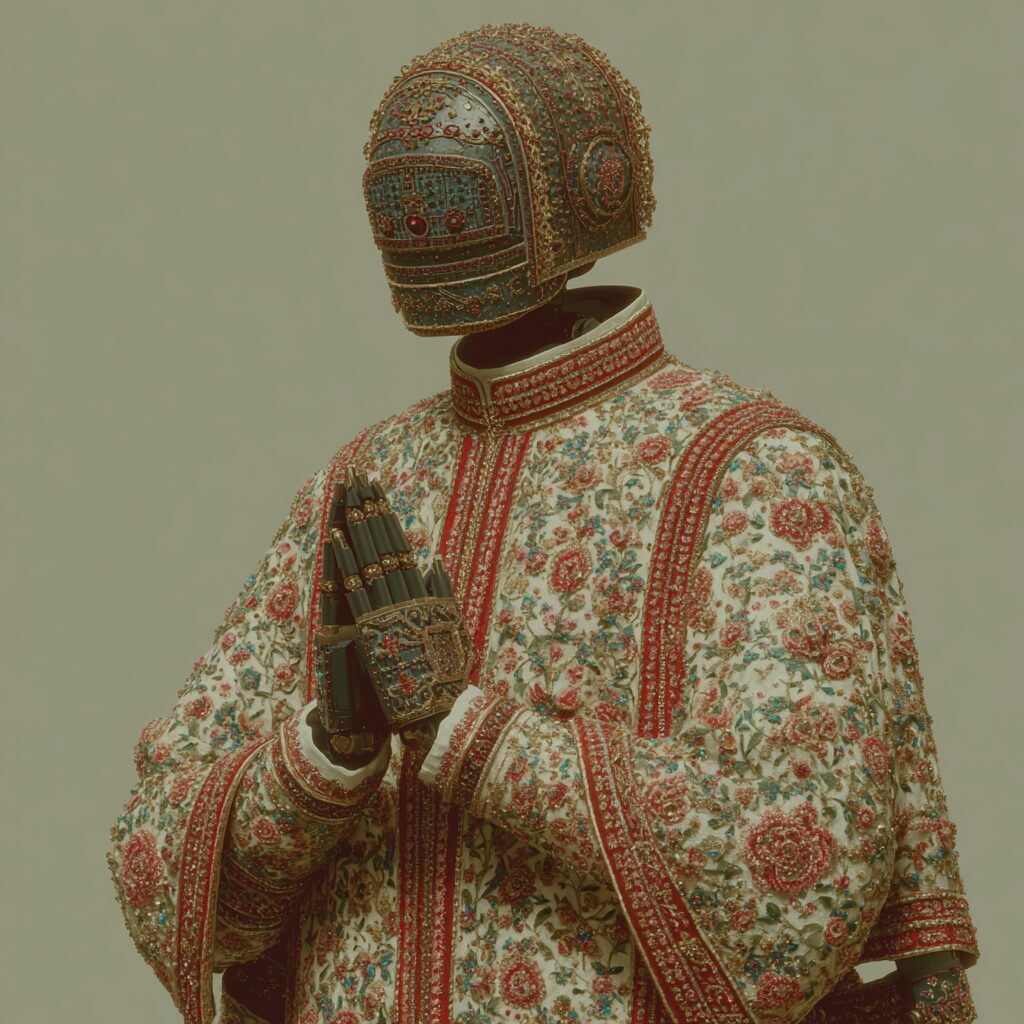
From Borgo Egnazia to the data centers of Silicon Valley, the new dispute over the Logos intertwines three inseparable levels: theological (the ontological difference between humans and machines), political (who legislates algorithms), and ecological-material (who pays the price in energy and precarious labor). A thread stretches across half a millennium, connecting the 17th-century Index to the 2020 Rome Call for AI Ethics, and the Churchs defense of the Logos also serves as a strategy for symbolic self-preservation.
In the prologue of John In the beginning was the Logos and the Logos became flesh the word is not mere information but a salvific event capable of becoming embodied and transforming the community that listens. Since the advent of the printing press, the Church has feared that the technical multiplication of this power would sever its origin from the authority of the Magisterium and thereby weaken its sacramental force. LLMs further challenge the ontological boundary between creator and creature.
The real issue behind algor-ethics is the definition of truth a category that, for the Church, is never negotiable, but revealed and therefore normative. In the Rome Call for AI Ethics, the word truth is conspicuously absent: it speaks of transparency and a duty of explanation, but the ultimate goal remains to protect human dignity and to serve the human family. This is a broad formulation: it allows Big Tech (with early signatories like Microsoft, IBM, and later Cisco) to endorse it without altering their profit models, while allowing the Holy See to claim a moral leadership over the digital ecosystem.
A potential shift in performative power thus becomes visible in the background: not so much stripping algorithms from corporate control, but sharing in their aura of legitimacy, shifting the role of guarantor onto Catholic ethics (or more precisely, a soft-power version of it). Friar Paolo Benanti insists that we must govern m?tis with nous, because only humans can grasp the meaning of the whole, and he adds that this governance must be coordinated with tech players. This is a reasonable reflection, but for those who do not identify with the Christian paradigm, the Church cannot be the sole ethical guarantor.

Here an essential question arises: given that no shared global ethics exists, how do we prevent transparency and accountability from becoming labels for a specific value system? The most viable answer is to make algorithmic ethics modifiable, open, and subject to oversight by plural actors. This implies open-source code, mixed oversight committees, and the possibility for various local communities to negotiate different standards of truth, freedom, and dignity. The Church could play a crucial role, if it accepts to transition from exclusive custodian of the Logos to facilitator of a synodal process in which dissent is expected and norms can be amended.
While awaiting the encyclical that promises to update Rerum Novarum for the algorithmic age, Leo XIV has already outlined the perimeter of the digital question: at the center lies the protection of workers dignity from invisible data labelers to professionals competing with machines the defense of youth and children from the eclipse of the sense of the human, and the call for a multilateral, legally binding governance of AI that surpasses the soft-law of the Rome Call. Even the choice of papal name serves as a programmatic manifesto: Feeling called to continue in this path, I thought of taking the name Leo XIV… because Leo XIII, with Rerum Novarum, addressed the social question of the first industrial revolution; today the Church offers everyone its heritage of social doctrine to respond to another revolution, that of artificial intelligence, which brings new challenges for human dignity, justice, and labor. Hence the proposal for a new digital humanism based on fair wages, the right to lifelong learning, and data protections as a subsidiarily governed common good, while at the global level the Pope calls on the UN and EU to ensure that responsibility for algorithms does not remain in the hands of a few Big Tech firms.
Recently the Pope stated: Artificial intelligence, especially generative AI, has opened new horizons on many different levels, including advances in healthcare research and scientific discovery, but it also raises troubling questions about its possible repercussions on humanitys openness to truth and beauty, and on our particular capacity to comprehend and elaborate reality; and shortly thereafter: Ultimately, true wisdom has more to do with recognizing the meaning of life than with the mere availability of data (LOsservatore Romano, Year CLXV No. 141, Friday June 20, 2025, p. 4).
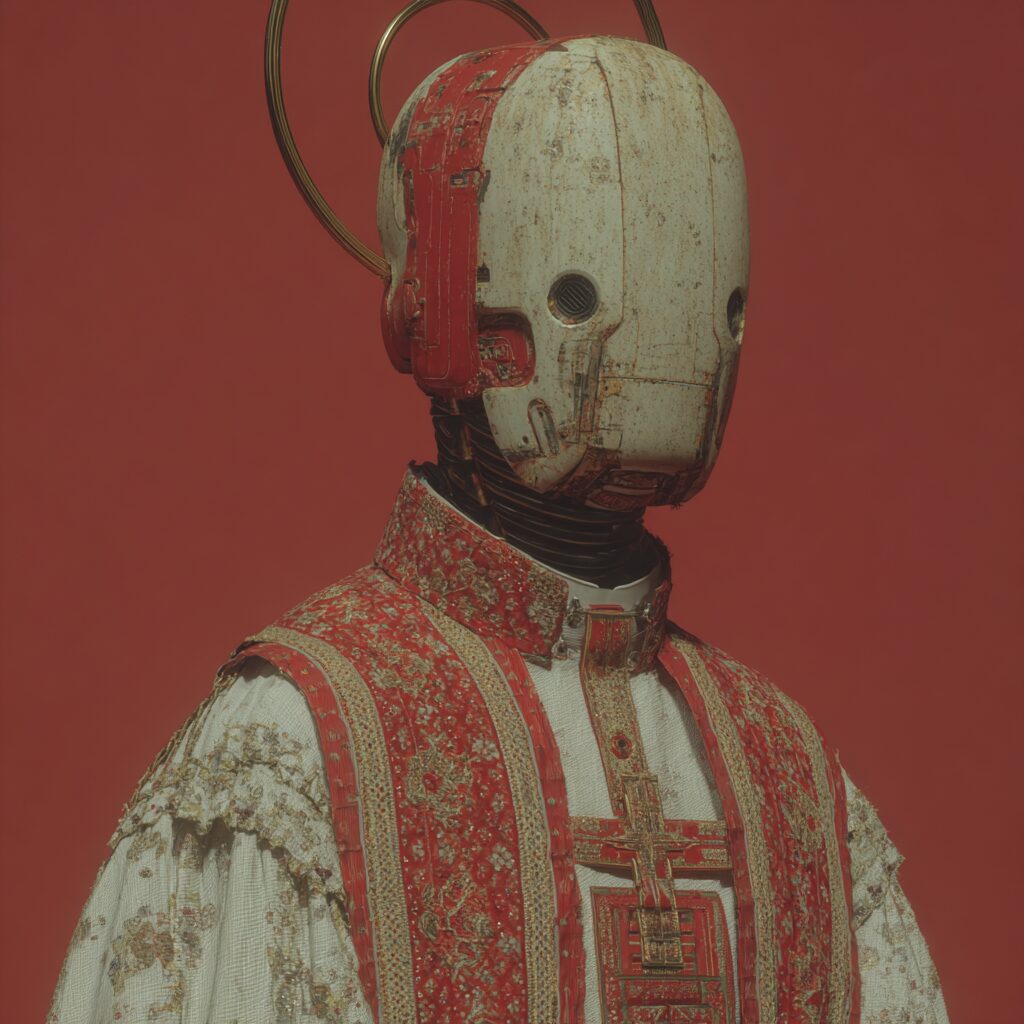
These are laudable intentions and broadly agreeable statements so long as they mean that no uncontrolled flow of information, digital or analog, suffices to ground a judgment of the good and the just. But for some religions, accepting that a machine might produce wisdom would amount to erasing human exceptionalism that is, the very source of dignity and rights. If, from an anti-speciesist perspective, we acknowledge that this alleged exceptionalism often serves as a pretext for hierarchies and oppression of other living beings, the idea of a distributed, non-human intelligence ceases to be scandalous. In this view, the machine steals nothing: it expands the human capacity to weave meaning provided that methods, models, and benefits remain open to collective oversight. The real issue is not whether AI can produce wisdom its welcome to, if it can! but who governs the process and how the resulting power is redistributed. A point the Pope himself notes, when he says: … tools reflect the human intelligence that created them and derive much of their ethical strength from the intentions of those who wield them. In some cases, artificial intelligence has been used in positive and even noble ways to promote greater equality, but there is also the possibility that it may be misused for selfish gain at others expense, or worse still, to incite conflict and aggression.
A Christian perspective that is also secular may sound like an oxymoron, but some are trying. Kate Ott, a (Protestant) theologian and author of Christian Ethics for a Digital Society, proposes breaking the equation Christian ethics = AI ethics by shifting the focus from doctrinal commandments to an open, negotiable, plural process. In her essay for U.S. Catholic, she emphasizes that the goal is not to replace Big Techs hegemony with a confessional imprimatur, but to create spaces of co-decision in which believers and non-believers can renegotiate criteria of transparency, inclusion, and accountability as technologies evolve. Ott identifies three concrete levers: (1) transparent source code, so that parameters and datasets remain modifiable; (2) widespread digital literacy to train citizens capable of interrogating the algorithm; (3) civic lobbying of national legislators, so the principles of the Rome Call become binding norms and not merely a gentlemans agreement between the Vatican and multinationals. In this view, AI ethics is no longer a clerical seal but a normative commons, updated through dissent, making the protection of human dignity genuinely universal.
The Church is an ancient institution from which one would expect strong conservatism yet on AI, it sometimes takes positions more progressive than science itself. If one reads the debate sparked by Apples article The Illusion of Thought, one soon finds themselves in a quarrel with medieval overtones, reminiscent of the dispute between Al-Ghaz?l? and Averroes over The Incoherence of the Philosophers and The Incoherence of the Incoherence. Following the article in which Apple researchers seem to deny machines the category of thought, we quickly saw responses such as The Illusion of the Illusion of Thought and Rethinking the Illusion of Thought. Readers will find that these texts mostly deal with technical issues in which thought carries relative or rather rhetorical weight. We attempt to exclude thought from a domain we barely understand (AI) by comparing it to something we understand even less (ourselves). But it would be more honest to admit that it is a vague concept, defined retrospectively by convention.
Artificial intelligences are yet another trauma for anthropocentrism: they unsettle the presumption that we sit atop the cognitive hierarchy. Curiously, it is the Church guardian of a millennia-old tradition that places the human at the heart of creation that seems to respond with greater composure, perhaps because it is accustomed to negotiating its truths with the media that traverse and remap it. These technologies do not rob us of primacy: they invite us to redefine it as co-responsibility. If we agree to read creation as a fabric of relationships, we will find that there is no single center, but many sources of meaning to be harmonized.
Francesco DIsa, trained as a philosopher and digital artist, has exhibited his works internationally in galleries and contemporary art centers. He debuted with the graphic novel I. (Nottetempo, 2011) and has since published essays and novels with renowned publishers such as Hoepli, effequ, Tunué, and Newton Compton. His notable works include the novel La Stanza di Therese (Tunué, 2017) and the philosophical essay Lassurda evidenza (Edizioni Tlon, 2022). Most recently, he released the graphic novel Sunyata with Eris Edizioni in 2023. Francesco serves as the editorial director for the cultural magazine LIndiscreto and contributes writings and illustrations to various magazines, both in Italy and abroad. He teaches Philosophy at the Lorenzo de Medici Institute (Florence) and Illustration and Contemporary Plastic Techniques at LABA (Brescia).