


Do you want humanity to survive? It’s a question that should prompt an immediate, clear, and confident yes. And yet, Peter Thiel billionaire investor, co-founder of PayPal and Palantir, Trump backer, and financier of Silicon Valleys boldest startups hesitates. He falters. He stalls. He pauses for several seconds, as if weighing the pros and cons. Only when pressed does he finally answer, half-heartedly: yes. But that yes isn’t enough. Because someone like Thiel is interested in the future just not in the way we, ordinary people, might expect.
In the interview published last June 25 by Ross Douthat for the Interesting Times column in the New York Times, Thiel lays bare his worldview: nihilistic, apocalyptic, obsessed with stagnation and decline.
To him, were too timid, too unambitious. Progress stopped around 1970: we havent done anything truly great since then, he claims. The only real exception to this paralysis is artificial intelligence, a field into which he has poured billions, dreaming of a supertechnological cascade that will let us cure dementia, conquer Mars, and live forever.
Thiel believes in transhumanism the idea that humanity can overcome its biological and mental limits through technology.
But behind this futurist ideology lies a deeply elitist and dystopian vision. For Thiel, humanity is worth saving only if it can become something else entirely: enhanced, evolved, fused with machines.
The average human being weak, inefficient, mortal holds less and less interest for him.
When Douthat asks for his opinion on the Antichrist, Thiel responds with a provocation that sounds like a revelation: It could be Greta Thunberg.
The young Swedish activist, in his view, embodies the ideology of anti-growth, a form of environmental authoritarianism that, in the name of saving the planet, seeks to halt scientific and technological progress. A new green totalitarianism ready to sacrifice humanity on the altar of CO?.
In Thiels thinking, theres a tragic and inescapable binary: either humanity submits to an Antichrist who will govern it in a totalitarian fashion to save it from disaster, or it faces Armageddon.
No middle ground. No compromise.
And those who propose alternative models less accelerationist, more sustainable are dismissed as enemies of progress, charlatans.
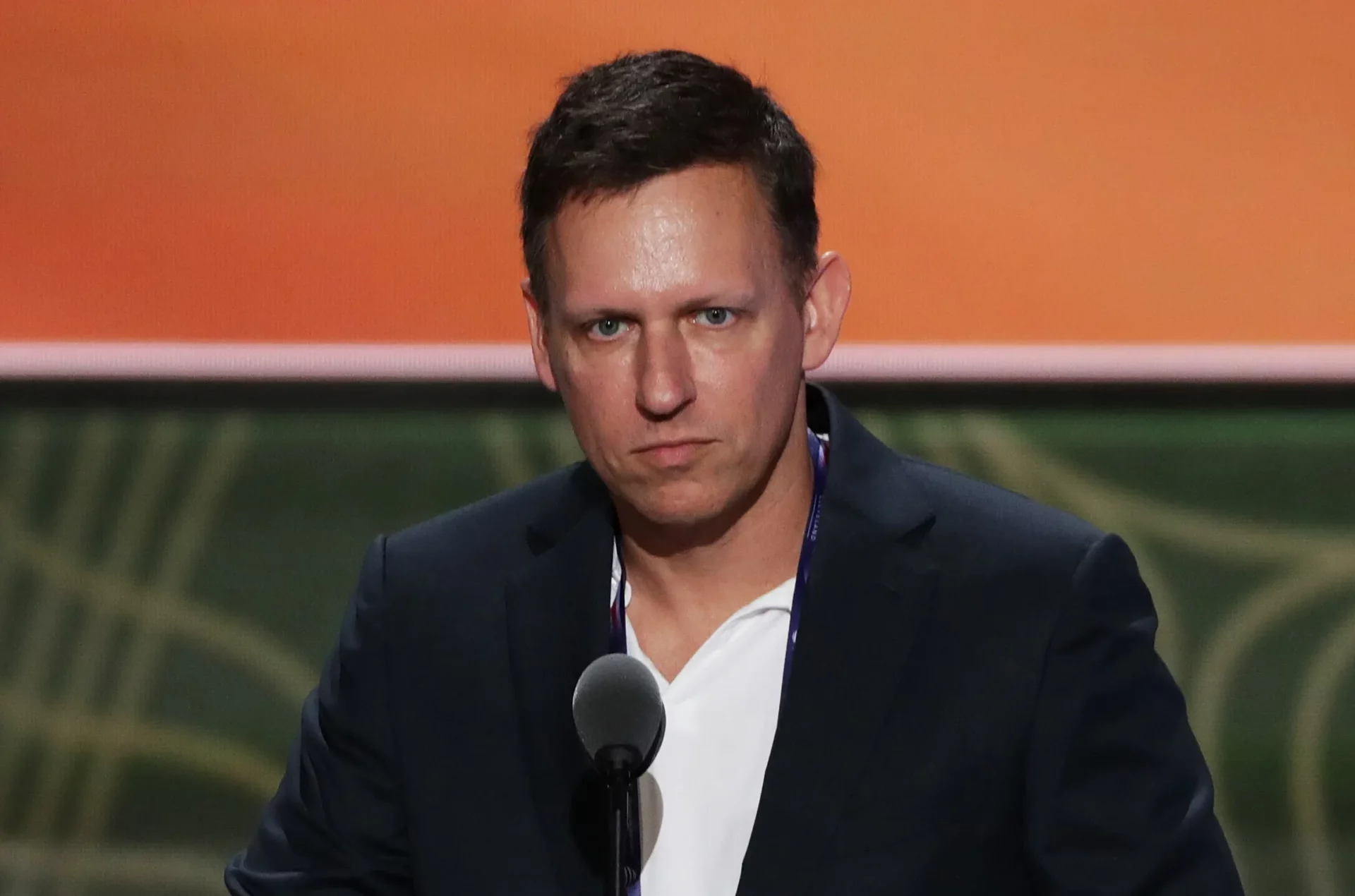
But who is Peter Thiel, really?
He is one of the oligarchs of our time.
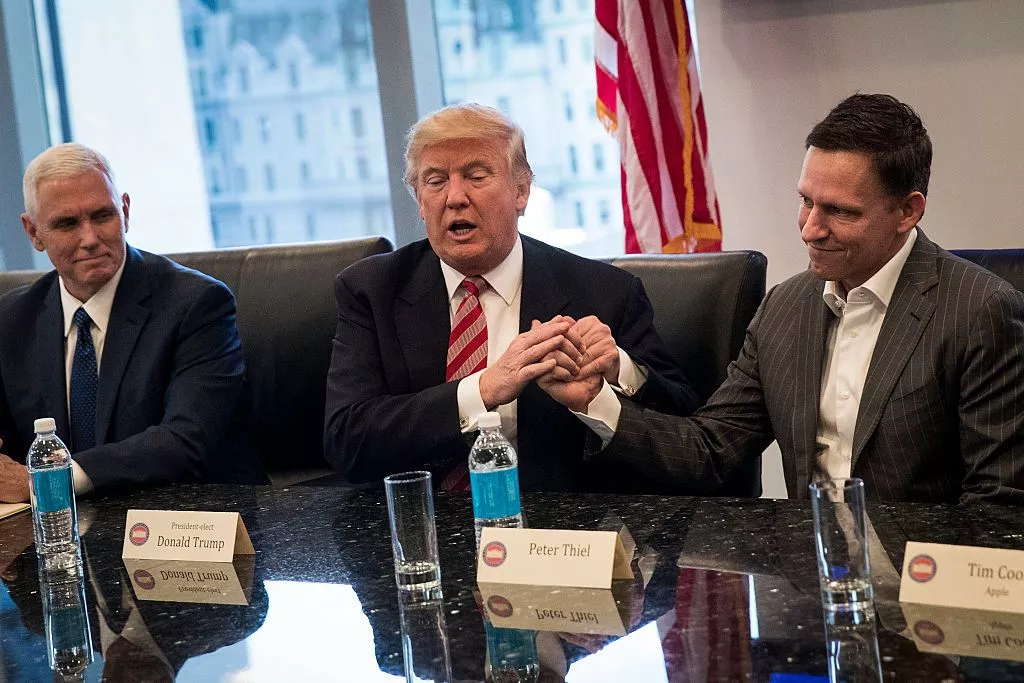
And no, were no longer talking about the archetypal oligarchs the Russian ones. After Donald Trumps re-election to the White House, the term oligarch has begun to take on a new meaning: it now refers to the U.S. financial and tech elite from Musk to Bezos, from Zuckerberg to Thiel himself who wield a power that goes far beyond democratic institutions, capable of influencing wars, elections, markets, algorithms, and even dreams.
Its in this context that transhumanism has stopped being a fringe philosophical current and become a functional arm of power.
A secular religion with its own dogmas: death is just a technical problem to be solved; the human body is outdated hardware to be upgraded; consciousness can be uploaded to the cloud.
Its prophets? Thiel, Musk, Altman, Kurzweil.
Its laboratories? Silicon Valley, but also Dubai, Singapore, and floating islands where societies are being tested without taxes, without laws, without democracy.
But all of this one must ask in the name of what?
For the good of humanity? Or for the narcissistic dream of a narrow elite that wants to save itself from humanity?
A vision of the future that presents a deep paradox: the tech magnates are obsessed with the future, yet seem to have forgotten the present.
Colonizing Mars, living forever, building autonomous cities in space
But meanwhile, here on Earth, climate change advances, inequalities grow, wars disrupt global balances, while millions of people lack access to water, education, and healthcare.
Whats the point of imagining how to live forever if we cant even live decently right now?
Perhaps its time to remind the Thiels and Musks of the world of a basic truth: before trying to save humanity, you need to care about it.
And before searching for new homes among the stars, we should take care of the only one we have.
Because if we treat Mars the way weve treated Earth, not even AI will be able to save us from ourselves.
Is a graduate in Publishing and Writing from La Sapienza University in Rome, he is a freelance journalist, content creator and social media manager. Between 2018 and 2020, he was editorial director of the online magazine he founded in 2016, Artwave.it, specialising in contemporary art and culture. He writes and speaks mainly about contemporary art, labour, inequality and social rights.