


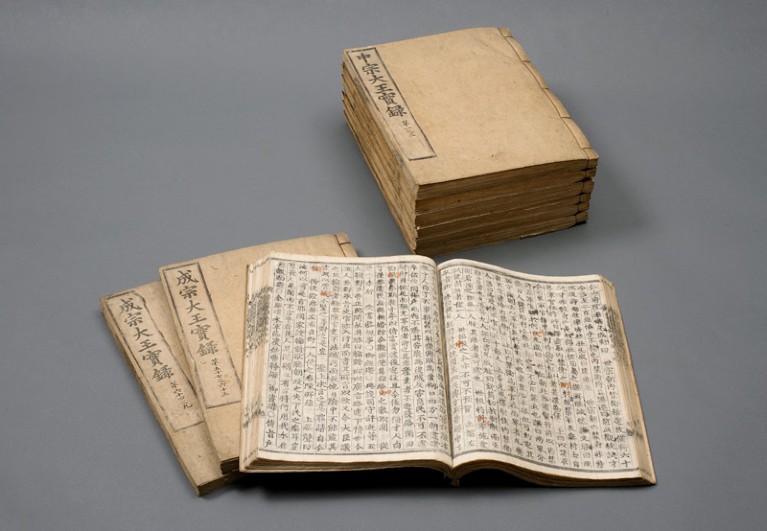
There is a point at which history stops being an archive and becomes a conversation, and that is what is currently being experimented with in China through the application of artificial intelligence to ancient texts. Not to animate avatars of Confucius or Laozi, nor to generate apocryphal quotes fit for social media (another trend in cultural and historical promotion in China), but to treat thousands of works written over two thousand years as a vast, queryable cultural database. In this sense, AI does not “make the ancients speak” in the sensationalistic way it is often portrayed; rather, it makes visible the deep structures of collective thought. According to reports by China Daily, the integration of AI and classical heritage is now a national strategic priority, with programs dedicated to the systematic digitization of ancient texts and their integration into major Chinese language models.
A recent study used language models to analyze nearly 10,000 Chinese historical texts, spanning from the Spring and Autumn period (722–481 BCE) to the end of the Qing dynasty in 1911, with the aim of measuring moral values, worldviews, and psychological orientations: individualism, respect for authority, sense of loyalty, care for the community. In essence, it applied categories from contemporary psychology to a corpus covering more than two millennia of intellectual production. The stated objective is twofold: to preserve cultural heritage while at the same time making it “computable,” that is, readable by machines and integrable into next-generation artificial intelligence systems.
For centuries, historical knowledge has been built on slow reading, close interpretation, and meticulous textual comparison. Artificial intelligence, by contrast, can move through thousands of volumes in a short time, identifying lexical recurrences, conceptual correlations, and long-term semantic shifts, studying patterns that repeat or evolve over the centuries. In China, AI-based platforms are already improving the recognition of ancient characters and facilitating access to classical archives through intelligent interfaces that combine original texts, annotations, and semantic analysis tools.
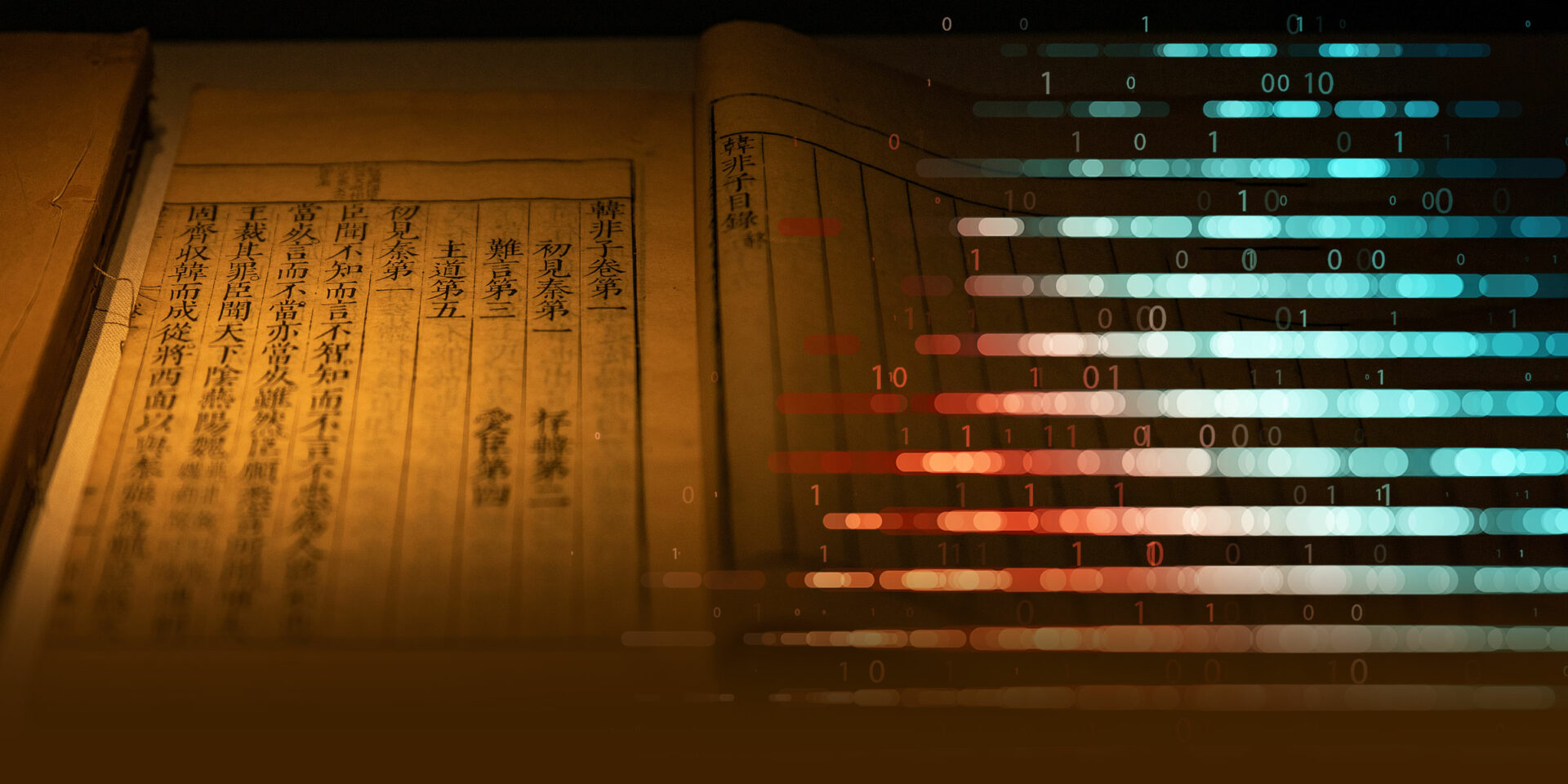
The results challenge one of the most enduring clichés about Chinese culture: the idea of an unchanging continuity, of a value system essentially identical to itself for centuries. Quantitative analysis reveals significant variations across regions and historical periods. In some eras, stronger emphasis emerges on authority and hierarchy; in others, greater attention is given to horizontal relationships or individual responsibility. Even material factors—agricultural productivity, population density, economic conditions—appear to leave measurable traces in the language of texts. When living conditions change, so do the words used to describe the world.
AI opens up the possibility of linking cultural data to environmental and social variables, transforming intellectual history into a field of comparable analysis. The focus is not so much on “what” the ancients said, but on how certain values and psychological tendencies emerged depending on the historical period, whether one of crisis or prosperity. This transformation is part of a broader strategy to build national linguistic resources designed to strengthen the presence of Chinese in global AI systems and in the international digital ecosystem.
It should be remembered, however, that language models operate through contemporary categories, and the risk of superimposing modern concepts onto ancient texts is far from theoretical. Every cultural translation is an interpretation, and without solid critical oversight, AI can not only replicate but amplify errors and distortions.
In recent years, universities and research centers—from Harvard to other institutions engaged in the digital humanities—have been working to build searchable databases of classical Chinese texts, improving Optical Character Recognition (OCR) for ancient characters and developing entity recognition tools. This makes it possible to trace citation networks, identify textual reuse, and map connections among authors and schools of thought. In this process, the very concept of the archive is being redefined: it is no longer a static repository, but a dynamic and queryable infrastructure from which ever-new data can be extracted.
For a present obsessed with innovation, there is something paradoxical about using the most advanced technologies to go back in time. Yet it is a coherent move: understanding the longue durée of cultural values also helps us read the contemporary world. Looking to the past in order to better understand the present—particularly in an era of geopolitical tensions and technological and narrative competition between China and the West—means that empirically analyzing the historical evolution of value systems becomes a political tool as well as an academic one.
The real breakthrough is not speaking with the dead, but ceasing to treat them as monolithic entities. Applied to ancient texts, artificial intelligence shows that cultures change, adapt, and react differently to moments of crisis and prosperity, restoring complexity and variability where we have long been accustomed to seeing immutability. This shift may unsettle those who fear the reduction of culture to datasets, but it is also an opportunity to move beyond rhetoric. The past will no longer be dust on a shelf, but living material to be examined with new tools.
Camilla Fatticcioni