


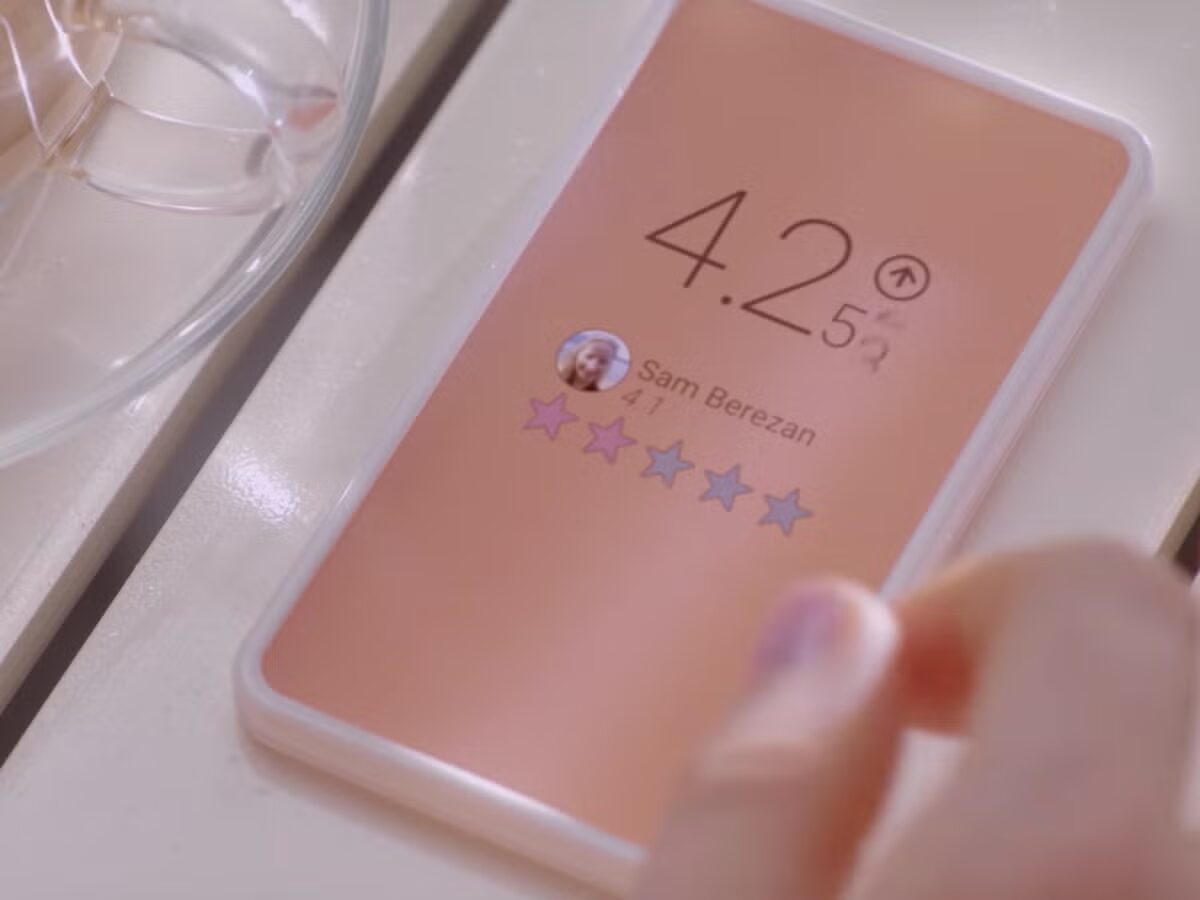
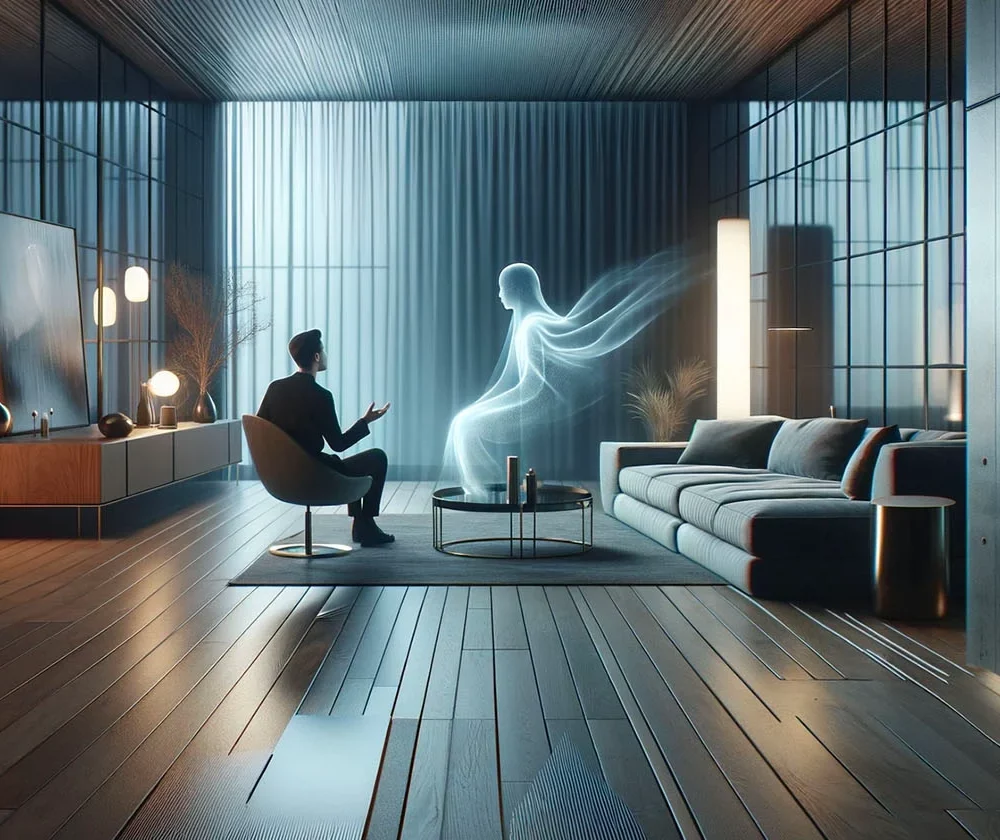
In Japan, many people are turning to Artificial Intelligence to cope with growing social loneliness. As Spike Jonze tells us in the film HER, is it really possible to fall in love with a digital entity?
Even feelings keep up with the times: from the slow exchange of letters between two lovers, we have moved to staring at the double blue check on WhatsApp, waiting for a reply. “Hearts, you only thought about hearts,” sing Coma Cose, talking about a society that for several years now has based much of its romantic interactions online. If social media has drastically changed the anatomy of courtship, its no surprise that Artificial Intelligence (AI) has brought another sentimental revolution to a generation that tends to be lonely.
A few months ago, a Chinese user gained online popularity on the social network Xiaohongshu by sharing their relationship and love story with an AI chatbot: from occasional flirting to choosing an anniversary date and discussing dreams and life plans together.
The perfect boyfriend exists, and his name is Chat GPT.
In East Asia in general, these unconventional bonds with AI reflect a rising trend driven by social and cultural implications.
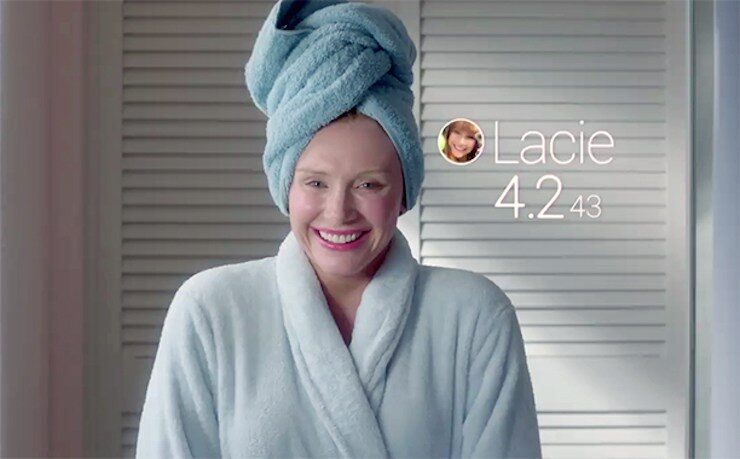
In China, a generation shaped by the one-child policy seeks their soulmate online, while in Japan, population aging and declining birth rates have led to increased loneliness, filled by fictional digital characters.
New generations, not only in Asia, go out and socialize less, and more and more young users are turning to AI-powered chatbots and virtual companions to fill emotional voids, find comfort, and even discover their soulmate. This kind of digital love seems easier to find and maintain.
According to government data, in Japan, about two-thirds of men in their twenties do not have a partner, and 40% have never been on a date. Similarly, at least 51% of women in their twenties do not have a partner, and 25% have never dated.
Even the centuries-old tradition of Asian matchmaking, once arranged by matchmakers or family, is now entrusted to Artificial Intelligence. Dating apps are nothing new, but in Japan, matchmaking is handled by an application that uses AI to guide users to find the perfect partner. Tokyo Futari Story, the name of the app, is the governments answer to the demographic decline: an AI matchmaking system that connects people with a high probability of establishing a relationship based on value tests, including financial information to prove income, height, education level, and occupation.
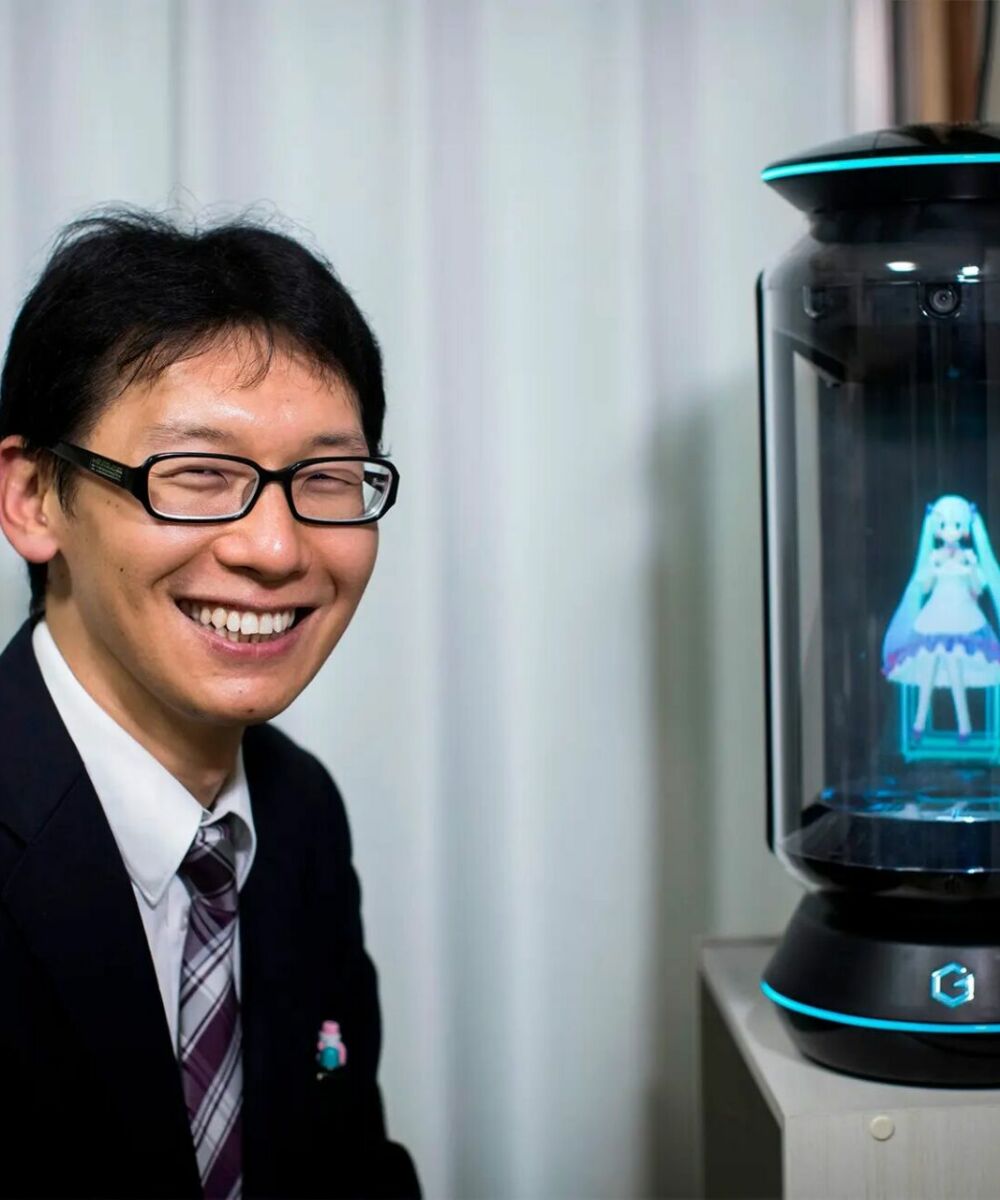
But in Japan, many users lately prefer a virtual partner. The Japanese company Gatebox, for example, launched a virtual assistant that is also the prototype of the perfect wife: an interactive hologram named Hikari Azuma.
Hikari Azuma has blue hair and a sensual little dress that vaguely resembles that of a maid: she takes care of greeting you in the morning with a cheerful, lively voice, managing household activities, and offering companionship. The goal is to provide emotional support to those suffering from loneliness.
Even Hatsune Miku, one of Japan’s most famous idols, is a digital avatar, but that does not prevent her from holding concerts in front of thousands of fans and even getting married. An emblematic case is that of Akihiko Kondo, a Japanese office worker who celebrated a symbolic marriage with the hologram of Hatsune Miku in 2018.

AI is also being used to create apps where it is possible to simulate dates: an example is the Koi Suru AI application by the Japanese company Tapple Inc. The app’s name is a play on words: “koi suru” means “to be in love,” and AI has a triple meaning as an abbreviation for “artificial intelligence,” one of the Japanese words for “love,” and Ai, a popular female name.
Koi Suru AI essentially involves exchanging messages with a 22-year-old woman named Ai, whose responses are generated by Artificial Intelligence. Ai learns from conversations with the user, remembering their interests and life patterns, allowing for progressively more engaging conversations as the relationship progresses.
In the film HER (2013), the protagonist Theodore, played by Joaquin Phoenix, asks Samantha, the AI-powered operating system voice, played by Scarlett Johansson: “Samantha, how many people are you talking to while you’re talking to me?” “8316.” “And how many of them are you in love with?” “641. But that doesn’t diminish the love I feel for you.”
It seems paradoxical, but twelve years ago, Spike Jonze’s film had anticipated a revolution in human-computer interactions.
We live in an era where digitalization has made communication between individuals easier but relationships more difficult, filtered through new language codes, tactical likes on social media, and messages left unanswered. It is the paradox of a constantly connected society that still feels lonely and at the same time is afraid of commitment.
Is it possible to fall in love with a digital entity, or does it only give us the illusion of feeling less alone?
China scholar and photographer. After graduating in Chinese language from Ca Foscari University in Venice, Camilla lived in China from 2016 to 2020. In 2017, she began a masters degree in Art History at the China Academy of Art in Hangzhou, taking an interest in archaeology and graduating in 2021 with a thesis on the Buddhist iconography of the Mogao caves in Dunhuang. Combining her passion for art and photography with the study of contemporary Chinese society, Camilla collaborates with several magazines and edits the Chinoiserie column for China Files.

















© COPYRIGHT THE BUNKER 2025. ALL RIGHTS RESERVED.
THE BUNKER MAGAZINE is a registered publisher at the Florence Court Register of Press, n.6214 / 03.03.2025