


New technologies are changing our world forever. The question is: for the better or for the worse?
What are the risks, the shadows, the dangers?
Valued at over 380 billion dollars, Palantir Technologies is today one of the most powerfuland opaquecompanies in the global tech landscape. Founded in 2003 by Peter Thiel, together with Alex Karp and other investors linked to PayPal, it built its empire by promising to make data comprehensible for governments, armies, and multinationals. Yet its dizzying growth and increasingly close ties with politics and the military raise crucial questions about privacy, democracy, and the concentration of power.
As StartMag reports, in the second quarter of 2025 Palantir surpassed one billion dollars in quarterly revenue, with a 53% growth in U.S. government contracts and a market value that places it among the top ten American tech companies. Billion-dollar contracts with the Pentagon, Homeland Security, and ICEwhich uses its systems to monitor migrants and deportationsmake it a central player in critical digital infrastructure.
Its influence does not stop at the United States. According to Il Post, the company is accelerating its penetration into Europe, signing contracts in sensitive sectors such as healthcare and defense, often without real public debate. In Italy, for example, Palantir systems are already being used for cybersecurity projects and for managing healthcare data.
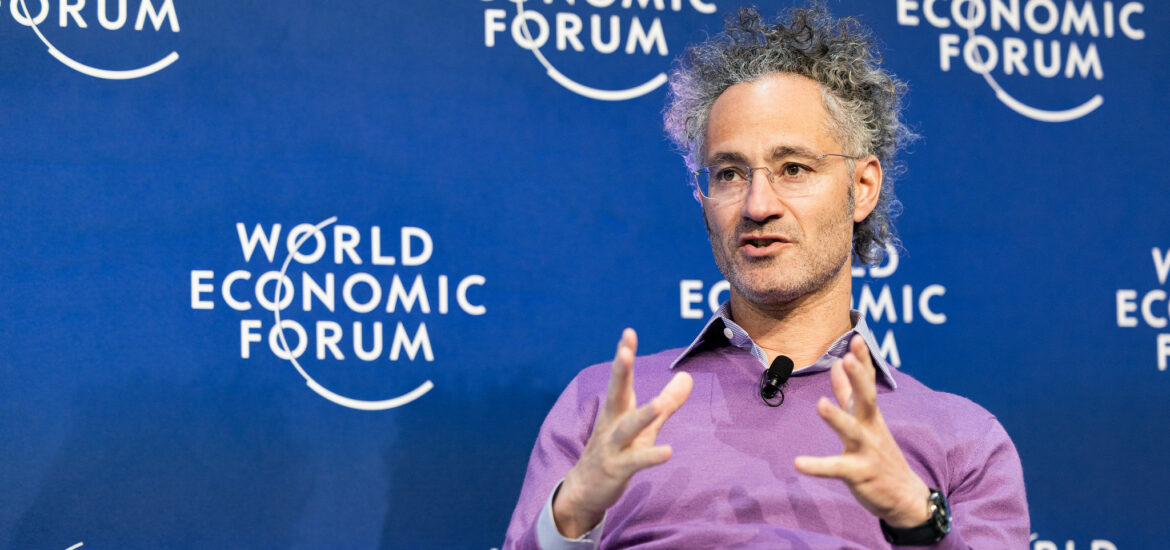
But while Palantir presents itself as a neutral technology partner, the facts tell a more complex story. As highlighted by The Conversation, the company is the preferred partner of U.S. intelligence agencies, while Al Jazeera has documented the role of its technologies in military operations in Gaza and in ICE raids.
In an interview with Stefano Quintarelli, curated by the editorial team of Pubblico, the newsletter of the Giangiacomo Feltrinelli Foundation, the entrepreneur, digital expert, and former member of parliament warns: Palantir does not merely exploit data for commercial purposes, but becomes the technological arm of state power, at the service of surveillance and control. Quintarelli emphasizes the lack of independent oversight: today those who manage the systems can modify or delete data without leaving a trace.
The risk, as noted by Cybersecurity360, is amplified in the U.S. by the projectrevived by the Trump administrationof creating a mega national database integrating data from citizens and non-citizens alike, with Palantir at its center.
Europe, thanks to a multilayered institutional system and regulations such as the GDPR, appears more protected from authoritarian drift, but Quintarelli nonetheless urges strengthening democratic infrastructures to prevent efficiency from becoming the sole criterion of governance.
The Palantir case demonstrates how the integration of data, algorithms, and political power is reshaping the very concept of governance. And it leaves open a crucial question: who watches the watchers?
Is a graduate in Publishing and Writing from La Sapienza University in Rome, he is a freelance journalist, content creator and social media manager. Between 2018 and 2020, he was editorial director of the online magazine he founded in 2016, Artwave.it, specialising in contemporary art and culture. He writes and speaks mainly about contemporary art, labour, inequality and social rights.