


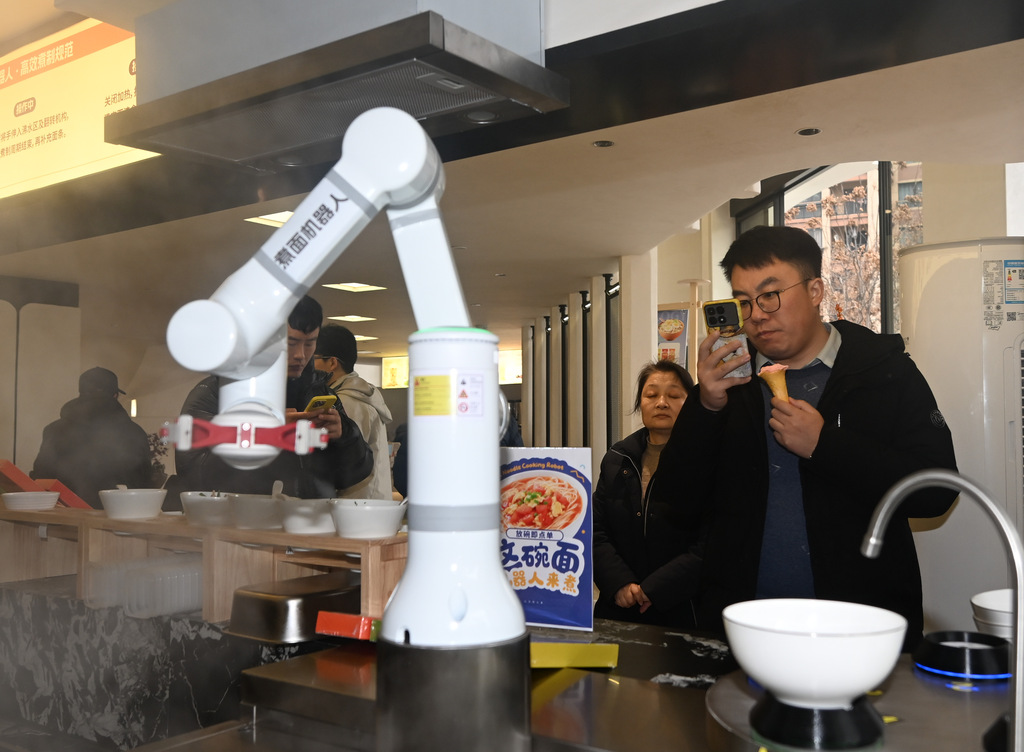
Strolling along Nanjing Road, Shanghai’s historic and perpetually crowded shopping artery, it is now possible to order a coffee without interacting with another human being. What might look like an upgraded version of the classic office vending machines is, in fact, something far more sophisticated: a robotic arm grinds the coffee beans, froths the milk, and prepares custom drinks on demand, including latte art decorations.
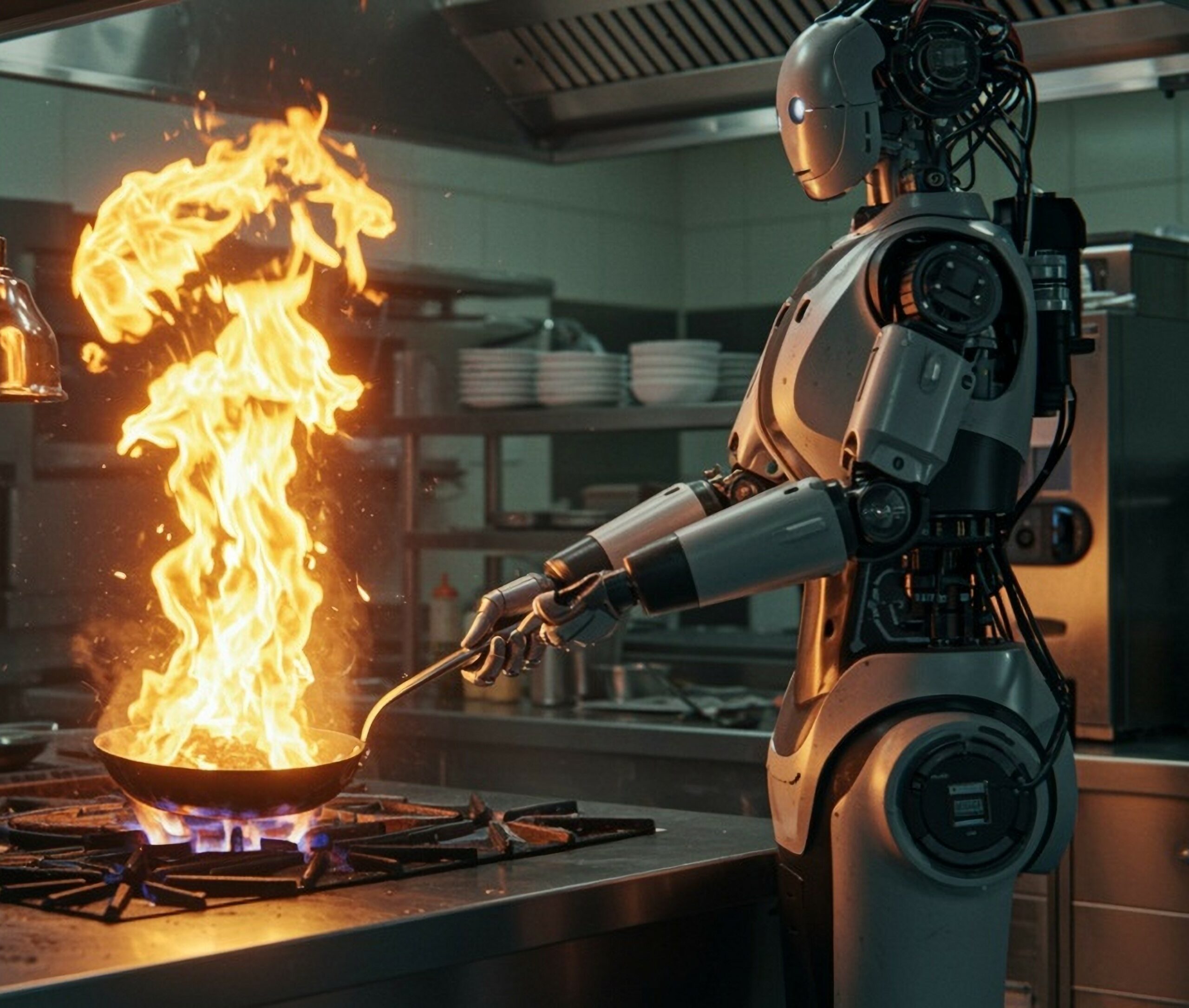
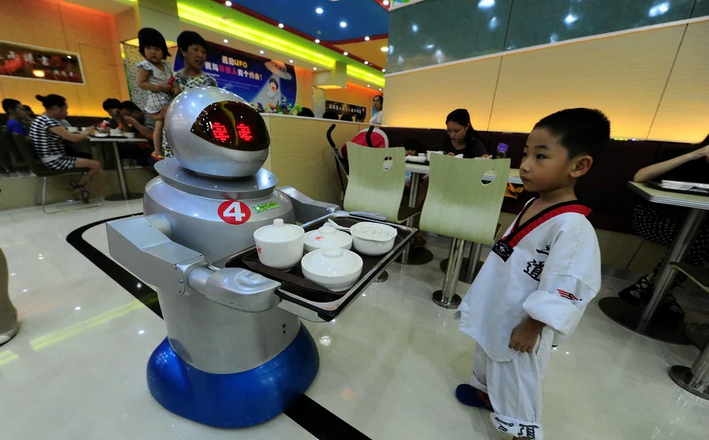
The robot barista, however, is not just a futuristic gimmick. Shanghai is actively betting on an AI-driven model of dining: robots that cook, serve, and clean, automated kitchens, and menus shaped by collected data. Applying AI to food service means reducing reliance on human labor, standardizing processes, gathering consumer insights, and optimizing supply chains, cutting both costs and waste in the process.
In a society marked by an aging population and the end of the low-cost labor era, service automation has become strategically crucial for China. AI dining is not just a technological or culinary trend, but an indicator of deeper structural changes in the Chinese economy. From factory floor to dinner plate, automation is emerging as a tool of global competitiveness, reshaping work, consumption, and urban space.
On reflection, robots are not an absolute novelty in our kitchens. For decades, smart appliances—dishwashers, programmable ovens, automatic coffee machines, robot vacuum cleaners—have gradually “relieved” us of the burden of certain tasks. But how far can efficiency go without eroding the relational, artisanal, and cultural dimensions of eating out?
China’s ambitions clearly extend beyond its own borders. City authorities aim to support Shanghai-based restaurants in their international expansion, backing them with an intelligent supply chain capable of ensuring standardization, traceability, and replicability worldwide. The AI-driven foodtech market is expected to reach $27.7 billion by 2029.
The large-scale adoption of AI-driven restaurant systems strengthens control over data: tastes, consumption habits, urban flows. An everyday activity such as dining out turns into a source of economic intelligence which, when integrated with digital payment platforms, home delivery, and e-commerce, helps consolidate a highly centralized digital economy model. China has been moving in this direction for some time, but Western audiences appear more skeptical about certain aspects.
A robot can calculate the optimal cooking time for a steaming bowl of noodles, yet public opinion seems more concerned with the flavor and authenticity of dishes prepared by a robotic arm
In London, for instance, Yari Club has recently opened (a futuristic Japanese restaurant featuring a robot yakitori grill that churns out the traditional grilled chicken skewers).
The robot, displayed as a window attraction, neither takes orders nor serves customers: it is essentially an automated grilling machine that cooks skewers with precision but does not, in fact, replace chefs or waitstaff. For a potential customer with specific intolerances or allergies, the machine’s lack of flexibility resulted in frustration and an immediate exit from the restaurant. The food? Good and fairly inexpensive, but the overall impression is that automation alone is not yet enough.
When discussing robots versus human labor, one scene from Roald Dahl’s Charlie and the Chocolate Factory often comes to mind: Charlie Bucket’s father loses his job at a toothpaste factory after being replaced by a robot. Only to find new work later on as a technician responsible for repairing that very machine. Progress brings both opportunities and losses, often in uneven ways.
This both frightens and fascinates us. You can see it in the eyes of those who stop, with curiosity and suspicion, in front of a shop window to watch the mechanical arm of a robot barista prepare a perfect cappuccino in just a few seconds.
Camilla Fatticcioni