


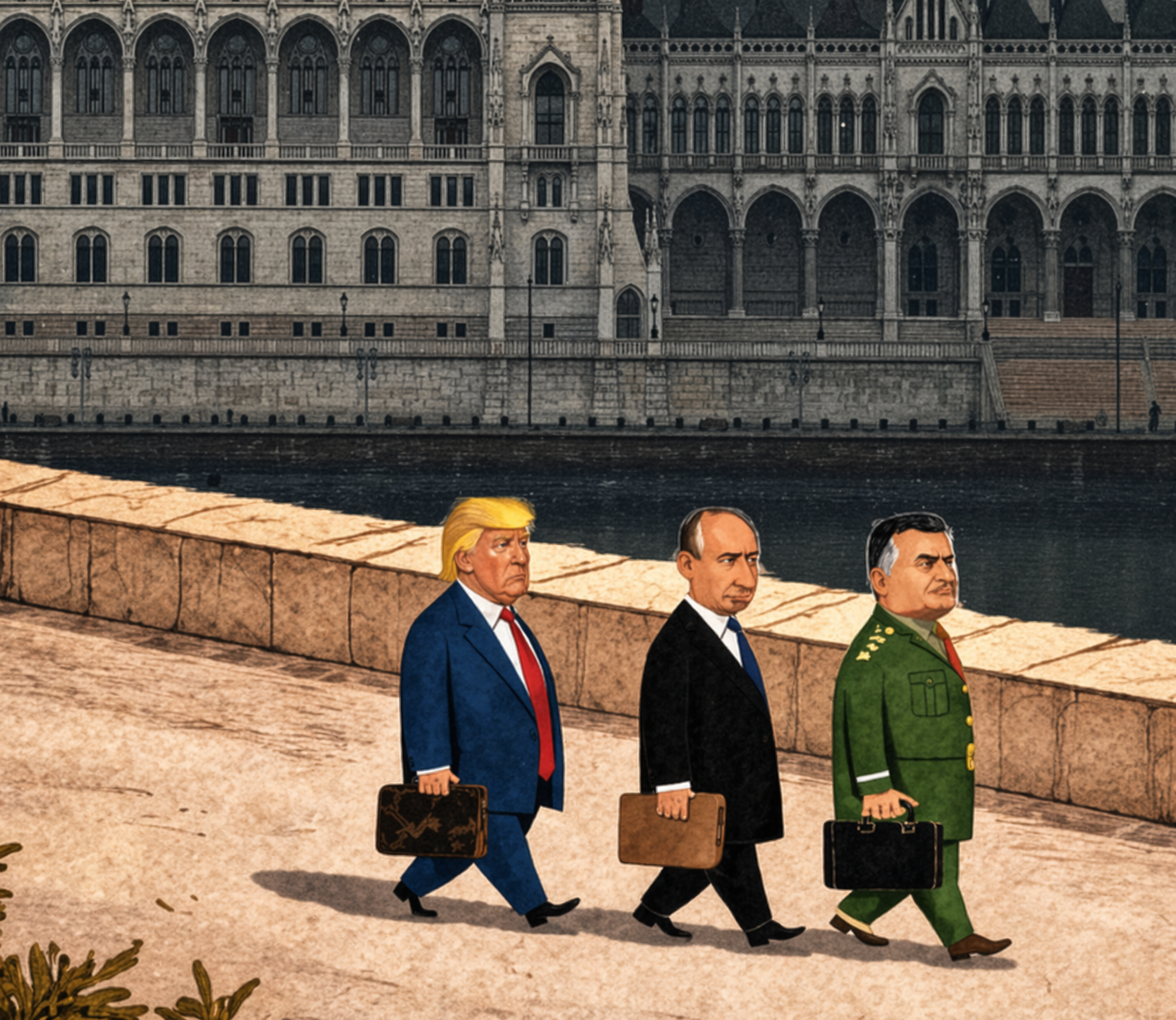
In an ideal world, a sovereigntist leader should defend his country’s borders from any external interference, making that a point of honor and consistency. But in the Hungary preparing to vote in the next parliamentary elections on April 12, the concept of sovereignty seems to have bent to a decidedly creative interpretation: that of an open-air laboratory where citizens’ decisions are steered by algorithms and foreign interests. Viktor Orbán, the man who built his political career denouncing the alleged plots of globalist puppet masters, now finds himself at the center of a digital vise in which Russian state apparatuses and the upper ranks of the White House are working together in an unprecedented coalition. What we are witnessing is more than an electoral contest; it is an experiment in total hybrid warfare in which artificial intelligence is no longer a conference topic, but a tactical weapon ready for use.
And Vladimir Putin’s Russia is not merely cheering from the sidelines. According to what was revealed by VSquare, some specialized units of the GRU, Russian military intelligence, have already established an operational base in Budapest to act as the true architects of the election campaign supporting the government. These experts in psychological operations are not dealing with billboards, but coordinating troll farms and botnets tasked with systematically polluting public debate on social networks. The objective is clear: to suffocate every critical voice under an avalanche of artificial messages, portraying Orbán as the only bulwark of stability in a Europe constantly described by the Kremlin as a continent in collapse and devoid of leadership.
The real novelty of this campaign, however, is the massive and unscrupulous use of generative AI. The IDMO observatory has documented an unprecedented influence strategy on TikTok, where AI-generated videos are being used to manipulate the perception of the youngest and least informed voters. Not only social media, but publishing too is affected by this phenomenon. A striking example is the circulation of Én, A Kétarcú (I, Two-Faced), an entire comic book created with the aid of artificial intelligence for the sole purpose of discrediting and ridiculing the main opposition leader, Péter Magyar. The author of the comic is Áron Ambrózy, a far-right Hungarian influencer supported by the National Resistance Movement, a far-right organization that amplifies the propaganda of the ruling party, Fidesz.
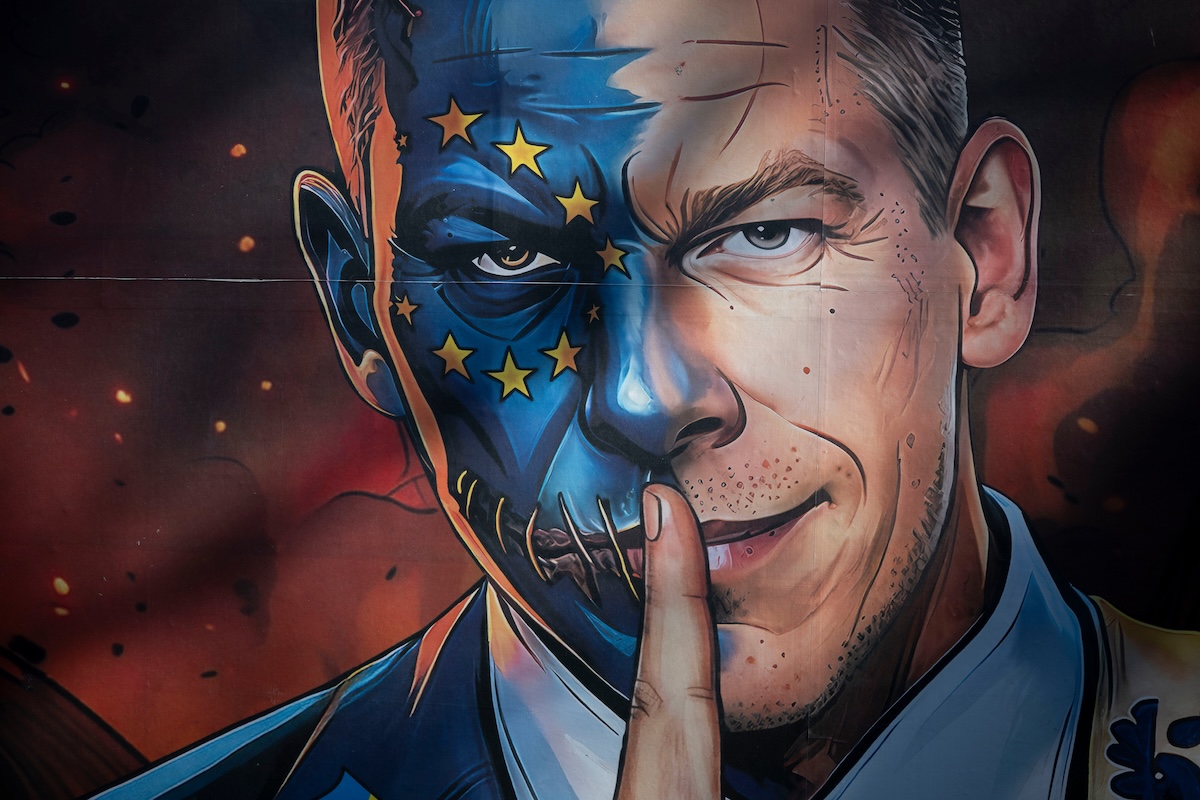
These synthetic contents, often indistinguishable from reality, do not merely glorify the government’s achievements, but spread fierce and defamatory attacks against the other presidential candidates, fueling a social polarization that is then amplified by the platforms’ algorithms. It is democracy reduced to software: cheap, scalable, and terribly effective at bypassing critical thinking.
Into this already crowded scenario has come an explicit and unprecedented show of support arriving directly from Washington. The strategic visit of Vice President JD Vance acted as a powerful political detonator on the eve of the vote, officially legitimizing Orbán’s narrative and pointing the finger at Europe for alleged improper interference. While Russian intelligence services work in the shadows of digital infrastructure, the pro-Trump network amplifies every message from the Hungarian leader online, creating a transatlantic echo chamber in which truth is reduced to a mere accessory of propaganda.
To complete the circle, the classic touch of technological victimhood could not be missing, useful for closing ranks against an invisible yet omnipresent enemy. In recent days, news was spread, later revealed to be false, that the major American platforms were actively censoring posts by Orbán’s supporters in order to influence the outcome of the vote. However, a meticulous fact-checking effort confirmed that Meta is not restricting government content at all. Yet the lie of censorship has by now spread through public opinion, helping to construct the image of a leader persecuted by “Big Tech,” while at the same time those very platforms are being flooded with Russian bots and pro-regime deepfakes.
The result of this joint offensive is a democratic system emptied of its essence. When the videos we watch are fake, the comments we read are written by Russian bots, and political support comes from those who accuse others of doing exactly what they themselves are doing, freedom of choice becomes an abstract concept. The Hungary that will go to the polls in a few days is a country on the edge and the mirror of a future in which elections are won on servers and no longer in public squares, leaving citizens with the illusory satisfaction of having taken part in a game whose outcome has already been written in code elsewhere. In this digital chess match between Moscow and Washington, the one thing at risk of being lost is the only true sovereignty left: that of the Hungarian electorate.
Alessandro Mancini