


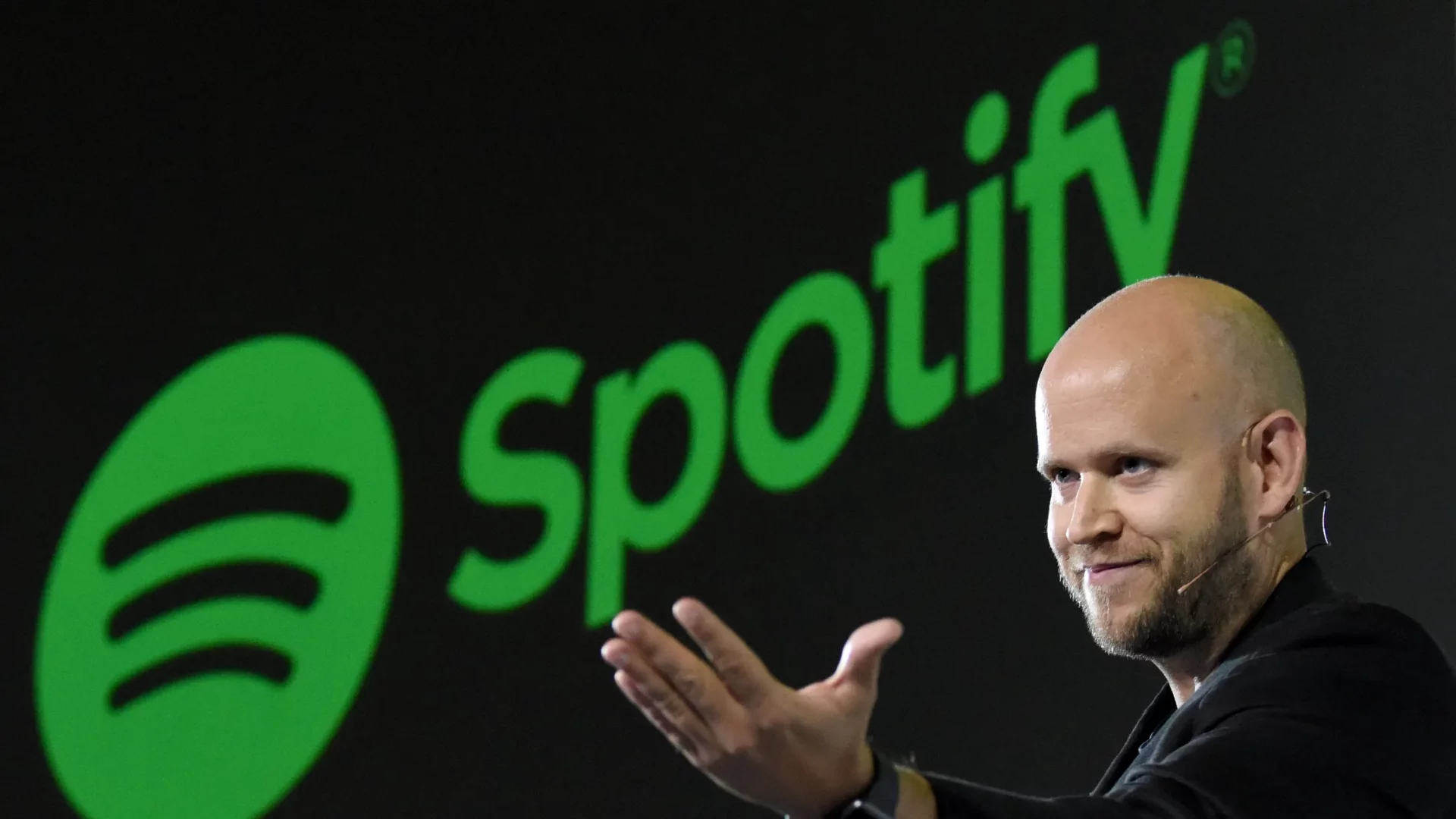
It’s not an easy time for Spotify. So to speak: the Swedish platform still holds the global record for the number of streams. Nevertheless, a few cracks are beginning to appear in what has been, for over a decade, an almost total monopoly.
Lets rewind the tape of this crisis. In June, news broke of a $600 million investment by Daniel Ek, Spotifys founder and CEO, in a startup specializing in military drone production. The reaction was immediate: a wave of outrage swept through the music world, pushing several artists, including Massive Attack, to remove their catalogs from the platform. Others followed suit, such as the prolific Australian band King Gizzard and The Lizard Wizard. In Italy, few artists took a stand on the issue: Auroro Borealo removed all his songs except for one track explaining his decision, while Piero Pelù joined the chorus of protest but stated that he was unable to remove his music since he does not own his masters.
Many users reacted as well, announcing the cancellation of their premium subscriptions.
To this must be added another initiative, not limited to Spotify, which has gained traction among international artists in recent weeks: No Music For Genocide. Through this campaign, over a thousand artists and labels have made their music inaccessible in Israel on every platform. The musicians involved span a wide range of genres and backgrounds: from the Canadian jazz group BadBadNotGood to Australias Amyl and the Sniffers, as well as Primal Scream, Paramore, Fontaines D.C., and many othersshowing that artists today place great importance on the ethics and political weight of their choices.
So, is Spotify in crisis? Not exactly. Despite the stock taking a sharp dip last July, growth projections remain optimistic: from June to now, the Swedish platform is said to have gained over 14 million new premium subscribers.
In the meantime, the app has introduced some small changes that some interpret as a response to the boycott: the reintroduction of user-to-user chat, removed years ago (and previously discussed here), and the ability to play any track immediately, even without a premium subscription. Its hard to say whether these updates truly signal that external pressure is affecting Spotifys bottom line.

The reality is that there are no major migrations of users to other streaming platforms at the moment.
Tidal, for example, continues to occupy a rather small niche in the market. According to the latest estimates, it has around seven million global users, with a significant presence only in a few countries such as the United States, and a market share of less than one percent. Despite its positive reputation for audio quality and a more artist-friendly revenue model, it doesnt appear to be benefiting meaningfully from Spotifys reputational troubles: growth is slow, and its ability to attract new subscribers remains limited.
A different but equally marginal case, in terms of overall impact, is SoundCloud. The German platform still counts around 180 million users, but most of them dont use it as an alternative to Spotifyrather, in parallel. SoundCloud remains a hub for independent and self-produced music, closer to a community archive than to a subscription-based streaming service. Here too, theres no sign of a mass exodus: its role in the streaming ecosystem is complementary, not substitutive.
And what about Nina Protocol? I previously discussed this blockchain-based music platform, which allows users to publish, listen to, and purchase music directly from creators, without intermediaries. Founded on the idea of giving back control and revenue to artists, it functions like a digital store where musicians, labels, and listeners can interact freely, with all transactions recorded on-chain. According to Rolling Stone, its a sort of Bandcamp for the Discord generation, experimenting with new redistribution models like the Community Revenue Share. However, theres no data showing measurable growth tied to Spotifys reputational crisis. Some recent partnerships suggest vitality, but the project remains small-scale, far from having a major impact on the streaming market.
In short, while the public debate around Spotify grows more intense, its economic and technological dominance still shows no structural cracks. The crisis, if not financial, is certainly reputational. Eks controversial investments add to a climate of mounting dissatisfaction: for years, many artists have accused the platform of underpaying the very musicians whose work fuels its profits.
Just a few days ago came the announcement of Daniel Eks resignation as CEO, after nearly twenty years at the helm. Its too early to speculate on the reasons behind his departurebut in the meantime, one cant help but wonder. For Spotify, is this the beginning of the end?
Pierluigi Fantozzi, born in 1995, is a musician. He graduated from the National Jazz Academy in Siena and obtained his masters degree at the Conservatory of Bologna. A clarinetist, he has played in jazz bands but has also cultivated an interest in electronic music, collaborating with Tempo Reale. In 2023, he joined the Controradio team, for which he has conducted interviews with important figures on the international music scene. As a radio presenter, he hosts his own programme, Passabanda.