


In the modern paradigm, the archive has been conceived as a repository: a place of preservation, order, and authority. From Foucault to Derrida, the archive has appeared as a dispositif of power capable of determining what can be said and remembered. With the advent of the digital, this function does not disappear but undergoes a radical transformation. From a physical and institutional space aimed at preserving memory, the archive becomes a distributed infrastructure, protocol, algorithm, platform, and ultimately an instrument of control (and of memory alteration). The implicit promise is that of total preservation: everything is recorded, everything accessible, everything indexed (and always so, at any moment). And yet, never as today does memory appear unstable, vulnerable, reversible — aided by the “age of trauma,” which alters its chemistry, but also by constant cognitive overstimulation and, of course, the collective inability to remain in the present, driven by an anxious yearning toward a future we are not certain awaits us.
New media art practices of the last twenty years have challenged the idea of the archive as an objective repository of the past, showing how every act of recording is selective, situated, and political. In these works, the archive can perform time and reactivate and navigate trauma, exposing memory to oblivion. Below is a series of examples.
One of the foundational texts for this reflection is In Defense of the Poor Image (2009), in which Hito Steyerl analyzes the “poor image” as a degraded, compressed, pirated, recirculated image. Far from being merely the residue of inferior technical quality, the poor image is a symptom of the archive’s transformation in the network age: images are no longer kept in a stable space but pass through platforms, servers, hard drives, temporary caches.
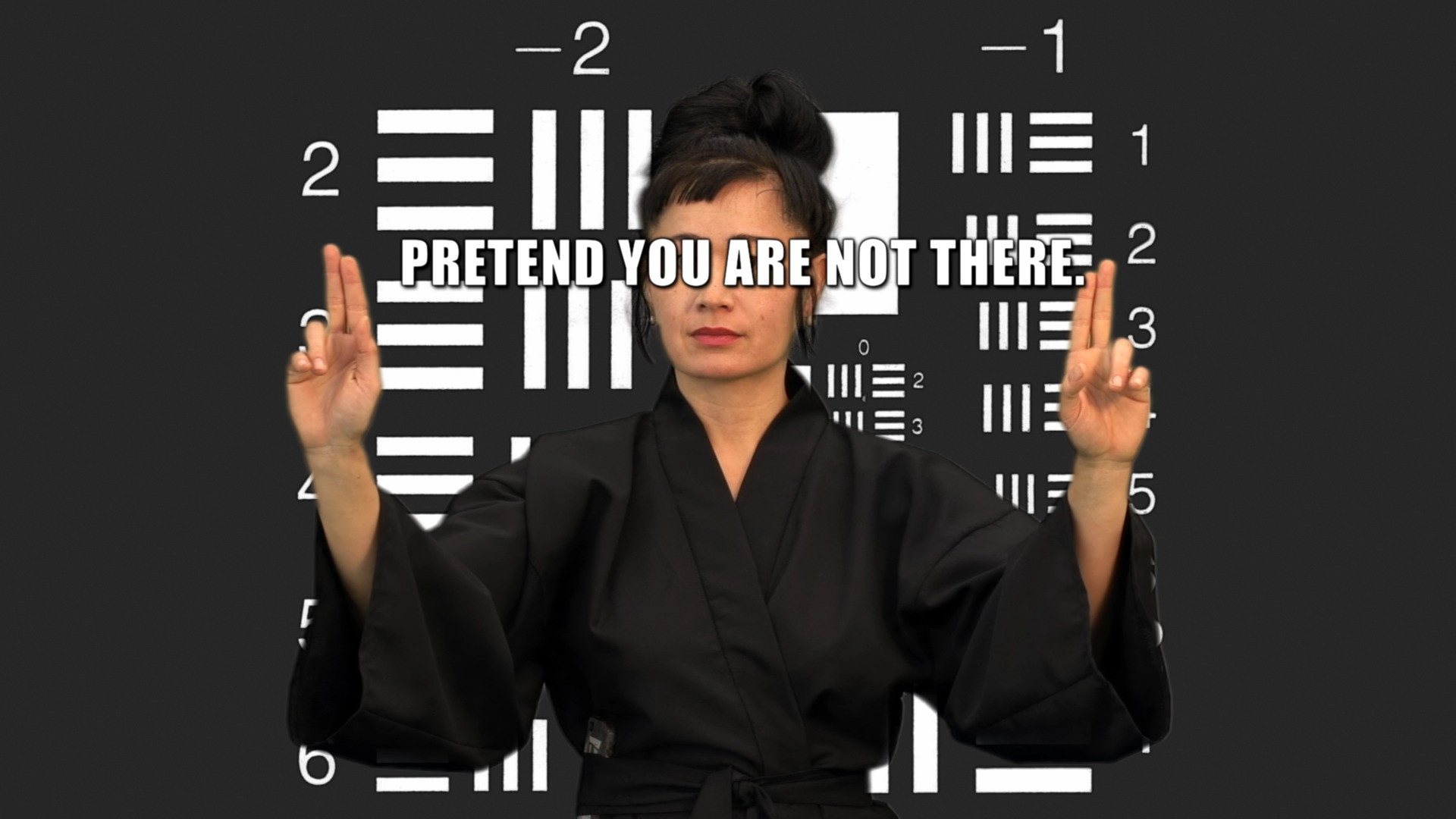
In the essay-film How Not to Be Seen: A Fucking Didactic Educational .MOV File (2013), Steyerl ironizes contemporary obsession with visibility and resolution. High definition promises clarity but also produces traceability, facial recognition, surveillance. The image that degrades, that renders itself unreadable, thus becomes a strategy of resistance. Here the digital archive becomes a battlefield between visibility and erasure. In this sense, the poor image is the first to destabilize the notion of archival authenticity: what survives is not the original but the compressed copy; not the intact document but its noisy proliferation. The archive turns into an entropic flow. Memory does not settle but is consumed in circulation.
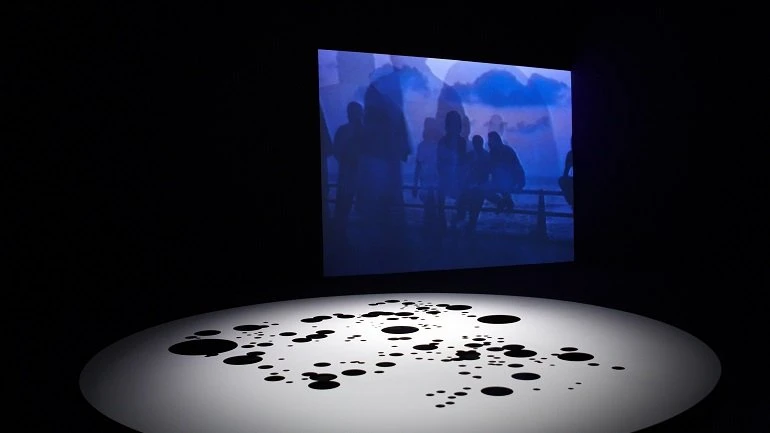
With The Atlas Group (1989–2004), Walid Raad constructs a fictitious archive about the Lebanese civil war. Documents, photographs, videos, and testimonies are presented as authentic materials but gradually reveal themselves as narrative constructions. The artist stages an archive that does not guarantee the truth of facts but rather their instability, demonstrating not only the unreliability of documents we tend to take for granted but also the power dynamics intrinsic to the documentation of “reality” itself (which can always be altered).
In a context marked by conflicts and collective repression, Raad shows how the archive is always already an interpretation. Historical memory, like individual and emotional memory, far from being a linear accumulation of data, is nothing more than an instinctive montage, one that does not escape omission and — obviously — invention. The archive thus becomes a performative dispositif: it produces reality while documenting it. Fiction is therefore reclaimed by the artist as a critical tool: by revealing the archive’s artificiality, Raad exposes its political dimension.
If Steyerl works on the circulation of images and Raad on their narrative construction, Trevor Paglen focuses on the invisible infrastructure supporting the digital archive. His photographs of submarine cables, data centers, and military satellites make visible what normally remains hidden: the technical and political apparatus enabling global data archiving.
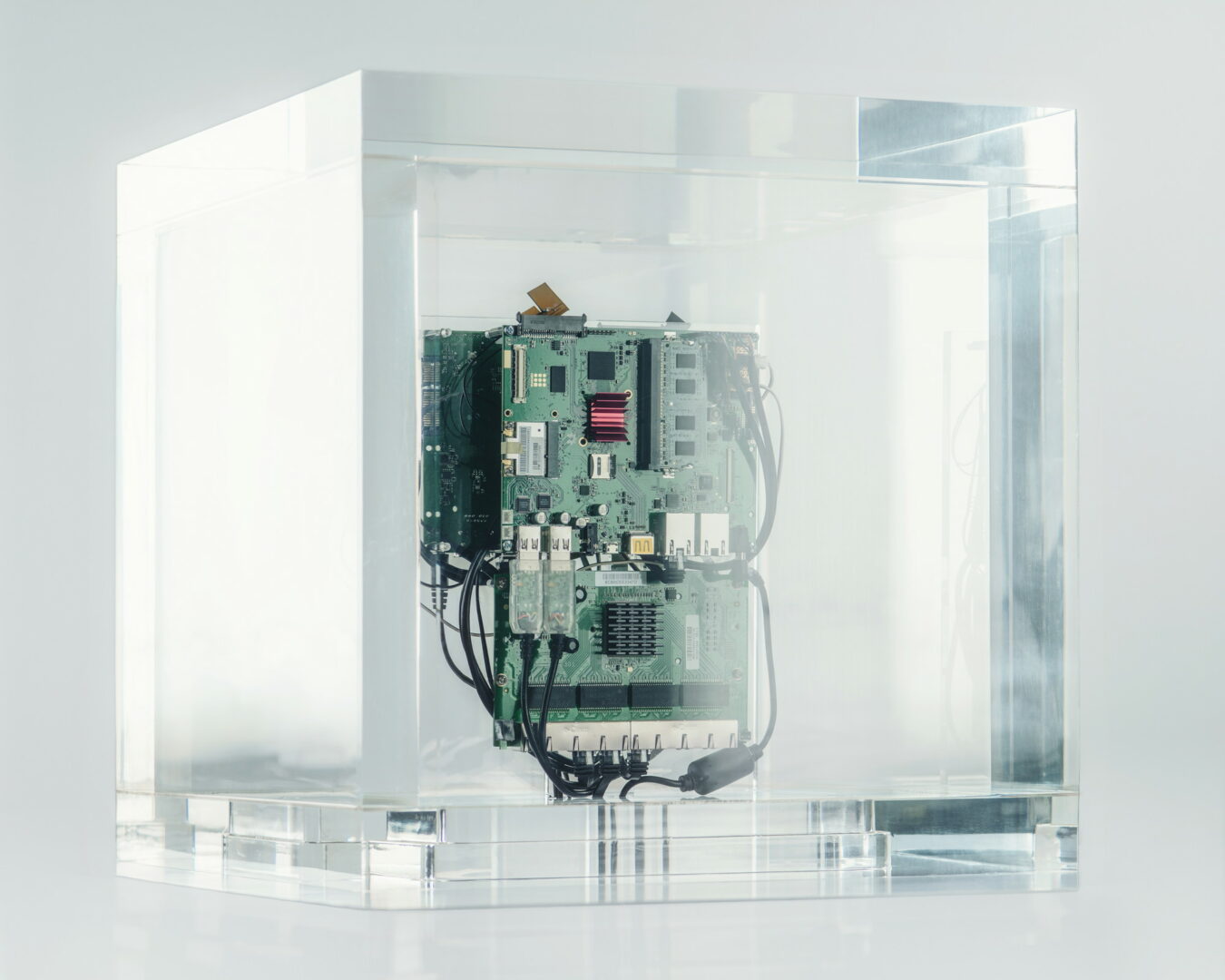
Works such as Autonomy Cube (2015) incorporate Tor network nodes into exhibition spaces, turning the museum into an anonymous access point. The archive reveals its irreducible physicality — that of a network of protocols and control devices.
Paglen highlights how the digital archive is inseparable from surveillance. Government databases, facial recognition algorithms, predictive systems: all contribute to producing an automated memory that records behaviors, movements, preferences. Thus, the archive not only “preserves” the past but anticipates the future through profiling.
There is also the case of the collective Forensic Architecture, which uses 3D modeling techniques, video analysis, and geolocation to reconstruct events of state violence or armed conflict. Their works — presented in courts, museums, and media contexts — demonstrate that the digital archive can become an instrument of counter-narrative. Amateur videos, satellite images, compressed audio are analyzed as fragments of evidence. Truth emerges from the montage and interrelation of heterogeneous materials. The archive is procedural, never definitive.
In this sense, Forensic Architecture radicalizes the idea of the archive as a situated practice. Neutral memory does not exist: here too, every reconstruction is a political act. However, unlike Raad, fiction gives way to a rigorous analytical method. Instability implies critical awareness of the conditions under which evidence is produced.
Constant Dullaart intervenes directly in social platforms and algorithmic ecosystems. In projects such as The Possibility of an Army (2014), he buys thousands of Instagram followers and redistributes them to selected users, revealing the artificial nature of online social capital.
Here the digital archive coincides with platform databases: likes, followers, images, metadata. But this archive is governed by opaque logics, private ownership, inaccessible algorithms. Collective memory is mediated by companies that determine its visibility and oblivion. Dullaart shows how the digital archive is manipulable, vulnerable to gaming strategies and intervention. The idea of objective memory is eroded by the awareness that what appears relevant is the result of invisible calculations.
These practices converge on a crucial point: the digital archive is intertwined with technical infrastructures, economic interests, and regimes of power. It promises infinite preservation but depends on vulnerable servers, obsolete formats, platforms destined to disappear. The contemporary archive performs time in a paradoxical way. On the one hand it accumulates data in real time; on the other it accelerates obsolescence. The result is that trauma is not pacified by recording but reactivated through its incessant reproducibility.
In opposition to musealization and the rhetoric of total preservation, these artists propose an archive as an unstable, vulnerable, and situated process. Digital memory refuses to settle because of excess power: because it is always already implicated in networks of circulation, surveillance, and computation. In this perspective, the archive is a space of conflict where the present (and the future) are negotiated. Through degradation, fiction, counter-investigation, and algorithmic sabotage, these works make visible the constitutive instability of digital memory.
Laura Cocciolillo