



The closure of Milan’s Plastic seems to fit into the broader context of a crisis facing European nightclubs, a crisis that has been unfolding in an underground, intermittent way for years and that, until recently, did not appear to have affected Italy significantly. The first warning signs had come mainly from the United Kingdom and from Berlin. The German capital, in fact, is experiencing what local media have called Clubsterben, the “death of clubs”: over the past three years the phenomenon has reached even global landmarks of electronic music such as Watergate and Renate, which have been forced to shut down for reasons similar to those that have already wiped out around half of the clubs in London and its surroundings. Indeed, the February 2024 report by the Night Time Industries Association (NTIA), among many things, reveals that between 2020 and 2024 roughly 400 clubs in the United Kingdom have closed their doors, linking the sector’s collapse to a combination of converging factors: the steep rise in operating costs (rent, energy, staff), a general contraction in purchasing power, the collapse of weekday nightlife, and a generational shift in how young people experience the night, with Gen Z—unlike its predecessors—barely touching alcohol at all.
As for Plastic, no official statements exist regarding the reasons for its closure. However, there is talk of declining attendance and tensions with the neighbors around its latest location—factors that would have made continuing the activity increasingly difficult. On an emotional level, the disappearance of such an important venue hits hard, but in terms of numbers it is not an exception at all: the closure of Plastic is part of a long-term trend. From 2010 to 2023, in fact, 2,698 discos, dance halls, and nightclubs disappeared in Italy, while only 630 new ones were established: the negative balance of 2,068 venues makes even the end of such a historic space statistically plausible.
The 2024 SIAE Report describes a sector undergoing a deeper transformation than the raw closure data alone would suggest. According to the document, the traditional nightclub is progressively losing centrality because the habits of young audiences have changed significantly. Beyond drinking less, Gen Z tends to frequent stable venues to a lesser extent and prefers forms of socialization that are more fluid, less tied to weekly routines, and more oriented toward exceptional events: festivals, hybrid formats, itinerant nights.
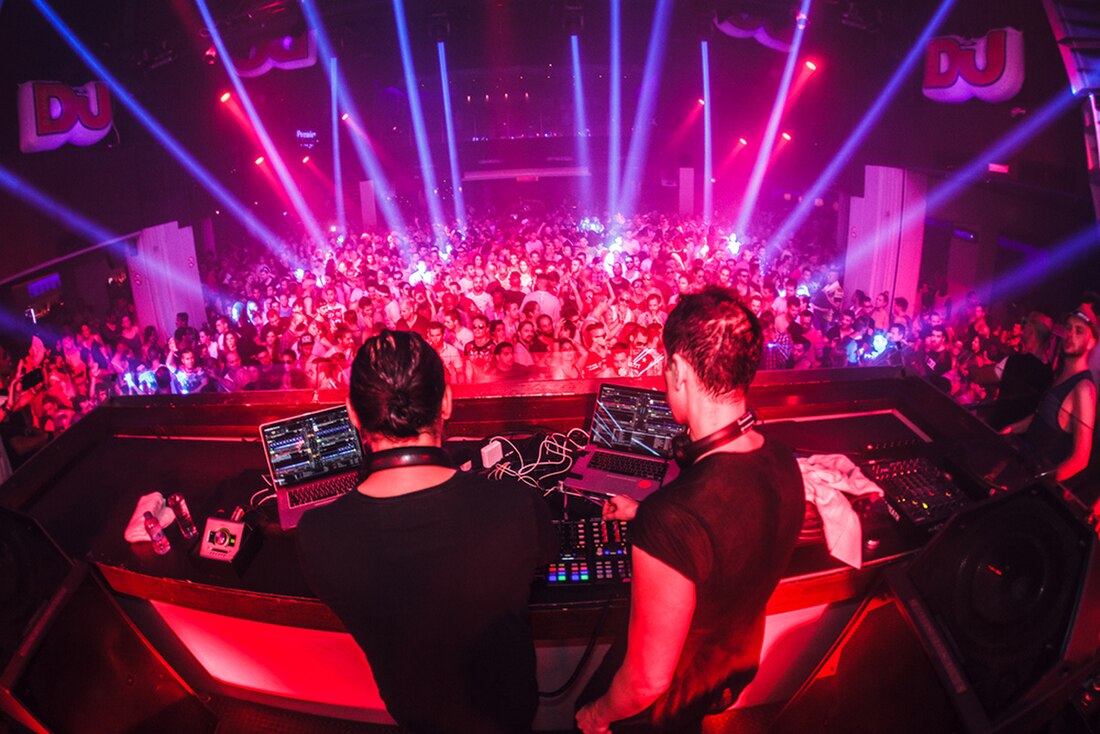
The report also highlights the growth of phenomena that are difficult to detect through official statistics, such as free parties, self-managed events, and illegal venues, which appeal to audiences seeking less codified, cheaper, and more “authentic” experiences. It is a parallel ecosystem that does not fully replace nightclubs, but gradually erodes their role, drawing away the youngest segments of the public.
And furthermore, as many nightlife workers point out, there is a factor often ignored by official analyses: dating apps. Tinder, Grindr, and their derivatives have profoundly altered the dynamics of going out, reducing the club’s social function as a meeting space. To meet someone, you no longer need to go dancing, nor spend money on drinks or entry fees: you can comfortably stay at home and swipe through a few profiles. A shift as silent as it is radical, one that has stripped clubs of one of their traditional roles, further emptying a model already struggling to survive.
Paradoxically, this crisis emerges precisely at a moment when club culture and electronic dance music have forcefully entered the mainstream, influencing pop aesthetics, imaginaries, and sonic languages. The most evident example is Charli XCX: in the summer of 2024, with her brat summer, she brought the club universe back to the center of the pop conversation, both through explicit lyrical references and through production choices directly inspired by the sounds of the night. Among the most emblematic initiatives of the promotional campaign was a Boiler Room DJ set, which helped transform the clubbing context into a highly visible cultural and media commodity. And even Spanish singer Rosalía has not remained immune to this influence, titling her latest single Berghain, after the famous and exclusive Berlin venue.
Of course, neither Charli XCX nor Rosalía “invented” this imagery: both, however, have captured a growing public interest in the world of clubbing—an interest amplified by social media, especially TikTok and Instagram, which have turned the club into a true aesthetic model with codified outfits, micro-rituals, poses, and recurring frames (I discussed this here).
Within this process, references such as Boiler Room or Berghain circulate as visual symbols now recognizable even outside the contexts from which they originate. At the same time, however, these places and platforms are the subject of debate within parts of the “underground” scene, where some concerns have been raised: in the case of Boiler Room, criticisms have emerged regarding the ownership structure of the company and the financial ties with Israel of the fund that controls it; in the case of Berghain, there has been criticism of the perceived lack of transparency surrounding the cancellation of a live performance by French-Lebanese DJ Arabian Panther. These signals show that the alternative aura surrounding certain global clubbing symbols is far from uncontested, even as they are being absorbed and amplified by the mainstream—demonstrating, in any case, that the conversation around the club world is anything but dead.
Ultimately, in Europe the club as a physical place is experiencing an evident crisis, pushed to the margins by unfavorable economic dynamics, new social habits, and an increasingly fragmented nighttime ecosystem. But club culture, far from disappearing, seems to have shifted into pop aesthetics, into the codified languages of social media, and into festivals and occasional events that replace the weekly rituals of historic discos. It is a nightclub experience that has been partially dematerialized, surviving in the form of symbols that continue to circulate powerfully within the contemporary imagination.
Pierluigi Fantozzi, born in 1995, is a musician. He graduated from the National Jazz Academy in Siena and obtained his masters degree at the Conservatory of Bologna. A clarinetist, he has played in jazz bands but has also cultivated an interest in electronic music, collaborating with Tempo Reale. In 2023, he joined the Controradio team, for which he has conducted interviews with important figures on the international music scene. As a radio presenter, he hosts his own programme, Passabanda.