


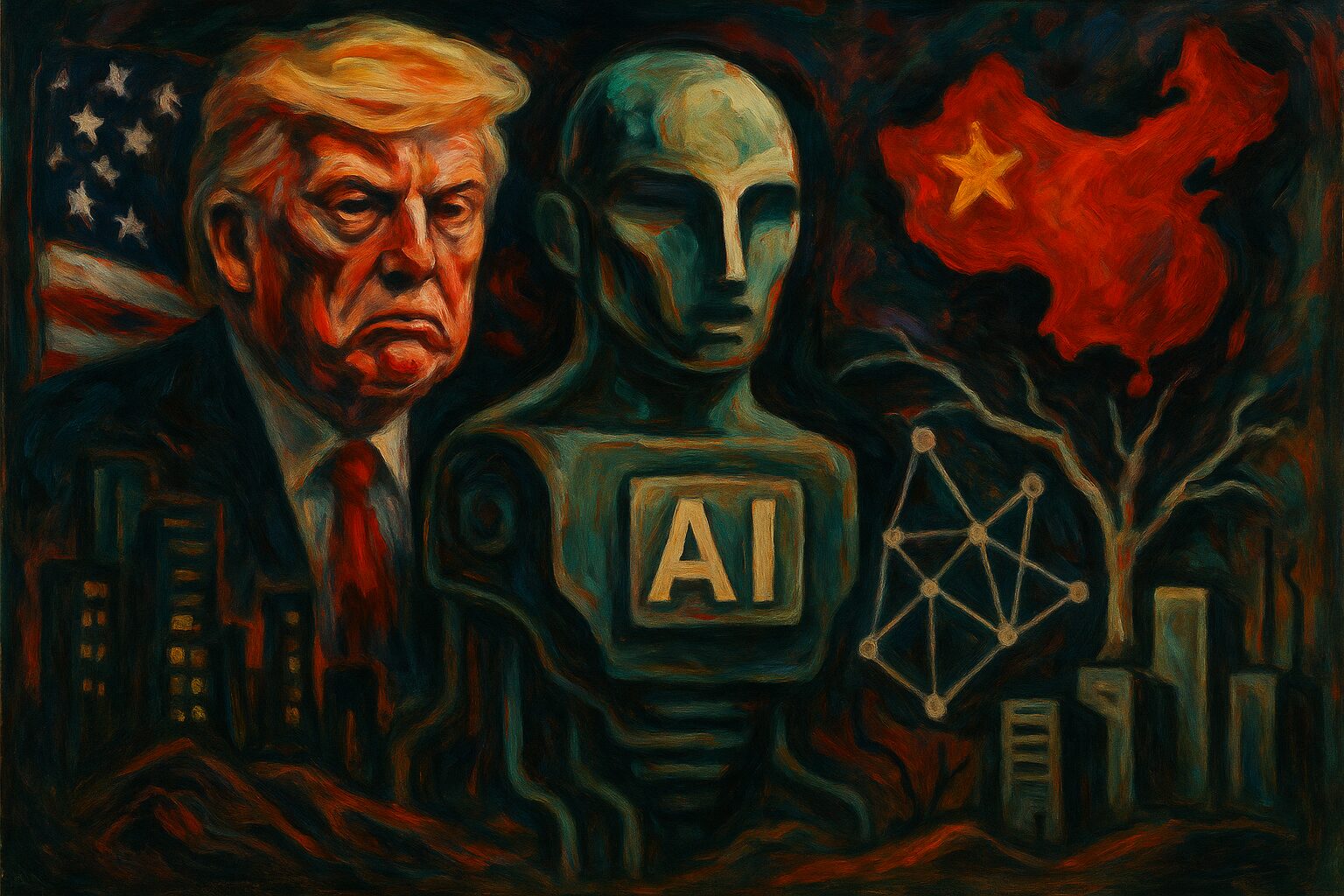
It was released without much noise (at least in Italy): Americas AI Action Plan, the Trumpian manifesto on artificial intelligence. Its a muscular, testosterone-driven text that recalls the tones of 1980s90s America, from which the political culture behind it originates.
On one hand, it makes a choice that could be called farsighted: not underestimating AI and not treating it as just another technological sector, but as a strategic priority. For this reason, it supportsalbeit with egoistic calculationthe open-source approach. The White House has decided to focus on open-weights and widespread access to computing power in order to accelerate startups and research, thereby imposing U.S. standards and creating a supply chain tied to the American ecosystem.
This is an important move, because it signals the intent to build hegemony through openness: to catalyze domestic innovators and attract those who lack the resources to bear prohibitive costs. Its a direction Europe could have taken in a more community-based way, but instead sacrificed in favor of an obsessive debate on copyrightfailing to understand that tightening copyright protections during the training phase only hands a structural advantage to those who already own vast catalogs and capital. Not coincidentally, copyright isnt even mentioned in the American document, as its considered a secondary obstacle compared to the race for innovation.
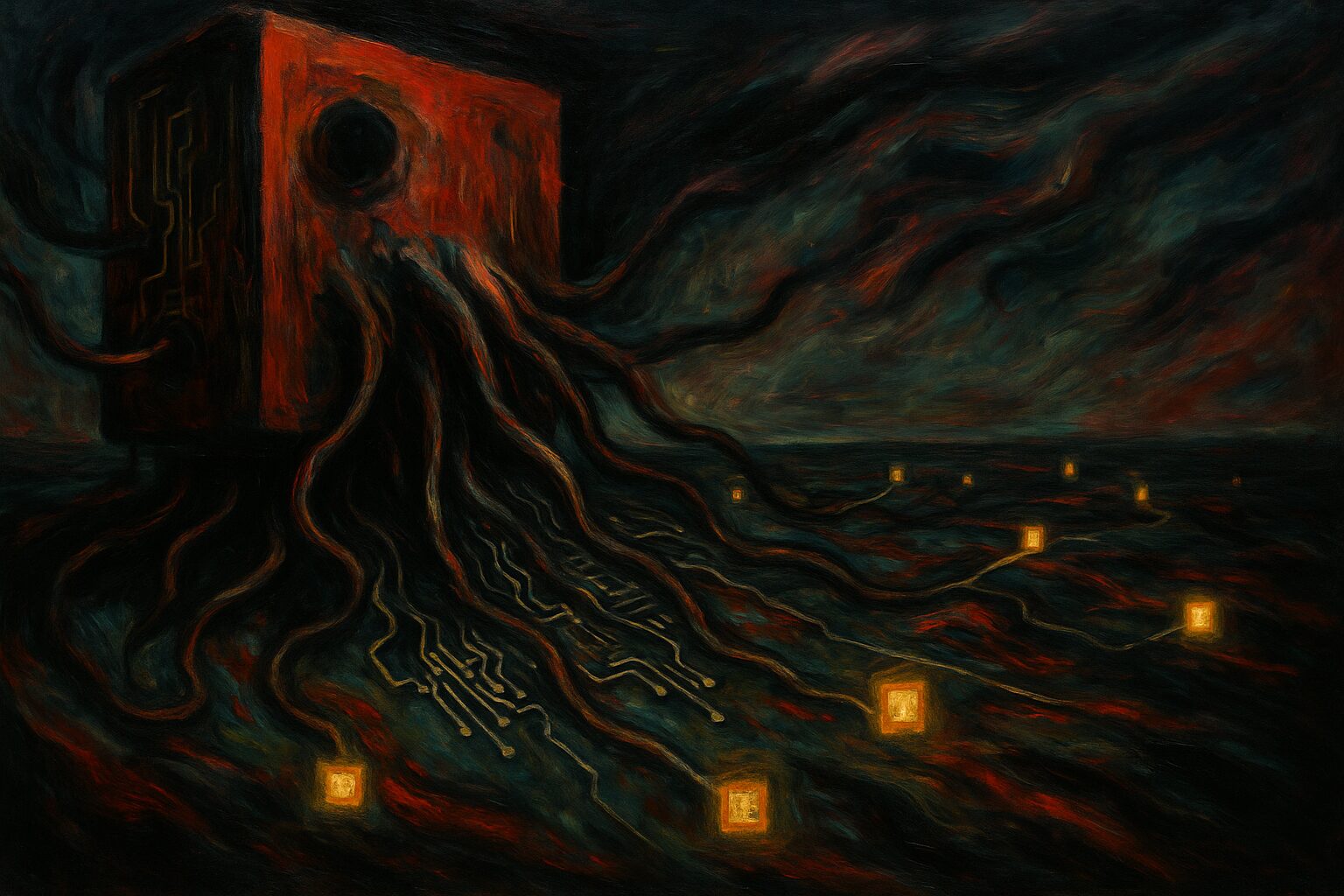
End of the (apparent) good news. The plan doesnt just finance domestic innovation; it also envisions exporting the entire American stackchips, models, software, and regulatory standardsbinding allies into a technological dependence whose sole purpose is to exclude Beijing. Its blatant digital colonialism, not even hidden behind universalist rhetoricthe days of soft power seem behind us.
To this geopolitical logic is added an unprecedented environmental deregulation: the plan drastically reduces oversight, introduces new categorical exclusions, extends FAST-41 corridors, weakens protections in the Clean Air and Clean Water Acts, and makes federal lands available to build data centers and energy infrastructure at record speed. In other words: build now, maybe measure the impact later. The urgency of AI is placed above every other consideration, instantly erasing the safeguards introduced in the 1970s when America had decided that progress had to account for ecological costs.
But perhaps the most disturbing point is not even that, but the imposition of an ideological filter on technology. The administration has ordered NIST to remove from its frameworks all references to disinformation, climate change, and DEI (diversity, equity, and inclusion) policies. The models the government will be allowed to purchase must appear neutral and objectiveterms used as synonyms for aligned with Trumps policies and ideas.
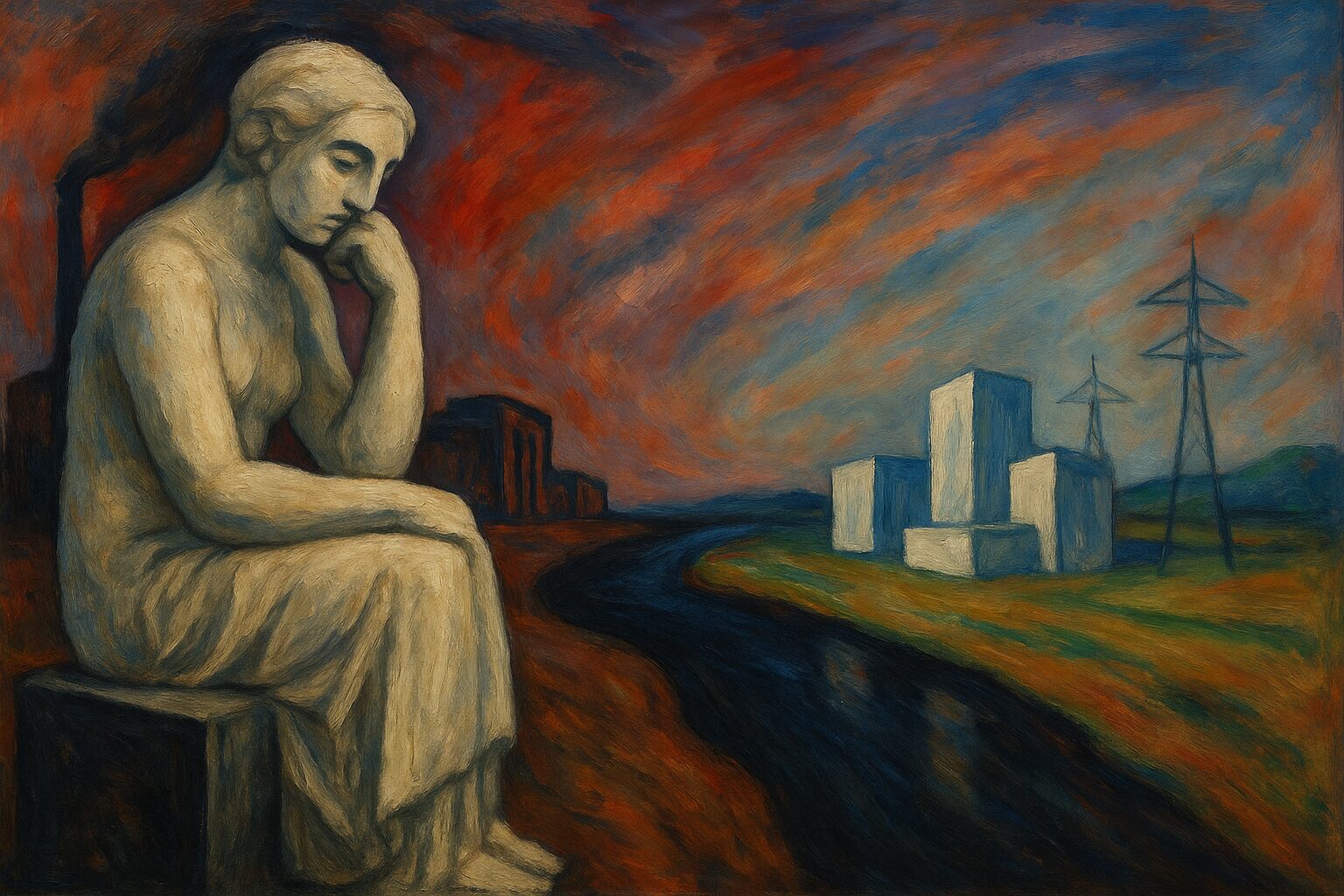
The effect is paradoxical: in the name of a non-existent neutrality, the risk is producing models amputated of entire domains of knowledge, making them less accurate and less competitive scientifically. Its a strategic as well as cultural mistake; an AI that doesnt talk about climate or disinformation isnt neutralits simply blind. And a blind ecosystem cannot win any technological race. Its worth recalling for those who accused Chinese AIs of being unable to talk about Taiwan: we may end up with American models that are practically flat-earthers.
The plan is a very fragile hybrid: on one hand, the open-source impulsecommendable at least as a tactical moveon the other, digital colonialism designed to bind allies, environmental deregulation that turns urgency into an alibi, and a notion of objectivity that mistakes the removal of uncomfortable topics for neutrality.
In this way, the United States risks declaring its own defeat in the AI competition. Europe, which hasnt even truly entered the race, watches from afar. And the question is: if Americans choose to run with a crippled AI and we dont run at all, who will win?
That leaves, of course, China. Its AI governance is openly aligned with Party values, and every generative system must undergo security reviews before reaching the public. Its a censorial framework that doesnt pretend to be neutralit openly asserts its ideology. Industrially, it builds computing capacity through national programs, develops domestic chips to reduce reliance on U.S. GPUs, finances clusters of data centers, and aims to surpass 300 exaflops by 2025. Within this dirigiste framework, paradoxically, lives one of the liveliest open-weight scenes: models like Qwen and DeepSeek release weights and permissive licenses, creating a fast-growing ecosystem that in some cases manages to compete with fewer resources.
In the end, the emerging scenario is one of rigid American colonization, a Europe bogged down in regulations without building infrastructure, and a China thatthough censorialconstructs computing capacity and open models with industrial pragmatism. I dont know who will win, but the East certainly seems more culturally suited; its traditions, from Confucius to Laozi, have taught that knowledge is born of relationships, not individuals. The West clings to the dusty myth of the author and objectivity, while Chinadespite asserting its partialityaccepts that every work is collective. Perhaps this awareness is what makes its ecosystem more likely to endure. After all, good seeds are not enough for a good harvest; you also need the right soil.
Francesco DIsa, trained as a philosopher and digital artist, has exhibited his works internationally in galleries and contemporary art centers. He debuted with the graphic novel I. (Nottetempo, 2011) and has since published essays and novels with renowned publishers such as Hoepli, effequ, Tunué, and Newton Compton. His notable works include the novel La Stanza di Therese (Tunué, 2017) and the philosophical essay Lassurda evidenza (Edizioni Tlon, 2022). Most recently, he released the graphic novel Sunyata with Eris Edizioni in 2023. Francesco serves as the editorial director for the cultural magazine LIndiscreto and contributes writings and illustrations to various magazines, both in Italy and abroad. He teaches Philosophy at the Lorenzo de Medici Institute (Florence) and Illustration and Contemporary Plastic Techniques at LABA (Brescia).