



Do you know John Maynard Keynes’s old prediction about the fifteen-hour workweek? It was 1930, and the economist imagined that, thanks to technological progress, our grandchildren would suffer more from an excess of free time than from the burden of work. Well, here we are in 2026, and looking around at crowded desks and nonstop notifications, we can officially say that Keynes was an incurable optimist—or perhaps he failed to anticipate that human beings are incredibly creative when it comes to complicating their own lives. The great promise of artificial intelligence was exactly this: to delegate repetitive tasks to machines so we could reclaim our time. Instead, the data tells a completely different story: AI has not come to send us on vacation, but to push us to run faster, like hamsters on the wheel of hyper-production.
The breaking point of this utopian narrative has been crystallized by a recent and illuminating study published by the Harvard Business Review, which bluntly argues that artificial intelligence does not reduce workload—it intensifies it.
The central thesis of the research is this: every minute saved through automation is not returned to the worker as rest, but is immediately reinvested in new tasks, constantly raising the bar of corporate expectations. It is the so-called efficiency paradox applied to white-collar work. If it once took eight hours to write an accurate report, and now—thanks to a language model—it takes two, management will not allow you to go to the park for the remaining six; they will simply ask you to produce four reports instead of one.This dynamic is generating what experts call “work intensification,” a phenomenon in which the density of tasks performed within a given unit of time reaches critical levels. We are not working less—we are working at a higher frequency, eliminating those precious idle moments that once acted as a psychological buffer between tasks. The disappearance of these “analog” pauses has led to a sharp increase in mental fatigue. A global report on workplace trends shows that the volume of digital communication has increased by 250% in recent years, leaving employees in a state of constant cognitive alertness. AI has accelerated processes, but human beings remain biological organisms with finite processing limits.
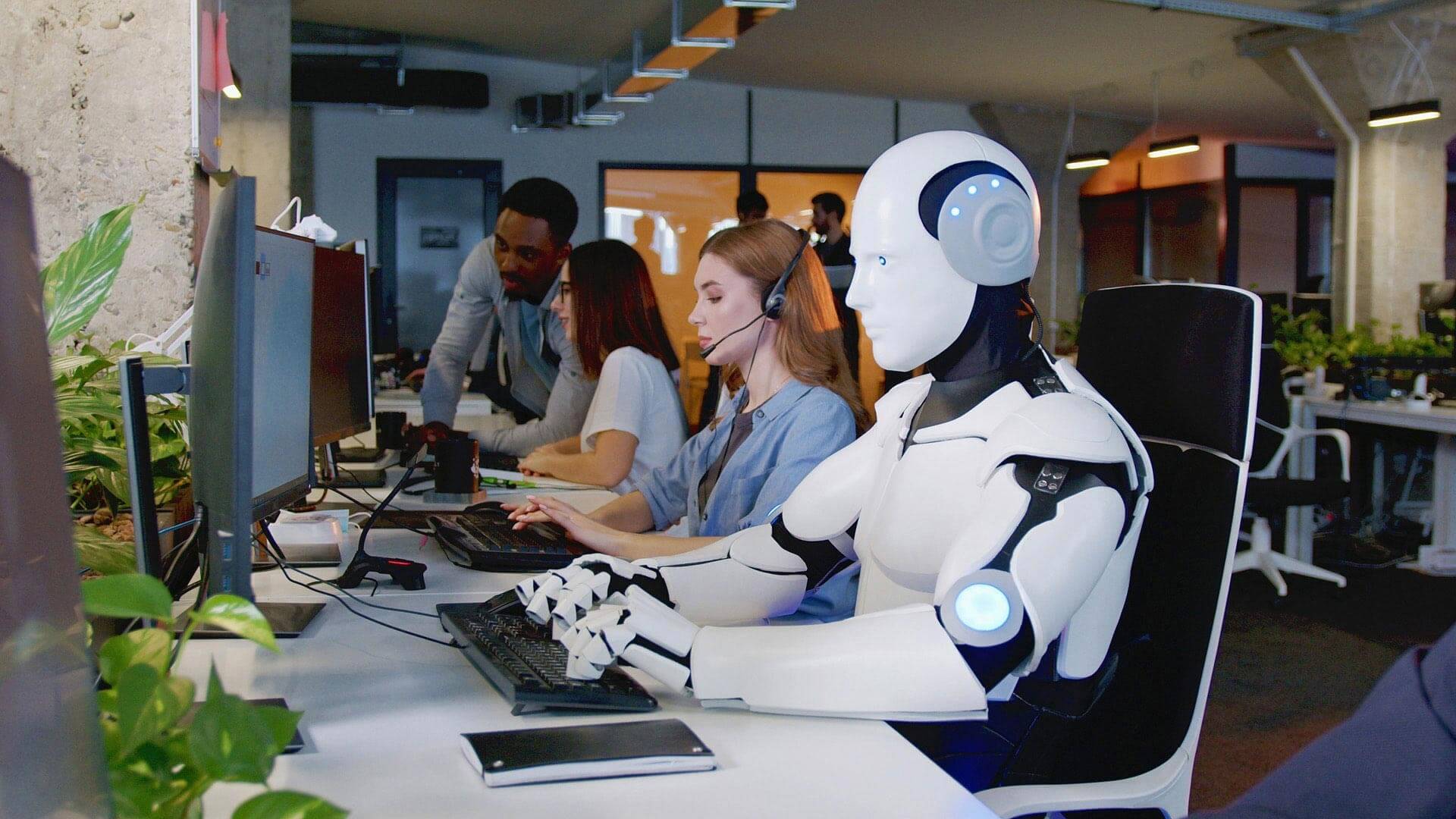
The result is a form of exhaustion that stems less from physical effort and more from decision saturation. Managing artificial intelligence requires constant oversight: we must ensure it does not hallucinate, correct its tone, integrate its data, and verify that its output is coherent. This supervisory work, often underestimated, is extremely demanding in terms of mental energy. Research in occupational health confirms that the need to constantly interface with algorithmic systems is leading to new forms of digital burnout, characterized by a sense of inadequacy in the face of machine speed. We have become air traffic controllers of a data flow that never sleeps.
There is also the issue of availability. If artificial intelligence is always active, the implicit expectation is that those who operate it must be as well. Constant availability has become the new norm, eroding the already thin boundary between professional and private life. Many companies, far from promoting well-being, use data on AI-boosted productivity to justify work rhythms that would have been considered inhumane just a few years ago. In this scenario, AI acts as a catalyst for performance anxiety: if the tool is perfect and fast, any delay or mistake is attributed solely to human fallibility.
In conclusion, the idea that automation would set us free is proving to be one of capitalism’s greatest illusions. While chatbots become more “human” and image generators more sophisticated, we find ourselves managing an unprecedented cognitive load, trapped in an upward spiral where the reward for doing a good job is, ironically, receiving even more work. Perhaps we should stop asking how AI can make us more productive and start asking why we are so afraid of empty time.
Alessandro Mancini