


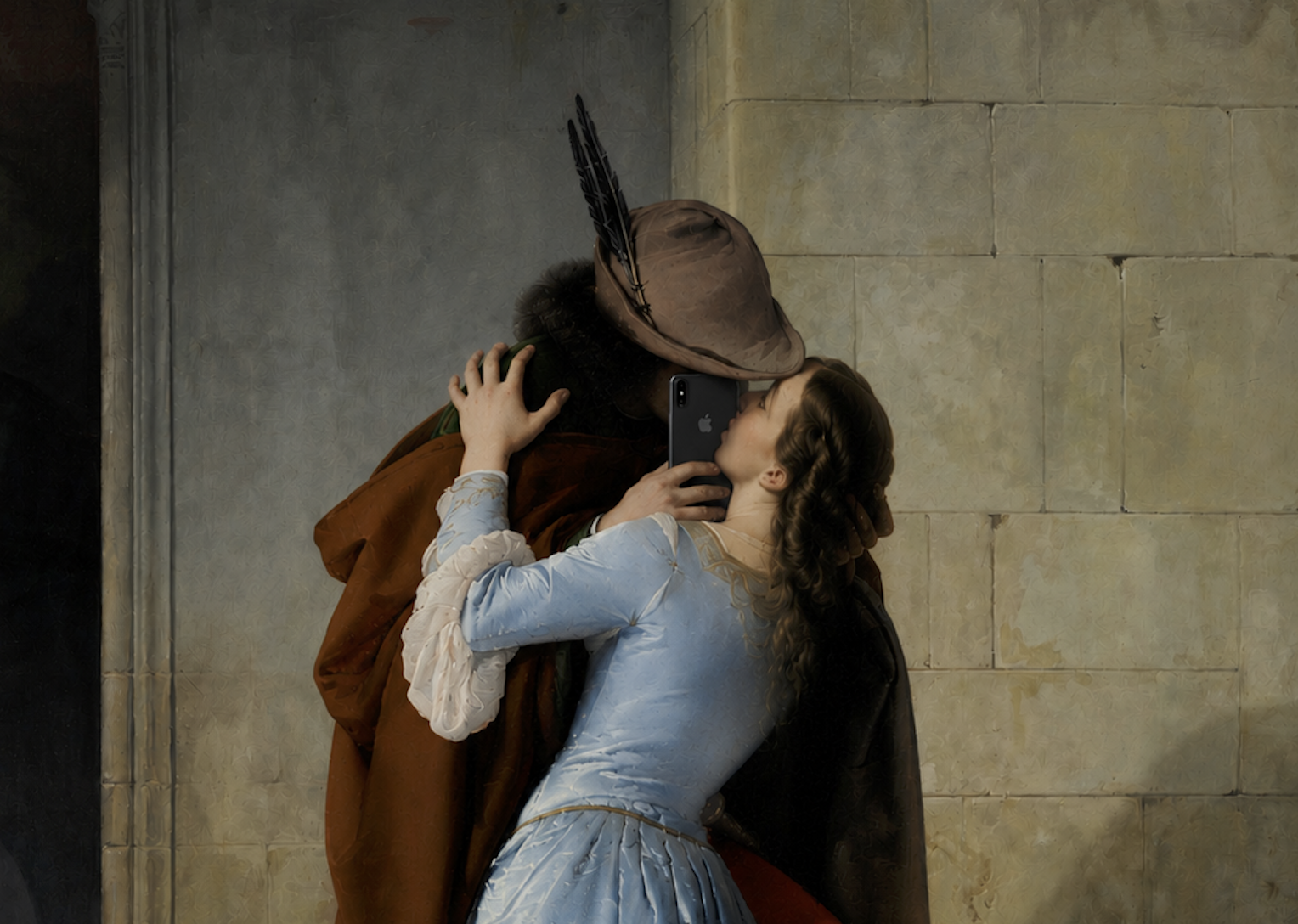
In a scene from He’s Just Not That Into You, the 2009 film-Bible that clarified dating for at least one generation, an exasperated Drew Barrymore stands among supermarket shelves, complaining to her friend Scarlett Johansson about the complexity of interaction between the sexes. She says, and I quote faithfully because the concept is fundamental: “I miss the days when there was just one phone number and one answering machine, and that one answering machine had one cassette tape, and that one cassette tape either had a message from him or it didn’t. Now you have to go around checking all these different portals just to get rejected by seven different technologies.”
The film’s screenplay was based on the book of the same name, first published in the United States in 2004. Facebook was released to the general public in 2006. Which means the protagonists’ exasperation, because basically all of them are exasperated, was ahead of its time. Because what Drew Barrymore tells her friend during that same rant, “One time a guy left me a voicemail at work, so I called him at home, then he emailed me on my Blackberry and I texted him on his cell, then he emailed me back to my private address, and it all got out of hand,” now feels to us like reading about the rituals of a tribe living on some remote Pacific island. Nobody would ever leave us a voicemail on the office landline, and vice versa; nobody would ever send us an email or an SMS, and vice versa; almost nobody has a landline at home anymore; and the Blackberry has been off the market for a decade.
And yet, despite all this, are we really better off than Drew Barrymore?
In 2024, Bumble CEO and founder Whitney Wolfe Herd said that the future of the app she had created would be to use artificial intelligence to do the dirty work. Meaning that systematic pain in the ass that consists of making small talk with someone, without even being too direct so as not to scare them off, in the hope of picking up, from the crumbs, the much-coveted level of compatibility. Spoiler: real compatibility is built over time within a relationship between two people, with all the lack of patience and mangled compromises that entails. Trying to figure out from a handful of questions, asked, moreover, by an artificial you to another artificial you, whether a person may or may not be a match for us is, for all intents and purposes, a load of bullshit. And trying to reduce everything to that, what does it smell like if not laziness? Because apparently the desire to take the trouble and the time to discover a person layer after layer after layer, which ultimately means trauma after trauma after trauma, is nowhere to be found, and it is nowhere to be found because it is genuinely exhausting. We have grown used to being comfortable in everything, and love, in itself, is one of the most uncomfortable things I can think of.
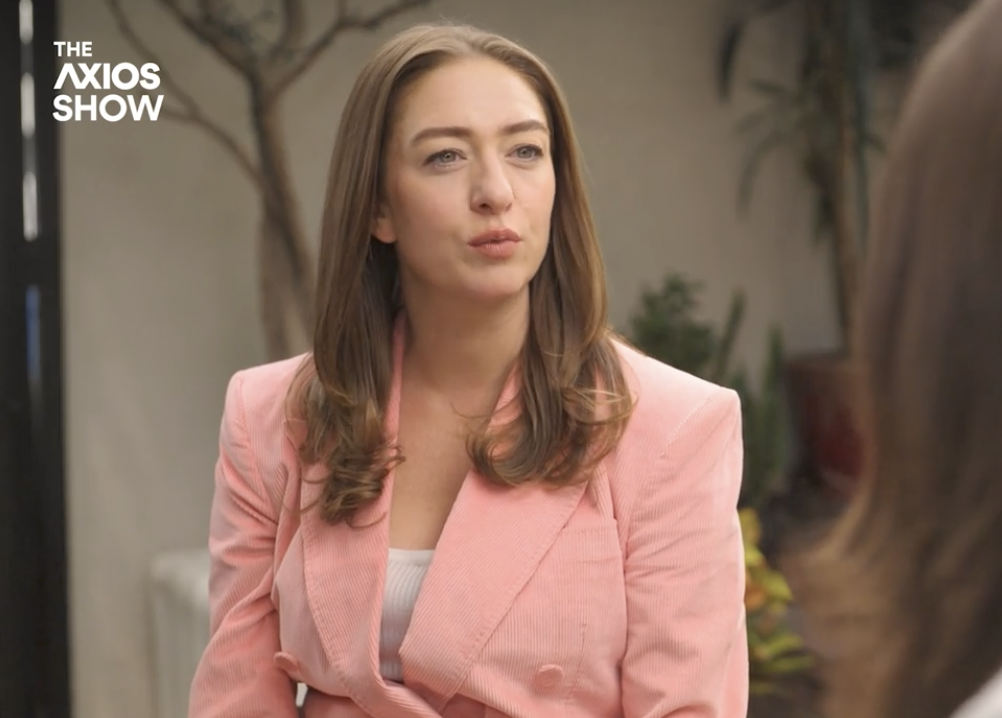
A few days ago, following an announcement made in March, Bumble’s founder again said in an interview with Axios that it is clear the traditional dating-app model is slowly dying of starvation. After years of swiping, users, apparently especially Gen Z, are increasingly tired, frustrated, and disillusioned by the online dating experience, which is why Bumble is preparing for a major AI-driven transformation. The app will introduce an AI assistant called Bee, for those who missed it: Bumble Bee, designed to help users build more effective and authentic profiles, while banning any possible assistance with profile pictures and messages. According to the CEO, the goal is to use artificial intelligence to make relationships more human, no, this is not a joke, by facilitating real-life meetings and quality connections. Apparently, if my artificial Self talks first to your artificial Self, maybe then you and I will understand each other better. Utopia? No, just 2026.
But let’s be clear for a second, guys. Let’s talk about sex, casual sex, the kind we like so much. I have seen people looking for sex on Tinder the way you look for parking on a Friday at aperitivo hour, while failing to notice the person gazing at them rather languidly from a meter away. Even if we remove amour from the algorithm to make room for hit-and-run coitus, what changes? Because let’s be honest, there is a fierce beauty in locking eyes with someone while we are out in the world, holding that gaze long enough to sense that something in both of you has joined the cause more firmly than Greenpeace ever could, and then finding yourself feeling that your fingers can find no peace anywhere except in the most remote hollows of each other’s bodies. Without having to talk, without having to ask what you do for work or whether you like cinema. What we want is hands on us, in the good sense, ça va sans dire. How can a swipe replace that? And let’s be clear, a gallant encounter arranged through Bumble or whoever can certainly give us a couple of orgasms. Nobody is denying that. But it is like ordering on Glovo. Nice, sure, but never as good as lifting your ass off the chair and going to that little restaurant that looked interesting when you walked past it.
Even while establishing that we are undoubtedly the biggest losers of them all, the history of this relational involution is much older than we are. In 1959, at Stanford, Jim Harvey and Phil Fialer used the IBM 650, the world’s first mass-produced computer, for a matchmaking project they renamed Happy Families Planning Service. It was nothing more than a university experiment, based on questionnaires and punch cards, but it already revealed three key elements: the questionnaire, the idea of computable compatibility, and the social allure of the machine. In 1964, in the United Kingdom, Joan Ball founded the St. James Computer Dating Service as an extension of her marriage bureau in London. This idea, long overshadowed by better-known American narratives, is crucial. Because Ball understood that the computer could make more efficient a profession that already existed, namely matrimonial mediation. It was no longer a little university game; it was a commercial service for people genuinely looking for a partner. The following year, at Harvard, Operation Match was born, considered the first major American computer dating service. For the first time, questionnaires were used that included social class, sexual attitudes, family income, intelligence, aesthetic self-assessment, and weight. And from there, between the 1970s and 1980s, agencies, classified ads, videotapes, and telephone services took off: whatever technology was deployed, the essence was the progressive normalization of the idea of looking for a partner through an intermediary.
In 1995, Match.com brought the romantic-personal sphere into the commercial internet, and in 2009 Grindr launched a turning point for gay, bisexual, and queer men. By then it was an app, and it used location to show you nearby profiles, breaking down the web-desktop stage and moving the encounter into immediate urban space. This changed the temporality of dating: no longer just profiles to search through, but people who, if all goes well, you can meet within the hour. On the market since 2012, Tinder alone today claims more than 630 million downloads, more than 100 billion matches, we are 8 billion people, 100 billion matches, and around 50 million monthly users. And in all this, one factor, which is something halfway between a carousel and a trap, is worth noting: the global dating-app market claims to keep the whole circus running in order to help people form relationships, on the assumption that once you have found one, you will stop using certain services at least for as long as that relationship lasts. But it makes money when you stay, come back quickly, do everything you can to improve your competitive position, and, above all, pay to reduce your chances of failure.
But what, I ask you, are we really afraid of? Those who want to save themselves from bruises to the ego at the last second will tell you it is not about fear but about time, that chatting on an app with however many people at once gives you the chance not only to optimize, and on that word alone one could write a book, not just an article, but also to find someone more easily within the framework of our frantic lives. That if life is mostly work-work-work, there is not exactly much room left for horizontal public relations, and sentimental ones too, in the event of an upgrade. Let us set aside, for now, the fact that perhaps this is where we should push a little further and dare to say that if the life we live deprives us of the very meaning of life, then maybe the conversations we need to have are entirely different ones and should come well before these. But even leaving that aside, I believe the answer to the question lies in those few lines of script entrusted to the mouth of good old Drew Barrymore. If we move away from the surface of things, and dear God, how much we love staying there, it is being rejected. It is failure. It is the eighteen-story building we construct all around ourselves so we never have to hear someone say we are not tall enough. And we want so badly to avoid that happening to us, we want so badly to avoid feeling ineffective, that in order to do so we are even willing to entrust the choice of a partner to artificial intelligence. Bumble Bee saw us for what we are, and won everything.
Luca Nardi