


It was August 2025 when astronomers discovered a new celestial body. It had a peculiar trajectory, because it was not following a closed orbit around the Sun, but tracing a hyperbola. This meant that the object came from another stellar system, had been ejected from it, and, while traveling through interstellar space, had ended up in our neighborhood by chance. It was 3I/ATLAS, the third interstellar comet ever discovered in history. The astonishing thing is that this kind of phenomenon can involve not only small objects, but sometimes entire worlds as well.
They are known as rogue planets, free-floating planets, wandering planets, interstellar planets. Many names, but in short they are planets without a sun, wandering through the space between the stars. The technical term is isolated planetary-mass object, or iPMO, and the first was discovered in 2000 with the British UKIRT telescope, which, with its infrared eyes, observes the sky from an altitude of more than 4,000 meters on Mauna Kea, in Hawai‘i. While searching in the Great Orion Nebula, M42, researchers had found several brown dwarfs and some isolated planets.
This kind of object can form in two ways: they can be planets that are ejected from their own planetary system, or they can form directly from a nebula. This should not be too surprising: as Leibniz said, “nature makes no leaps” unless we are talking about quantum mechanics, of course. If material from a nebula can accumulate to form stars, it can also do so on a smaller scale, forming brown dwarfs, planets, dwarf planets, pebbles, and dust. Between a grain of dust and a cosmic monster like a black hole with the mass of 6 billion suns, the basic difference is simply the amount of mass available. The other properties, from the formation of solid surfaces to the ability to trigger nuclear reactions, are consequences.
Interstellar planets are therefore worlds without suns, and it is estimated that billions of them wander out there in the darkness of the sky. It is difficult to imagine life on planets like these. Or perhaps nature could surprise us in that regard? There are at least two possibilities we can speculate about: the moons of giant planets and Hycean worlds.
Let us start from an assumption: when looking for habitable places, we first look for rocky bodies where liquid water could exist. In planetary systems, we speak of the habitable zone, the region of the system where liquid water can exist. The inner boundary of the habitable zone is the point at which the star’s energy becomes so intense that it causes water to evaporate enough to trigger a strong greenhouse effect, which further warms the atmosphere, causing more water to evaporate in a self-sustaining mechanism until complete evaporation occurs. This is the case of the planet Venus.
The outer boundary, on the other hand, is where the greenhouse effect is no longer sufficient to warm the planet enough. Two things can happen: the energy from the star is no longer sufficient, or carbon dioxide begins to freeze, no longer performing its role as a greenhouse gas. This reasoning, however, refers to a planet like Earth.
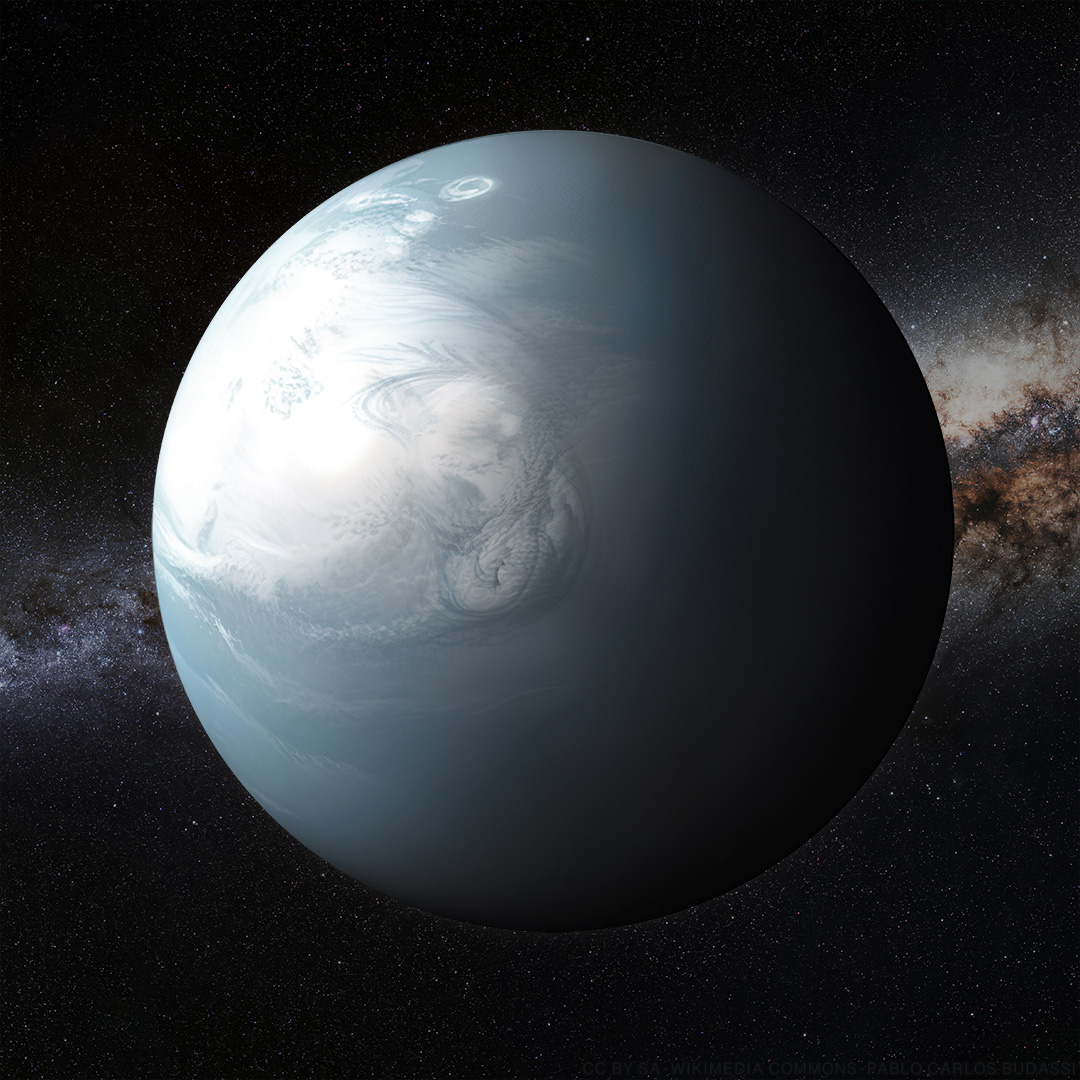
If the atmosphere, instead of containing carbon dioxide, were rich in molecular hydrogen, the situation would be different. Molecular hydrogen would produce a strong greenhouse effect but, unlike carbon dioxide, it cannot condense into ice. Therefore, a world rich in this gas could have liquid water even at great distances, even beyond Saturn’s distance from the Sun. One speculative hypothesis is that of Hycean worlds, a portmanteau of hydrogen and ocean: worlds covered in water but equipped with an atmosphere of molecular hydrogen. A 1999 study speculated that such worlds could remain habitable even without a star, because they would be able to retain enough heat. In other words, worlds with liquid oceans could exist without a sun.
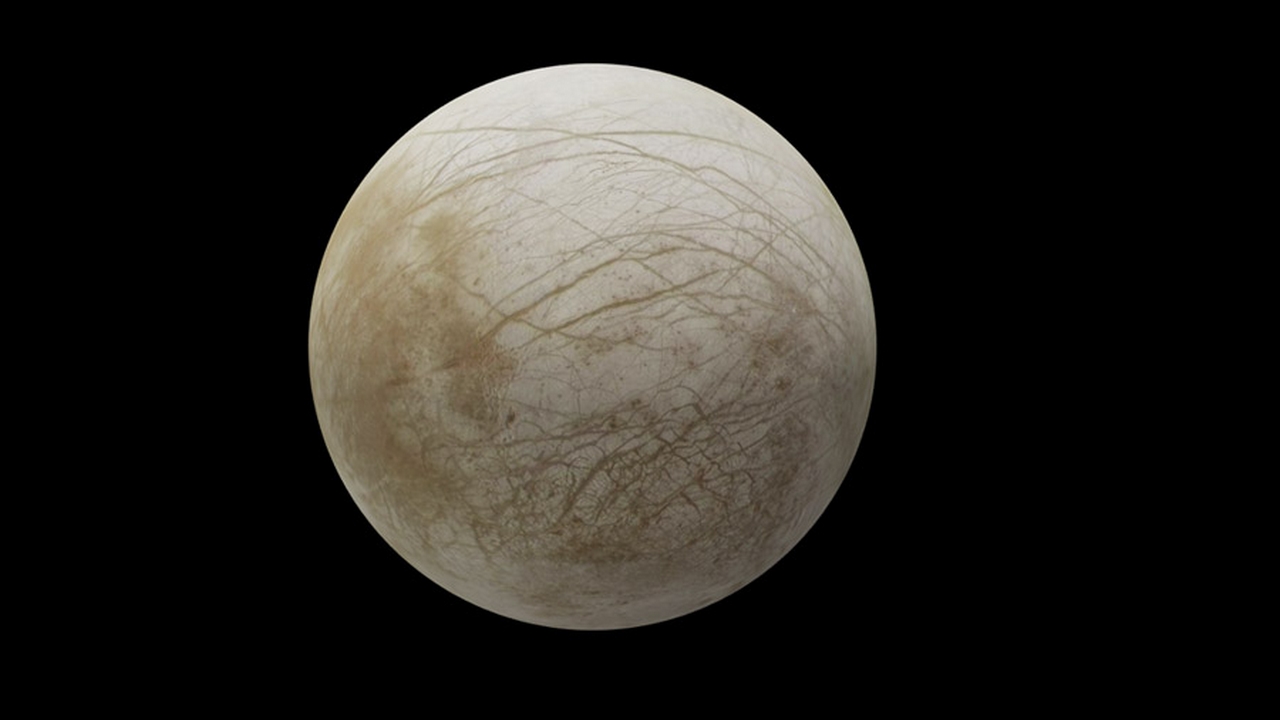
But there is another possibility. If the planetary body, instead of orbiting a star, orbits a giant planet, the tidal forces of the giant and its moons can still produce the necessary heat, even if the body is well outside the habitable zone. Many icy moons in the Solar System, such as Europa around Jupiter and Enceladus around Saturn, have underground liquid oceans even though they are located in regions where water should freeze completely. A 2026 study raised the hypothesis that Hycean exomoons could have liquid oceans even if they orbit interstellar planets.
These are fascinating hypotheses, but with one small problem: even though they are theoretically possible, so far we have never found any Hycean world, nor any exomoon. So, at least for now, these hypotheses remain within the realm of pure astrobiological speculation. What is certain is that thinking about these possibilities is not a pointless game, but an important theoretical exercise to guide the search for life on other worlds. Our biological sample is limited to life on Earth alone. If we want to search for life elsewhere, we must also consider hypotheses involving forms of life very different from our own.
Luca Nardi