


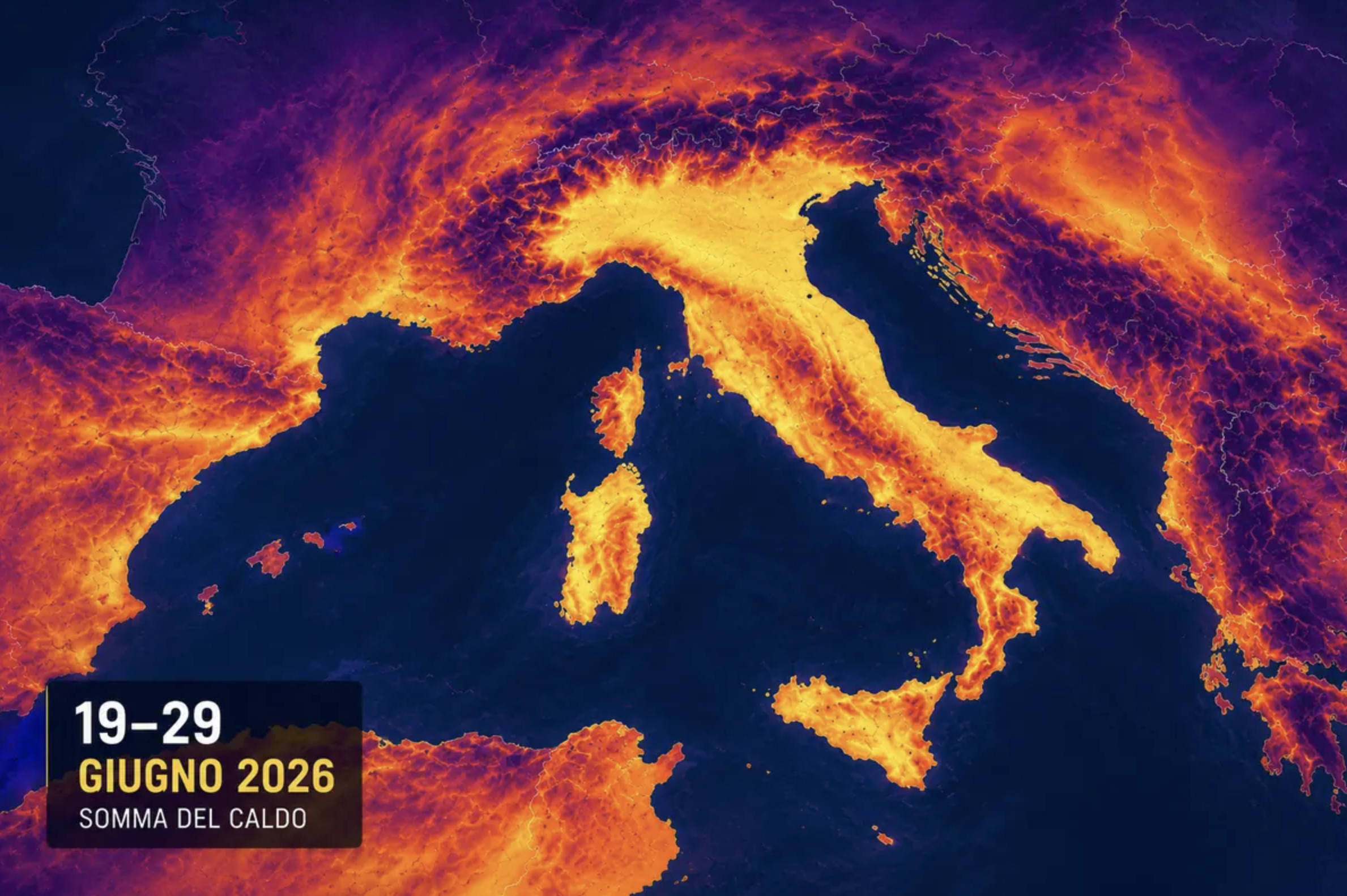
Every summer seems to be one for the record books. The hottest year ever recorded gives way to the next, which surpasses the previous one. Heat waves are becoming longer, more intense and more frequent, while the number of people exposed to extreme temperatures continues to rise. Yet, despite more than thirty years of warnings from the scientific community, much of Europe continues to be caught unprepared.
The question, then, arises naturally: how is it possible that a continent that has been aware for decades of the effects of climate change has still not developed adaptation strategies sufficient to protect its population? It is a question that carries even more weight today, as vast areas of Europe are facing one of the most extensive and intense heat waves ever recorded, with temperatures above 40°C, fires, strained infrastructure and thousands of people at risk.
To understand the current situation, we need to go back to the summer of 2003. It was one of the worst climate disasters ever recorded in Europe: a persistent heat wave caused more than 70,000 deaths across twelve European countries, especially among the elderly, women and vulnerable people. That disaster marked a turning point in climate risk management and prompted many governments to adopt their first prevention plans, with alert systems, information campaigns and dedicated health protocols.
Since then, something has indeed changed. Governments have linked early warning systems to rapid response measures when temperatures rise, such as limiting travel, closing schools and cancelling non-urgent hospital appointments. According to a study published in Nature Medicine, these adaptations have proved effective: if a heat wave identical to that of 2003 were to hit Europe today, the number of deaths would be 75% lower thanks to the adaptation measures introduced over the past two decades.
The problem, however, is that in the meantime the climate has also changed. Average temperatures continue to rise, and extreme events are increasing faster than our ability to adapt. The result is that, despite progress, the overall risk continues to grow.
Extreme heat is often perceived as a simple discomfort, but from a biological point of view it is one of the deadliest weather events.
The human body maintains its internal temperature at around 37°C through complex thermoregulation mechanisms. When the ambient temperature rises, the body disperses heat mainly through sweating and peripheral vasodilation. However, if the air is very hot or particularly humid, these systems gradually become less effective.
The heart is forced to work harder to keep blood pressure stable, the risk of dehydration increases, electrolyte balances are disrupted, and heatstroke, cardiovascular decompensation and respiratory problems may occur. Older people are particularly vulnerable because they have a reduced ability to dissipate heat and often take medications that interfere with thermoregulation.
This is precisely why heat causes far higher mortality than is commonly imagined. It is not only a matter of deaths directly attributed to heatstroke, but also of the increase in heart attacks, strokes, heart failure and respiratory failure that occur during episodes of extreme temperatures.
According to estimates by the World Health Organization, over the past four years heat may have caused around 200,000 deaths in Europe, many of which could have been avoided with adequate prevention measures.

One of the lesser-known aspects is the speed at which the European continent is warming.
Europe is now the fastest-warming continent in the world. This phenomenon depends on several factors: its proximity to the Arctic, which is warming much faster than the global average; changes in atmospheric circulation; and the increase in persistent heat waves. World Weather Attribution (WWA) argues that a situation like this would have been “virtually impossible” at this time of year only 50 years ago.
The consequences are now evident. The continent is being suffocated by the most intense and widespread heat wave ever recorded: an oppressive force made even more scorching by carbon pollution and unbearable by the repeated failure to prepare for it. France recorded its hottest day and night ever, while the United Kingdom and Switzerland both broke their temperature records for a June day.
In light of all this, the question arises: if we have known all this for decades, why do we find ourselves back in an emergency every summer?
Part of the answer lies in the way our cities are built.
Many European urban centres were designed to retain heat in winter, not to disperse it in summer. Asphalt, concrete and impermeable surfaces absorb enormous amounts of solar energy during the day and release it slowly at night, creating the phenomenon known as urban heat islands.
On top of this, there is a lack of trees, limited availability of green spaces, poorly insulated buildings and infrastructure designed for a climate that, quite simply, no longer exists.
The consequences of all this are clear. Several hospitals in England declared a state of emergency because of extreme heat, with failures in cooling systems and breakdowns in essential IT systems, while schools, workplaces and railways were paralysed by chaos and fires broke out. In France, where half of all homes do not offer adequate protection against high temperatures, more than 55 people drowned while trying to cool off, four young children died in overheated cars, and two nuclear reactors were forced to shut down due to a lack of cooling water.
The effects of heat are not limited to health.
High temperatures reduce worker productivity, compromise agricultural production, increase the risk of wildfires, encourage drought and put pressure on energy production, especially when rivers and waterways fall to levels too low to cool industrial plants.
Hospitals find themselves thrown into a permanent red alert, with emergency departments overwhelmed by the surge in illness, heatstroke and cardiac or respiratory complications affecting the most vulnerable. Extreme heat thus reveals itself for what it truly is: a global and interconnected challenge that forces us to rethink the economy, the shape of our cities and the management of our vital resources from the ground up.
It is therefore a phenomenon that simultaneously involves public health, the economy, urban planning and the management of natural resources.
Every summer is described as exceptional, but the data tell a different story.
The exception is gradually becoming the norm. Continuing to treat every heat wave as an extraordinary event risks preventing the structural transformation that Europe needs.
Climate adaptation does not simply mean installing a few more air conditioners or issuing weather alerts. It means rethinking cities, increasing green surfaces, improving building insulation, protecting the most vulnerable people and designing infrastructure compatible with the climate of the twenty-first century.
Science predicted all this decades in advance. Today, the problem is no longer understanding whether climate change is increasing extreme heat: the evidence is now overwhelming. The real question is why, despite this knowledge, we continue to chase emergencies instead of preparing to face them, or trying to prevent them altogether.
Alessia Mircoli