


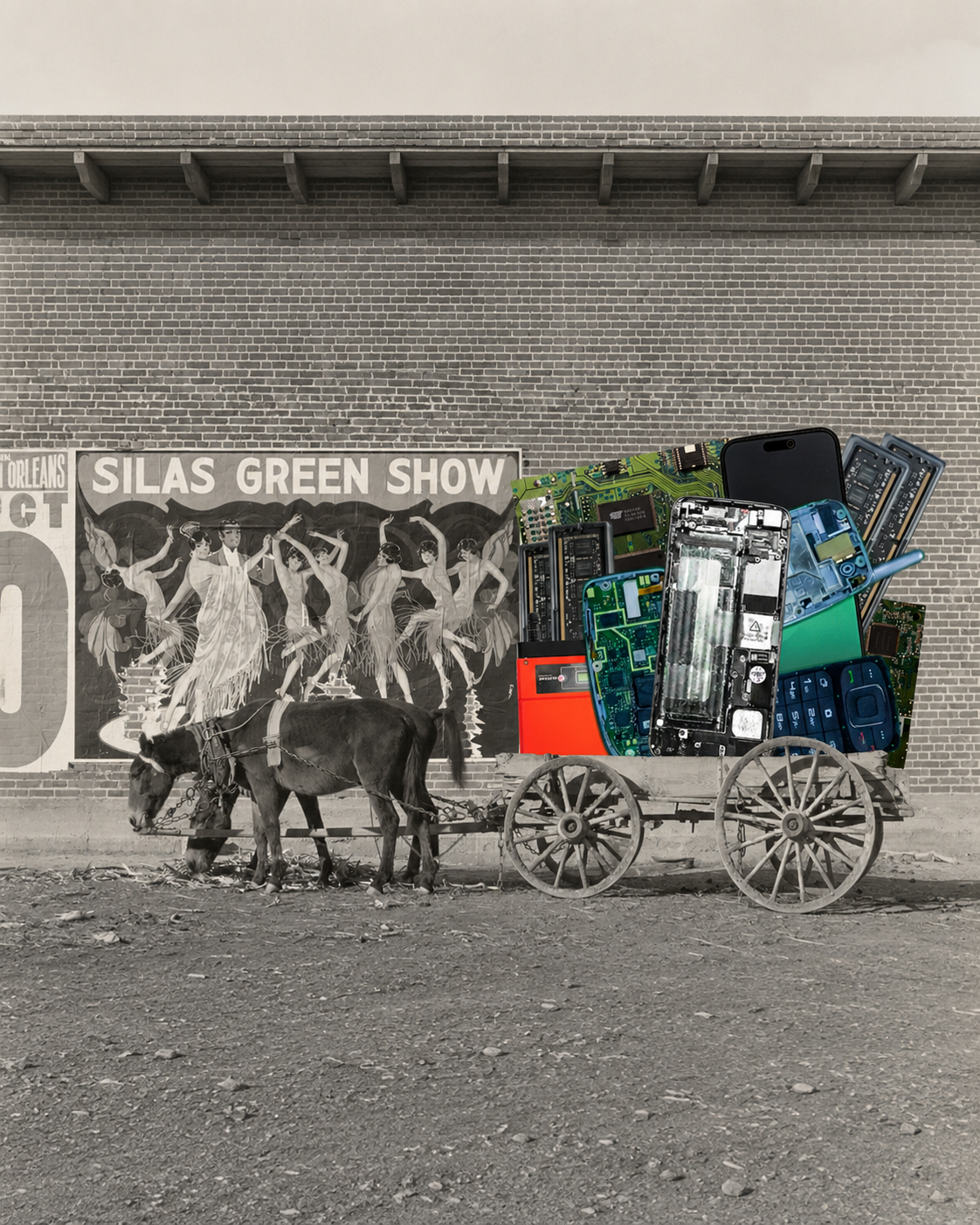
“We Gen Zers are the new Dadaists.” I came across this statement a few days ago in a video by creator Martina Fiori, who compared nonsense content such as Italian brainrot to a contemporary form of Dadaism: a response to the absurdity of the world through an even more absurd kind of art. A few weeks earlier, I had read a different headline on VD News that gave me the same sense of déjà vu: “Teenagers Are Being Drawn to Nazi Ideology Through Memes.”
The comparison between memes and avant-garde art did not begin with brainrot. It was already circulating in 2016, when everyone was talking about shitposting. Similarly, the idea that memes could become powerful vehicles for political propaganda exploded during Donald Trump’s election campaign, when Pepe the Frog was turned into a symbol of the Alt-Right and dozens of articles tried to determine whether an ironic image could genuinely influence the vote. In some respects, it certainly did. Today, the characters, platforms and technologies have changed, but the debate surrounding online irony seems to restart from scratch every time, trapped in a perpetual present.
What is missing is a shared historical memory of internet culture, one that does not belong exclusively to nerds and industry insiders. Every new language is presented as a revolution, when it often represents nothing more than the evolution of existing forms of expression. Retracing our steps could help us understand where the meme ends and evil begins, what qualifies as shitposting and what is simply shit, to put it plainly.
As the trend goes, “2026 is the new 2016.” And 2016 is precisely the year we need to return to: the year when, according to several theories, everything changed, marking a turning point for both politics and internet culture. The term “shitposting” entered the mainstream media just as Trump was elected, although memes and nonsense texts had obviously been circulating on Reddit, 4chan and Tumblr for several years. This time, “shitposting” also encompassed written content: ironic and stupid posts, random thoughts and nonsensical rants circulating on Facebook and Twitter. More broadly, it described a creative, punk, absurdist and sincere way of inhabiting the internet. That was also the year when comparisons with Dadaism and the avant-garde began to emerge. Sam Greszes’s article Shitposting Is an Art, If History Is Any Indication, published by Polygon in 2018, was among the first to make this connection explicit, describing the phenomenon as “neo-neo-Dadaism.”
As early as 2016, however, journalist Megan Hois wrote on Medium:
“This generation is fuelled by a desire similar to that of the Dadaists: to confront our generation’s disillusionment with all the current events we are witnessing, particularly in the United States […]. Is it really surprising, then, that millennials are following in their predecessors’ footsteps and building a movement centred on absurdity and, fundamentally, on deliberate confusion and nonsense?”
An article published by The Guardian in 2019 examined the wave of dark, surreal comedy series, particularly American ones, that had appeared during the previous years, including Broad City, Rick and Morty, The Eric Andre Show, BoJack Horseman, The Good Place and Don’t Hug Me I’m Scared. The article’s central argument was that these programmes had been influenced by social media: some shows reflected the chaos of social timelines, where stupidity, tragedy and banality are mixed together.
The article asked: “How did millennial comedy become so disorientating, dark and strange?” Once again, the answer was traced back to the sociopolitical context: “One explanation for this ‘non-realism’ is that it is a response to a world that has stopped making sense.”
Brett Mills, a lecturer at UEA and the author of The Sitcom, argued that the very idea of narrative was disappearing from comedy:
“These shows retain the same characters, but play with narrative linearity, both at a diegetic level and by deconstructing the traditional structure of the joke, much like social media does […]. Things are funny because they are deliberately dissonant and strange. Sometimes, the decontextualisation is the joke itself.”
From 2016 onwards, the social media landscape evolved. Instagram introduced Stories, and TikTok was born, changing the rules of the game by imposing a new video culture that other platforms would eventually adopt through dedicated Reels sections. In 2022, the launch of OpenAI brought generative AI to the masses, making it accessible to everyone. And so we arrive at brain rot, which the Oxford Dictionary selected as its 2024 Word of the Year and defined as “the supposed deterioration of a person’s mental or intellectual state, especially viewed as the result of overconsumption of material, particularly online content, considered to be trivial or unchallenging.”
Brain rot is also used to describe the specific kind of content that has emerged from this new digital environment, such as AI slop and Italian brainrot. These forms are even more absurd, but they are also “the visible surface of a much deeper process. By giving a name to the experience of overstimulation and ironic self-awareness typical of digital life, the term brain rot ultimately comes to denote the entire algorithmic economy that produces that experience,” writes the THE VOID+Band collective in Nero Editions.
And, in the meantime, Trump has been elected again, and we have watched a genocide unfold via livestream.
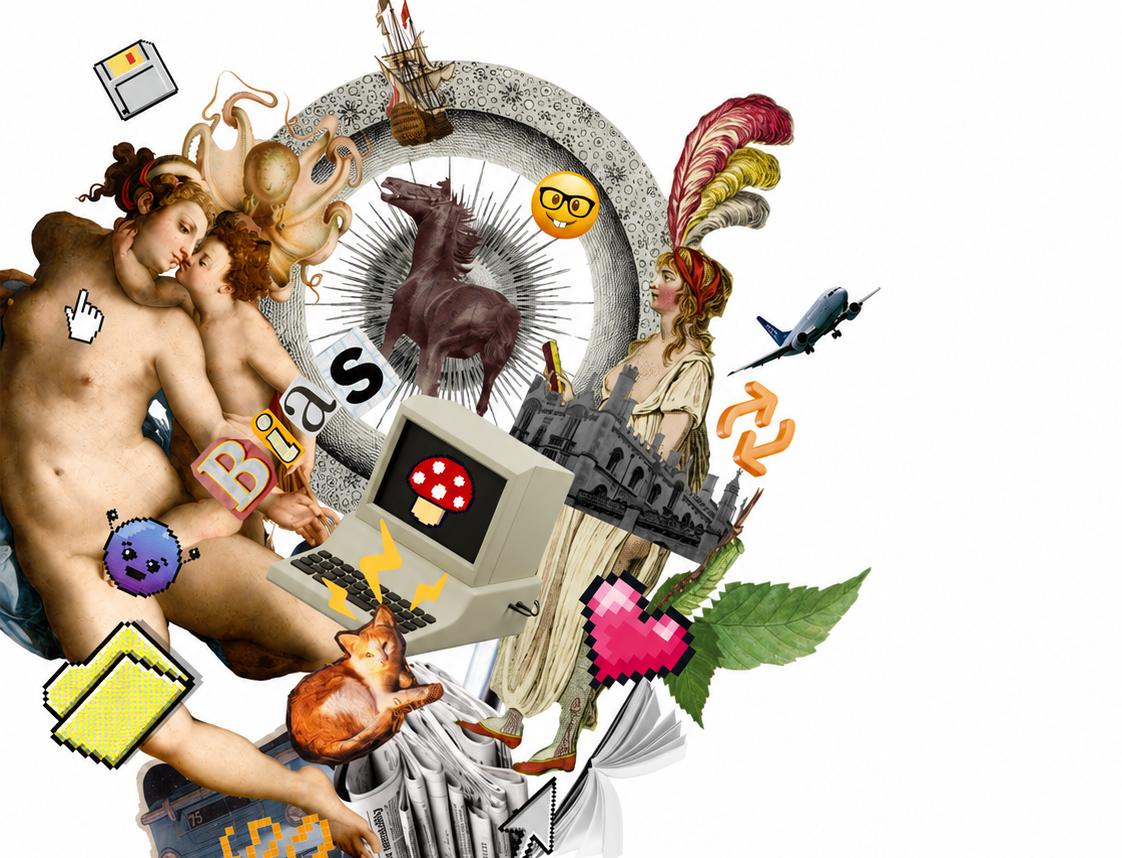
This is another reason why the comparison with Dadaism continues to resurface. There are numerous similarities: the taste for nonsense, the liberation of language, “skibidi toilet!”, the collage of heterogeneous images and references, and the idea that any element of reality can become creative material. Not because the people producing this content consider themselves the heirs of Tzara or Breton, but because distant cultural forms can emerge from similar historical conditions. The interesting question, however, is not whether brainrot truly is the new Dadaism.
The historical avant-gardes were conscious, organised movements equipped with manifestos and artistic programmes. Meme culture, by contrast, emerged as a spontaneous and collective form of production within a fluid space, distributed among millions of users who constantly share, copy and transform the same material. The value of regarding the creators of this language as a kind of avant-garde lies in reminding ourselves that it all began as one enormous collective game. And it remains one, despite the changes to its grammar and despite the fact that others have learned to speak its language.
After all, this is a dynamic shared by almost every avant-garde movement and subculture. They begin as underground practices, are observed with curiosity or suspicion, then described by newspapers, studied by universities and ultimately absorbed by the very establishment they originally opposed. The Dadaist bourgeois, in fact, is the meme “normie”: the user who feels perfectly at ease with the performative, carefully constructed nature of social media. The same thing happened to shitposting. Born as a collective game, it became an advertising language, an aesthetic for brands and a strategy for creators and companies.
In his 1993 essay E Unibus Pluram: Television and U.S. Fiction, David Foster Wallace explained how television and advertising had absorbed the irony of American postmodern writers. Wallace regarded this process as harmful and hoped for the emergence of a new generation of “anti-rebels” capable of overcoming postmodern cynicism: “The next real literary ‘rebels’ in this country might well emerge as some weird bunch of ‘anti-rebels’.”
Wallace called this movement the New Sincerity, an idea that many people would later recognise in contemporary shitposters. “Shitposting is our New Sincerity,” Alessandro Lolli wrote in 2018. It is hardly surprising, then, that the same process eventually affected the irony of our shitposters.
Italian brainrot has also been transformed into video games, collectible cards, merchandise and commercial campaigns. Yet the joke has not ended. On the contrary, the more new players enter the game, the more entertaining it becomes, because it must adapt, change the rules once again and grow increasingly obscure, much to the frustration of anyone trying to understand it.
In recent years, this process has taken another and far more dangerous step. Brands are no longer the only actors to have appropriated the language of memes. Governments, political parties and political leaders have done the same. They have not merely used memes in their campaigns and on their official channels. They have learned to communicate according to the rules of memes: speed, irony, self-mockery, provocation, absurdity and the constant pursuit of virality.
For this reason, attributing to memes the power to radicalise an entire generation by themselves risks diverting attention from the real problem, shifting the focus from the language to the people using it. Politicians are using a language rooted in humour and play to wage war against one another and promote their agendas.
“The political effect of memes is no different from that of words or images: they work only when there are people willing to receive them, because they respond to some pre-existing need or idea. Those who already possess power can use memes to make their actions appear less serious, as propaganda has always done, but their actions are not caused by memes,” Daniele Zinni, author of Meme dal sottosuolo, told me.
Italy’s emerging far-left Capybara Party gained momentum through the exchange of memes. Yet, as its spokesperson Xenodibi, whom I interviewed for Il Fatto Quotidiano, explained: “The apparently playful nature of the meme breaks through the barriers of attention and enters people’s minds through laughter. Then the political content allows them to understand that everything behind the meme is completely serious.”
Indeed, the demands they express jokingly online arise from very concrete problems, including the housing crisis and low wages.
In a Reel, educationalist Alessia Dulbecco discusses the “moral panic” that drives public debate whenever a new technology is introduced. She points to the Pessimists Archive, a website that collects historical documents demonstrating this recurring phenomenon. Moral panic distorts our perception of the real level of risk. More importantly, it prevents us from understanding these phenomena and clouds our vision.
In his essay Quel che non è salvato è perso, or What Is Not Saved Is Lost, Lorenzo Fantoni instead discusses “presentism”: “the belief that what we are experiencing in the present moment is unique, special, a deviation never before witnessed in human history.”
Writing about Oxford University Press’s decision to select “rage bait” as its Word of the Year, he observes: “I felt the familiar shiver of self-satisfaction that runs through the mainstream media whenever they convince themselves that they have, once and for all, ‘given the monster a name.’”
Discussing the online forums of the early 2000s, Fantoni writes:
“While these spaces were certainly lighter and more naïve than the social networks that would replace them, they also had their problematic aspects. To give just one example, the few women present on those forums would be asked to send photographs of their bodies as soon as they revealed themselves to be women.”
He continues: “A common mistake when analysing social dynamics is to confuse the amplifier with the voice: social media did not invent anger, it merely industrialised it.”
To understand this phenomenon more clearly, we can turn to Deleuze and Guattari. In Anti-Oedipus, the authors describe capitalism as a system characterised by cynicism and the continuous management of flows of desire. Capitalism is both repressive and productive: it liberates desires, only to encode and reabsorb them into the system. In this sense, the “madman” becomes an ambivalent figure, destructive but also potentially creative.
Applied to social media, this interpretation suggests that capitalism has deterritorialised public debate and work, transferring them to the web and making them increasingly abstract. Within this context, the shitposter becomes the contemporary “madman,” while the brands that adopt their language represent the process through which the subversive impulse is recoded and reterritorialised.
And then there is us, forgetting that history repeats itself. And me, having to reread Anti-Oedipus because I cannot remember who wins in the end.
Skibidi toilet!
Viola Giacalone