


By now, the criticism of Spotify is familiar. The platform has been accused of paying artists poorly, filling playlists with inexpensive stock music attributed to anonymous performers, investing in military technology and increasingly absorbing AI-generated tracks. But for Kyle Chayka, one of the most perceptive observers of digital culture, the deeper problem lies elsewhere.
Writing in The New Yorker in the summer of 2024, Chayka argued that Spotify’s latest redesign did more than reorganize an app. It subtly reshaped the act of listening itself. The home screen now revolves almost entirely around playlists assembled by recommendation algorithms, encouraging users to continue listening rather than to start searching. Convenience, in this case, comes at the expense of curiosity.
The paradox is striking. Never before has so much music been instantly available. Every day, tens of thousands of new songs appear online, placing what feels like the entirety of recorded music within reach. Yet discovering something genuinely unexpected—music that has not been filtered through an opaque recommendation system—has become increasingly rare.
That is why the Instagram posts of Collettivo HMCF, a collective based in Bologna, feel almost subversive. For the past sixteen years, its members have devoted themselves to uncovering Italy’s underground music scene, assembling painstakingly curated playlists that move effortlessly from shoegaze to post-punk and beyond. Spotify is rarely mentioned by name. Instead, captions refer, with deliberate understatement, to “the world’s most popular digital music platform.” Some of the collective’s favorite discoveries, however, cannot be found there at all.
What began as an online radio station created by a group of high-school friends has evolved into one of the most comprehensive archives of Italy’s independent music scene. Through newsletters, free compilation albums, fanzines and a lively Telegram community, HMCF documents artists who often exist outside the reach of mainstream platforms.
“We’d love to give you an epic origin story,” says Teo Filippo Cremonini, one of the founders. “The truth is much simpler.”
The collective’s name emerged almost by accident. Their original project was to be called Close Friends FM, until they discovered the domain was already owned by a German pharmacy chain. A random prefix—Hey Men—solved the problem, eventually giving rise to the acronym HMCF.
Cremonini struggles to say exactly how many people belong to the collective. Officially, around ten are involved through its cultural association, though participation shifts constantly. “Whoever we are,” he says with a smile, “or almost whoever we are.”
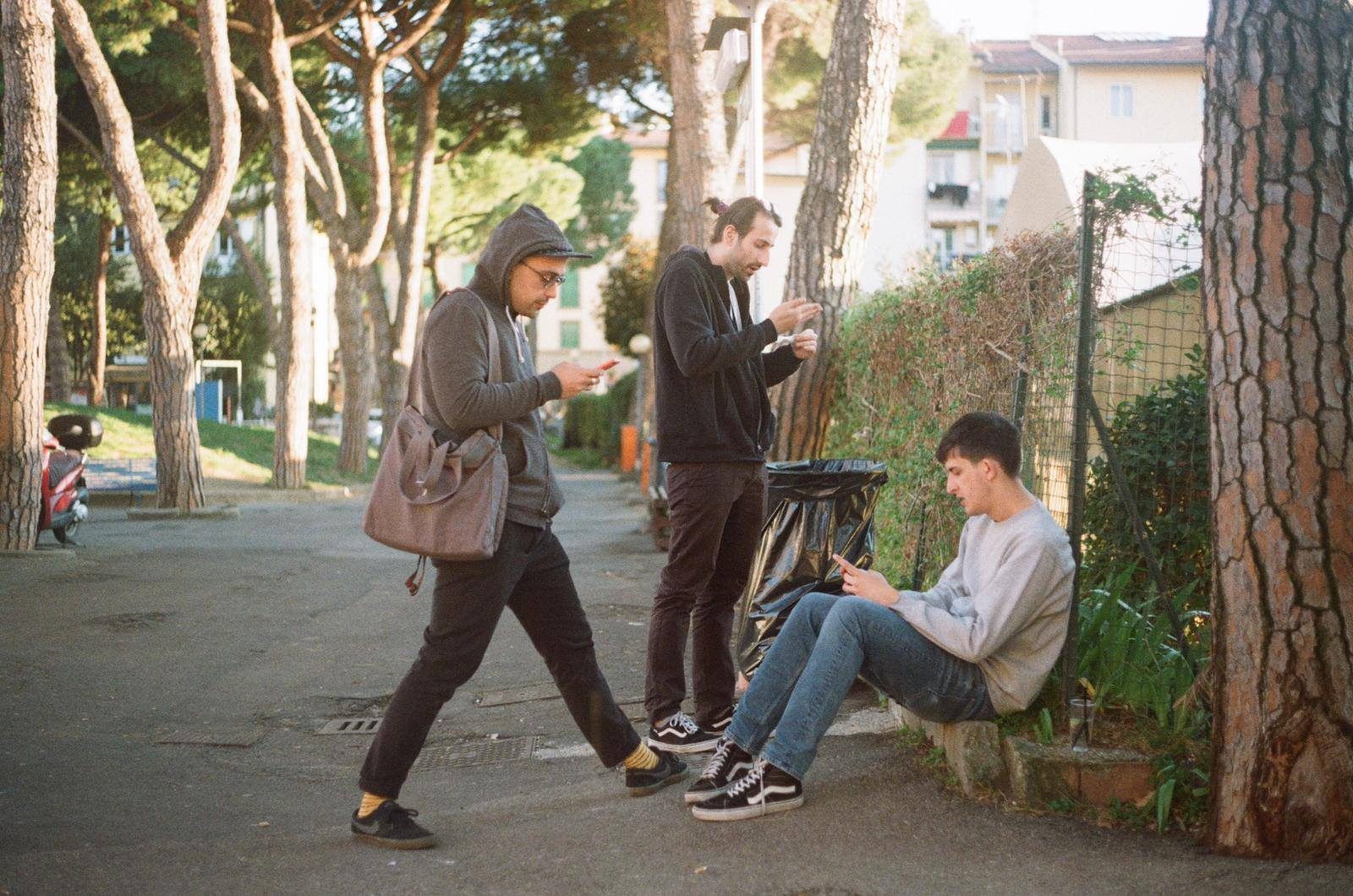
The group describes itself with characteristic irony as “broken toys”—people drawn to artists who rarely fit established categories. Their mission is not simply to identify promising musicians but to answer a question they believe few people ask.
“Everyone says, ‘These artists are great,'” Cremonini explains. “We’re interested in everyone else.”
The members reject familiar labels. They are not a magazine, not influencers and not musicians building a brand. They think of themselves as researchers. Their work resembles what collectors call digging: patiently searching through independent labels, forgotten blogs, Bandcamp pages and obscure catalogues instead of waiting for algorithms to deliver recommendations.
For Cremonini, digital technology itself is not the enemy. He also questions the nostalgia that suggests music was once discovered mainly through live shows.
“People say that everyone used to go to concerts and discover bands that way,” he says. “In reality, we’ve always relied on media—radio, MySpace, Bandcamp, streaming. Interest in live music may have declined, but often that’s because of the venues and the ecosystem, not because of the music.”
HMCF was openly critical of Spotify long before the pandemic, arguing that musicians were increasingly shaping their work around the platform’s incentives. Today, their position is more measured. Spotify is simply one tool among many.
“We’re not interested in the algorithm,” Cremonini says. “Related artists can sometimes be useful. But most of the music we discover now comes from magazines and Bandcamp.”
What they miss most is the culture that once flourished around SoundCloud—a decentralized, experimental world where discovery felt less programmed and more communal.
Nor do they worry much about Instagram’s future. Digital platforms, they argue, are temporary. Communities are not.
“MySpace disappeared. Then Facebook. Then Instagram,” Cremonini says. “We’ll build something somewhere else. The people always find each other again.”
For him, beginning from scratch is not a setback but part of the process.
“Isn’t that the exciting part?” he asks. “Starting over makes you feel alive.”
Viola Stefanello