



Last May, NBA commissioner Adam Silver announced the introduction of a Hawk-Eye-style system similar to the one used in tennis, entirely run by an algorithm. The aim: to put an end to controversy and save millions of dollars.
Losing your temper over a mistake is more than understandable when millions of dollars are at stake. But what unfolded on May 27, 2026 — when the Oklahoma City Thunder faced the San Antonio Spurs in Game 5 of the NBA Western Conference Finals — turned into an epic outburst for more than one reason. At Paycom Center, the officials incorrectly awarded an inbound possession, the TV replay made the mistake plain to see, and the debate immediately began: what would have happened if technology had been allowed to make the call?
Back at the scene of the crime, Spurs head coach Mitch Johnson is pacing the court, furious. He insists a mistake has been made, but the officials wave him away and tell him to sit down. Johnson has no intention of doing so. He knows that when you are one step away from the ultimate prize, every detail can make a difference. Even something as routine as an inbound play. So he keeps protesting wildly until he is eventually assessed a technical foul for dissent. The Thunder go on to win 127-114, taking a 3-2 lead in the series behind 32 points from Shai Gilgeous-Alexander and 22 from Alex Caruso. But the controversy is far from over.
In the NBA, the richest basketball league in the world, a single officiating mistake can cost millions of dollars across sponsorships, betting, television rights and ticket revenue. Far too much money to simply let the matter drop. With a tsunami of criticism erupting immediately after the game, commissioner Adam Silver decides only a few hours later that the issue deserves a deeper look.
Appearing on ESPN’s The Pat McAfee Show, Silver makes clear that what has just happened will not be dismissed as a routine part of the game. Settling back into his chair, a broad smile spreading across his face, he instead announces a potentially disruptive change that he wants implemented “as soon as possible.”
With the new season due to tip off in early October, it is still unclear whether the system will be introduced from the outset or rolled out during the season. One thing is certain: it already has one foot on the court.
What Silver is proposing is an automated system designed to neutralize complaints from teams and ensure the greatest possible degree of impartiality. AI will step in for all “objective” calls. One example? A ball going out of bounds. In situations like these, referees would no longer need to be involved. A network of Hawk-Eye technology — the electronic line-calling system already used in other sports, tennis above all — would provide a level of precision beyond human capability, but well within the reach of AI-controlled sensors.
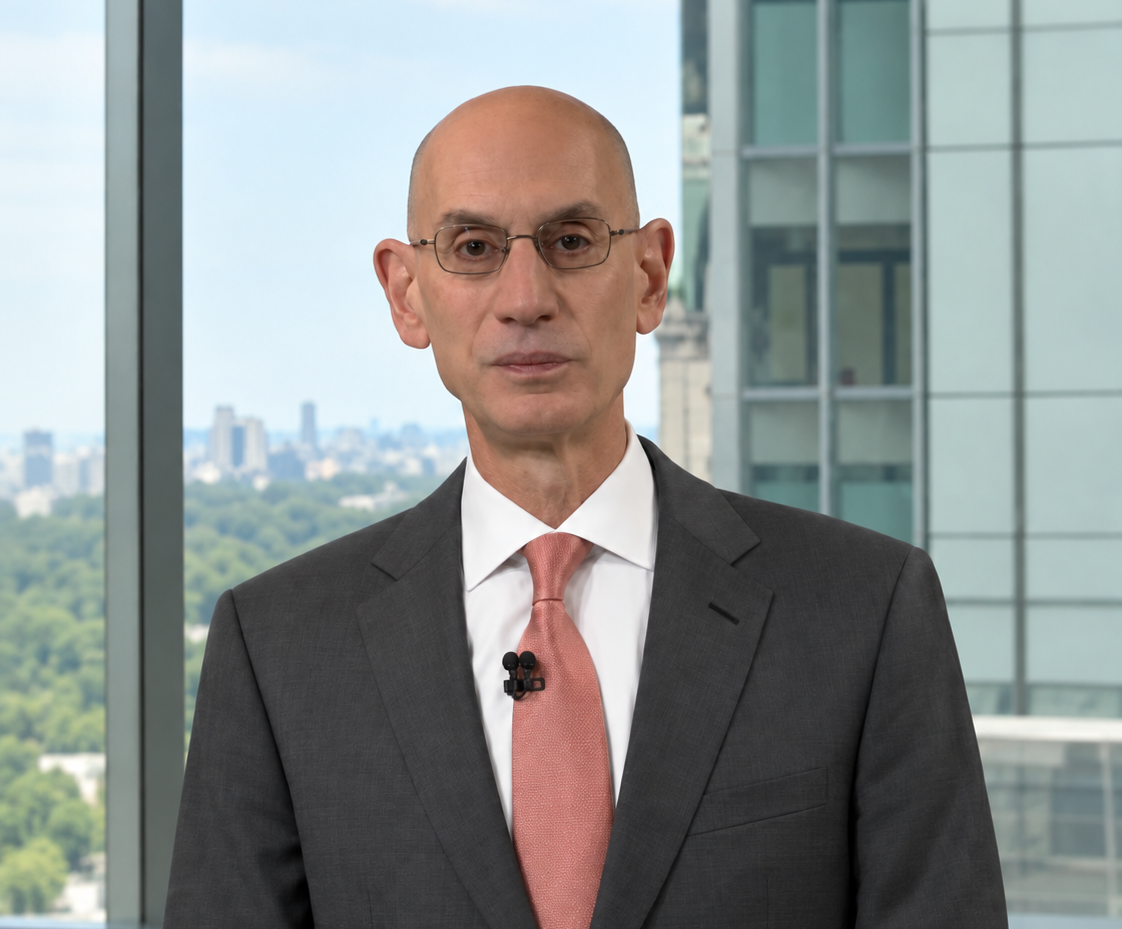
At this point, viewers at home start shifting in their seats. They immediately understand that the arrival of this kind of technology in basketball represents a major point of no return. It is not the first time an American professional sports league has turned to technology to untangle its problems, of course. But it is rare to see a commissioner announce its arrival so openly, with the cameras rolling.
The idea mirrors what is already happening elsewhere in sport. In tennis, electronic line-calling systems can determine within a fraction of a second whether a ball is in or out. The technology adopted by American baseball is not so different: the automated ball-strike system has transformed the sport by dramatically reducing the margin for error. It works through a combination of cameras and radar tracking, instantly measuring the trajectory of the ball against a digitally defined, geometric strike zone.
These examples show how technology can coexist with sport and, in practical terms, improve it. It can even strengthen the public’s trust in the competition, reducing post-game controversy and restoring confidence in the final result.
It is hardly a coincidence that a wave of outrage on social media, triggered by a single incident, was what pushed Silver to come out publicly with such a clear announcement. The NBA’s brand and reputation, under constant pressure in an era of endless replays and slow-motion analysis shared in real time across every platform, have become assets that need to be fiercely protected.
The system envisaged by the NBA follows precisely that logic. A network of ultra-high-precision cameras will be installed around the entire perimeter of the court with a specific mission: to monitor the position of both the ball and the players in real time.
When the issue is determining possession after contact close to the sideline, for instance, the system will deliver its verdict immediately: Lakers ball, Thunder ball, Knicks ball, and so on. Ambiguity disappears, and the controversy with it.
In the league’s view, this AI-driven automation should also produce another significant benefit: an end to interminable challenges and replay reviews that drain the pace and intensity from games. Technology would make decisions not only more accurate, but faster as well.
What remains unclear — at least until the new technology is actually put into practice — is how transparent the algorithm-calibration process will be, or how the league intends to deal with the gray areas that can lurk even behind apparently objective calls.
Above all, there is still the question of how fans will react to a version of basketball increasingly mediated by technology. After all, part of the sport’s appeal has always been rooted in human imperfection: in the arguments over a pint of dark beer, in the uncertainty that somehow ends up feeding the passion.
So will every dispute disappear? Not quite.
NBA officials — like referees in any other sport — cannot, at least for now, be completely replaced by AI. The algorithm will deal with positions, trajectories and whether the ball or a player has touched a boundary line. Physical clashes between players, the intentional nature of a foul, or the interpretation of an ambiguous play will remain entirely in human hands.
Controversy may therefore remain part of the season ahead. But there is an important difference in philosophy here compared, for example, with the use of VAR in Italy’s Serie A. In Italy, debate continues not only over when VAR should intervene, but also over the decisions reached after officials have reviewed an incident with its assistance.
The NBA, by contrast, has chosen the path of maximum objectivity: when it comes to boundaries and lines, there is no room for interpretation.
The distinction Silver made during his television appearance is important for another reason. Discussing flopping — the practice of exaggerating or faking contact in an attempt to draw a foul — Silver explained that understanding context cannot, at least for now, be entrusted to artificial intelligence.
There are, he argued, certain perceptions that can be interpreted only by someone who is physically and humanly present on the court. It is a clear and unequivocal line in the sand, even if one that may prove increasingly fragile given the speed at which AI continues to advance.
What happens when artificial intelligence finally steps onto the court — potentially creating something close to semi-infallible officiating — remains to be seen. More broadly, it raises an ethical question.
Will we continue searching for a balance between humans and machines in an effort to make sport fairer, more objective and more consistent? Or will we eventually hand the entire process over to technology?
And if we do, what role will be left for us?
It is a question that clearly extends far beyond the lines of a basketball court, reaching into virtually every part of our lives.
Paolo Lazzari