


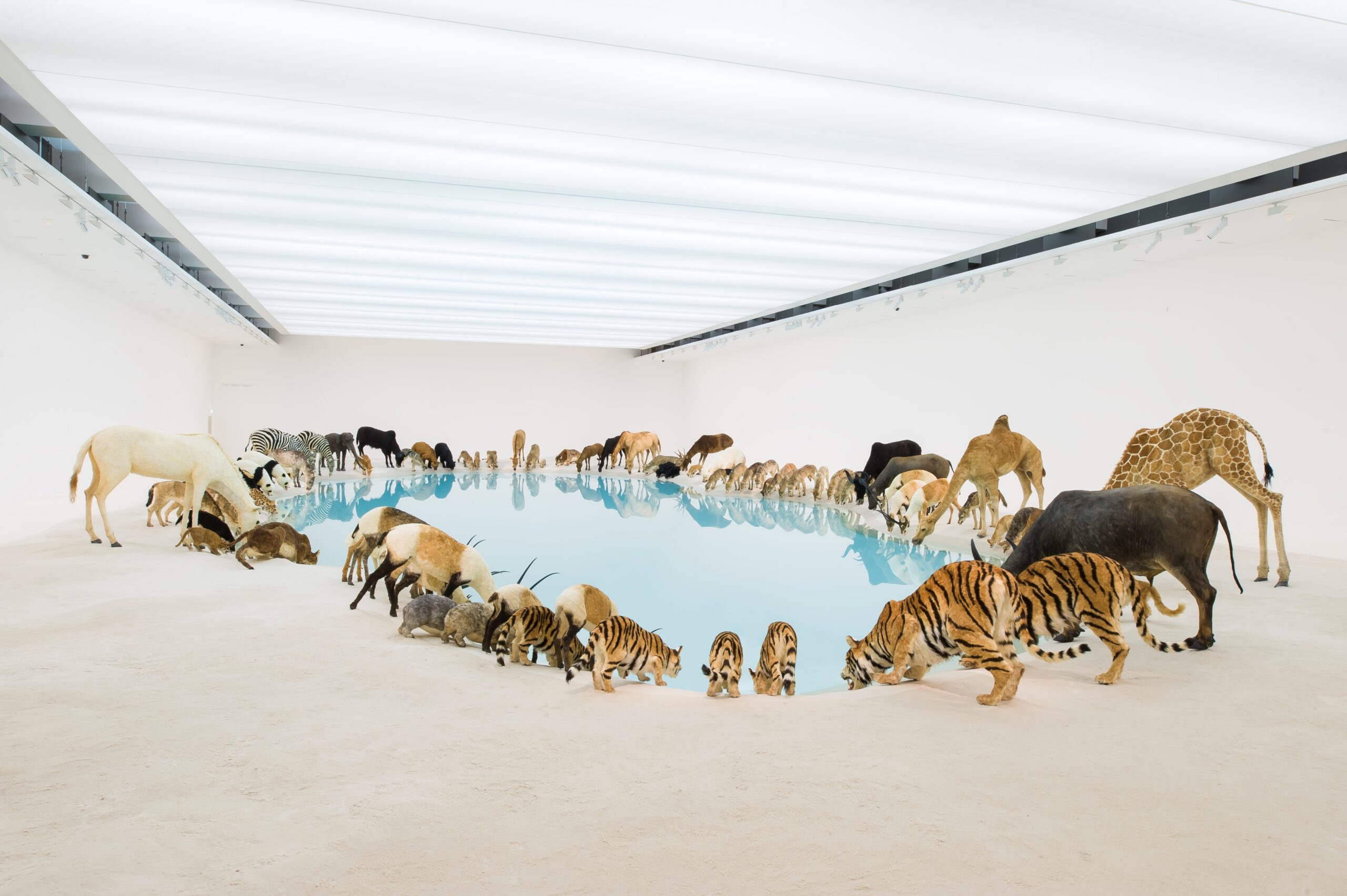
For anyone who spent time on Facebook from around 2014 onwards, Stephen Ellcock was the mysterious admin behind the page that bore his name, probably one of the most beautiful ever to exist on the platform. In real life, he was a London bookseller who, during a difficult period in his life, discovered an unusual calling: searching for extraordinary, little-known images and almost compulsively pouring them into a digital space originally designed for something entirely different, eventually building an archive followed by hundreds of thousands of people.
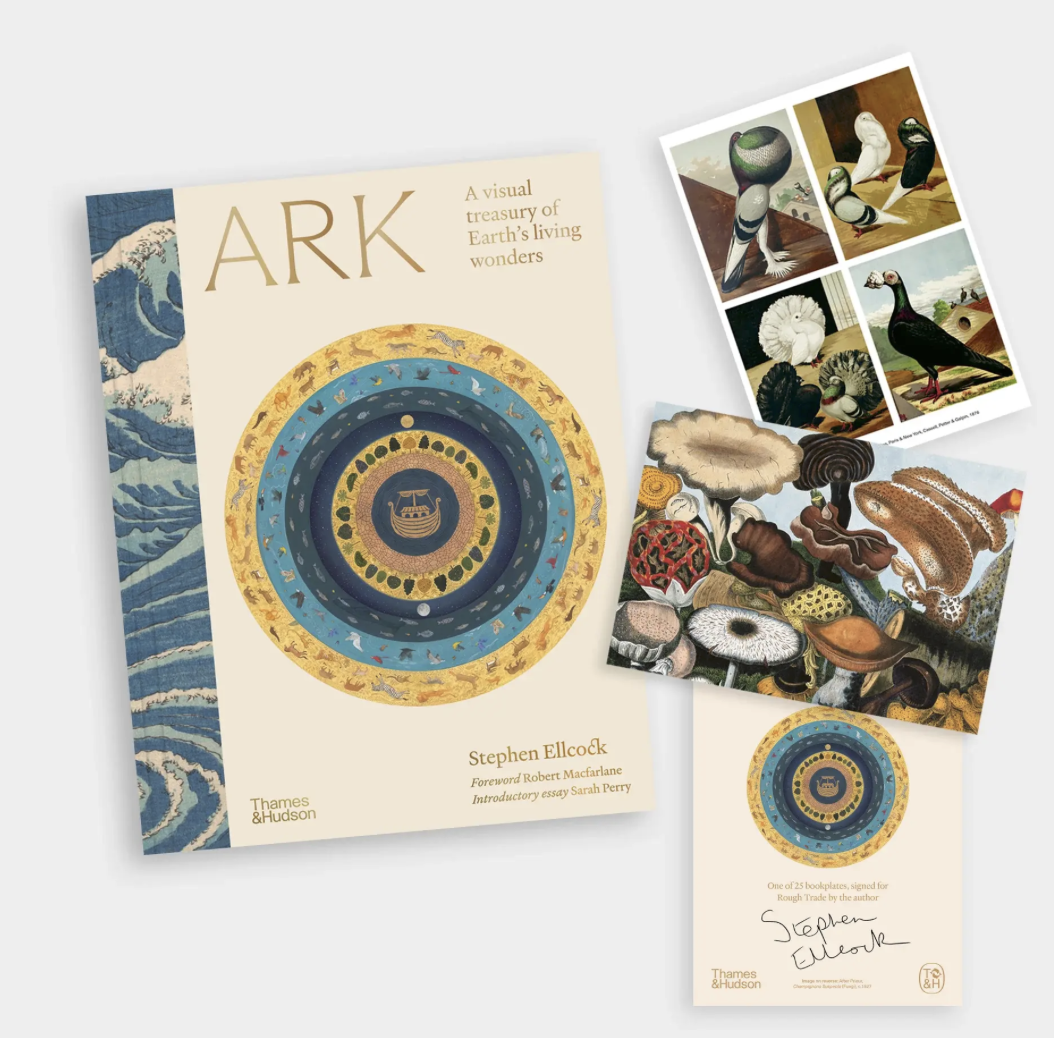
The page still exists today, as does his presence on Instagram, although the digital ecosystem is very different from the one in which it began. In the meantime, Ellcock has transformed that archive into a series of art books published by Thames & Hudson, including his forthcoming book, Ark, due to be published in Italy by Rizzoli in September. The book concludes the trilogy that began with Underworld and continued with Elements: a kind of Noah’s Ark constructed through images of animal and plant species, celebrating both what still exists and what we are in danger of losing.
I asked him some of the questions I have found myself wondering about over the years while following his work.
You’ve been described as an “image alchemist.” How would you explain this practice? What makes it different from curation?
I think I am a curator as well, but “image alchemist” is my favourite description, and the one that has become most closely associated with what I do. I find affinities and correspondences between images. It’s a kind of magical act, an alchemical process, even if saying so makes me sound terribly pretentious. Two images placed next to one another create something different, in the same way that a collage does. I like to think that, in this sense, I am creating something, and that it therefore becomes a form of art as well.
I’m good at recognising patterns and creating new ones. Because of that ability, I’ve often been invited to work with curators and artists on the installation of their exhibitions. I also think of my books as works of art, because they are the result of choices, and I believe choosing is itself a way of making art.
It would be terrible for the planet, but my dream would be to print every image in my archive and work with them physically, creating one enormous alchemical collage.
How big would it be? Have you ever counted how many images your archive contains?
Hundreds of thousands. Probably far more.
Is the archive organised according to a rational system, or is it mainly based on intuitive associations? I’d be curious to know, for example, how you organise the images into folders on your desktop.
I only started seriously organising it fairly recently, and I’m using several different criteria. Sometimes I begin with a category such as “symbols” and then move into subcategories: moon, sun, spiral… I never organise things according to place or period. I try to eliminate those kinds of boundaries, as well as hierarchies between different forms of art. Frankly, they don’t interest me very much.
My aim has always been to represent as many different periods, media, cultures and countries as possible. I think what I want to create is an image of the world as I would like it to be, as it potentially could be. Because even though we unfortunately see enormous amounts of division, everything is actually interconnected. Similar colours, patterns and symbols appear across wildly different periods and traditions.
I think, for example, of textile art, which is my latest passion. Some of the most beautiful things ever made in that field were created by unknown people. That is fundamental to me, and something we shouldn’t overlook.
There is a tendency to build narratives around art. Particularly in the West, we are always looking for the genius, the great individual artist, and when a work falls outside that narrative, it somehow seems to lose value. But as you can see in any museum containing ancient artefacts, even the most everyday object, made by an ordinary person, can display extraordinary skill, beauty, technical expertise and usefulness.
There is more art in the world made by unknown people than by famous names. I want to find all of it. It’s frustrating that I can’t. Discovering something new still gives me an incredibly powerful emotional response.
Where do you look for images?
Almost entirely online. I don’t have the time or resources to research them in any other way. I have, however, occasionally been invited to visit private archives. Some of them are secret places that very few people know about.
In London in particular, I was once invited by a secret organisation with an enormously valuable collection, mainly consisting of artefacts connected to magic and the history of political revolutions. Before I was allowed inside, I had to prove that I was an “honest” person who wouldn’t try to disclose anything I saw there, and I had to undergo a series of checks.
That experience became fundamental to two of my early books, but I can’t say anything more about it. Although secrecy is the exact opposite of what I do, since I try to make images accessible to everyone, I came to understand and respect the need for it.
Is there an image you are still searching for and haven’t managed to find?
Yes, lots of them. There are still major gaps in my research, for a variety of reasons. Until quite recently, for example, it was very difficult for me to access Japanese archives because all the information accompanying the images was exclusively in Japanese, so I had no way of understanding what I was looking at.
The biggest gaps are mainly in the Global South. African art is very difficult to find unless it has been stolen and taken to Western museums. Every now and then someone asks me, “Why do you share images of looted works?” The answer is simple: because often that is the only way to see them. They are the only images available. It is part of the legacy of colonialism and colonial extraction.
I have a remarkable friend who curates an extraordinarily valuable collection of African and Indian textiles called the Karun Thakar Collection. He is Indian, lives in the UK, and has an almost obsessive passion for finding objects that nobody knows about, things that have been overlooked by popular taste or interest. Flags, for example. He has collected several from Ghana that otherwise would simply have been thrown away.
You built your cultural authority outside traditional institutions, at a time when social media was still regarded as a marginal space. Do you still encounter scepticism in the publishing world because of those origins?
Definitely. There is still a great deal of snobbery and resistance. It’s real, it’s tangible. But it doesn’t bother me at all.
When I started on Facebook, I was simply doing it for fun, for myself and a few friends. Then it became an obsession. I would spend hours researching and posting, sometimes fifteen to seventeen hours a day.
The digital landscape has changed enormously since then, but at the time I felt that having that space was an opportunity to create something genuinely democratic and accessible. I sensed that I had discovered something important.
I’d worked in many different fields, but I’d never experienced that feeling before. It was as though I had finally found my calling. Some people genuinely thought I had gone mad, but I had a very clear vision of what it could become: a new way of communicating with other people, a new medium.
Even today, people don’t quite know how to classify me. I don’t fit into any category. I’m not an artist, I’m not a writer, I’m not a curator in the traditional sense. It’s something new.
After a few years, literary agents and publishers began contacting me. What they mainly saw was that I had a lot of followers and therefore commercial potential. But they had absolutely no idea what to do with my work. They simply wanted to publish a book filled with images thrown together at random, whereas I had something much more carefully considered and higher-quality in mind. Fortunately, I eventually managed to make that dream happen.
Do you ever feel in conflict with the digital infrastructure you work within?
Yes. At the moment I’m very disillusioned. Sometimes I find posting online exhausting. The joy I felt at the beginning has gradually diminished as the platforms have changed.
I’ve met wonderful people through social media, but today I feel much less of a sense of community. I constantly receive messages from Meta encouraging me to make content in a certain way, but I don’t want to transform my work just to satisfy the algorithm. I don’t want to have to make Reels, for example.
I devote an enormous amount of time to what I do, and yet on social media everything seems arbitrary. I can post exactly the same image at exactly the same time on a different day and get completely different results. It’s almost a form of violence.
I believe that sooner or later something new will emerge. Someone will invent a different kind of space.
Social media platforms are extremely fragile containers: a change to an algorithm or to the platform itself can make years of work disappear. Does that affect the way you think about your archive?
Yes. I’m aware that it could happen. If Meta suddenly decided to delete my account, it would be terrible. Financially, it would represent an enormous loss. Fortunately, I still have the books.
What do you think of images generated by artificial intelligence? Would you ever include them in your archive or in one of your books?
I already have! Underworld includes the work of an artist who uses artificial intelligence and whom I admire enormously.
There is no going back from artificial intelligence now. We are going to have to learn to live with it, unless the world collapses.
I know several well-known art pages that have shared AI-generated images without even realising it, so why should we exclude them on principle?
Sometimes it frightens me. While I was looking for quotations to accompany images of goats in Ark, Gemini gave me some beautiful quotations about goats supposedly written by great English poets. I thought they were wonderful, but when I checked them, I discovered that none of them existed. The AI had simply invented them from scratch.
Let’s talk about Ark. Where did the idea of making a Noah’s Ark book come from?
I wanted it to be a contemporary equivalent of the great nineteenth-century natural history encyclopaedias. I was also inspired by an extraordinary book that belonged to my grandmother and attempted to explain Darwin to children. It had an enormous impact on me.
I grew up between the sea and the countryside. Then I moved to London. At one point I became seriously ill and was very depressed, and it was during that period that I began creating my archive on Facebook and moved to the Docklands.
In an attempt to feel better, I started taking long walks along the river, and I began to notice just how much aquatic wildlife there was around me. There was an incredible variety of birds.
Reconnecting with nature wasn’t some heroic act. I didn’t travel to the other side of the world. It was simply about learning to observe and appreciate the most ordinary animals, the ones we encounter every day.
It may sound pathetic, but that kind of connection with the living world changed my life and my personality. It was a spiritual transformation as well.
Ark grew out of that experience: the feeling of being out of place in the contemporary world, in an age ruled by monsters.
Your latest work arrives at a time when images of nature are often associated with loss and catastrophe. Why did you choose instead to focus on abundance?
It was a conscious decision. At first, when I began thinking about the book, I considered including images of loss and devastation: factory farming, suffering animals, environmental disasters.
Then I realised I wanted to do the opposite. I wanted to celebrate everything that deserves to be saved by showing it alive. I wanted people to see what we stand to lose if we don’t change the way we live.
The essays in the book address the climate and environmental crises, but the images are a celebration of everything that still exists, even though many of the species I chose to include are endangered.
Do you apply the same idea to politics? Can focusing on beauty and celebrating it still be an effective response to the ugliness of the present moment?
It is almost impossible not to despair when you look at the state of the world. And yet I genuinely believe that focusing on the function of beauty is a political act.
Beauty is a way of making sense of chaos. It is a way of keeping darkness at a distance. It can provoke a response, it can inspire people. It has transformative power.
This is absolutely not about “art for art’s sake.” Many people accuse me of exactly that, but every image I publish carries a political idea with it. Every image is a comment on the world. I don’t live inside a bubble.
On the other hand, some people criticise me when I post explicitly political material. Many leave comments saying that bringing politics into art ruins it. But to me, art is political.
With my books, in my own small way, I wanted to show that everything is connected. That in itself is already a political statement. Everything depends on everything else.
If I were to die tomorrow, I would be profoundly proud of the collection of books I have made.
You didn’t include human beings among the species in the book…
(Laughs.)
No, they can go fuck themselves.
No, I’m joking. We couldn’t include human beings because it would have become a completely different book.
The hardest part was choosing which species to represent. With all the material I collected, I could make several more books.
The only organisms for which there was a shortage of images were bacteria. That was the most difficult chapter. I had to verify every single species included in the book with botanists and biologists, scientists and specialists.
I hope Ark encourages everyone to think about their own ark, about what they would choose to take with them, about what is worth saving.
Viola Giacalone