


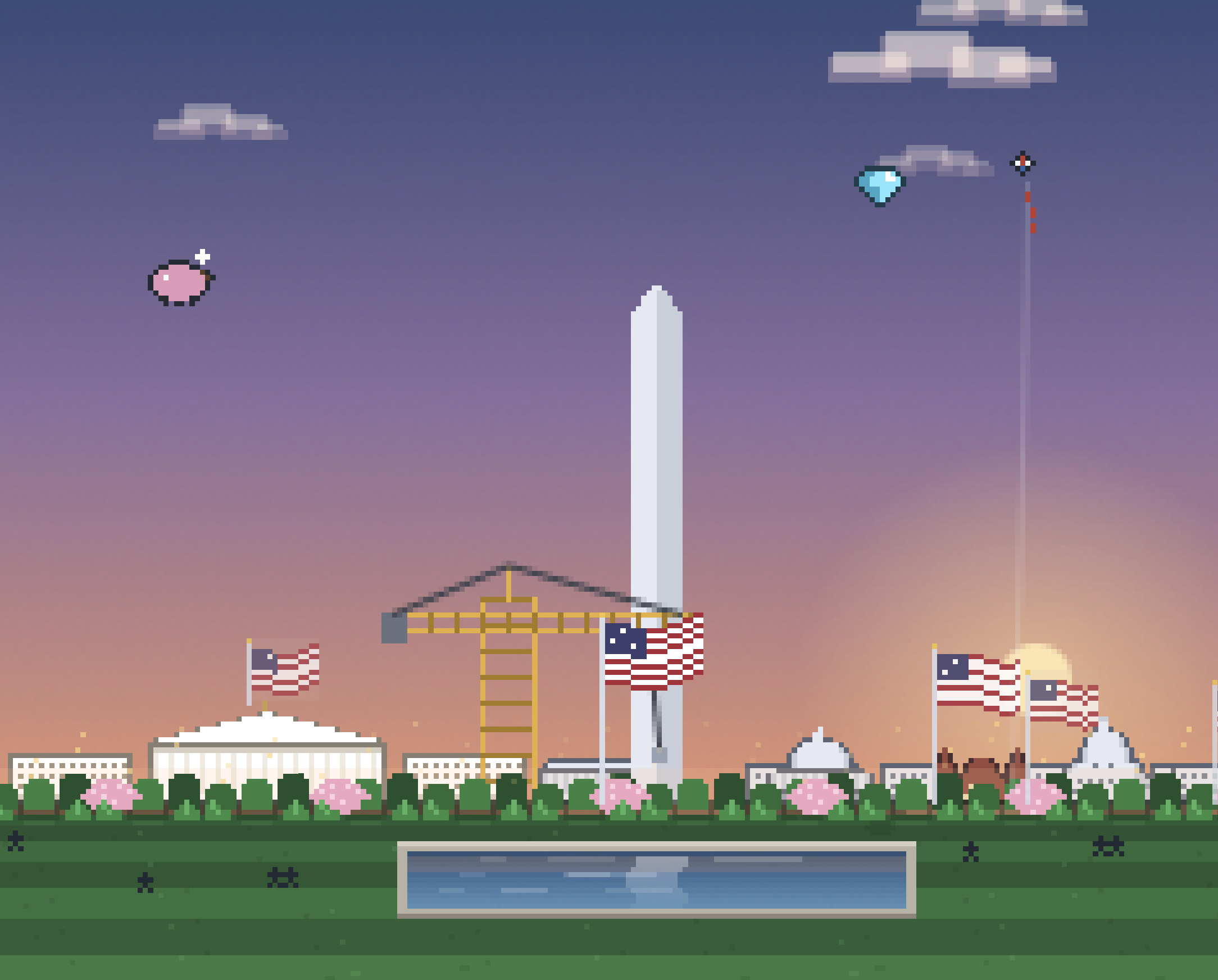
In early September, the White House website unveiled a new arcade section featuring games modeled on classics like Tetris, Snake and Flappy Bird. The launch was preceded by a retro-gaming teaser posted on official social media accounts. It opened with an animation of the Sega logo, except that the company’s name had been replaced with “MAGA,” the acronym for Make America Great Again.
The games, which were most likely created using artificial intelligence, offer a propagandistic and racist twist on some of the most recognizable video games of the 1980s and 1990s.
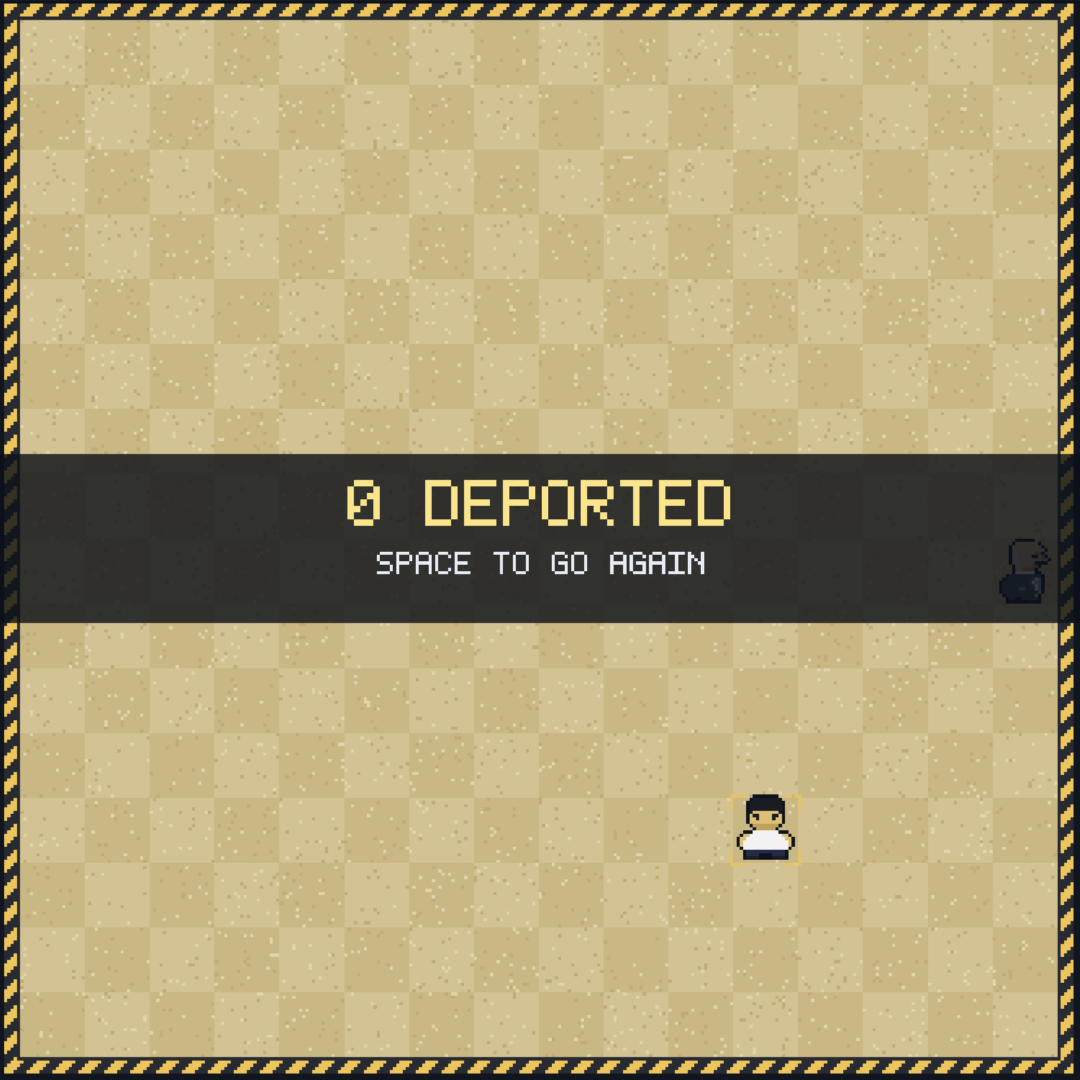
In Build the Wall, for instance, players must assemble a barrier out of Tetris-like blocks to stop an invading horde of “alien zombies” — a thinly veiled reference to migrants. In Rio Run, modeled on Snake, the objective is to capture people along the Rio Grande. As the player character, who resembles Tom Homan, the administration’s so-called border czar, moves across the screen, those captured fall into line behind him and are transformed into detainees wearing orange jumpsuits. Each new capture sends the “deported” counter in the upper-left corner ticking upward.
Another game, Escape from Socialism, is a memory-matching exercise in which players flip over cards to find pairs. Each successful match reveals a statistic drawn from a Council of Economic Advisers report on the supposed “cost of socialism,” a label the administration applies to economic proposals associated with the Democratic Socialists of America.
Kaelan Dorr, the White House’s digital strategy director, described the games as a way for users to experience the Trump administration’s policy decisions firsthand. The broader goal, he said, was to contrast a “culture of fun and winning” with the Democrats’ “gloomy socialist vision.”
The Tetris Company, which owns the rights to the original game, was not amused.
“For over 40 years, Tetris has believed in the power of connection and bringing people together, not dividing them,” Kerri Brusca, a company spokeswoman, told The Verge. In a social media post, the company also stressed that it takes copyright infringement seriously. Following what amounted to a thinly veiled legal warning, Build the Wall was removed from the White House website.
Watch the White House’s arcade announcement on X.
This is hardly the first time the Trump White House has incorporated video games, their visual language and the broader culture of gaming into its political messaging.
Quite the opposite.
As George Osborn, the author of Power Play: Video Games, Politics and the Battle for Global Influence, explained, the use of video games is a defining feature of Trump’s White House, not an aberration.
Such content, Osborn argued, borrows instantly recognizable elements of popular culture and repackages them to capture attention. Its tone is caustic and irreverent, tailored to platforms like X. The provocations work on two levels: They enrage Trump’s opponents while entertaining and energizing his supporters.
There is a deeper history behind this strategy.
Much of the contemporary political right, Osborn noted, emerged from toxic online gaming communities. In particular, activists who helped shape Gamergate have since become an established part of the Trump movement.
“Gamergate” refers to a virulent campaign of misogynistic harassment that erupted in August 2014, targeting female game developers, journalists and other women working in the video game industry. They were accused, without evidence, of trying to impose a progressive or “woke” agenda on gaming.
Organizing through platforms including 4chan, Reddit and Twitter, Gamergate participants subjected their targets to death threats, sustained harassment and intimidation. The game developer Zoë Quinn, for example, had her accounts hacked and personal information leaked online, including her home address, telephone number and private photographs.
One of Gamergate’s most prominent media champions was Breitbart News, then led by Steve Bannon, who would soon become one of the principal ideologues of the MAGA movement.
The connection was hardly coincidental.
Earlier in his business career, Bannon had helped finance Internet Gaming Entertainment, or IGE, a Hong Kong-based company that sold virtual goods through unauthorized markets to players of World of Warcraft and other massively multiplayer online role-playing games.
According to the journalist Joshua Green, author of Devil’s Bargain: Steve Bannon, Donald Trump, and the Storming of the Presidency, it was during this period that Bannon realized the enormous potential political power of alienated young white men in gaming communities.
When he joined Trump’s first presidential campaign in 2015, Bannon sought to put what he had learned to use, mobilizing gamers in support of the Republican candidate.
The gamble paid off.
Throughout the campaign and beyond, Trump benefited from an army of online trolls and meme creators who had sharpened their skills during Gamergate before becoming increasingly radicalized within the alt-right. This loosely organized far-right movement popularized the concept of “meme warfare,” turning gaming culture into a political propaganda weapon.
A decade later, Osborn wrote in his newsletter, the young people who drove that movement now occupy positions of power. They can shape online debate and reach a new generation of men through an increasingly fragmented social media ecosystem that rewards the most provocative content with viral attention.
Under Trump’s second administration, the White House’s official social media accounts increasingly resemble those of an army of shitposters, adopting the communications tactics of 4chan and some of the internet’s most extreme message boards.
As the journalist Charlie Warzel wrote in The Atlantic, the administration’s messaging reproduces the gleefully malicious, almost sociopathic sensibility associated with the darkest corners of the internet.
Video games occupy a central place in this transformation — the 4chan-ification of government propaganda — alongside the flood of synthetic imagery and other AI-generated content.
Trump himself has been depicted as Master Chief, the armored protagonist of the Halo franchise, in a post on X. In another video shared through official accounts, the American president was portrayed as Link, the hero of Nintendo’s The Legend of Zelda series.
The Pokémon franchise has also been used in anti-immigration videos published by the Department of Homeland Security. Meanwhile, imagery from Halo appeared in an ICE recruitment advertisement, in which migrants were likened to an alien species that infects and destroys the world.
See the White House’s Halo-inspired post on X.
But perhaps the Trump administration’s most brazen appropriation of gaming culture has come in its messaging about the war in Iran.
From the opening days of the conflict, the White House and Pentagon social media accounts released a stream of videos interspersing actual footage of airstrikes with scenes from Grand Theft Auto: San Andreas, Call of Duty: Modern Warfare III and Wii Sports.
Applying video game memes to real warfare is an unmistakable form of shitposting. But its consequences extend beyond online provocation: It can desensitize viewers to violence.
According to the researcher Daniel Baldino, the 4chan-style humor that informs the Trump White House’s communications is fundamentally hostile to mourning. Its primary function is to create emotional distance. War remains visible, but the way audiences experience it changes.
In an interview with The Washington Post, Roger Stahl, a professor at the University of Georgia, argued that video game-inspired war propaganda creates a bloodthirsty aesthetic, turning military violence into a form of nihilistic entertainment.
“They’re selling Americans a Hollywood-style, video-game version of war,” Stahl said, describing a sanitized spectacle designed to shield the public from a reality it might otherwise find disturbing.
To extend the gaming metaphor, another corrosive effect is the reduction of real victims to NPCs — “non-playable characters,” the computer-controlled figures that populate video games.
And no one is expected to mourn an NPC. By definition, these characters are not real people but digital figures without feelings or agency, expendable targets within the logic of a game.
In this sense, gaming memes reflect the sadism and dehumanization that have come to characterize the Trump administration’s political messaging.
As the journalist Nesrine Malik wrote in The Guardian, war is no longer presented in terms of death, destruction or catastrophic economic and geopolitical consequences. Instead, it becomes a succession of explosions, scores and triumphant fist pumps celebrating the humiliation of an adversary.
The result, Malik suggested, is an administration that resembles a gamer holed up in a dark basement, beer in hand, trying to drown out his insecurities with the flashing lights and deafening noise of a giant screen.
Leonardo Bianchi