


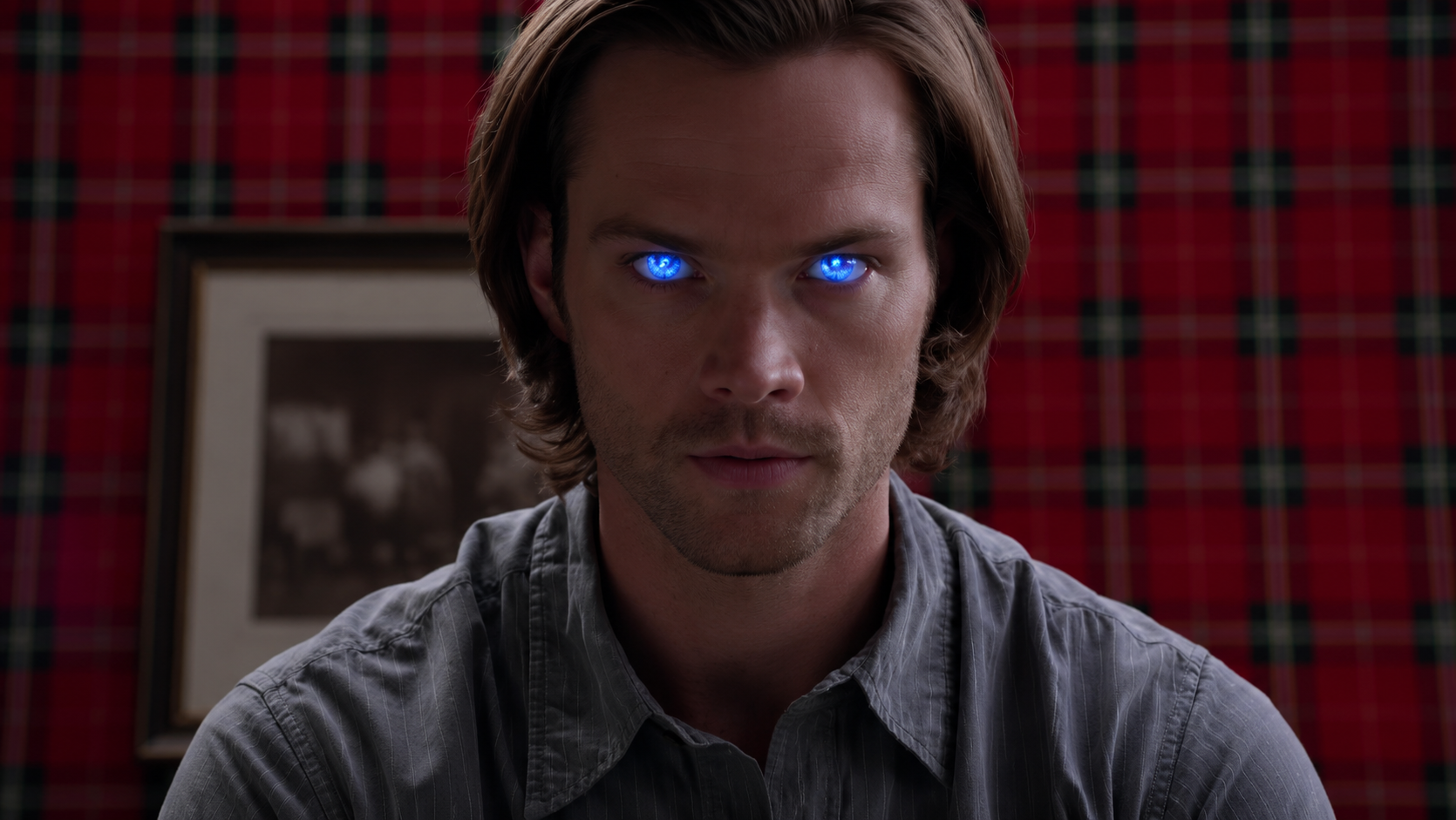
Ask the women in your life: almost all of them will tell you that, for months now, they’ve been relentlessly targeted on TikTok or Instagram Stories by a very particular kind of advertising with an unmistakably sexual undertone. These are AI-generated vertical videos, often featuring men with plastic-smooth skin and gleaming pecs in increasingly absurd situations. They’re ads for microdrama apps, platforms offering series designed to be watched vertically on a phone, with episodes lasting just a couple of minutes. The apps are free to download, but after the first few episodes, viewers are asked to pay to find out what happens next.
Watch enough of them, though, and you start to notice that the stories tend to look remarkably similar. Some are set in the present day, in corporate offices and billionaires’ mansions. Many others unfold in fantasy or science-fiction worlds populated by vampires, supernatural creatures and, above all, werewolves. These are very different werewolves from the ones you find in horror films: extraordinarily handsome men who occasionally turn into wolves and spend the rest of their time running a company, a mafia family or an imaginary kingdom.
Almost all these elements, from werewolves to pregnant men, come from a narrative genre known as the omegaverse. It emerged around fifteen years ago in the world of fanfiction, the stories fans write using characters from their favourite television series, films or books and publish online for free. Since then, it has spread enormously: Archive of Our Own, the world’s largest fanfiction archive, now hosts almost 250,000 stories in the “omegaverse” category.
In this genre, people belong to one of three categories, alpha, beta or omega, in addition to being male or female. The three categories derive from the way wolf packs were believed to be organised for much of the twentieth century. According to this theory, every pack had an “alpha” wolf that dominated the others and enjoyed priority when it came to food and mating. Beneath the alpha were the “betas”, while at the very bottom of the hierarchy was the “omega”, the most submissive animal in the group.
This hierarchy emerged from studies conducted between the 1950s and the 1980s on wolves in captivity. The animals being observed, however, were unrelated wolves forced to live together in the same confined space for extended periods. Subsequent research on wolves in the wild showed that natural packs do not function this way. Instead, wild wolves almost always live in family groups consisting of a breeding pair and their offspring from the previous two or three years. The pack is led simply by the parents, while younger wolves leave once they are old enough to find a mate and establish a pack of their own. Among those who have explained this is American biologist David Mech, who helped popularise the concept of the alpha wolf in a 1970 book and subsequently spent decades trying to debunk his own theory.
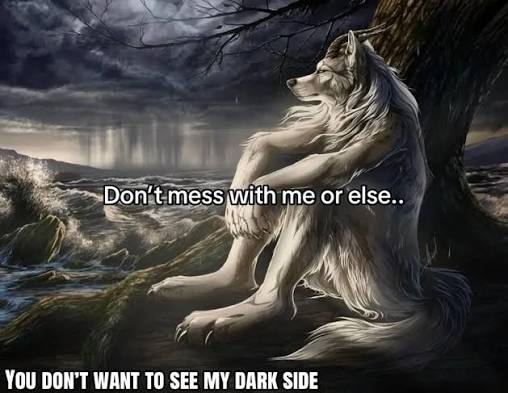
By then, however, the idea had already become firmly embedded in popular culture. It was from there that both the omegaverse and today’s discourse about “alpha males” borrowed it. In omegaverse stories, alpha characters are larger and more aggressive than everyone else, and regardless of their sex, they can impregnate an omega. Omegas are smaller and can bear children even when they are male. Periodically, they go into “heat”: for several days, their urge to mate becomes almost impossible to control, while the pheromones they release drive nearby alphas wild. Betas, meanwhile, are simply ordinary people in most stories, without any of these characteristics.
Male pregnancy is one of the genre’s most recognisable features, so much so that fans have a specific term for it: mpreg, short for male pregnancy. On AO3, almost 120,000 stories carry this tag, and the trope is also hugely popular on microdrama apps. StoReel, one of the many platforms in the sector, features a series called The Werewolf CEO’s Pregnant Boy. Its protagonist, Noah, is the much younger partner of Victor, a CEO who also happens to be a werewolf. After a car accident, Noah ends up in hospital, where a doctor informs him that he is pregnant and, what’s more, already in his third trimester.
Another typical element of the omegaverse is the bond between an alpha and the person they are destined to be with. The two recognise each other by scent and, once they have found one another, remain bound together forever, even against their will. Fans call them “fated mates”. On microdrama apps, this bond provides the foundation for countless plots, often revolving around one of the two characters attempting to reject it or escape. Titles such as Alpha’s Regret After Putting Me In Jail give a fairly clear idea of what to expect.
The origins of the omegaverse can be traced with some precision thanks to an account published in 2013 by an AO3 user writing under the name netweight. According to this reconstruction, it all began in the Supernatural fandom, centred on the television series whose early seasons featured just two regular protagonists, brothers Sam and Dean Winchester.
Many female fans who did not want to write romantic stories about brothers had instead begun writing them about the actors who played them, Jared Padalecki and Jensen Ackles. This is a genre known as RPF, or real person fiction, and it remains controversial even among fanfiction enthusiasts themselves.
On LiveJournal, the blogging platform where much of the English-speaking fandom gathered in the late 2000s, these stories circulated mainly through so-called “kink memes”: communities in which one anonymous user would suggest an erotic premise and another, equally anonymous, would turn it into a story.
In July 2010, the Supernatural kink meme featured the following request: “Their world is just like ours, except that there are two types of men: alpha males and bitch males. Alpha males are like other men, except for their penises, which work like a dog’s. […] I’d like to see Jared as the alpha male and Jensen as the bitch male.”
The story written in response, I Ain’t No Lady But You’d Be the Tramp, went considerably further than the original prompt. It imagined a society resembling 1950s America, in which “beta” males married alphas and bore children, and a movement campaigning for their rights mirrored the women’s liberation movement. The term omegaverse became widespread the following year, and the genre has since expanded enormously, to the point that it now has successful authors working in mainstream publishing.
In 2024, bestselling romance author Ali Hazelwood published Bride, a love story between a vampire and a werewolf that many readers consider one of the first omegaverse novels written by an established author.
Serial fiction and microdrama apps, meanwhile, have taken the genre’s most commercially successful ingredients and turned them into writing instructions. In 2022, Rest of World reported that GoodNovel, one of the most downloaded reading apps in the United States and the Philippines, provided its authors, often poorly paid and based in countries including the Philippines, Nigeria and Mexico, with a guide to writing bestselling werewolf stories. It recommended building the plot around a single dominant alpha ruling over a population of enslaved subjects, while incorporating other popular themes, such as CEOs or the mafia.
Almost all the elements of the omegaverse, however, had already existed in fanfiction for decades. Star Trek fans, for instance, had long been writing about pon farr, the period during which Vulcans like Spock must mate or die. This gave rise to an entire subgenre of stories in which two characters are compelled to have sex for biological or magical reasons.
Male pregnancy, known among fans as mpreg, appeared as early as 1980 in a Star Wars fanfiction in which Han Solo becomes pregnant. The omegaverse simply drew on all these tropes and organised them into a coherent system, creating a shared set of narrative rules from which anyone could develop a new story.
The genre has also spread because those rules leave enormous room for imagining their consequences. On AO3, dozens of guides circulate in which authors explain how their particular version of the omegaverse works. One of the most frequently cited, written by Nora Bombay, even imagines how literary history might have unfolded differently. In that world, Jane Austen was a shy, unmarried beta who wrote comedies of manners about Regency-era omegas forced to secure suitable mates in order to save their family fortunes.
A Tumblr user quoted by the YouTube channel Strange Æons in a lengthy video about the history of the genre pointed out that, in these worlds, sex is treated with a degree of casual acceptance that simply does not exist in ours: “Imagine taking a week off work to have nonstop sex and your colleagues being completely fine with it. No gossip, no drama. Just Mark from HR getting railed from Tuesday to Saturday and coming back to the office on Monday with a fresh bite mark on his neck.”
The same rules also provide a way of exploring gender and power dynamics. Researchers Xiaoyan Yang and Federico Pianzola have observed that, in the omegaverse, inequalities between men and women disappear, only to be replaced by new ones based on secondary gender and similarly justified through biology. Many stories explore precisely what it means to be in a relationship within such a system.
“In every version of the omegaverse, the world is like ours,” reads the newsletter Mixed Feelings. “A caste system justified by the supposedly innate characteristics of certain bodies and the roles we’re told they should occupy.”
Viola Stefanello