



onsisting of ten works that he himself described as vues.
They were not films in the way we understand them today. Rather, they were unprecedented representations of reality—new perspectives on the world, captured in order to create a novel form of spectacle.
Workers, a train, the sea. Everything was being seen for the first time. And this is worth remembering because cinema was born with a precise ambition: to reinterpret reality through an innovative technological medium.
From that moment on, filmmakers have continued to push experimentation forward, using technology to visualize and realize their ideas. Today, with the arrival of tools that would have been unimaginable even twenty years ago, one might assume that cinema is no longer central to the conversation—that it has become an aging form of representation, disconnected from the present and from the interests of a new generation of audiovisual pioneers.
But that is not the case.
Without giving too much away, let me tell you about three very recent horror films: three feature debuts, three major commercial successes that, despite being made with modest resources, use technology as a creative object, a preparatory tool, or even as the very soul and subject of the work itself.
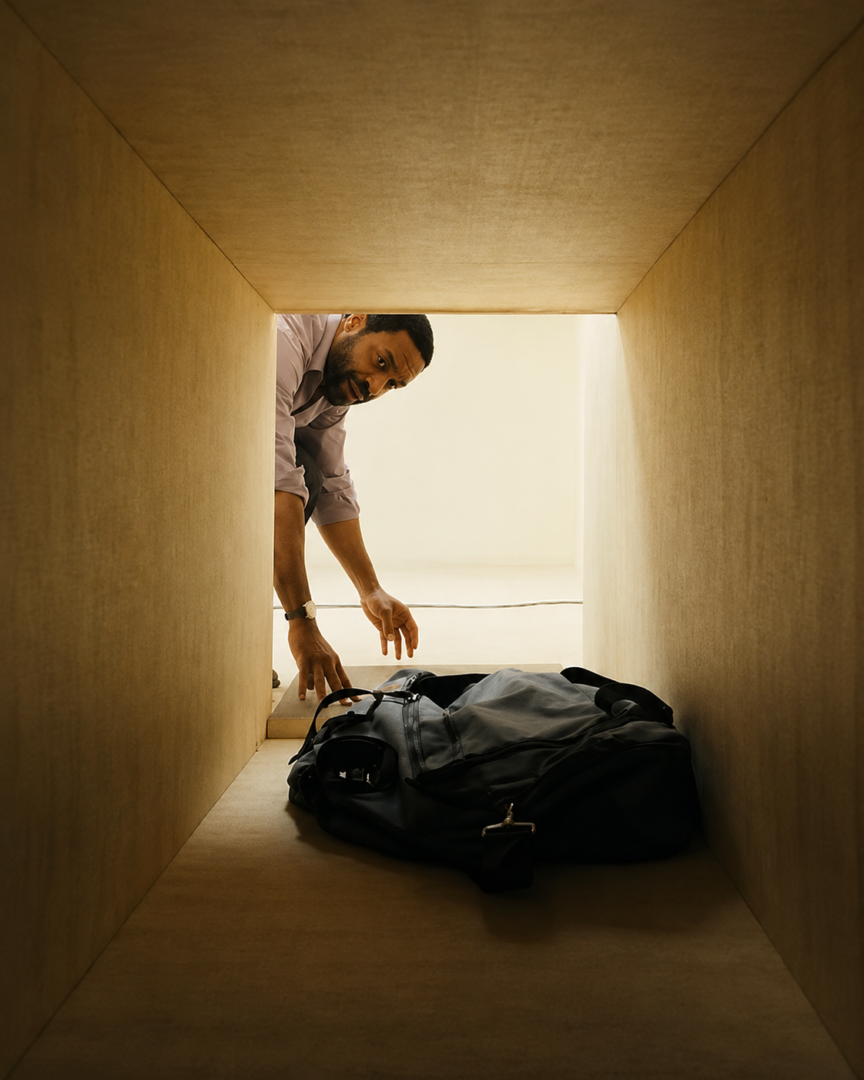
Budget: $10,000,000
Box Office Gross (updated June 9, 2026): $212,971,260
The most anticipated of the three.
Born in 2005, Kane Parsons arrives with a feature adaptation of his own web series, itself inspired by an internet urban legend.
A brief digression is necessary regarding the 24 episodes published on YouTube. Lacking the resources to realize his ideas in the physical world, Parsons turned to Blender, a software suite for modeling, animation, video editing, rendering, and both 2D and 3D visual effects.
The young filmmaker builds his universe entirely inside a computer, throws the viewer into it through a moving point of view, and then adds sound. And how does he solve the problem of the “rubbery” appearance often associated with Blender-generated imagery? Simple: by deliberately degrading image quality and disguising everything as found footage shot on a cheap 1990s camcorder.
It is a perfect example of how a technical limitation can become the defining characteristic of a style.
What happened next is simple. Someone recognized the talent of this young creator, saw the audience his ideas were attracting online, and quite rightly offered him a major opportunity.
Parsons has stated that the physical set occupied more than 3,000 square meters and that every element had already been designed, planned, and built within Blender.
Much has already been written about the film, and countless theories have been proposed. I will limit myself to one observation—a thread that connects all three debuts discussed here: a relentless search for a space or condition where the rules of the world are no longer the ones we know.

Budget: $750,000
Box Office Gross (updated June 9, 2026): $209,121,395
A record-breaking return on investment, a small gem poised to become a cult classic.
The creative force behind the camera is Curry Barker, 26 years old and already well known online as a creator and performer of comedy sketches, as well as a director of horror shorts.
Any further praise for the film would be redundant. The box-office numbers speak for themselves, audience reactions have been ecstatic, and the film is clearly crafted with exceptional care and precision.
Barker has explained that he prepared many of his shots using LiDAR technology (Light Detection and Ranging), a remote-sensing method that employs laser pulses to measure distances and generate highly detailed 3D maps of the surrounding environment.
It sounds like science fiction, but LiDAR is far more common than many people realize. For years, it has been a standard feature in numerous smartphone models.
Once locations had been scanned, the data was imported into CineTracer, a simulation platform capable of previsualizing scenes. This allowed the team to plan camera positions, lighting setups, and movements before ever arriving on set, saving a significant amount of time.
And time, as we know, is money.
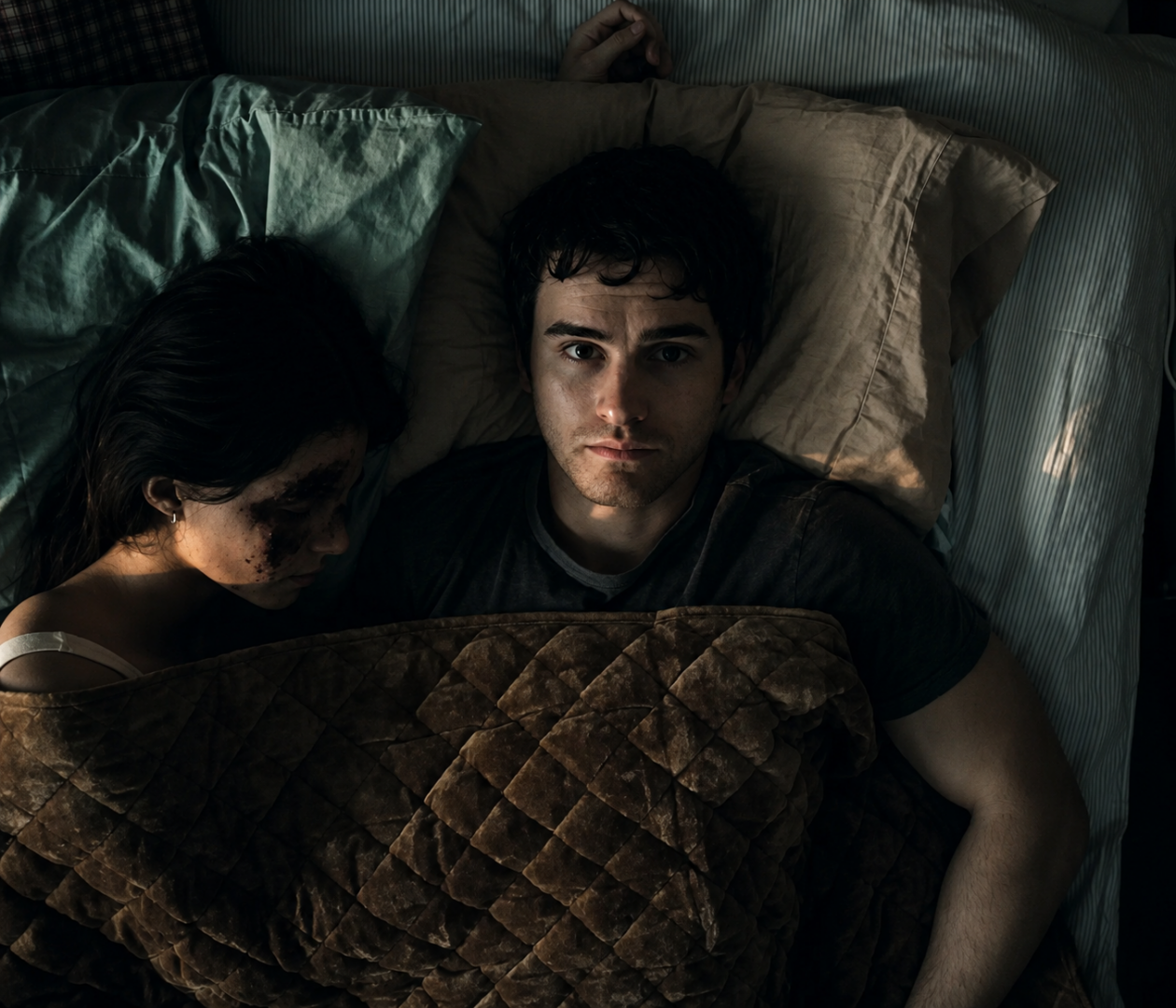
Budget: $500,000
Box Office Gross (updated June 9, 2026): $21,623,750
Cinema is something we watch. Cinema is something we hear.
On October 30, 1938, during a CBS radio broadcast, Orson Welles adapted The War of the Worlds, presenting an alien invasion as though it were a real news event. People locked themselves indoors, some sought shelter in bunkers, and many reached for their rifles.
Canadian filmmaker Ian Tuason, drawing inspiration from a difficult period in his own life, originally conceived his film as a horror radio drama.
Unlike the first two films discussed here, where technology played a crucial role in the creative process, Undertone places at its center one of the defining communication formats of recent years: the podcast.
Much of the film unfolds in a single room, where a young woman records her voice into a microphone connected to a computer, listens to disturbing audio files sent via email, and speaks by phone with a colleague.
It is yet another reminder that sound remains cinema’s most powerful emotional force.
It is hardly surprising that Tuason has since been entrusted with the next installment of the Paranormal Activity franchise.
Generative artificial intelligence tools have been on the market for several years now, and with each passing month they seem to become more accessible and more effective.
James Cameron has acknowledged that, in order to optimize the costs of the Avatar saga, careful use of AI could prove valuable.
Harmony Korine, a filmmaker whose career has been defined by experimentation, has openly embraced artificial intelligence. Even Martin Scorsese has recently expressed interest in the technology, testing Black Forest Labs’ software, which can generate a complete storyboard simply from written descriptions of desired shots.
Yet Parsons, Barker, and Tuason appear to belong to a different school of thought.
They employ the themes and tools of the present, but they have no intention of handing over responsibility to a machine.
We cannot know whether Louis Jean Lumière and his brother would have supported or opposed the use of AI—or any of the technologies mentioned above. What we can say with confidence is that they would almost certainly have experimented with every tool available to them.
Because what truly matters is the magic, not the trick behind it.
Matteo Manganelli