


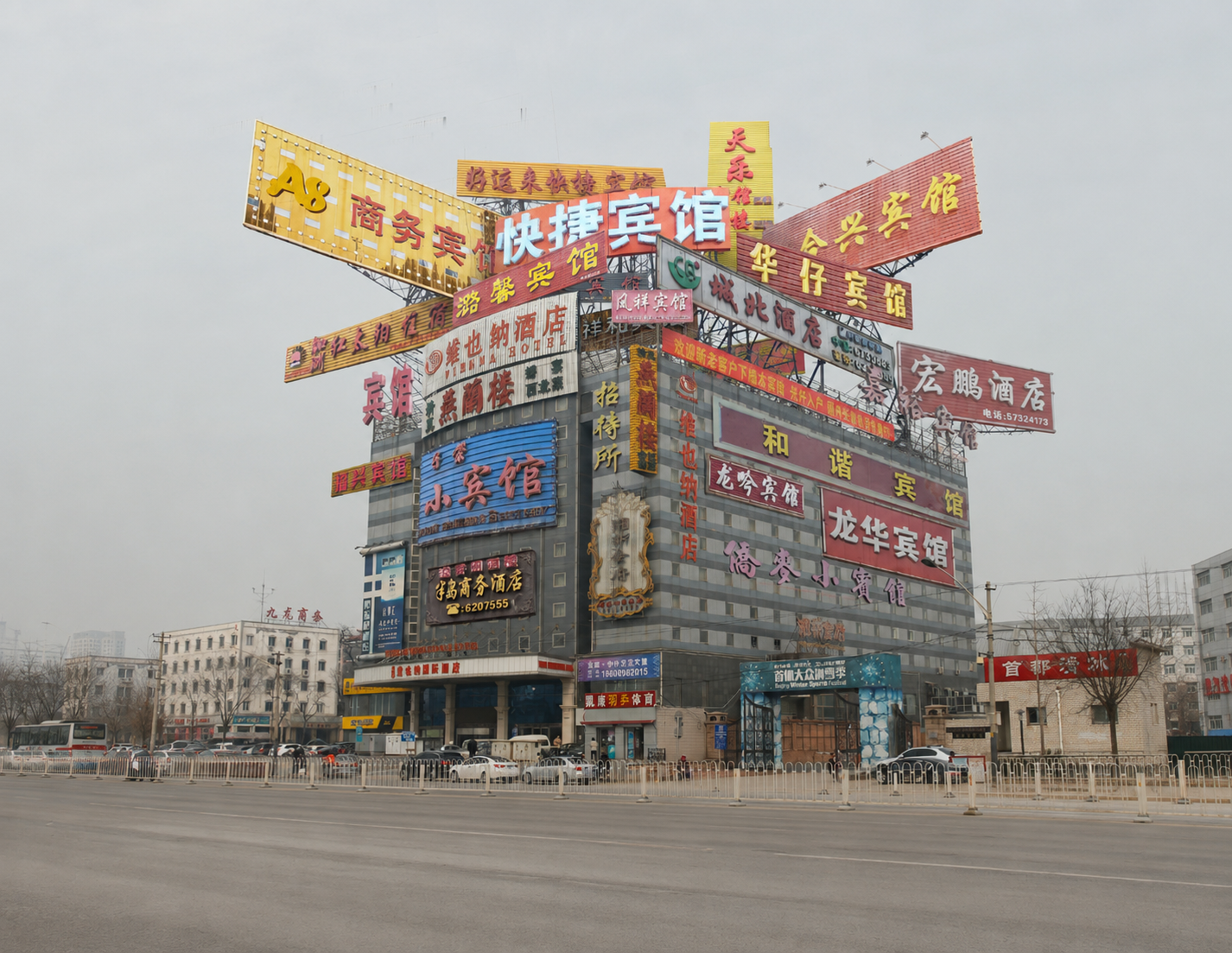
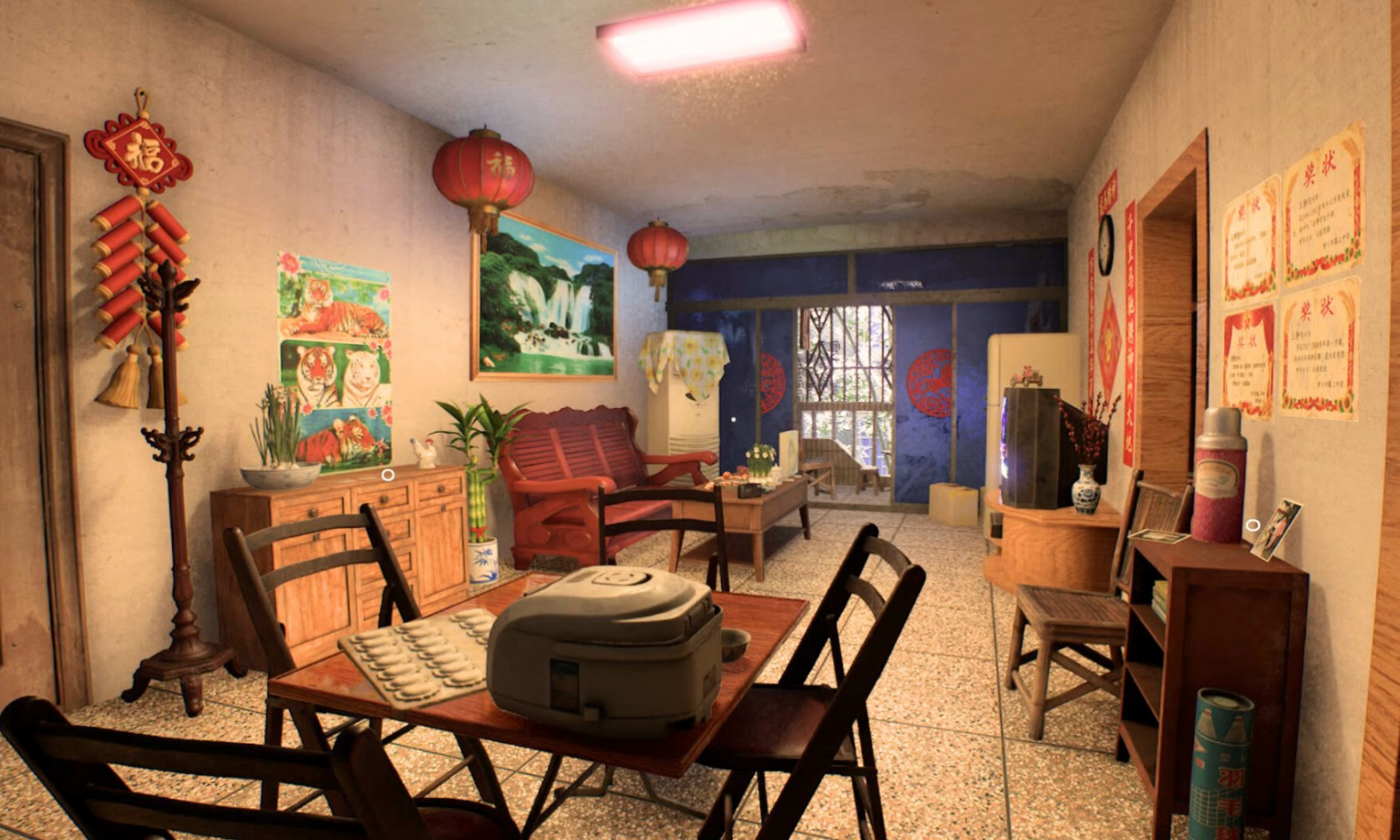
The places we remember from childhood seem to have brighter colours. Blurred like an old photograph taken with a disposable Kodak camera, images of playgrounds, shops with old colourful signs, and living rooms with cathode-ray tube televisions have become the latest viral nostalgia trend on Chinese social media.
Dreamcore is a web aesthetic and subculture that evokes the surreal, nostalgic atmosphere of dreams. It incorporates childhood memories into what are now known as liminal spaces: non-places or spaces of suspension and transition. Unlike the Backrooms, however, Chinese Dreamcore is not unsettling at all. On the contrary, it is comforting.
This cultural phenomenon is not merely a nostalgic evocation of the past, but also a subtle critique of the present.
Dreamcore borrows elements from the Y2K aesthetic, from metallic pop colours and pixelated digital graphics to cyberpunk influences, reworking them into a kind of “retrofuturist” aesthetic. People born between the 1990s and the early 2000s look back to a time when it was still possible to imagine the future with optimism, a period that Chinese netizens have described as “the beauty of a phase of economic growth”.
During those years, China was experiencing its economic rise, alongside the rapid urbanisation of its cities and greater openness to globalisation. Unlike previous generations, these young people had a childhood marked by increased access to consumer goods and experiences, including shopping centres, international fast-food chains, amusement parks, video games, and the growing influence of global culture. Symbolic events such as the 2008 Beijing Olympics and the 2010 Shanghai Expo left a profound mark on this generation’s collective imagination.
“You have gone back in time. You are in Beijing in 2008, and the Olympics are about to begin,” reads the caption of one of the many nostalgic images circulating on Bilibili, China’s equivalent of YouTube.
This social media trend has also emerged within a context shaped by the growing pressure experienced by young Chinese people. In recent years, the term neijuan (内卷), literally meaning “involution”, has spread online. It is used to describe an extreme form of competition in education and the workplace, in which ever-greater effort does not lead to any genuine improvement in one’s prospects.
Chinese Dreamcore represents a temporary escape from reality, particularly for a generation facing an extremely high rate of youth unemployment and a competitive, uncertain employment landscape that contrasts sharply with the expectations cultivated during childhood.
It is precisely this gap between expectations and reality that leaves a sense of emptiness and creates a powerful desire to go back to some ordinary afternoon in the summer of 2006. The same feeling could form the basis of a distinctly Italian version of Dreamcore, centred on memories of that year’s FIFA World Cup.
One of the most frequently recurring titles used by Chinese Dreamcore creators on social media, however, also highlights the profound sense of loneliness that characterises this aesthetic: “You can go back, but there is no one there anymore.”
In this world “of the past”, life moves more slowly and is more monotonous, but the sense of emptiness is neither unpleasant nor disturbing. On the contrary, the atmosphere is filled with the comfort and warmth of certain childhood memories. This is especially significant for a generation that often grew up without brothers or sisters under the one-child policy and consequently developed strong attachments to particular objects and symbolic places from childhood.
A qualitative study conducted in 2024 by students from the School of Literature and Journalism at Sichuan University (SCU), based on interviews with Gen Z Dreamcore creators active on platforms such as Bilibili, found that many participants use nostalgic content to seek empathy and reduce their sense of digital isolation.
Looking backwards is more reassuring than looking forwards. It is no coincidence that Dreamcore has gained traction on social media, both in China and elsewhere, at a time when Millennials and Gen Z are continually reviving the aesthetics of the early 2000s through music and fashion.
Unlike their parents’ generation, which grew up with films about the future and an aesthetic oriented towards the modernity of the new millennium, those now approaching their thirties seem to prefer living within an eternal memory of the past and of the more optimistic promise of what the future was once supposed to become.
Camilla Fatticcioni