


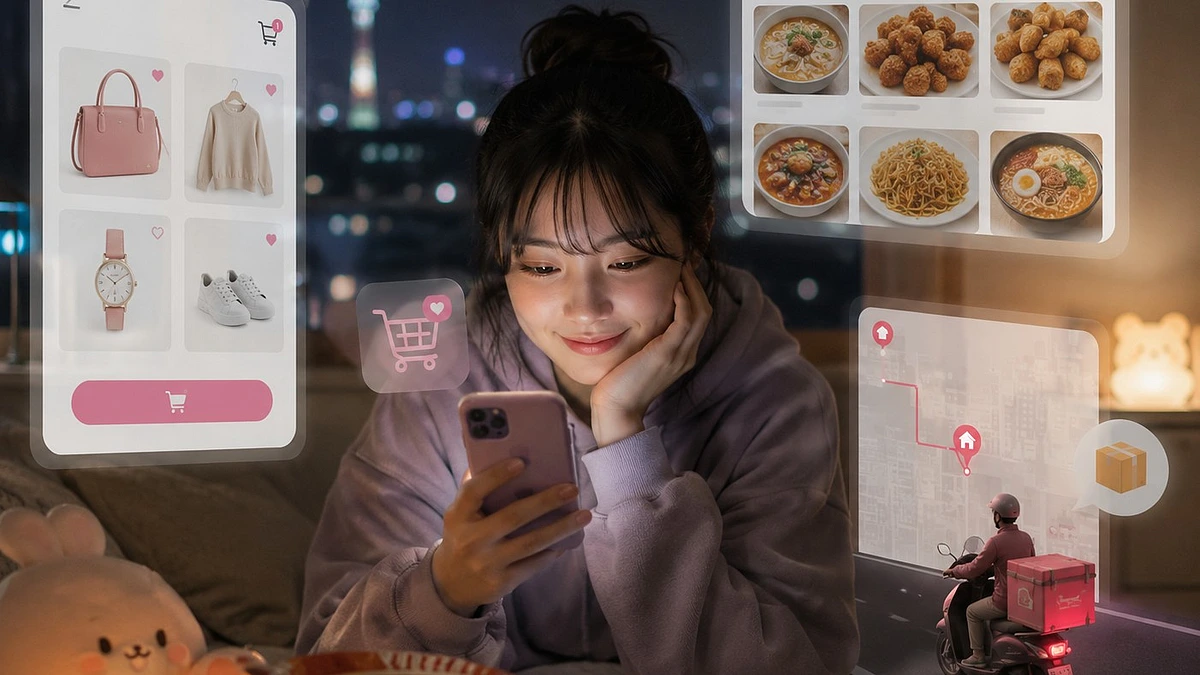
The only happiness lies in the anticipation of happiness itself, Giacomo Leopardi once argued. I suspect he would agree even more strongly today if he found himself staring at an Amazon basket ready for checkout.
There is no denying it: the thrill of making an online purchase can be priceless, often more satisfying than actually owning an object that has spent weeks sitting in a shopping basket waiting to be bought. That pleasant sensation is largely caused by the release of dopamine, the neurotransmitter associated with pleasure and the brain’s reward system. Unfortunately, compulsive shopping has its drawbacks. Carrie Bradshaw understood this perfectly well in Sex and the City: the problem begins when the pursuit of that gratifying rush produced by buying something collides with the limits of one’s bank account.
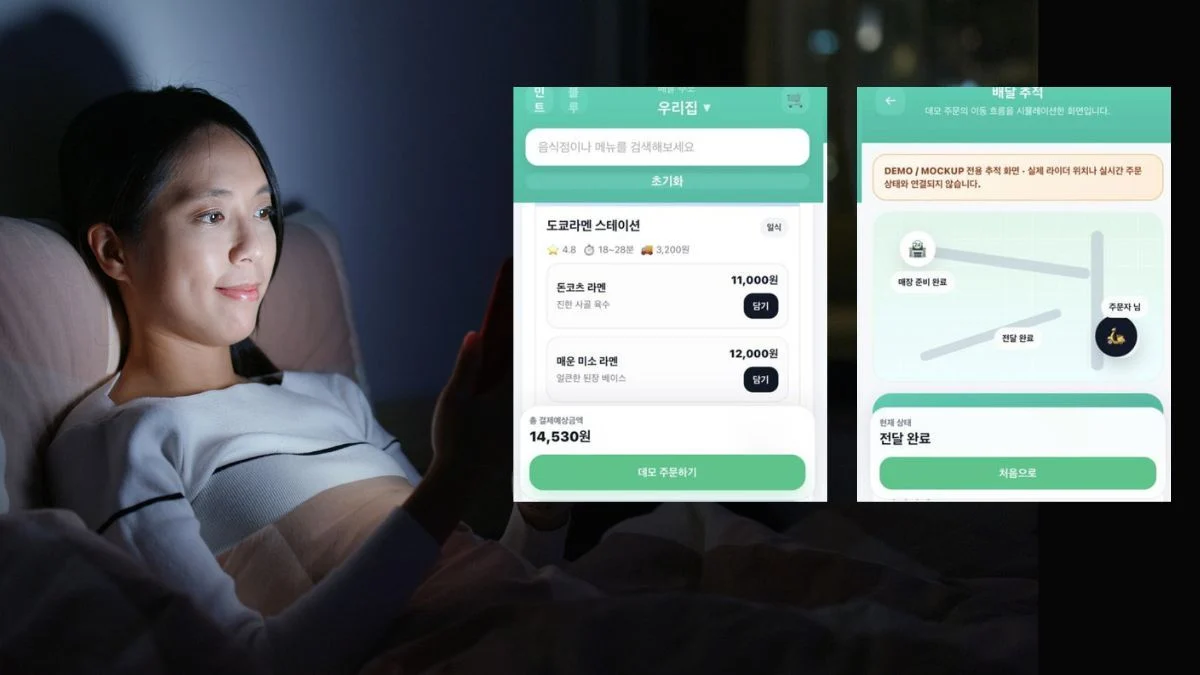
To get around the inconvenience of having to pay for a dopamine hit, so-called “dopamine websites” have emerged in South Korea: platforms that allow users to simulate the experience and excitement of online shopping without spending a single cent.
As The Korea Times reports, dopamine websites act as a kind of pressure valve for young people living frantic lives and hovering on the edge of burnout, who often find it difficult to resist late-night cravings. In Korea, there are food-delivery websites that faithfully reproduce the experience of using a real delivery platform, complete with estimated waiting times, restaurant ratings from one to five stars and interfaces designed down to the smallest detail. The illusion is revealed only at the final stage, when it is time to pay: there is no button to complete the order.
Also popular among Koreans are so-called “break rooms”, where people can take an imaginary online cigarette break and chat anonymously with other users inside the virtual room.
Shopping without buying, ordering food without eating, smoking without lighting a cigarette: simulation is the final product of digital capitalism, which for years has promised to make everything accessible, from travel to the strangest possible purchases. These platforms have become particularly successful in South Korea not only because it has one of the world’s most advanced e-commerce economies, but also because it is a society deeply shaped by competition and stressful working conditions.
Dopamine websites offer the brain a form of reward at no cost. The pressure that disappears is not only the pressure of payment, but also that of having to make a decision and commit to it.
Kim Heon-sik, a professor at Jungwon University, argues that the spread of these websites is connected to a broader online culture centred on constant stimulation. Before the rise of social media, few people had ever heard of dopamine or dopamine detoxes. Today, however, we are constantly desensitised by online stimuli, as well as by those of everyday life beyond the internet. It can therefore seem almost sensible, both for our wallets and our health, to obtain pleasure from an activity without actually performing it.
The phenomenon is not particularly different from the popularity of mukbang videos, the social-media trend in which viewers watch other people consume enormous quantities of food. On a psychological level, these videos can help satisfy the audience’s appetite without requiring them to eat anything themselves.
“Recently, there has been an increase in content that allows people to experience things such as alcohol, cigarettes and food indirectly,” says Kim Heon-sik. “These websites also reflect the desire to experience a similar form of satisfaction or atmosphere without having to go through it in real life.”
It might appear to be an extreme version of philosopher and sociologist Jean Baudrillard’s theory of the simulacrum, according to which images and media no longer represent an authentic reality, but create a new artificial dimension known as hyperreality, in which the copy replaces the original. In this case, pleasure no longer comes from possessing an object, but from simulating the experience of buying it.
It is no coincidence that this kind of platform has emerged in a context of economic and employment insecurity among younger generations, where the anticipation of consumption itself can be turned into a commodity. At the same time, we live in a hyper-digitalised environment in which our connections with other people increasingly take place through screens.
Surrogate experiences have long been popular across the world. These include “study with me” websites, where users join video calls with strangers while studying, effectively simulating the experience of being in a library, and video games built around the performance of simple household chores.
Even the most ordinary form of doomscrolling on Instagram creates something similar. We endlessly watch influencers displaying ultra-luxurious holidays or immaculately organised homes filled with every conceivable kitchen accessory. The result is a peculiar form of pornography made from experiences and lifestyles that we desire but cannot afford. It produces a feeling of satisfaction, however temporary.
For decades, the market persuaded us that happiness could be found in the purchase of particular products. Today, it is moving towards the monetisation of desire itself, a system in which the promise of happiness is more seductive than happiness itself.
Camilla Fatticcioni