


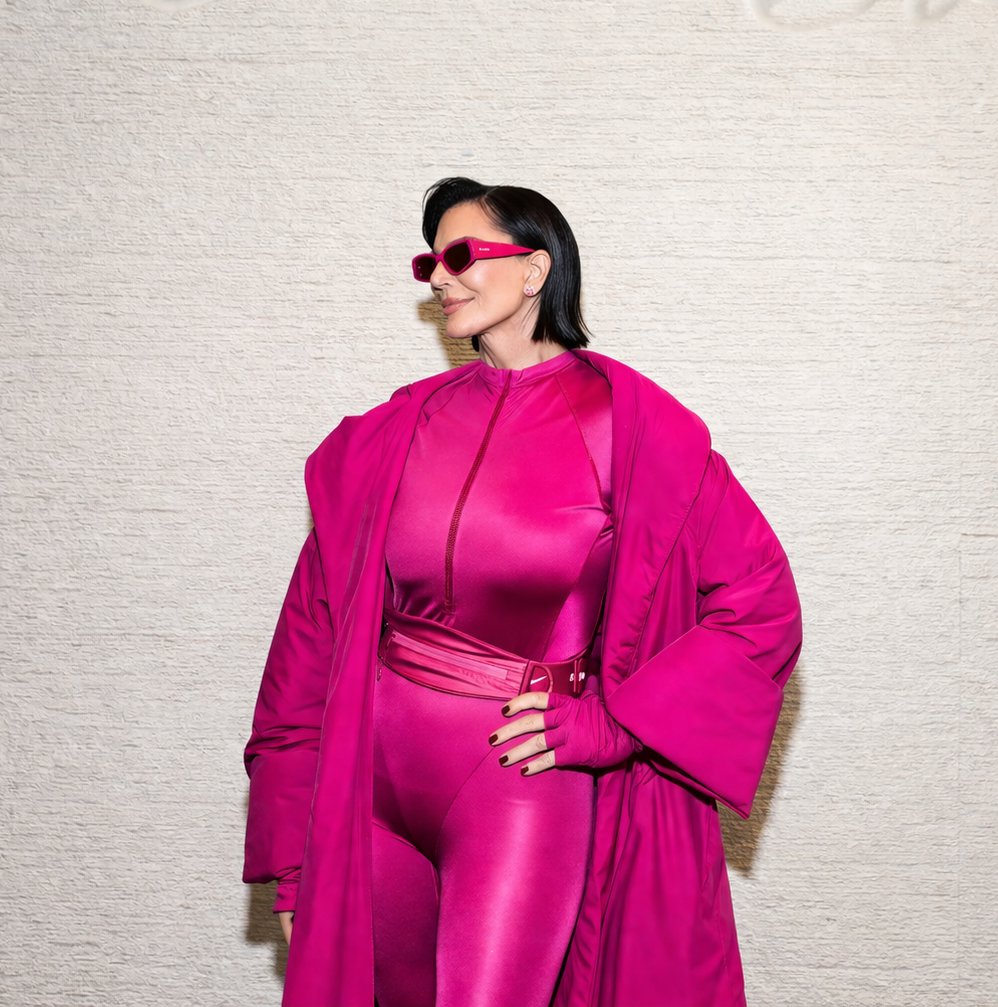
Kris Jenner is the face of success and wealth for China’s Gen Z. In recent weeks, portraits of the famous Kardashian-Jenner matriarch have flooded Chinese social media, from RedNote to Douyin, in the form of a kind of “holy card” used to manifest prosperity and money: something that may seem absurd at first glance, but is actually perfectly consistent with the cultural grammar of the web in the People’s Republic of China. “You’re ALL doing great sweetie” is the motto netizens are playing with online, both to show off wealth and to try to manifest it. Clips and AI-edited images featuring Kris Jenner as a teacher, lawyer, doctor, or Chinese empress are being used in everyday contexts as “digital good-luck charms” to pass an exam or earn enough money to go shopping.
But why Kris Jenner specifically? She is the driving force behind the Kardashians’ television empire, having propelled her extended family to global fame with the hit 2007 reality show Keeping Up With The Kardashians. The program ran for 20 seasons before ending in 2021. Today, Jenner also manages the careers of her children: Rob, Kourtney, Kim, and Khloé Kardashian, as well as Kendall and Kylie Jenner. Unlike other figures in the Kardashian family, her image is less tied to sensuality or youthful glamour and more to an idea of consolidated economic power as both matriarch and family manager. That makes her perfect for China’s urban public, especially the segment of young professionals navigating social pressure, economic competition, and the need for recognition. In China, Jenner is seen as an extraordinarily hardworking and influential woman, nicknamed “Tai Hou” (the emperor’s mother), a title that has earned her enough respect to turn into a semi-ironic meme.

The success of the Kris Jenner meme comes at a particular social and economic moment for China’s Gen Z, which in recent years has come to view with deep disillusionment the narrative of economic success embodied by slogans like “996,” meaning working from 9 a.m. to 9 p.m., 6 days a week. In this context, the meme becomes a release valve for a generation struggling to find employment in an already saturated labor market. Kris Jenner is the modern, ironic version of the saint one appeals to in order to make it to the end of the month, or to “flex” one’s wealth.
“Chinese Gen Zers don’t just use Kris Jenner as a profile picture: her photo is on all our iPhone, iPad, and laptop wallpapers… literally everywhere,” influencer Marcelo Wang explains in a TikTok video that has reached more than 2 million views. According to Business Insider, more than 99,000 posts dedicated to Jenner can be found on RedNote, attracting over 52 million views.
This is not an isolated trend: Chinese netizens’ memes have long become part of everyday language, often extending beyond the digital sphere. Unlike Western platforms, where memes are often ends in themselves or tied to an aesthetic of absurdity, in China they are much more codified tools of social communication. One example is the classic “meme stickers” (biaoqingbao), images that instantly condense emotions, judgments, and subtext, or code-numbers like “666” used to express admiration. The case of Kris Jenner fits perfectly into this logic: her face is no longer that of a real celebrity, but a semiotic symbol.
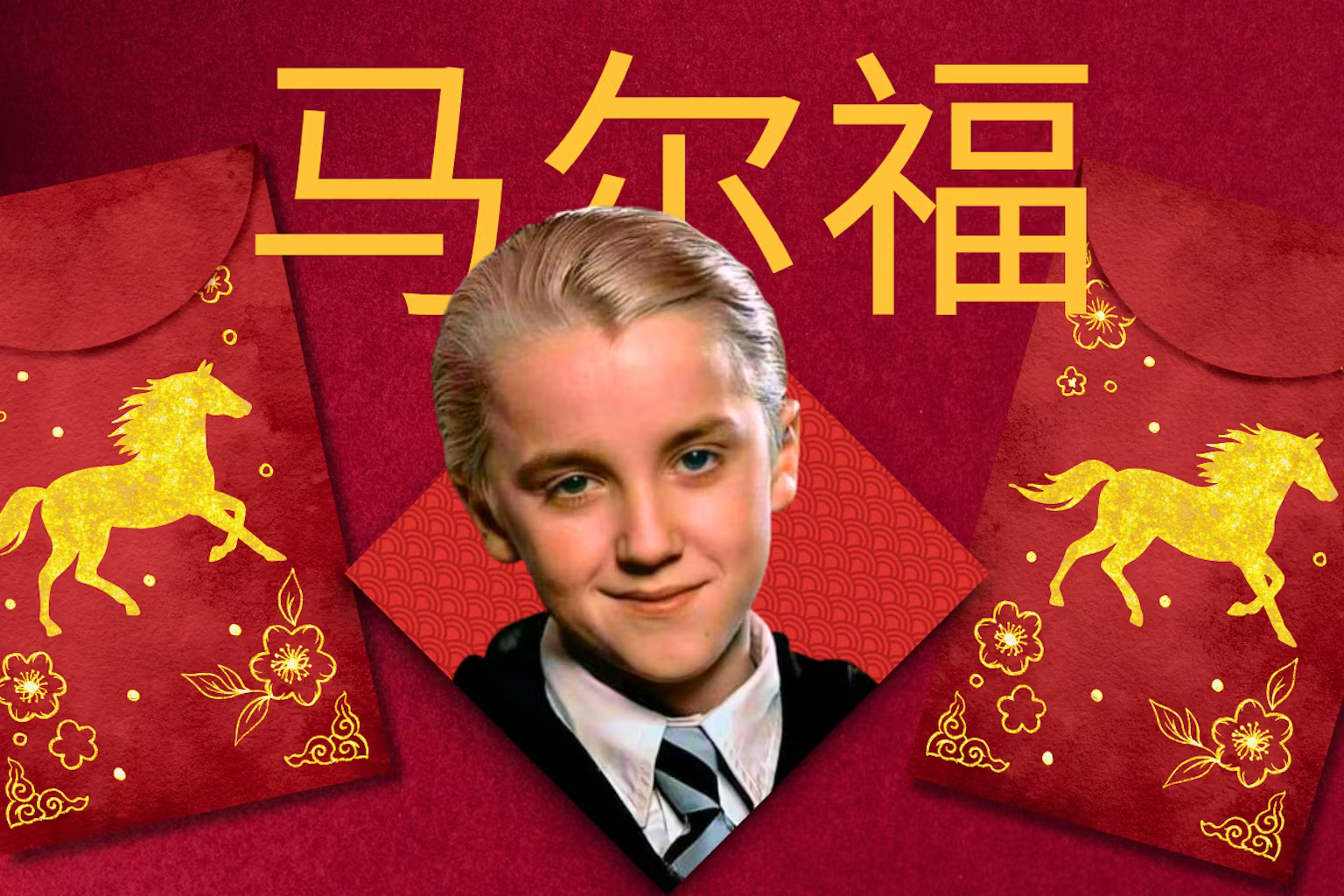
This points to another phenomenon that spread across Chinese social media during Lunar New Year celebrations in February, when images of Harry Potter antagonist Draco Malfoy went viral as symbols of good luck for the year ahead. Draco Malfoy became hugely popular in China for Lunar New Year 2026, the Year of the Horse, thanks to a linguistic pun on his name: transliterated into Mandarin as “Ma-er-fu,” it contains the characters for “horse” and “fortune.” This turned him into an auspicious mascot, with his image used as a lucky charm.
Much of this dialectic remains confined to the sphere of the Chinese web, which often leaves Western users puzzled as more and more of them turn to social media platforms like RedNote. Linguistic and cultural differences in the digital age also apply to images and the faces of celebrities, which are often loaded with very different meanings from one side of the world to the other.
On Western social media, Jenner is regarded with a similar sense of reverence by Kardashian fans, though not as an actual symbol of good luck.
Ultimately, the “digital cult” of Kris Jenner says far less about Kris Jenner and far more about how online communication is constructed today. In an ecosystem where everything is image, performance, and repetition, even wealth becomes a language to imitate, share, and wish upon others.
Between irony and aspiration, superstition and aesthetic capitalism, the Chinese web transforms an influential figure from American television into something entirely new: an emotional interface for negotiating economic anxieties, dreams of status, and everyday micro-victories.
Camilla Fatticcioni