


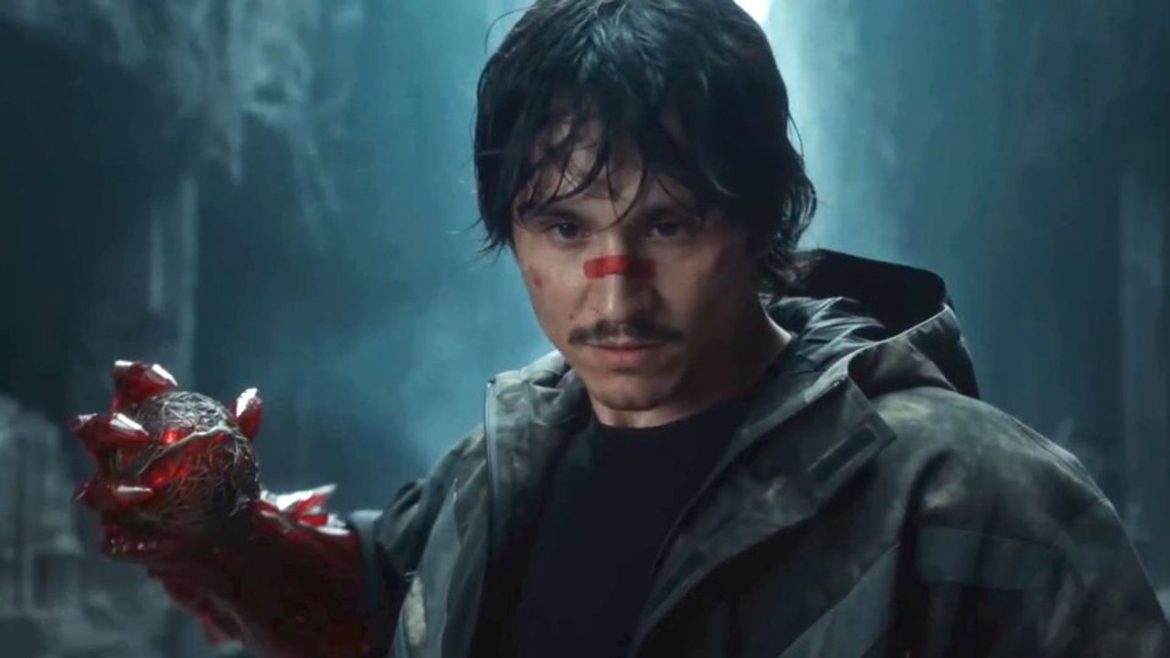
I have not seen Hell Grind, only the trailer that the production company Higgsfield released to promote its film made entirely with artificial intelligence. That was enough for me to recognize the product: a fantasy action film with adventurers, a magical artifact, a portal to hell, battles against hordes of demons, and so on. I would call it “nothing special” in the same way I call many action films made without artificial intelligence “nothing special.” If it had been shot with flesh-and-blood actors, nobody would be talking about it, but here the film matters less than its genesis.
For a few days, the press, starting with The Wall Street Journal, reported that Hell Grind was the first feature film generated entirely by artificial intelligence to debut at the Cannes Film Festival. The festival immediately denied it: the film was not part of any official program; it had been screened during an industry event organized by third parties. Higgsfield defended itself by saying it had shown the film at the Marché du Film, but the Marché does not select anything; it is a trade fair, and it screens any film whose producer pays for the theater.
Higgsfield accompanied the film with a series of interesting figures. The first episode of the film, which evidently had originally been conceived in installments, lasted about twenty-five minutes and reportedly required 16,181 video generations to arrive at the final 253 shots; the ratio is 64 discarded clips for every usable one. Sixty-four to one is a very high number, but not an absurd one. Anyone who works with video generation knows that throwing away a lot of material is the norm if one wants to obtain something precise. I asked colleagues who work with AI video, and I deduced that in commercial contexts the ratio fluctuates between 1:10 and 1:20; but in a fantasy film full of action scenes in which perfect continuity must always be maintained, the number can rise.
Higgsfield declares a total cost of under 500,000 dollars, of which 400,000 was spent on compute, that is, on the processing power required to generate the videos, all within a fourteen-day production window. Here the numbers seem excessive to me. If twenty-five minutes require about 16,000 generations, then if the film is between 80 and 95 minutes long, we are looking at something like 50,000 to 65,000 total generations.
Let us look at the price. A fifteen-second clip on Seedance 2.0, the main model used for the film, costs very different amounts depending on how it is accessed. Through ByteDance’s official API, the price is about fourteen to twenty cents per second, so a fifteen-second clip comes to around two or three dollars. On the consumer platform Dreamina, at the base credit price, a ten-second clip in the Pro version costs around four and a half dollars; but on that same Dreamina platform, by purchasing the largest credit package, the same clip drops to under two dollars. The total would therefore come to between 100,000 and 260,000 dollars.
One can also reason in reverse: start from the 400,000 dollars and ask how many generations are needed to justify that amount. At the full price of four dollars, 100,000 generations are needed; at two and a half dollars, 160,000 are needed; at two dollars, 200,000. All of these figures are much higher than the 50,000 to 65,000 that the 64-to-1 ratio projection would suggest. It is curious, incidentally, that the number that makes the budget add up at Dreamina’s full price, roughly 100,000 generations, is also the figure I had come across in some early journalistic reconstructions, later absent from subsequent press releases.
So either the film required far more generations than the first episode would lead one to imagine, or the clips cost much less than 400,000 dollars and that budget item contains something else, perhaps dedicated GPUs, pipeline development, AI agents. The third hypothesis, the most sober one, is that nobody ever tried to make those numbers add up, because their purpose was not to add up. As for the number of days needed to make it, I have no data to cross-check, only the awareness that two weeks sounds truly incredible even if they had worked on it 24/7. Making films with AI is not as easy as they make it sound.
In terms of the technical result, I think AI generation has already surpassed traditional computer graphics in many tasks and will soon surpass it in the remaining ones. The interesting short film Patchwright by the artist Gossip Goblin has amply demonstrated this. I say this without nostalgia: special effects have always adapted to new technologies and will adapt to this one as well. The delicate issue is not animated monsters, explosions, or scenes of soldiers in battle, but actors. At the moment, the “acting” of a synthetic character works very well for the role of an extra, but not for a protagonist. It lacks depth and realism. For this reason, the use of AI in cinema today is mixed, with AI interventions for special effects in productions that retain humans as the main actors. But what will happen in the future?
Cinema has already undergone shocks in the past, and in both cases the reaction was the same: panic, debate, normalization. When sound arrived at the end of the 1920s, part of the film world treated it as a degradation. Chaplin resisted for a long time; he remained essentially silent until Modern Times in 1936 and did not truly speak on screen until The Great Dictator in 1940, convinced that pantomime had a purity that speech would destroy. When digital replaced film stock between the 1990s and the 2000s, there was similar resistance. Many directors demanded 35mm and showed distrust and snobbery toward digital projection; the Dogma 95 manifesto was, in its own way, an internal reaction to that transition. In both cases the technology was first demonized and then absorbed, until it became invisible.
I would be tempted to file AI under the same pattern, but I think the comparison would be partly inaccurate. Sound and digital changed the way cinema was made without changing too much who could make it; it remained an expensive, industrial enterprise, reserved for those who had access to the means. Generative artificial intelligence touches precisely that point, and for this reason it resembles the arrival of photography less than the arrival of sound. Photography, in fact, made the production of images increasingly accessible over the years to those who did not know how to draw, and it shifted the threshold of access to a medium that for centuries had been guarded by a relatively rare skill. It was greeted with the same mix of enthusiasm and scandal, accused of not being art because it was too easy, too mechanical. We also know how that turned out.
On the one hand, then, there is a real danger for those who work in cinema in certain roles; a medium that lowers the threshold of access also lowers, at least in part, the market value of certain skills. Those who work in special effects will partly adapt, but some demands will inevitably become less common.
On the actors’ side, this pressure has already produced a union response. In the same weeks in which Hell Grind was being launched, the American actors’ union, SAG-AFTRA, reached a tentative agreement on television and film contracts for 2026, which is currently being voted on for ratification. Much of that text convinces me: mandatory consent for digital replicas, protection of biometric data, the ban on using the replica of a minor in scenes of nudity or simulated sex, and the guarantee that during a strike no one can replace an actor with their synthetic double are very fair and sensible protections. One point, however, leaves me perplexed: point K on page fourteen, dedicated to the so-called “Synthetics,” entirely generated performers that do not reproduce any real actor. The agreement does not ban them entirely, but it requires prior notice and negotiation, establishes the principle of a clear preference for human performance, and allows the synthetic performer only when it brings “significant additional value” compared with what could be obtained through a simple digital replica.
The problem, it seems to me, is that such a clause binds only those who sign the union contract, namely the major studios, and leaves free rein to those producing outside that perimeter, precisely the world from which a film like Hell Grind emerged. It defends the interests of actors without considering those of people working with minimal resources, for whom the synthetic performer is a way to compensate for the absence of an adequate budget. I think it is right that the major studios should continue to employ flesh-and-blood actors, and equally right that a small producer should be able to resort to synthetic ones. So what should be done? The whole matter of labor in the age of AI still seems to me provisional and partly framed in the wrong way. If these tools really prove to be as destructive as people fear, the most reasonable direction seems to me to be a basic income, rather than the all-out defense of individual professions. Technology has erased entire professions in the past as well, and today nobody misses the lamplighters who lit gas lamps or the women computers who performed calculations by hand before computers.
One of the advantages of AI in cinema is that small groups, or even individuals, will be able to make films that compete with major productions. One of the directors of Hell Grind said that it took him ten years to make his first traditional film and that he had seen almost everyone who had started out with him never make it to directing. Among all the publicity surrounding the film, this statement seems to me the most interesting.
The thing I find unpleasant about this story is not the use of artificial intelligence, since I am very interested in artists’ experiments with it and use it myself for video as well. What I find problematic is how companies are using it. For now, almost the entire discourse, from those who sell these tools, revolves around savings: AI as a way to make the same old Hollywood cinema while spending a fraction of the budget. Hell Grind would cost fifty million with traditional methods, Higgsfield repeats, and instead it cost five hundred thousand; the film is sold to studios so they understand how much they can save.
A new medium deserves to be used to do what could not be done before, not to do the usual things for less money. Video generation makes possible visions that no crew could ever have staged, just as it allows those who do not have fifty million, or even five hundred thousand dollars, to give shape to a vision.
For its part, the Cannes Film Festival has staged this contradiction. It has declared verbally, though without writing it into the rules, that it does not want to admit films “primarily driven” by AI into competition, while at the same time welcoming Meta as an official partner and allowing its market to become a fairground for artificial intelligence.
On the Croisette, directors and actors spent the week declaring where they stood. Demi Moore, on the jury, dismissed the question by saying that opposing AI is a lost battle; Peter Jackson, receiving the honorary Palme d’Or, reduced it to a mere special effect like any other; James Gray, more cautious, called it a sometimes useful tool while adding, however, that it “will never touch the only infinity we know, the soul,” whatever that is supposed to mean. Del Toro limited himself to an eloquent “Fuck AI.” Steven Soderbergh, who arrived in Cannes with a documentary about John Lennon in which roughly a tenth of the images were generated with Meta’s tools, a company that also co-financed the film, called himself “his own whistleblower” and said something very interesting: a great many directors and producers use AI, but silently, pretending not to. The only anomaly in his case is that he admitted it.
This is not an isolated impression. According to Envato’s report Beyond Adoption: The State of AI in Creative Work 2026, based on 1,780 creative professionals worldwide, 58% have used AI in professional work without disclosing it to clients; almost half of them justify the choice simply by saying that they do not see why they should disclose every tool of their trade, just as they do not disclose that they use Figma or Photoshop. Only 31% always disclose it. The report calls this phenomenon “creative AI’s don’t ask, don’t tell moment.”
The producer Kent Sanderson predicted during a panel that within a couple of years it will be possible to manufacture something that resembles a Marvel film in one’s basement. It is, once again, the promise of savings, the idea that AI is useful for remaking the usual things at a lower cost; and it is the version I find least interesting, because it imagines the basement as a small Hollywood, rather than as a place from which something Hollywood would never make might emerge.
Francesco D’Isa