


How many of your musical tastes are truly your own doing? All of them? None?
It is an unpleasant question, almost an offensive one, because it strikes at one of the few territories we still like to consider genuinely ours. When we listen to a song we love, especially if it belongs to the band we have chosen as a refuge, we tend to believe that it is speaking directly to us, that it has detected some hidden distortion in our character, or perhaps a fragility that others can barely sense. As a teenager, I confess, I was even jealous of the meaning of certain songs, because I presumed that they had found in me their most authentic recipient, that their deepest meaning belonged to me almost exclusively, as if every nuance were there to confirm some private form of emotional intelligence. It was, of course, an illusion. And perhaps one of the most presumptuous ones.
Taste, including musical taste, ultimately has a history and does not coincide with a pure instinct, fixed once and for all. It is formed through exposure, or through habit, or imitation, and it certainly changes with age, with the people we spend time with, according to the places in which we listen to music and the real or imagined communities to which we feel the need to belong. There are records we reject for years and then, almost without noticing, learn to listen to, just as there are sounds that seem better to us than others also because someone, before us, taught us to recognize them as such.
Let us be clear: this does not make taste less sincere, but it does make it less self-sufficient than we like to think. Our relationship with music almost always passes through a network of mediations: friends, magazines, radio, concerts, playlists, interviews, covers, videos, social profiles, comments. Before a song even begins, we have often already received a series of implicit instructions on how to welcome it: as a revelation, as a trend, as a return, as a scandal, as a promise.
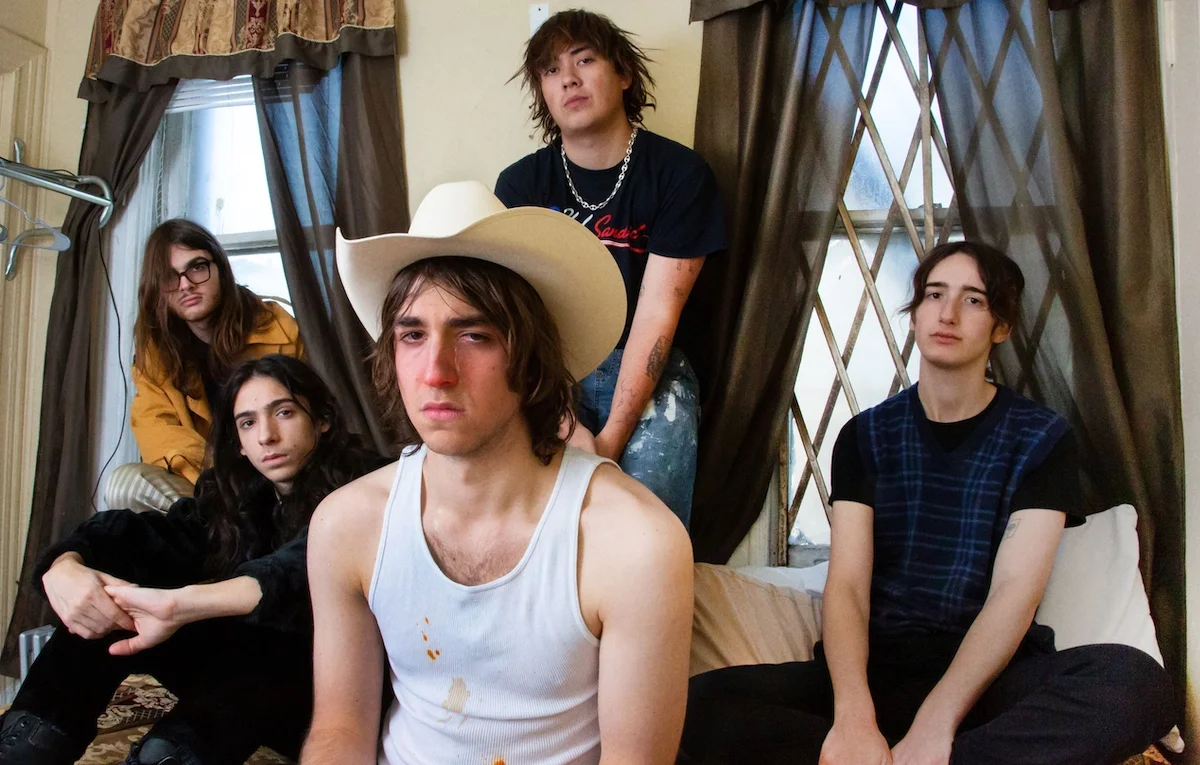
It is in this grey area that, in recent months, the Geese case has flared up. Geese are a rock band from New York; in 2025 they released Getting Killed, an album greeted with enthusiasm by a substantial part of the critical establishment, including Pitchfork, which presented it as the strangest and strongest work by a band active since 2016. Shortly afterwards, however, a suspicion began to take shape around their sudden centrality in online music discourse: that at least part of that enthusiasm, perceived by many as spontaneous, had in fact been accompanied by a promotional strategy capable of imitating the signals of organic interest. In other words, the question was not only whether Geese were truly worthy of the attention they had received, but how much of that attention had arisen from below and how much had been prepared to look that way.
To understand this, two expressions that circulated widely need to be clarified. The first is industry plant: in the language of pop music, it indicates an artist perceived as artificial, supported by the industry but presented as an organic or independent discovery. The second is psyop, an abbreviation of psychological operation: online it is often used, hyperbolically, to indicate a campaign capable of shaping perceptions and behavior without presenting itself as such. In the case of Geese, both accusations need to be handled with caution. We are not dealing with a band that appeared yesterday or one with no history. What remains to be analyzed, however, is the way in which the conversation around the band may have been fuelled.
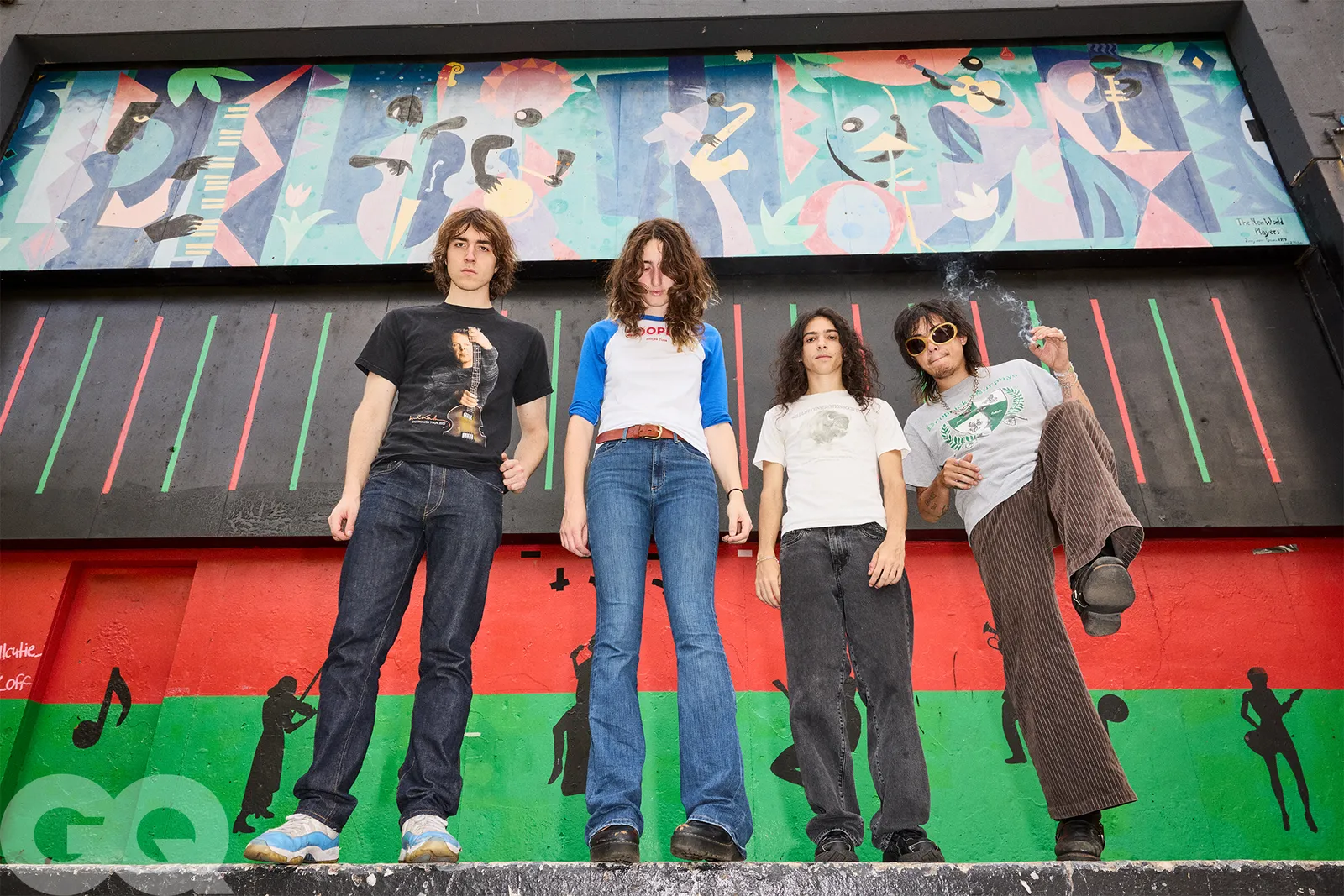
According to Wired, part of the attention surrounding Geese and their singer Cameron Winter was allegedly supported by the work of Chaotic Good Projects, a digital marketing agency that speaks of trend simulation: a practice based on the construction of content, accounts, and micro-narratives designed to enter feeds as if they were spontaneous signals of online culture. Wired specifies that the agency denied using bots or artificially inflating numbers, but it nevertheless describes a promotional model founded on profiles and content designed to trigger conversations, shares, and the impression that people were talking a great deal about the group. The Guardian then broadened the issue, describing how similar strategies, from fake fan pages to apparently amateur videos, have by now become widespread even in indie contexts, where authenticity remains a decisive part of perceived value. Experience teaches us this too: even the unknown provincial rapper often has his own Instagram fan page administered by a mysterious user. Who could it possibly be?
For years, after all, people have been repeating that an independent musician, in order to survive in a saturated environment, must now behave at least partly like an influencer. They are expected to maintain a constant presence, an immediately recognizable identity, a coherent imaginary, and a narrative capable of explaining, without too many shadowy areas, who they are, where they come from, and what place they occupy in the contemporary cultural landscape. The word that recurs most often is “storytelling,” pronounced with that corporate ease thanks to which the market manages to convert into technique even what once belonged to the more elusive realm of artistic invention.
And yet it would be difficult to place this demand for legibility on the same level as the work of artists such as David Bowie. When Bowie brought Ziggy Stardust, Aladdin Sane, or the Thin White Duke to life, he was not developing a strategy of recognizability; rather, he was constructing a mythology. Each character opened up a different perspective on the world and on music, offering a narrative form within which aesthetic, theatrical, and even anthropological transformations could find a place. His masks did not serve to push listening into the background; on the contrary, they made it more complex by loading it with references and inscribing it within a symbolic fabric destined to change continuously.
Something analogous, though according to very different modes, can be found in much of the popular music of recent decades. Prince turned his own identity into a territory of ceaseless metamorphosis; Madonna moved through eras and languages, reinventing herself each time without ever renouncing the narrative dimension of her image; Björk constructed works that seem to emerge from autonomous ecosystems, in which technology, nature, and imagination coexist according to their own laws.
What emerges from cases such as that of Geese seems to belong to a different order. In their case, storytelling is far from investing primarily in the work itself; rather, it prefers to establish the conditions through which a marketing agency wants the work to be encountered. The object of the story becomes the very act of discovery: the feeling of being faced with something that is emerging right at that moment, of participating in a still-limited conversation, of having caught a signal before it is absorbed into the broader circuit of collective attention. The listener is thus drawn into a story that concerns, first and foremost, their own position in relation to the artist.
Perhaps this is where a further form of flattening in the world of music marketing reveals itself. If the concept album organized an imaginary universe within which music could unfold, today a different tendency sometimes seems to be taking shape, one in which invention concentrates around the modes of reception. The creative energy that once fed characters, worlds, and stories is progressively absorbed by the construction of a shared perception, of hype. In place of the journey into a narrative, what comes into view is the preventive management of desire; and where the work once asked to be inhabited, there increasingly appears a device that suggests to the listener how urgent it is not to be left out.
Pierluigi Fantozzi