


In Spirited Away, Hayao Miyazaki’s animated masterpiece, the young protagonist Chihiro finds herself trapped in a supernatural world where the witch Yubaba steals her name and renames her Sen. To remember who she is and find her way home, the girl must hold on to the memory of her own identity. In that world, losing your name means risking forgetting the person you once were.
In real life, however, some people voluntarily choose to leave everything behind, including their name and identity, to start over from scratch.
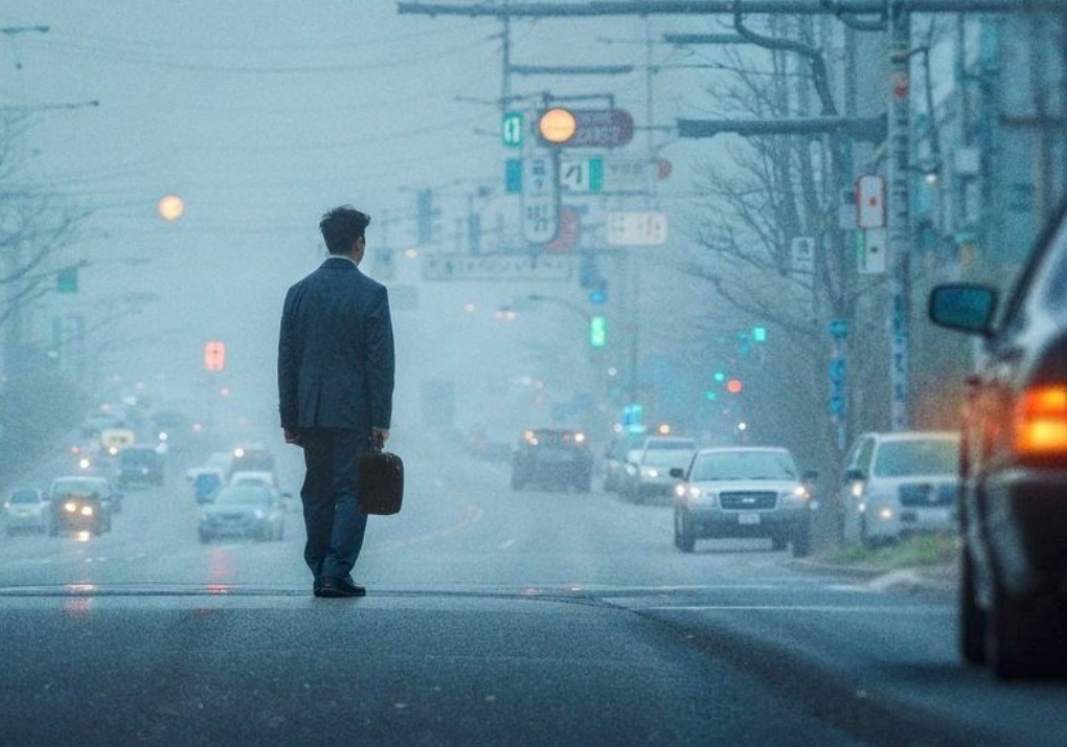
At least once in our lives, most of us have probably fantasized about disappearing. Changing our address, appearance, and job, only to find ourselves, in the best-case scenario, running a beach bar somewhere, far away from the troubles of everyday life. What might seem to us like a desperate, fanciful response to the relentless pace of modern life has a name in Japan: jōhatsu, which literally means “evaporation” and describes people who voluntarily choose to vanish into anonymity.
In the 1960s, jōhatsu referred to people fleeing unhappy marriages, creditors, or loan sharks. From the 1990s onward, however, the term took on a different meaning. Japan’s Lost Decade brought a surge in layoffs, accompanied by rising suicide rates and an increasing number of missing persons. Japanese people began choosing to “evaporate” not only to escape their circumstances, but also to avoid confronting personal disappointment or professional failure.
The subject remains taboo to this day, although an estimated 80,000 to 85,000 people are reported missing in Japan every year.
There are even agencies that help people “evaporate.” The businesses that assist jōhatsu are known as yonige-ya, literally “night-moving shops.” They are relatively easy to find online, since choosing to disappear is legal in Japan, and the police are often promptly informed of voluntary disappearances through these agencies. The agency takes care of everything: moving personal belongings, finding a new job, and securing accommodation so that clients can start a new life in anonymity, with a new name and address.
In a recent article published by the Japanese newspaper Asahi Shimbun, the owner of one such agency revealed that she had handled more than 2,500 cases over more than twenty years in the business. She receives between 10 and 20 inquiries every day and helps approximately 120 people “evaporate” each year.
Eighty percent of those who use the service are women experiencing domestic violence or psychological abuse. But others choose to vanish without a trace simply to avoid the humiliation of telling friends and family that they have lost their job, suffered a failure, or are struggling with depression.
The French philosopher Jean-Paul Sartre argued that we become aware of ourselves through the way others see and judge us. And today, perhaps more than ever, we care about what other people think.
In Japan, the weight of reputation and social expectations can make the very idea of failure unbearable. In Europe and the United States, despite significant cultural differences, we encounter another version of the same problem: the pressure to be independent, productive, successful, and capable of solving our problems entirely on our own. It is not simply that we have become more individualistic. We also tend to view personal successes and failures as responsibilities we owe to a society in which we have grown accustomed to living constantly under the spotlight.
Social media accounts, photographs, geolocation data, purchase histories, and personal information scattered across old databases all contribute to constructing a version of ourselves that continues to exist digitally, even when we would rather leave everything behind.
In the age of hyperconnectivity, disappearing means reckoning with a digital presence that survives our absence from the physical world. Yet while some people try to erase every trace of themselves, others choose to reinvent themselves online, creating a parallel identity entirely separate from their real-life persona. After all, in the digital age, a new account and a new username might be all it takes to start over.
But can we really “evaporate” without leaving a trace today? Or is our only option to become someone else without ever leaving the place where we are?
Camilla Fatticcioni