


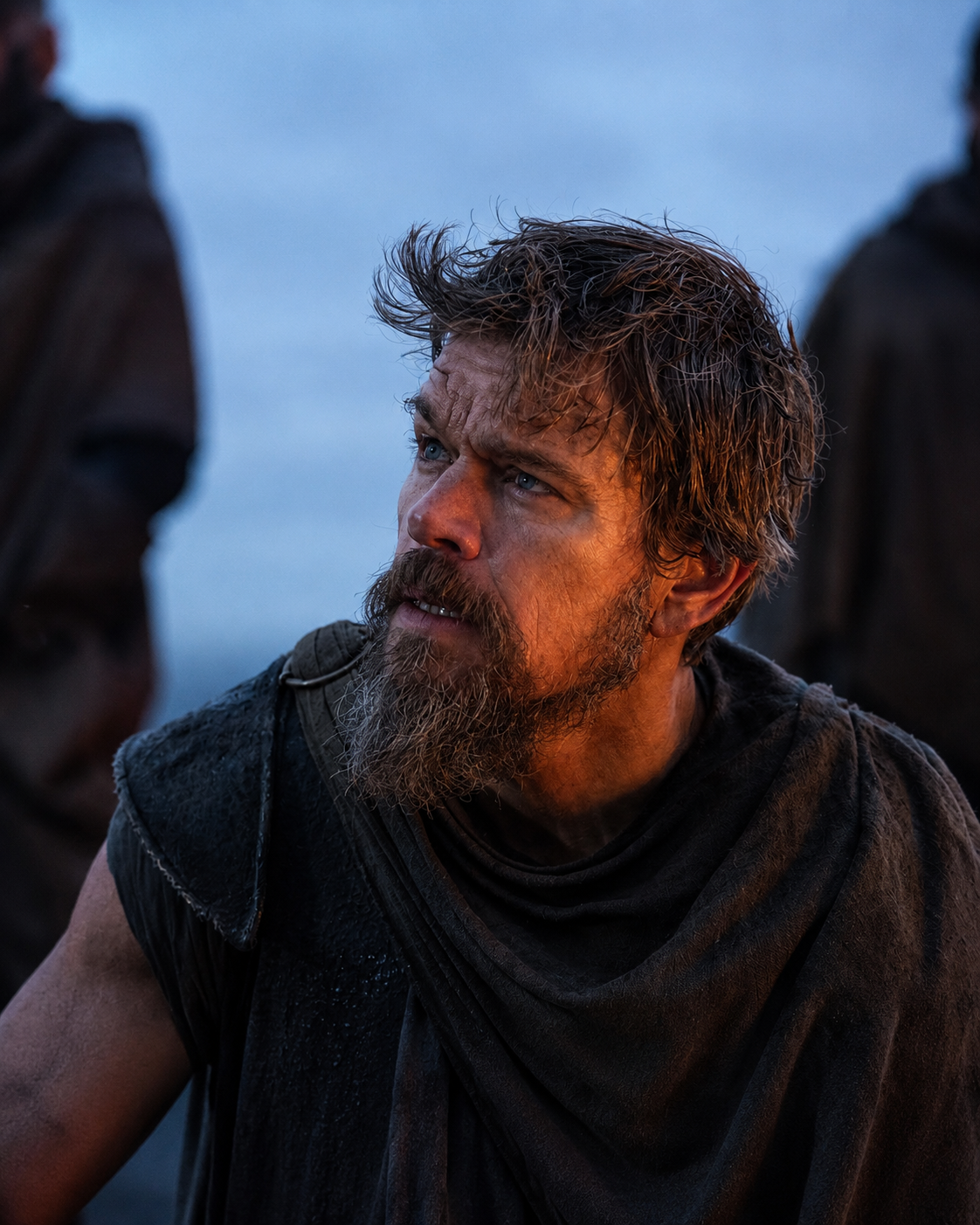
In Christopher Nolan’s 2006 masterpiece The Prestige, two illusionists engage in an obsessive rivalry that drives them to sacrifice friendship, love, and even their own humanity in pursuit of the perfect trick. Their ambition perfectly mirrors Nolan’s own, as he has always sought new ways to astonish audiences with his work.
IMAX technology was developed in Canada in 1967 by a group of filmmakers and engineers determined to overcome the limitations of traditional cinema. Unlike standard 35mm film, which runs vertically and uses four perforations per frame, the IMAX format uses 70mm film running horizontally with 15 perforations per frame. When projected, the image can fill slightly curved screens measuring around 20 metres high and up to 30 metres wide.
The first IMAX presentation debuted at Expo ’70 in Osaka, Japan. The following year, the world’s first permanent IMAX theatre, the Cinesphere, opened at Ontario Place in Toronto.
Initially, the format was used mainly for documentaries, experimental films and museum installations. It was only in the 2000s that IMAX became a staple of Hollywood blockbusters. The filmmaker who has done more than anyone else to popularise this technology is undoubtedly Christopher Nolan.
In April 2007, the London-born director began shooting The Dark Knight, choosing to film some of the movie’s most iconic sequences in IMAX, including the unforgettable opening bank robbery.
From that moment on, other acclaimed directors such as Denis Villeneuve, James Cameron and Ryan Coogler embraced the format to elevate their own films. Today there are roughly 2,000 IMAX theatres around the world. Most use digital projection systems, while only around forty are still capable of screening genuine 70mm IMAX film prints. As is often the case, this remarkable innovation comes with both advantages and drawbacks. Image quality is vastly superior and the format is enormous, but the cameras are heavy and extremely noisy, making it impossible to record dialogue on set. For decades, this remained the format’s greatest limitation.
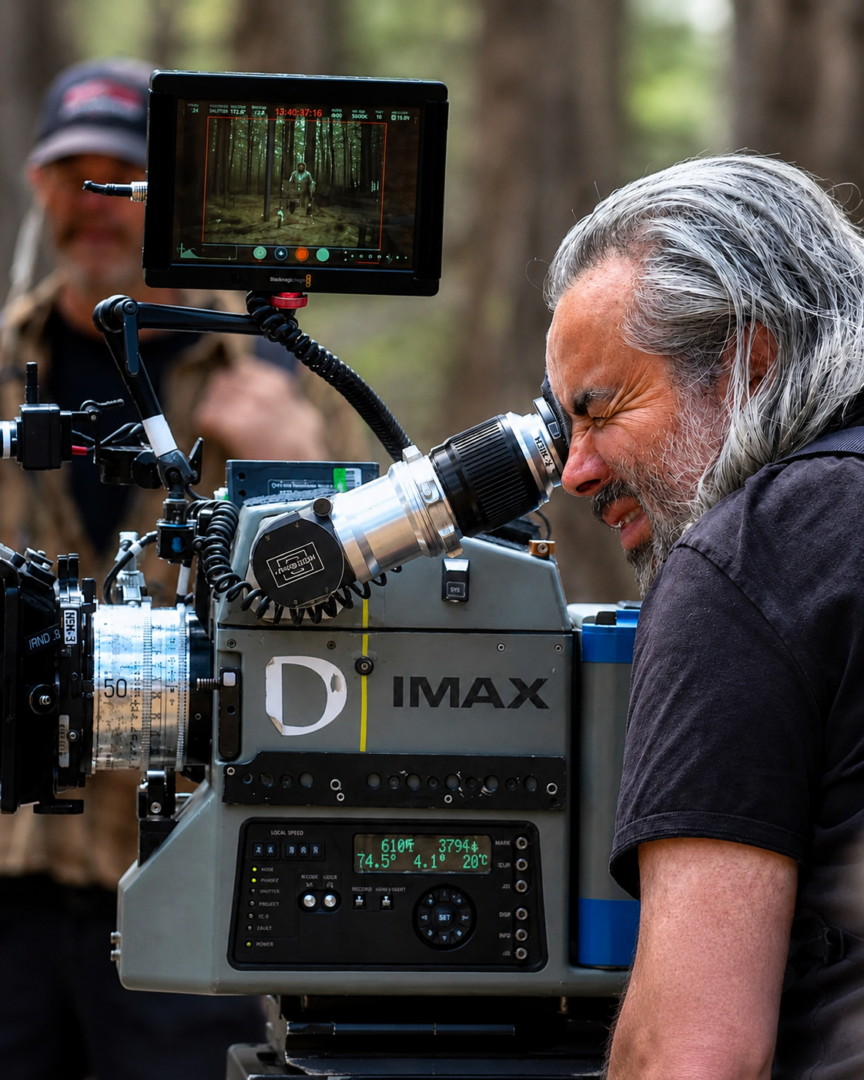
For The Odyssey, Nolan and cinematographer Hoyte van Hoytema worked with IMAX to develop a new camera called the Keighley, enclosed in a soundproof housing. The casing reduces the camera noise to a faint hum, making it possible to record whispered dialogue with the camera positioned just centimetres away from the actors.
The housing made the camera even bulkier. According to the cast, working beside it felt like acting in front of an SUV. The production even devised a mirror system that allowed performers to maintain eye contact during shot-reverse-shot sequences, as the camera occupied much of the space between them.
The Odyssey opened in Italian cinemas last night, one day ahead of its release in most other countries, including the United States.
The film opens with a title card against a black screen: “In an age of apparent magic…”
This opening line offers an important clue to Nolan’s strategy for adapting Homer’s epic. Throughout the twenty-four books of The Odyssey, Odysseus’ long journey is constantly shaped by divine intervention. Athena, Zeus, Hermes and Poseidon are central characters, each possessing their own will and determining the fate of humankind. Nolan has long been known for stripping comic-book and fantasy worlds of their most implausible elements, and he follows the same approach here.
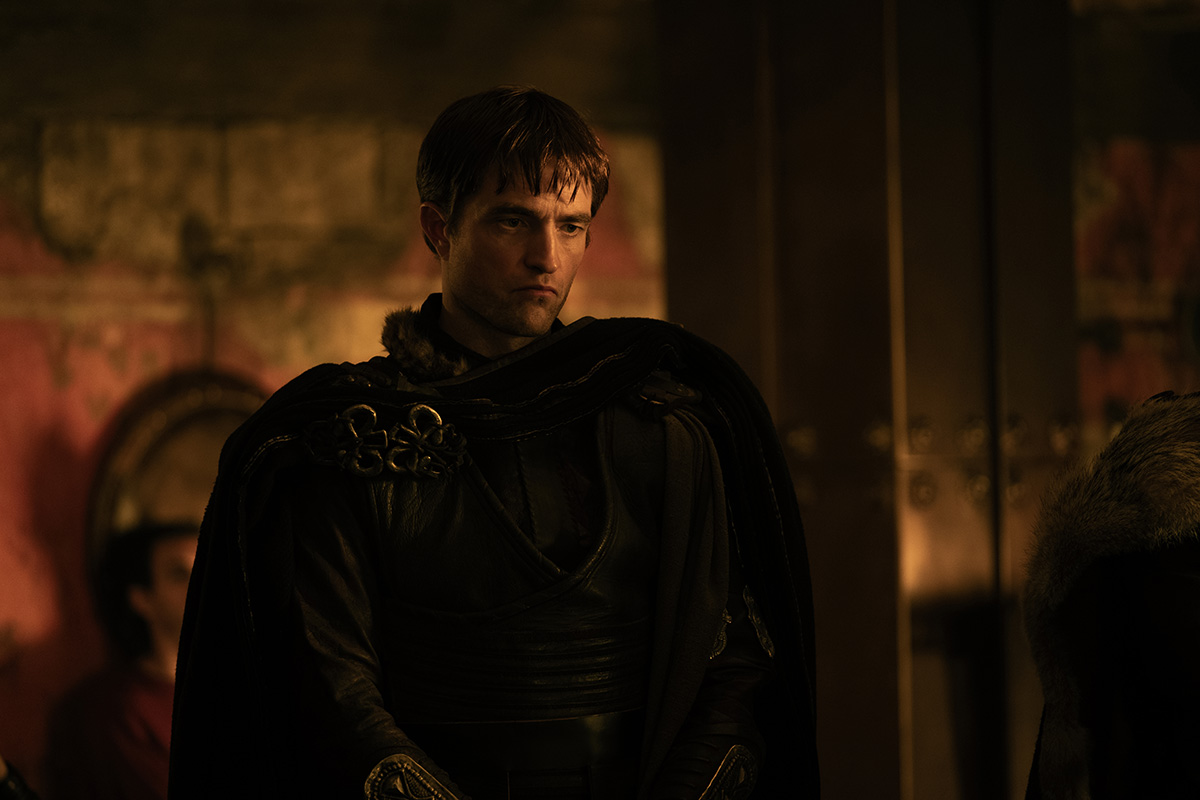
For the entire first section of the film, Odysseus is absent. Instead, the focus falls on Telemachus, the son of the King of Ithaca, who worries about the fate of the kingdom. His father has been missing for twenty years, and his mother Penelope will soon be forced to choose a new husband from among her suitors. Tom Holland delivers a competent but largely unremarkable performance, and Anne Hathaway fares similarly. Robert Pattinson, however, deserves special mention, proving perfectly cast as a delightfully slimy villain.
It is a lengthy and dialogue-heavy introduction. Characters repeatedly meet one another, remind each other who they are, speak of the Trojan War immortalised by the bards, and express growing concern over the imminent arrival of the mysterious “Sea Peoples”—legendary invaders from distant lands who have spent years attacking and plundering the Greek islands.
A flashback takes us back to Odysseus before his departure for Troy, as the king discusses the present and the future with his queen. Here the film clarifies Agamemnon’s true motives for rallying the Achaean kings to wage war against Troy. In Wolfgang Petersen’s 2004 film Troy, Agamemnon, played by Brian Cox, openly admits that his ambition is to dominate the Aegean Sea. Nolan’s The Odyssey likewise makes it immediately clear that the reasons for the war are not personal but political and socio-economic.
The central section of the film gives ample room to spectacle, action and adventure. Odysseus’ encounter with Polyphemus, the Cyclops and son of Poseidon, confronts the audience with a grotesque and monstrous creature. In Homer’s poem, Odysseus’ cunning is expressed through language: he reassures and deceives Polyphemus, using trickery to blind the Cyclops before escaping. Nolan has fun with an impressive combination of forced perspective and body doubles, successfully capturing the sequence’s epic scale. Yet the complete absence of any dialogue between Polyphemus and Odysseus is a significant omission.
After a brief and somewhat confusing battle against a platoon of four-metre-tall medieval soldiers, the survivors arrive on the island of the sorceress Circe, played by Samantha Morton. Once again, Nolan approaches the character through a socio-realist rather than fantastical lens. Circe is portrayed as a wounded woman, disillusioned with both the world and mankind, determined to live in complete isolation. Those unfortunate enough to approach her are transformed into what she believes they already are: filthy pigs. The body-transformation sequence reveals an unexpected side of Nolan, demonstrating a strong interest in practical horror effects rather than digital spectacle. In Homer’s poem, Odysseus survives Circe thanks to the intervention of Hermes. In Nolan’s adaptation, however, the King of Ithaca relies instead on compassion and empathy.
The journey continues. The breathtaking real-world locations of Italy, Greece, Morocco, Scotland and Iceland illuminate the screen and fully justify the use of IMAX technology. After countless trials and encounters, Odysseus finally returns to Ithaca.
A conversation between Penelope and Odysseus, disguised as a beggar, provides the film’s ultimate key to interpretation. Through this exchange, we come to understand that the terrifying “Sea Peoples” were in fact nothing more than soldiers returning home after twenty years of war in Troy. During their voyage back, they looted, murdered, raped and burned their way across the Mediterranean, consumed by the rage and brutality of men who had entirely lost their humanity.
The gods and monsters are therefore nothing more than reflections, metaphors and allegories of human behaviour. Nolan seems to suggest that almost everything we have witnessed may simply be the hallucination of a traumatised veteran, the product of a mind consumed by guilt. The film concludes with an extended massacre of the suitors—effective but not especially memorable—followed by an escape that places the fate of the world in the hands of a new generation.
Ultimately, the film becomes a socio-realist treatise on the end of one era and the beginning of another, marked by invasions, barbarism and bloodshed. Responsibility cannot be assigned to anyone else: through deception, cunning, arrogance and manipulation, Western civilisation has permanently altered the course of history. Odysseus’ journey becomes the meeting point between the world of myth and legend and the terrifying reality of human nature.
In conclusion, IMAX represents one of the most advanced forms of contemporary cinematic technology, and with The Odyssey, Nolan appears to have exploited every one of its possibilities. It is an experience well worth having, particularly when a film is conceived specifically for this format.
Yet this is precisely where cinema reminds us of a timeless truth, regardless of technological innovation: true magic does not reside in the screen, the projectors or the sound system.
It lives in the images a filmmaker chooses to show us, in the emotions those images evoke, and in the stories they choose to tell. Technology can amplify the impact of a great film, making it even more immersive and spectacular, but it can never replace its soul. Because cinema, even in its grandest form, ultimately lives and dies by ideas.
Matteo Manganelli