



A critical and philosophical look at artificial intelligence and its influence on society, culture and art. La Rivoluzione Algoritmica aims to explore the role of AI as a tool or co-creator, questioning its limits and potential in the transformation of cognitive and expressive processes.
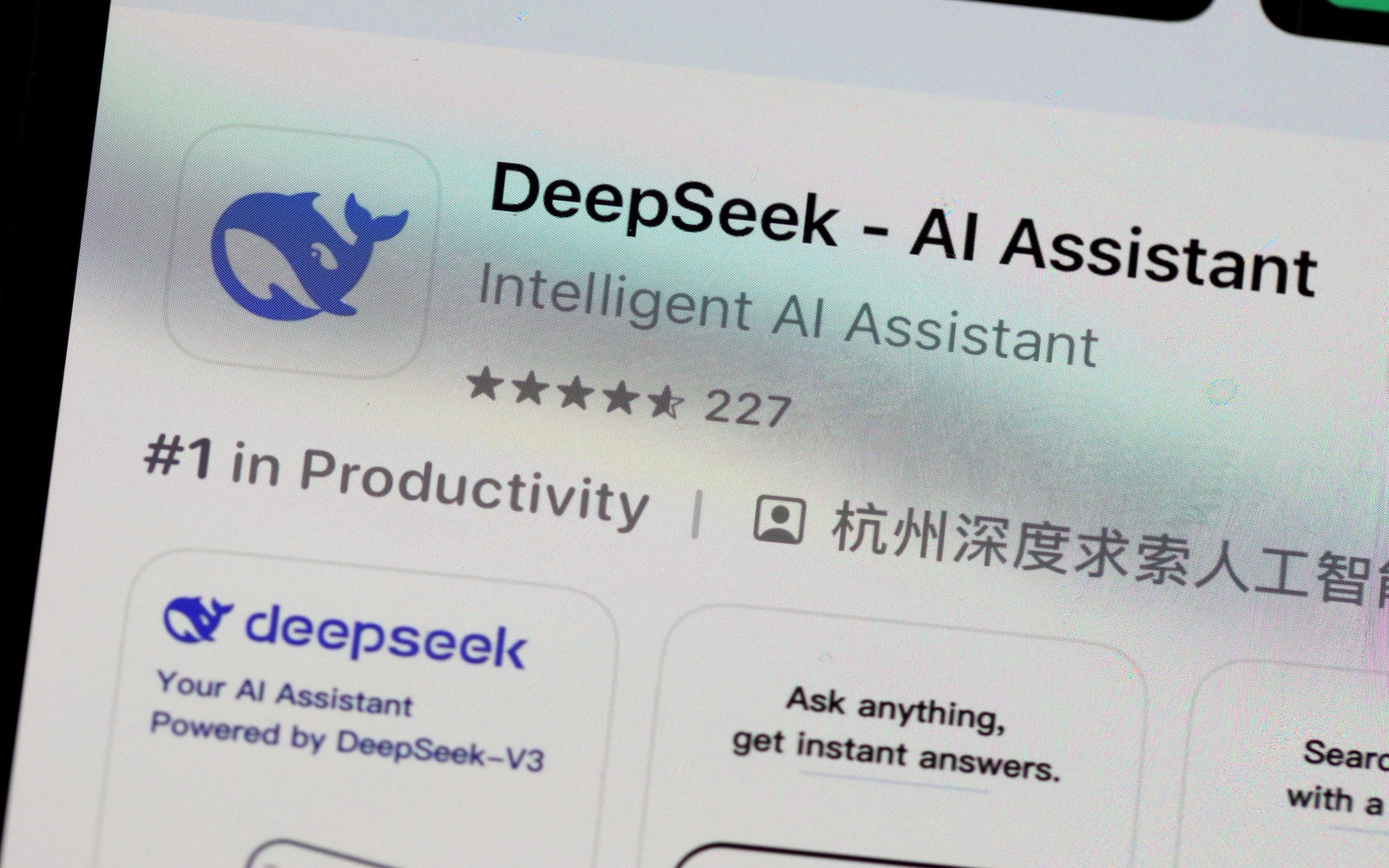
While it does not entirely match the performance of ChatGPT, it comes remarkably close while consuming only one-tenth of the energy. This particular focus on efficiency could stem from the restrictions placed on Chinas access to high-end chips, pushing researchers to prioritize energy optimization.
At the same time, DeepSeek has also unveiled Janus Pro, their most advanced image generation model. While not groundbreaking, it is still intriguing because, like DeepSeek, it is largely built on synthetic datasets, with an impressive 1:1 ratio. This approach is fascinating, especially for those who believed that such datasets would poison training materials.
On the open-source front, DeepSeek-V3 adopts a license even more open than Llama (Metas LLM). It is therefore unsurprising that Yann LeCun, head of Metas AI division, stated that this is not a victory for China but a victory for open sourcea comment that subtly hints at concerns about falling behind. While Western big tech companies pursue increasingly large (and energy-hungry) models, Chinese research focuses on more streamlined solutions capable of reducing energy consumption by up to 90%.

However, the issue of transparency remains: DeepSeek releases its code but not its training data. Only smaller and harmless projects (like Minerva) take the risk openly, as copyright regulations remain unclear, and lawsuits are always a looming threat.
When it comes to politically sensitive topicsranging from Trump to Gaza and transgender issuesDeepSeek appears aligned with the Western market. However, when the topic shifts to Chinese politics, responses are blocked. Some find this shocking, but it is worth noting that Western LLMs also have their own censorship and biasesthey are simply closer to our cultural framework. There is no such thing as a bias-free LLM, nor can one exist, because it inevitably reflects the society in which it is developed. The only truly free solution is open-source models, as they can be modified and customized. In this regard, DeepSeek outperforms many Western competitors.
Adding to the broader picture is a concerned OpenAI, which complains of alleged violations through the practice of distillation (using one LLM to train another). This is an interesting debate, as shifting responsibility for potential copyright infringement exposes the inadequacy of copyright law in the age of artificial intelligence. Furthermore, the exclusion of copyrighted content only increases model biases, as some studies confirm.
Francesco DIsa, trained as a philosopher and digital artist, has exhibited his works internationally in galleries and contemporary art centers. He debuted with the graphic novel I. (Nottetempo, 2011) and has since published essays and novels with renowned publishers such as Hoepli, effequ, Tunué, and Newton Compton. His notable works include the novel La Stanza di Therese (Tunué, 2017) and the philosophical essay Lassurda evidenza (Edizioni Tlon, 2022). Most recently, he released the graphic novel Sunyata with Eris Edizioni in 2023. Francesco serves as the editorial director for the cultural magazine LIndiscreto and contributes writings and illustrations to various magazines, both in Italy and abroad. He teaches Philosophy at the Lorenzo de Medici Institute (Florence) and Illustration and Contemporary Plastic Techniques at LABA (Brescia).?


















© COPYRIGHT THE BUNKER 2025. ALL RIGHTS RESERVED.
THE BUNKER MAGAZINE is a registered publisher at the Florence Court Register of Press, n.6214 / 03.03.2025